
Health Information Technology Degree at CF: 2-Year Path
Earn a Health Information/Medical Records Technology/Technician Associate's degree at College of Central Florida. Call (877)-218-7081 to get started.

By Janet Wilson
Every time a patient visits a doctor, gets a lab test, or fills a prescription, a trail of data is created. That trail includes diagnoses, treatments, insurance claims, and billing codes. Keeping that information accurate, secure, and accessible is not a clerical afterthought. It is a legal requirement, a patient safety issue, and a critical part of how hospitals, clinics, and insurance companies operate. The people who manage this work are health information technicians, and the demand for trained professionals in this field continues to grow as electronic health records expand across the country.
If you want to enter this field quickly and with a clear career path, a Health Information/Medical Records Technology/Technician Associate's degree, usually 2 years In-person at College of Central Florida, offers a structured, hands-on route. The College of Central Florida, often called CF, serves students in Ocala and surrounding communities with a program designed to prepare you for entry-level roles in hospitals, physician offices, nursing homes, and insurance companies. This article explains what the degree covers, what it takes to get in, what it costs, and what kind of career you can build with it.
What Is Health Information Management and Why It Matters
Health information management, sometimes shortened to HIM, is the practice of acquiring, analyzing, and protecting medical information. It sits at the intersection of healthcare, technology, and business. Every patient record contains a mix of clinical notes, lab results, imaging reports, and billing codes. Someone has to ensure that information is complete, accurate, and compliant with federal and state regulations. That someone is often a health information technician.
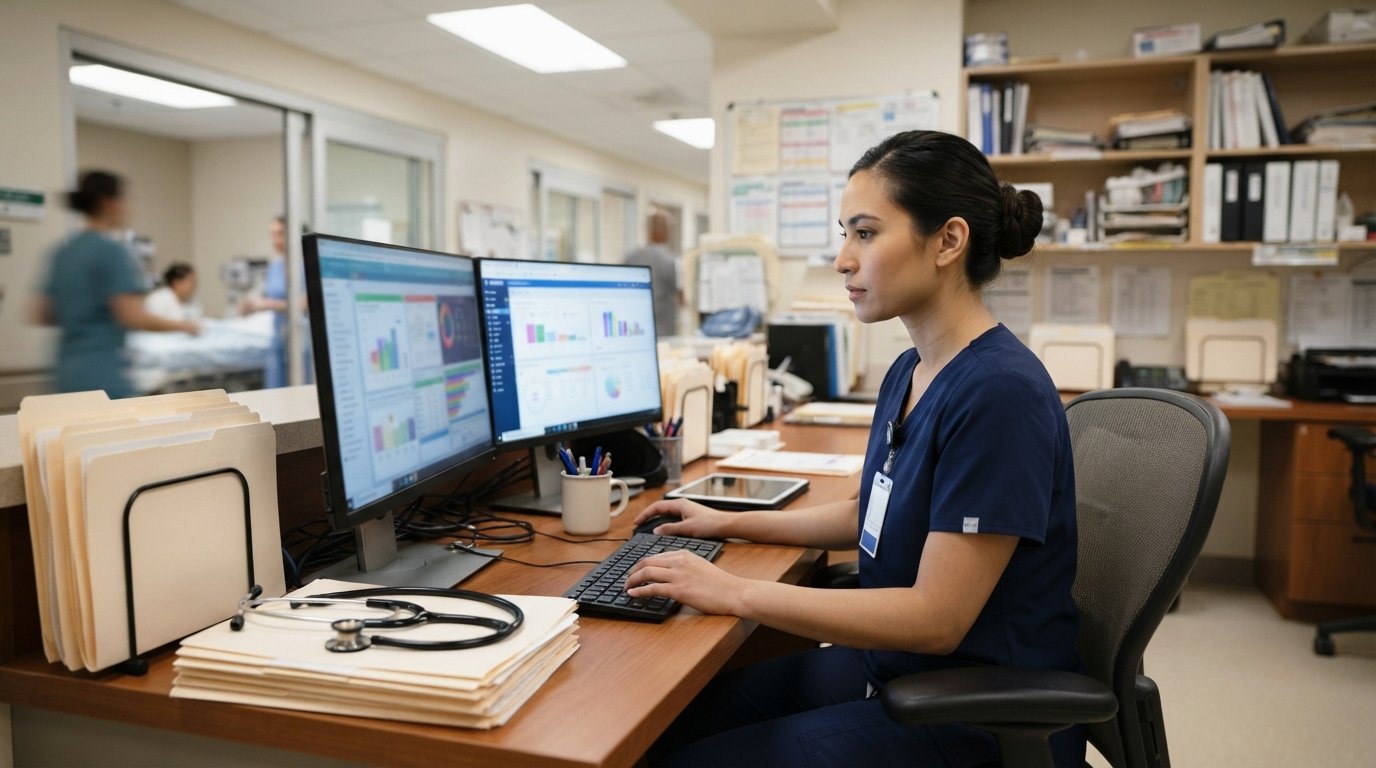
The role goes far beyond filing papers. Modern health information technicians work with electronic health record systems, audit charts for completeness, assign standardized codes for diagnoses and procedures, and manage release-of-information requests. They also help protect patient privacy under laws like HIPAA. As healthcare organizations adopt more sophisticated technology, the need for people who understand both clinical data and information systems keeps rising.
According to the U.S. Bureau of Labor Statistics, employment for health information technologists and medical registrars is projected to grow much faster than the average for all occupations through the next decade. An aging population, expanding insurance coverage, and the ongoing transition from paper records to digital systems all drive that demand. For students who want a stable, meaningful career without spending six or eight years in school, this field offers a practical entry point. If you are still exploring whether an associate degree in this area is the right fit, our guide on What Is an Associate Degree in Health Information Management breaks down the fundamentals.
Program Overview: Health Information Technology at College of Central Florida
The Health Information/Medical Records Technology/Technician Associate's degree at College of Central Florida is typically a two-year program delivered in person. Students attend classes on campus, which allows for direct interaction with instructors, access to lab equipment, and face-to-face collaboration with classmates. For many learners, this format provides the structure and accountability they need to succeed, especially when tackling technical subjects like medical coding and health data systems.
The curriculum blends general education courses with specialized health information coursework. You will take classes in anatomy and physiology, medical terminology, health record content and structure, coding and classification systems, healthcare reimbursement, and legal and ethical issues in health information. Toward the end of the program, you may complete a professional practice experience, often called an internship or practicum, where you work in a real healthcare setting under supervision. That hands-on component is one of the most valuable parts of the degree because it gives you resume-ready experience before you graduate.
Graduates are prepared to sit for national certification exams, such as the Registered Health Information Technician (RHIT) credential offered by AHIMA. Earning that credential can improve your job prospects and salary potential. The program also articulates to some bachelor's degree programs if you decide to continue your education later. For students who want to compare this path with other options, CollegeDegree.Education provides tools to explore accredited programs and request information from schools with no obligation to apply.
Admission Requirements and How to Apply
Admission to the Health Information Technology program at College of Central Florida follows a structured process. You will need to apply to the college first, submit official transcripts from high school and any previous colleges, and complete placement testing or provide SAT or ACT scores if required. Some programs also require a separate application to the health information technology department, which may include a background check and health documentation.
While specific prerequisites can vary, most students entering this type of program need to have completed courses in English, math, and basic computer literacy. If you are missing any of those, CF offers developmental education and support services to help you get up to speed. It is always a good idea to meet with an academic advisor before registering for classes. An advisor can map out your sequence of courses, explain financial aid options, and help you avoid taking classes you do not need.
Because the program is in person, you should also consider logistics like commute time, parking, and how your class schedule fits with work or family responsibilities. Many students in this program work part time or have caregiving duties. Planning ahead makes a real difference in staying on track. If you need help comparing costs or understanding aid packages, resources like CollegeAndTuition offer guides on financial aid, scholarships, and college planning that can simplify the process.
Costs, Financial Aid, and Return on Investment
Cost is one of the biggest concerns for prospective students, and it is smart to look at the full picture. Tuition at a Florida public college is generally more affordable than at private institutions or for-profit schools. In-state students pay lower rates than out-of-state students. Beyond tuition, you should budget for books, supplies, a laptop, and possibly a physical exam or immunizations required for clinical placements.
Financial aid can reduce your out-of-pocket expenses significantly. Here are the main types of aid available to students in this program:
- Federal grants, such as the Pell Grant, which do not need to be repaid if you meet eligibility requirements
- Federal student loans, which must be repaid but often have low interest rates and income-driven repayment options
- Florida state scholarships and grants, including Bright Futures for recent high school graduates
- Institutional scholarships from College of Central Florida or community organizations
- Work-study programs that let you earn money while enrolled
To apply for most of this aid, you need to complete the Free Application for Federal Student Aid, known as FAFSA. The application opens each year on October 1 for the following academic year. Filing early improves your chances of receiving need-based grants before funds run out. It is also worth asking your advisor about payment plans, which let you spread tuition costs across the semester instead of paying everything upfront.
When you calculate return on investment, consider the earning potential after graduation. Health information technicians in Florida earn a median annual wage in the range of $45,000 to $55,000, with higher pay for those who hold RHIT certification or work in specialized settings like cancer registries or trauma centers. Compared with the cost of a two-year degree, that salary offers a reasonable path to financial stability without years of debt.
Curriculum and Skills You Will Build
The coursework in this program is designed to build both technical and professional skills. You will learn how to read medical records, interpret physician notes, and translate clinical information into standardized codes that insurance companies use for reimbursement. You will also study the legal framework around health information, including patient rights, confidentiality, and the rules for releasing records.
Technology is woven throughout the curriculum. You will work with electronic health record software, practice using coding databases, and learn how to protect data from security breaches. Communication skills matter too. Health information technicians interact with physicians, nurses, billing staff, and patients, so the ability to explain complex information clearly is essential.
By the time you finish the program, you should be able to:
- Accurately assign ICD-10, CPT, and HCPCS codes for diagnoses and procedures
- Manage patient records in compliance with HIPAA and other regulations
- Use electronic health record systems to input, retrieve, and analyze data
- Audit records for completeness and accuracy
- Communicate effectively with clinical and administrative teams
These skills are portable across healthcare settings. Whether you end up in a large hospital system, a small private practice, or a remote coding position, the core competencies remain the same. That flexibility is one reason this degree appeals to career changers and working adults who want a reliable path forward.
Career Paths and Job Outlook for Graduates
Graduates of the Health Information/Medical Records Technology/Technician Associate's degree, usually 2 years In-person at College of Central Florida, pursue a variety of roles. The most common job titles include health information technician, medical records specialist, medical coder, billing specialist, and release-of-information coordinator. Some graduates move into supervisory roles after gaining experience, while others specialize in areas like cancer registry or clinical documentation improvement.
The job outlook is strong. The Bureau of Labor Statistics projects steady growth for health information roles, driven by the increasing use of electronic health records and the need to manage vast amounts of patient data. Hospitals, physician offices, nursing care facilities, and insurance companies all hire these professionals. Some technicians also work for government agencies, consulting firms, or vendors that develop health information software.
Certification can set you apart in the job market. The RHIT credential requires passing an exam and maintaining continuing education credits. Many employers list RHIT certification as a preferred or required qualification. Earning it demonstrates that you have met a national standard of competence, which can lead to higher pay and more responsibility. If you are considering further education later, a bachelor's degree in health information management can open doors to management and leadership positions. CollegeDegree.Education can help you compare bachelor's programs if you decide to continue your studies.
Is This Program Right for You?
This degree is a good fit for people who are detail-oriented, comfortable with technology, and interested in healthcare but prefer administrative work over direct patient care. If you enjoy organizing information, solving puzzles, and working in a structured environment, health information technology could be a rewarding career. The in-person format at College of Central Florida suits students who learn best with face-to-face instruction and access to campus resources.
It is also a practical choice for career changers. If you have worked in customer service, office administration, or another field and want to move into healthcare, this program provides a clear pathway without requiring a clinical background. The two-year timeline means you can enter the workforce relatively quickly and start earning while you consider further credentials.
Before enrolling, take time to visit the campus, speak with faculty, and talk to current students or graduates if possible. Ask about job placement rates, certification exam pass rates, and what support services are available for students who need tutoring or career counseling. The more information you gather upfront, the more confident you will feel about your decision.
Healthcare will always need people who can manage information accurately and ethically. A Health Information/Medical Records Technology/Technician Associate's degree, usually 2 years In-person at College of Central Florida, gives you the technical skills, hands-on experience, and credential preparation to step into that role. With affordable tuition, financial aid options, and strong demand for graduates, it is a path worth considering if you want a stable career in a growing field.