
Mechanical Engineering Technology Associate's at Catawba Valley CC
Earn a Mechanical Engineering Technology associate's degree in two years at Catawba Valley CC. Hands-on training leads to in-demand technician roles.

By Janet Wilson
For students who enjoy taking things apart, figuring out how they work, and putting them back together better, a Mechanical/Mechanical Engineering Technology/Technician Associate's degree, usually 2 years In-person at Catawba Valley Community College offers a focused, hands-on path into a high-demand technical career. This program combines classroom theory with extensive lab work, preparing graduates for roles in manufacturing, maintenance, product design, and industrial operations. In a region like Catawba County, where advanced manufacturing is a major economic driver, this degree can be a direct ticket to employment. If you are considering this program, you likely have questions about what you will learn, how to apply, and what kind of job you can expect after graduation. This guide covers those details and more, helping you decide if this two-year, in-person commitment is the right next step for your future.
What Is a Mechanical Engineering Technology Associate's Degree?
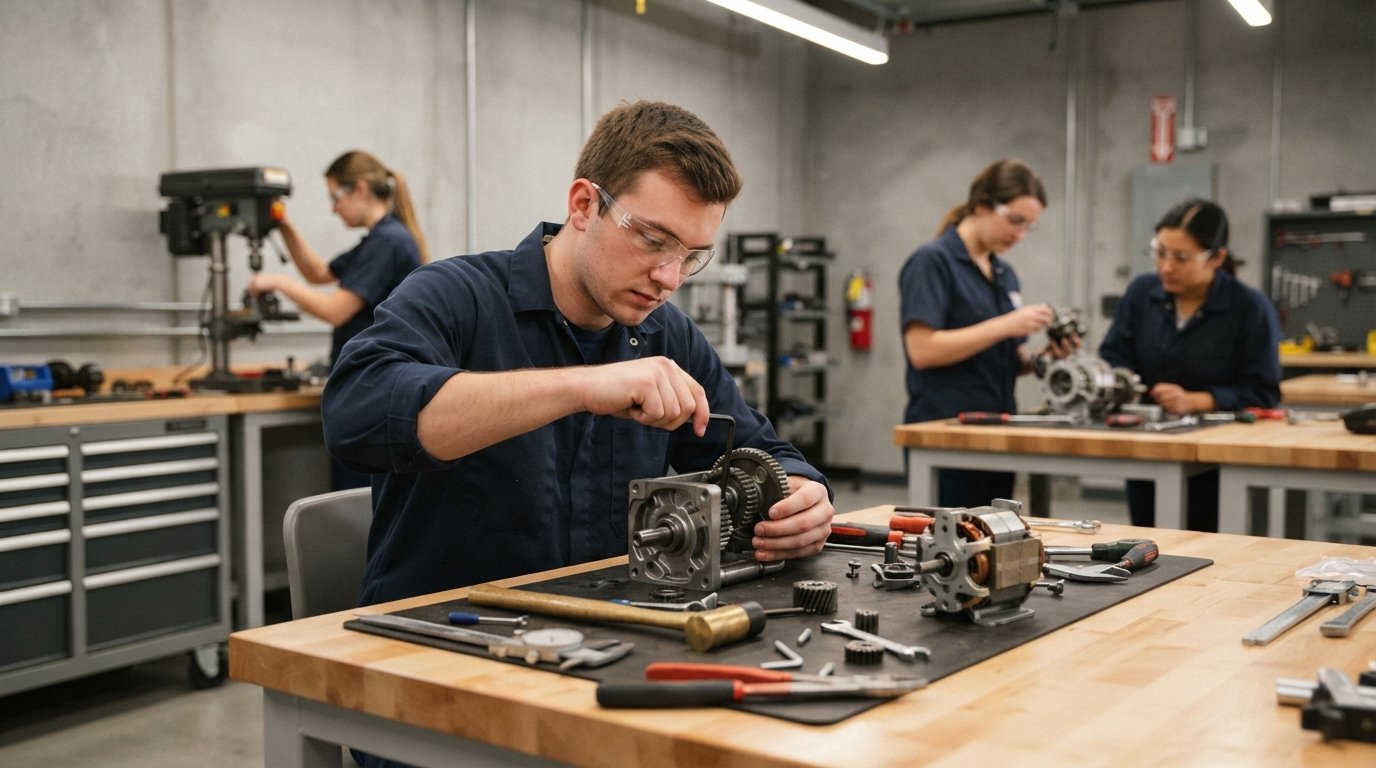
A Mechanical Engineering Technology (MET) associate's degree is distinct from a traditional mechanical engineering bachelor's degree. While engineering programs tend to emphasize theoretical design and complex analysis, MET programs focus on the practical application of engineering principles. Students learn how to install, maintain, troubleshoot, and improve mechanical systems and equipment. The curriculum is heavily lab-based, giving you hands-on experience with the tools and technologies you will use on the job. This makes the degree ideal for students who prefer a learn-by-doing approach and want to enter the workforce quickly.
At Catawba Valley Community College (CVCC), the program is designed to be completed in two years of full-time study. All courses are delivered in person, which allows for direct interaction with instructors and access to campus labs and equipment. This format suits students who benefit from a structured environment and immediate feedback from faculty with industry experience. The degree is typically awarded as an Associate in Applied Science (AAS), signaling that the curriculum is career-oriented and designed to meet local employer needs.
The core of the program covers topics such as statics, dynamics, strength of materials, fluid mechanics, and thermodynamics, but always with an eye toward application. You will also spend significant time on computer-aided design (CAD), manufacturing processes, and automation. By the time you graduate, you should be able to read engineering drawings, operate machine tools, use precision measurement instruments, and understand how mechanical components interact within larger systems. This skill set is valuable across a wide range of industries.
Program Structure and Coursework at CVCC
The Mechanical Engineering Technology program at CVCC is built around a sequence of technical courses that build on each other. In your first year, you will likely take foundational classes in engineering graphics, manufacturing processes, and basic mechanics. These courses introduce you to the language of engineering and the fundamental physical principles that govern mechanical systems. You will also take general education courses in English, mathematics, and social sciences to round out your education and develop communication skills that are critical in any workplace.
As you progress, you will move into more advanced topics. Typical courses include:
- Statics and Strength of Materials: Analyze forces on stationary structures and understand how materials behave under stress.
- Dynamics and Fluid Mechanics: Study moving systems and the behavior of liquids and gases in mechanical applications.
- Computer-Aided Design (CAD): Use industry-standard software to create and modify 3D models and engineering drawings.
- Manufacturing Processes and Automation: Learn about machining, welding, and automated systems used in modern production.
- Mechanical Design and Capstone: Apply your knowledge to a comprehensive design project, often in teams, simulating real-world engineering challenges.
Many programs also include a course in industrial safety and maintenance, reflecting the practical nature of the degree. Throughout the program, you will work in labs equipped with the same types of equipment used in local industry, from milling machines and lathes to programmable logic controllers (PLCs) and robotics. This hands-on experience is a major advantage when you start applying for jobs, as you can demonstrate practical competence rather than just theoretical knowledge.
The in-person format at CVCC means you will have regular access to instructors who often have years of experience in manufacturing or engineering settings. Small class sizes allow for personalized attention and the opportunity to ask questions in real time. This environment can be particularly beneficial if you are new to technical subjects or returning to school after a break.
Admission Requirements and How to Apply
Admission to the Mechanical Engineering Technology program at Catawba Valley Community College follows the standard procedures for the college. Prospective students must first apply for general admission to CVCC, which typically involves submitting an online application, providing proof of high school graduation or equivalent, and taking placement tests if required. However, because the MET program is a competitive technical program, there may be additional requirements or a separate application process to enter the program itself.
To be considered for the MET program, you should expect to complete the following steps:
- Apply to CVCC: Submit the college application and any required transcripts.
- Meet with an advisor: Discuss your interest in the MET program and review any prerequisites or placement test scores.
- Complete any foundation courses: Some programs require you to complete developmental math or English courses before enrolling in technical classes.
- Submit a program application: If the program has limited enrollment, you may need to submit a separate application and meet specific criteria, such as a minimum GPA or completion of certain courses.
- Register for classes: Once accepted, work with your advisor to plan your schedule and register for first-semester courses.
It is important to check the CVCC website or contact the admissions office for the most current requirements, as these can change from year to year. Because the program is in-person, you should also consider your availability to attend classes on campus during the day, as many technical labs are scheduled during traditional hours. If you are working full-time, you may need to adjust your schedule or explore part-time options, though the two-year timeline assumes full-time enrollment.
Financial aid is available for qualified students, and the college's financial aid office can help you explore grants, loans, and work-study opportunities. Scholarships may also be available through local industry partners or the college foundation. Given the demand for skilled technicians, some employers offer tuition assistance or apprenticeship programs that can help offset costs. It is worth investigating these options early in the application process.
Career Outlook and Job Opportunities
Graduates of the Mechanical Engineering Technology associate's degree program are well-prepared for a variety of roles in the manufacturing, maintenance, and engineering sectors. The skills you acquire are directly transferable to the workplace, and many employers in the Catawba Valley region actively recruit from CVCC. Common job titles for graduates include mechanical engineering technician, manufacturing technician, maintenance technician, CAD drafter, and quality assurance technician. These roles are essential to keeping production lines running, improving efficiency, and ensuring product quality.
According to the U.S. Bureau of Labor Statistics, employment of mechanical engineering technologists and technicians is projected to grow modestly in the coming years, with opportunities strongest for those with hands-on training and familiarity with advanced manufacturing technologies. In North Carolina, advanced manufacturing is a key industry, and the demand for skilled technicians who can operate, maintain, and troubleshoot complex machinery remains steady. Salaries for entry-level technicians in the region typically range from $40,000 to $55,000 per year, with potential for advancement as you gain experience and additional certifications.
One of the strengths of this degree is its versatility. You are not limited to a single industry. Graduates find work in automotive manufacturing, aerospace, furniture production, food processing, and even power generation. The problem-solving and technical skills you develop are valued across sectors. Additionally, the degree can serve as a stepping stone to a bachelor's degree. Some students choose to continue their education at a four-year institution in engineering technology or industrial management, often transferring credits earned at CVCC.
For those interested in exploring the broader landscape of engineering technician careers, resources like Careers.org provide detailed occupational profiles, including job duties, education requirements, and salary data. This can help you understand how the CVCC program fits into your long-term career plan and what additional certifications or degrees might be beneficial.
Why Choose an In-Person Program at CVCC?
While online education offers flexibility, the in-person format of the Mechanical Engineering Technology program at CVCC provides distinct advantages for hands-on learners. The ability to work directly with machines, tools, and software in a lab setting is irreplaceable. You will learn to diagnose mechanical problems, operate equipment safely, and collaborate with classmates on projects, all of which mirror the realities of the workplace. Instructors can demonstrate techniques in real time and provide immediate corrective feedback, which accelerates learning.
Moreover, the in-person environment fosters connections with peers and faculty that can be valuable for networking and job placement. Many instructors have industry connections and can recommend students for internships or job openings. The college may also host job fairs and employer visits, giving you direct access to hiring managers. For students who thrive in a structured, social learning environment, the on-campus experience can be motivating and supportive.
If you are considering similar programs in other regions, you might also explore options like the Engineering Tech Associate's at Columbia Basin, which offers a comparable pathway. However, the CVCC program is tailored to the local job market and may have strong ties to area employers. When comparing programs, consider factors such as location, cost, lab facilities, and job placement rates.
Financial Aid and Affordability
Community college programs like the MET associate's degree are generally more affordable than four-year degrees, making them an attractive option for students seeking to minimize debt. At CVCC, tuition is set per credit hour, and North Carolina residents pay significantly lower rates than out-of-state students. There are also numerous financial aid options available, including federal Pell Grants, state grants, and scholarships. The Free Application for Federal Student Aid (FAFSA) is the primary way to access need-based aid, and you should complete it as early as possible.
In addition to traditional aid, consider these strategies to reduce costs:
- Apply for local scholarships: Many community foundations and industry groups offer scholarships for students in technical fields.
- Look into employer tuition assistance: If you are already working, your employer may offer tuition reimbursement or partnerships with CVCC.
- Explore apprenticeship programs: Some manufacturers sponsor apprentices who earn while they learn, covering tuition and providing paid work experience.
- Use veterans benefits: If you are a veteran or dependent, you may qualify for GI Bill benefits that cover tuition and living expenses.
Because the program is two years, you can enter the workforce sooner and start earning a salary, which can offset the cost of tuition. Many students find that the return on investment is strong, with starting salaries that allow them to pay off any loans quickly. It is wise to meet with a financial aid advisor to understand all your options and create a plan that minimizes out-of-pocket expenses.
Is This Program Right for You?
The Mechanical/Mechanical Engineering Technology/Technician Associate's degree at Catawba Valley Community College is a great fit for students who prefer practical, applied learning and want to enter a stable, well-paying field without spending four years in school. If you enjoy working with your hands, solving problems, and seeing the tangible results of your work, this program could be a rewarding choice. It is also a good option for career changers who need to update their skills or for military veterans transitioning to civilian careers.
However, it is important to be realistic about the demands of the program. The coursework is rigorous, and the in-person schedule requires a significant time commitment. You will need to attend classes during the day and may need to study outside of class to succeed. If you have a busy schedule, consider whether you can adjust your work or personal commitments to accommodate the program. Speaking with an advisor and current students can give you a better sense of what to expect.
Ultimately, this degree opens doors to a variety of technical careers and provides a solid foundation for lifelong learning. Whether you aim to become a technician, pursue further education, or move into management, the skills you gain at CVCC will serve you well. If you are ready to take the next step, visit the CVCC website to learn more about the application process and program requirements, or explore other engineering technology programs on CollegeDegree.Education to compare your options. With careful planning and dedication, you can earn your degree and start a fulfilling career in mechanical engineering technology.