
Engineering Tech Associate's at Columbia Basin
Earn a hands-on Engineering Technologies/Technicians, General Associate's degree, usually 2 years In-person at Columbia Basin College, and launch a technical career fast.
What if you could earn a degree that puts you on the ground floor of some of the most dynamic industries in the Pacific Northwest, without committing four years or a small fortune to get there? That is exactly the value proposition of an Engineering Technologies/Technicians, General Associate's degree, usually 2 years In-person at Columbia Basin College. This program is designed for students who want hands-on technical skills, a fast track to employment, and a credential that employers in manufacturing, energy, construction, and public infrastructure recognize immediately. Whether you are a recent high school graduate, a veteran, a working adult looking to change careers, or a parent planning for the future, understanding what this degree offers, how it is structured, and where it can take you is the first step toward making a smart educational decision.
Columbia Basin College, located in Pasco, Washington, has built a reputation for workforce-ready programs that align with regional employer needs. The Engineering Technologies/Technicians, General Associate's degree sits at the intersection of engineering theory and practical application. Instead of focusing narrowly on one discipline, the general pathway gives students a broad foundation in engineering technology, then lets them tailor electives or stack credentials toward specific fields such as mechanical design, electronics, industrial automation, or construction management. That flexibility is one of the degree's strongest selling points, especially for students who know they want to work in engineering-adjacent roles but are not yet certain which specialty fits best.
Before diving into curriculum, costs, and career outcomes, it helps to clarify who this program is really for. The general engineering technologies associate's degree is not a transfer-only degree, though some students do continue on to a bachelor's program. It is primarily an applied degree, meaning the coursework emphasizes labs, software tools, troubleshooting, and real-world projects. If you enjoy solving problems with your hands and your head, and you want to be the person who turns an engineer's design into a working system, this pathway is worth serious consideration. For students exploring broader engineering options, resources like this guide on civil engineering degree career paths and value can help clarify how applied technology roles differ from professional engineering tracks.
What the Engineering Technologies/Technicians General Associate's Degree Covers
At its core, the Engineering Technologies/Technicians, General Associate's degree, usually 2 years In-person at Columbia Basin College, blends foundational math and science with technical coursework. Students typically complete courses in algebra, trigonometry, physics, and introductory calculus, alongside engineering technology classes in drafting, computer-aided design (CAD), materials, electronics, and manufacturing processes. The general designation means the program does not force you into a single track from day one. Instead, it provides a framework you can adapt through electives, advising, and sometimes stackable certificates that build toward a specialty.
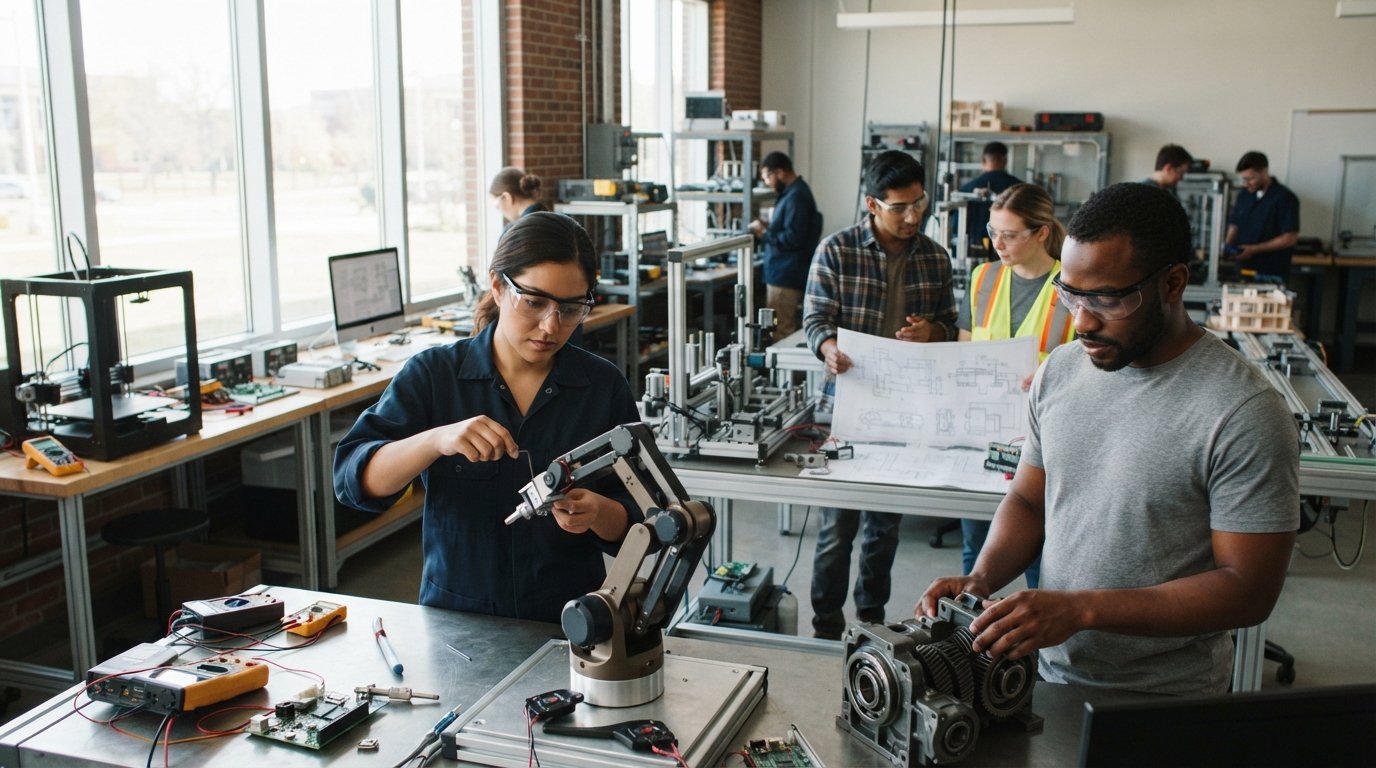
The in-person format matters here. Engineering technology is a hands-on field, and employers value graduates who have spent time in labs, machine shops, and simulation environments. Columbia Basin College's program is built around that reality: students work with equipment, collaborate on team projects, and learn from instructors who often bring industry experience into the classroom. This is not a degree you can fully replicate by watching videos online. The face-to-face interaction, immediate feedback, and access to campus resources are part of what makes the credential credible to hiring managers.
Here is a look at the kinds of courses and experiences you can expect to encounter in a typical general engineering technologies associate's program:
- Technical mathematics, including algebra, trigonometry, and applied calculus
- Physics and materials science fundamentals
- Computer-aided design (CAD) and engineering graphics
- Electronics, instrumentation, and control systems basics
- Manufacturing processes, quality assurance, and industrial safety
- Project management and technical communication
Beyond the core, students often choose electives that align with local industry demand. In the Tri-Cities region, that might mean coursework related to energy production, advanced manufacturing, or agricultural technology. Because the program is general, academic advisors play a critical role in helping students select courses that stack into a coherent skill set. A student aiming for a drafting and design role might lean toward CAD-heavy electives, while someone targeting industrial maintenance might focus on electronics and automation. That adaptability is a major advantage of the general pathway compared with highly specialized technician degrees.
It is also worth noting that engineering technology is distinct from engineering itself. Professional engineers typically earn a four-year ABET-accredited engineering degree and may pursue licensure. Engineering technicians and technologists work alongside engineers, often handling design implementation, testing, installation, and maintenance. The associate's degree is the standard entry point for technician roles, and it can be a stepping stone to a bachelor's degree in engineering technology or a related field if you decide to continue your education later.
Why Choose Columbia Basin College for This Program
Columbia Basin College is a public community college with a strong focus on career and technical education. Its location in Pasco puts it in the heart of the Tri-Cities, a region with a diverse economy anchored by energy, agriculture, healthcare, and manufacturing. That local context shapes the college's programs: employers in the area need skilled technicians, and the college works to supply them. For students, this means opportunities for internships, employer connections, and job placement that are often harder to find at institutions without deep community ties.
The in-person requirement is another reason to consider CBC. Engineering technology students benefit from access to labs, tools, and instructors in a way that online learners often cannot. If you are a hands-on learner who thrives in a structured environment with direct access to faculty, the campus setting is a genuine asset. It also makes it easier to form study groups, join student organizations, and build the kind of professional network that helps when you start job hunting. For adults balancing work and family, CBC offers flexibility in scheduling, but the core technical courses are designed to be taken in person for good reason.
Cost is another factor. As a community college, CBC generally offers lower tuition than four-year institutions, especially for in-state students. Financial aid, scholarships, and workforce training grants can further reduce the burden. Veterans and eligible dependents may be able to use VA education benefits. For students who want to minimize debt while earning a marketable credential, the associate's degree pathway is often one of the most cost-effective routes into a technical career. It is wise to meet with a financial aid advisor early to understand your options and avoid surprises.
Accreditation and transferability also matter. Students who later decide to pursue a bachelor's degree should confirm with advisors which credits transfer and to which institutions. Some four-year engineering technology programs accept associate's credits smoothly, while others may require additional coursework. Planning ahead can save time and money. If you are comparing programs, CollegeDegree.Education's matching tools can help you identify accredited options and compare costs, formats, and pathways side by side.
Career Outcomes and Job Outlook
Graduates of the Engineering Technologies/Technicians, General Associate's degree, usually 2 years In-person at Columbia Basin College, enter the workforce in a range of technician and technologist roles. Common job titles include engineering technician, CAD technician, manufacturing technician, quality assurance technician, industrial maintenance technician, and field service technician. These roles exist across industries, from aerospace and electronics to energy, construction, and public works. The breadth of the general degree means graduates are not locked into a single sector, which can be an advantage in a changing economy.
Pay varies by industry, region, and experience, but engineering technicians generally earn competitive wages with room for advancement. Many entry-level positions offer benefits, overtime opportunities, and on-the-job training. With a few years of experience, technicians can move into lead roles, project coordination, or specialized technical positions. Some pursue supervisory or management tracks, while others use the degree as a foundation for further education. The U.S. Bureau of Labor Statistics projects steady demand for engineering technicians in several fields, particularly where infrastructure, manufacturing, and energy systems require maintenance and modernization.
For students thinking about long-term career planning, it helps to understand how this degree fits into broader pathways. Careers.org offers detailed occupation profiles that explain typical duties, work settings, and training requirements for engineering technicians and related roles. Exploring those profiles early can help you decide whether a general engineering technology degree aligns with your interests, or whether a more specialized program might be a better fit. The key is to match your coursework and electives to the kinds of jobs you actually want, rather than choosing courses at random.
Another consideration is the local labor market. The Tri-Cities region has a strong demand for technicians in energy, agriculture, and advanced manufacturing. Employers often partner with CBC to recruit graduates, and some offer internships or apprenticeships that can lead to full-time offers. Students who take advantage of these connections often find that their first job comes through a referral or a relationship built during the program. That is one of the quieter benefits of an in-person, community-connected degree.
Admissions, Costs, and How to Get Started
Admission to Columbia Basin College is generally open-access, meaning you need a high school diploma or equivalent, and you may need to take placement assessments in math and English. Because engineering technology requires a solid math foundation, it is important to start at the right level and build up. Advisors can help you plan a sequence that avoids unnecessary delays. Some students may need to complete developmental coursework before entering the core program, so budgeting time for that is wise.
Costs include tuition, fees, books, and materials, and some courses may require personal tools or software. Financial aid options include federal grants and loans, state aid, scholarships, and workforce funding for eligible programs. Veterans should connect with the campus veterans office to understand how benefits apply. Working adults may find evening or part-time options, though the in-person requirement means scheduling flexibility is limited compared with fully online programs. It is worth asking advisors about any evening or hybrid options that might reduce conflicts with work.
To get started, a practical sequence looks like this:
- Apply to Columbia Basin College and submit transcripts.
- Complete placement assessments and meet with an academic advisor.
- File the FAFSA and explore scholarships and workforce funding.
- Register for foundational math and introductory engineering technology courses.
- Meet with an advisor each term to align electives with your career goals.
Following these steps early helps you avoid common pitfalls, such as taking courses that do not count toward your degree or missing financial aid deadlines. It also gives you time to explore specialties and confirm that the general pathway is the right fit. If you are unsure whether to start with a certificate or go straight for the associate's degree, ask about stackable credentials: some programs allow you to earn a certificate on the way to the degree, giving you a marketable skill even if you pause your studies.
Finally, keep in mind that this is an educational opportunity, not a guarantee of admission or job placement. Outcomes depend on your effort, the local job market, and the choices you make along the way. The most successful students tend to be those who engage with advisors, build relationships with instructors, and seek out internships or work-based learning experiences before graduation.
An Engineering Technologies/Technicians, General Associate's degree, usually 2 years In-person at Columbia Basin College, is a practical, affordable, and employer-aligned pathway into a technical career. It offers hands-on learning, a broad skill base, and the flexibility to specialize through electives. For students who want to enter the workforce quickly without sacrificing upward mobility, it is a strong option worth exploring. Take the next step by connecting with the college, comparing programs, and mapping out a plan that fits your goals and your budget. Careers.org