
Medical coding is a critical function in the healthcare revenue cycle, translating diagnoses and procedures into standardized codes. Among these, Current Procedural Terminology (CPT) codes are the most frequently used for billing outpatient and physician services. Mastering this system requires structured training, and selecting the right CPT coding course for medical coders can determine whether you pass the certification exam on your first attempt or struggle with denials and audits. With the growing demand for certified professionals, understanding what differentiates a quality program from a basic one is essential for career advancement.
This article provides a detailed framework for evaluating coding programs, the core skills you will develop, and how to leverage your training for long-term success. Whether you are starting fresh or transitioning from a clinical role, the insights below will help you make an informed decision about your education.
What Sets a High-Quality CPT Coding Course Apart
A strong CPT coding course for medical coders goes beyond memorizing code numbers. It teaches the logic behind code selection, including the hierarchy of codes, modifier usage, and the relationship between CPT, ICD-10-CM, and HCPCS Level II codes. A superior program will also incorporate real-world scenarios such as operative reports, radiology interpretations, and evaluation and management (E/M) coding guidelines that reflect actual payer policies.
Look for courses that are accredited by organizations like the American Academy of Professional Coders (AAPC) or the American Health Information Management Association (AHIMA). Accreditation ensures the curriculum aligns with industry standards and prepares you for certification exams such as the CPC (Certified Professional Coder) or CCS (Certified Coding Specialist). Additionally, programs that offer hands-on practice with encoder software and simulated billing systems provide a significant advantage over purely textbook-based instruction.
The Role of Anatomy and Medical Terminology
Effective CPT coding requires a solid grasp of human anatomy and medical terminology. A quality course will integrate these subjects rather than treating them as optional prerequisites. Understanding the difference between a partial and total resection, or knowing the anatomical layers of the skin, directly impacts code accuracy. Many students find that a dedicated master CPT coding classes for medical coders program that includes anatomy refreshers leads to higher exam scores and fewer employer rejections.
Without this foundation, coders commonly miscode procedures like lesion excisions or fracture repairs, leading to claim denials. A comprehensive course will repeatedly test your knowledge of body systems, surgical approaches, and common prefixes and suffixes to ensure you can interpret any operative note with confidence.
Core Curriculum Components You Must Expect
When evaluating a CPT coding course for medical coders, verify that it covers the following essential domains. The best programs dedicate significant time to each area rather than offering a superficial overview.
First, E/M coding is one of the most challenging and frequently audited areas. Your course should teach the 1995 and 1997 Documentation Guidelines, including key components such as history, examination, and medical decision making (MDM). Second, surgical coding must cover the CPT surgical package concept, global periods, and wound repair classifications. Third, radiology and pathology coding require understanding contrast material usage, imaging modalities, and modifier -26 (professional component) versus -TC (technical component).
Fourth, medicine coding includes immunizations, dialysis, and cardiovascular procedures. Finally, modifier application is a topic that deserves its own module. Incorrect modifier use is a top reason for claim denials. A thorough course will teach you when to append modifiers like -59 (distinct procedural service), -25 (significant separately identifiable E/M), and -51 (multiple procedures) using clear examples.
Practice Exams and Feedback Loops
The difference between a passable course and an excellent one often lies in the volume and quality of practice exams. You should have access to at least 300 to 500 practice questions that mimic the style of the CPC or CCS exam. More importantly, the course must provide detailed rationales for correct and incorrect answers. Simply marking an answer wrong without explanation does little to improve your reasoning.
Look for programs that offer live or recorded instructor reviews of difficult cases. Many top-tier courses include weekly Q&A sessions where you can ask about specific scenarios, such as coding a laparoscopic cholecystectomy converted to an open procedure. These interactive elements help you internalize coding guidelines rather than just memorizing code numbers.
How to Choose Between Online and In-Person Formats
Both online and in-person CPT coding courses have distinct advantages. Online programs offer flexibility, which is ideal for working adults or parents. They typically provide self-paced modules, recorded lectures, and digital workbooks. Some also include virtual labs where you can practice coding from operative reports using the same software used in hospitals and clinics. A strong online CPT coding course for medical coders will include discussion forums and instructor email support to prevent you from feeling isolated.
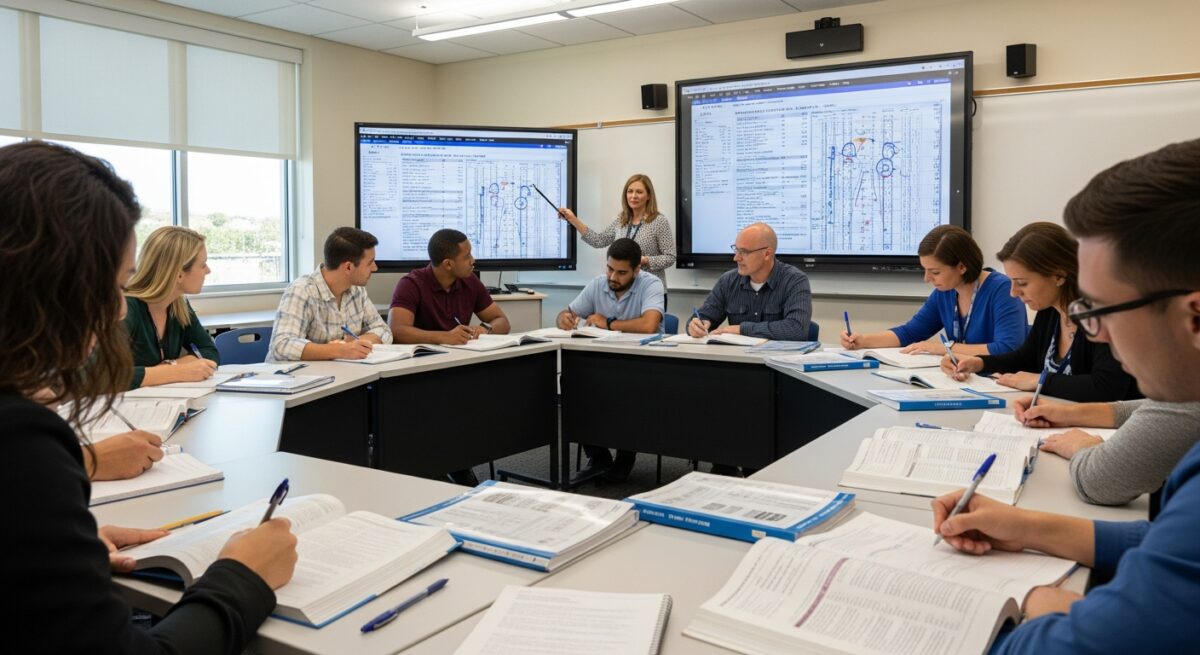
In-person classes, often offered through community colleges or career schools, provide structured schedules and direct access to instructors. They also facilitate networking with peers and potential employers. However, they may require a fixed commitment of 15 to 20 hours per week. If you thrive on accountability and face-to-face interaction, an in-person program might yield better results. For those who need maximum flexibility, an accredited online course is often the better choice.
Financial Aid and Affordable Learning Paths
Cost is a significant factor when selecting a coding specialist course. Prices range from a few hundred dollars for self-study packages to several thousand for comprehensive bootcamps with certification exam vouchers included. Before enrolling, research whether the program qualifies for federal financial aid, employer tuition reimbursement, or scholarships. Many community colleges offer coding programs that are eligible for Pell Grants, making them affordable for eligible students.
Additionally, some employers and professional organizations offer grants or discounts for coding education. For instance, the AAPC offers a scholarship program for students pursuing CPC certification. You can also explore external resources like scholarship.education to find funding opportunities that can reduce out-of-pocket costs. Investing in a quality program often pays for itself within the first year of employment through higher starting salaries and fewer exam retakes.
Career Outcomes After Completing a Coding Course
Graduates of a well-structured CPT coding course for medical coders can pursue roles in a variety of settings. Hospitals, physician groups, outpatient surgery centers, insurance companies, and telehealth companies all require certified coders. Entry-level positions typically include medical coder, billing specialist, or coding auditor. With two to three years of experience, coders can advance to senior coder, coding educator, or revenue cycle analyst roles.
Certification significantly impacts earning potential. According to the AAPC, certified coders earn approximately 20% more than non-certified peers. Many employers also require certification within six months of hire. Therefore, a course that prepares you for a specific certification exam, such as the CPC or CCS, provides a direct return on investment. Some programs also offer job placement assistance, resume workshops, and mock interviews to help you transition from training to employment.
Frequently Asked Questions
How long does it take to complete a CPT coding course?
Most courses require 12 to 24 weeks of study if pursued part-time. Full-time intensive programs can be completed in 8 to 12 weeks. Self-paced courses may take up to 12 months depending on your schedule.
Do I need a college degree to take a CPT coding course?
No. Many coding courses only require a high school diploma or GED. However, some employers prefer an associate degree in health information management for senior roles.
What is the difference between CPT, ICD-10, and HCPCS codes?
CPT codes describe medical procedures and services. ICD-10-CM codes describe diagnoses and conditions. HCPCS Level II codes cover supplies, equipment, and services not included in CPT, such as ambulance services and durable medical equipment.
Can I take a CPT coding course online and still get certified?
Yes. Many accredited online programs fully prepare you for certification exams. You will need to schedule the exam at a testing center or through a remote proctoring service.
What is the pass rate for the CPC exam after completing a coding course?
Pass rates vary by program. Reputable courses report first-attempt pass rates of 70% to 85%. Programs that include extensive practice exams and instructor support tend to have higher success rates.
Will a coding course help me get a job?
Most programs offer career services such as resume assistance, job boards, and employer connections. However, job placement is not guaranteed. Networking through professional organizations like AAPC or AHIMA can also improve your opportunities.
Final Thoughts on Selecting Your Training Path
Choosing the right CPT coding course for medical coders is a strategic decision that influences your certification success and career trajectory. Prioritize programs that offer comprehensive curriculum, ample practice exams, and instructor support. Whether you choose an online or in-person format, ensure the course is accredited and aligned with a recognized certification exam. Investing time in thorough research now will save you from costly retraining later and position you for a stable, rewarding career in healthcare administration.