
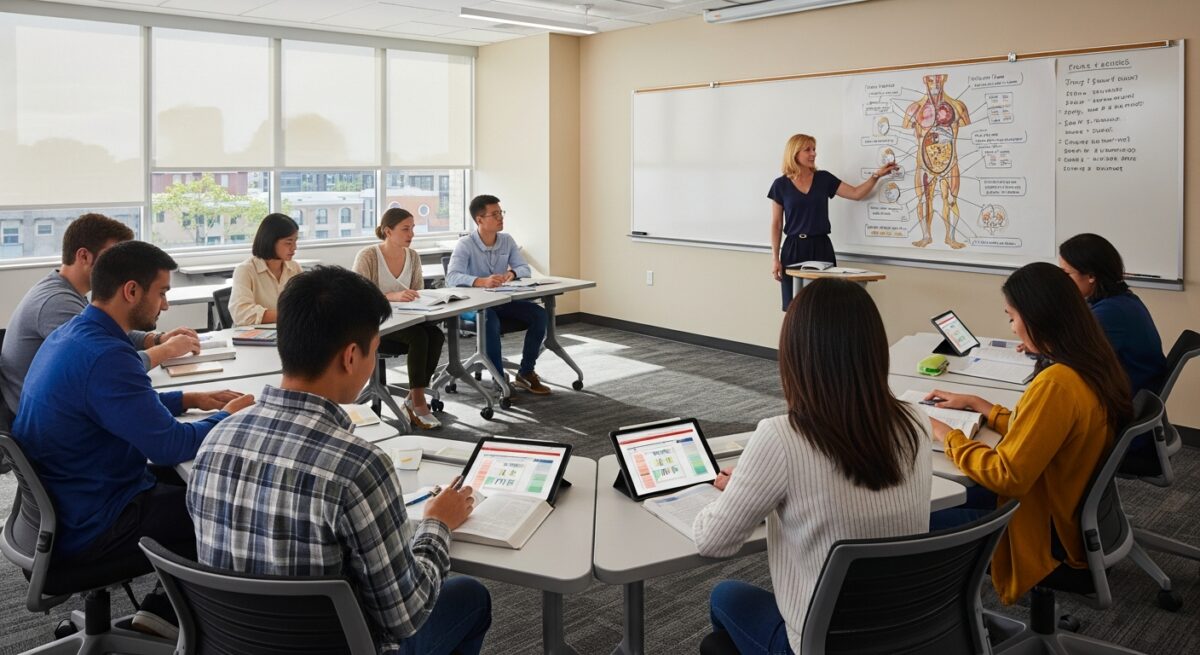
The healthcare industry runs on accurate documentation and precise billing. Behind every claim form and reimbursement check lies a complex system of codes that translate medical procedures into standardized language. For professionals entering this field, CPT coding classes for medical coders provide the foundational knowledge needed to navigate this system with confidence. These classes teach the Current Procedural Terminology (CPT) code set, which is maintained by the American Medical Association and used across the United States to report medical, surgical, and diagnostic services.
Medical coding is not just about memorizing numbers. It requires analytical thinking, attention to detail, and a deep understanding of anatomy and medical terminology. CPT coding classes for medical coders bridge the gap between clinical documentation and billing compliance. They prepare students to sit for certification exams and to perform accurately in real-world healthcare settings. Whether you are changing careers or advancing in healthcare administration, enrolling in structured coder classes is a strategic step toward a stable and rewarding profession.
The demand for certified medical coders continues to grow as healthcare facilities expand and regulatory requirements become more stringent. Hospitals, physician practices, insurance companies, and billing firms all need skilled coders who can ensure claims are processed correctly and payments are received without delay. By investing in quality training, you position yourself as a valuable asset in this essential industry.
What Are CPT Coding Classes for Medical Coders?
CPT coding classes for medical coders are structured educational programs that focus on the CPT code set, which includes five-digit numeric codes for thousands of medical procedures and services. These classes cover the guidelines for code selection, modifier usage, and the relationship between CPT codes and other coding systems such as ICD-10-CM (diagnosis codes) and HCPCS Level II (supplies and equipment).
In a typical coder class, you will learn how to read operative reports, evaluate medical records, and assign the correct codes for surgeries, office visits, laboratory tests, radiology procedures, and evaluation and management (E/M) services. The curriculum often includes practical exercises with real-world scenarios to build proficiency. Many programs also incorporate anatomy and physiology refreshers to help students understand the procedures they are coding.
Students who complete CPT coding classes for medical coders are typically prepared to take the Certified Professional Coder (CPC) exam offered by the American Academy of Professional Coders (AAPC) or the Certified Coding Specialist (CCS) exam through the American Health Information Management Association (AHIMA). Certification is not always mandatory, but it significantly improves job prospects and earning potential. In our guide on Certified Medical Coder Training and CPT Certification Guide, we explain how to choose the right program and what to expect from the certification process.
Who Should Enroll in Coder Classes?
CPT coding classes for medical coders are designed for a wide range of learners. You do not need a medical background to start, though familiarity with healthcare terminology can be helpful. The ideal candidates include:
- Career changers looking for a stable, desk-based healthcare role that does not involve direct patient care.
- Medical office staff such as front desk personnel or billing clerks who want to advance their skills and take on more responsibility.
- Healthcare professionals including nurses, medical assistants, and pharmacy technicians who want to expand into revenue cycle management.
- Recent high school graduates or college students exploring healthcare administration pathways.
- Military veterans and spouses seeking portable, remote-friendly careers in the civilian healthcare sector.
Each of these groups can benefit from the structured curriculum offered by CPT coding classes for medical coders. The best programs accommodate different learning styles through self-paced online modules, live virtual sessions, or in-person classroom settings. Many students complete their training within four to nine months, depending on the intensity of the program and their prior knowledge.
What to Look for in a Quality Coder Class Program
Not all CPT coding classes for medical coders are created equal. To ensure you receive a comprehensive education that prepares you for certification and employment, evaluate programs based on the following criteria:
Accreditation and Alignment with Certification Exams. Look for programs that are aligned with the AAPC or AHIMA exam blueprints. Some schools are approved by these organizations as certified training providers, which means their curriculum meets industry standards. Accredited programs also often include a voucher for the certification exam as part of the tuition, saving you money and simplifying the process.
Hands-On Practice and Real-World Scenarios. The best CPT coding classes for medical coders include extensive practice with actual medical records, operative notes, and claim forms. Coding is a skill that improves with repetition, so look for programs that offer at least 50 to 100 practice exercises across different specialties. Some programs also provide virtual labs where you can simulate the coding workflow used in hospitals and clinics.
Instructor Expertise and Support. A good instructor brings years of field experience and can explain tricky coding rules in plain language. Check whether the program offers live Q&A sessions, office hours, or discussion forums where you can ask questions. Self-paced courses with no instructor access can leave you stuck on difficult concepts, so prioritize programs that provide human support.
Flexibility and Format. Many students balance their studies with work or family responsibilities. Online CPT coding classes for medical coders offer the flexibility to learn on your own schedule. Some programs are entirely asynchronous, while others follow a cohort model with weekly live lectures. Choose the format that fits your lifestyle, but be honest about your ability to stay motivated without a fixed schedule.
Career Services and Job Placement Assistance. The ultimate goal of coder classes is to secure employment. Some programs include resume reviews, mock interviews, and connections to local healthcare employers. While no school can guarantee a job, strong career services can give you a head start in the job market.
The Core Curriculum of CPT Coding Classes for Medical Coders
Most CPT coding classes for medical coders follow a structured curriculum that builds from basic concepts to advanced applications. Here is what you can typically expect to learn:
Introduction to Medical Coding and Healthcare Reimbursement. This module covers the history of CPT codes, the role of coding in the revenue cycle, and the difference between inpatient and outpatient coding. You will also learn about payer types, including Medicare, Medicaid, and private insurance, and how coding accuracy affects reimbursement.
Anatomy, Physiology, and Medical Terminology. Coders must understand the human body to assign codes correctly. This section reviews major body systems, common diseases, and the language used in clinical documentation. Many students find this refresher essential, especially if they have not studied biology since high school.
CPT Code Structure and Guidelines. You will learn how to read the CPT manual, locate codes by category and section, and apply the official coding guidelines published by the AMA. This includes understanding the difference between Category I codes (procedures and services), Category II codes (performance measures), and Category III codes (emerging technology).
Evaluation and Management (E/M) Coding. E/M codes are used for office visits, consultations, and emergency department encounters. They are among the most frequently used codes and also among the most complex. CPT coding classes for medical coders dedicate significant time to E/M coding, including the use of medical decision-making (MDM) levels and time-based coding.
Surgery Coding. This module covers coding for surgical procedures across all body systems. You will learn about the global surgical package, separate procedures, and the use of modifiers to indicate special circumstances such as bilateral procedures or staged operations.
Radiology, Pathology, and Laboratory Coding. These sections teach you how to code for imaging studies, interventional radiology, lab tests, and pathology reports. You will also learn about the differences between professional and technical components.
Medicine Coding. This broad category includes codes for immunizations, dialysis, physical therapy, psychiatry, and other non-surgical services. You will practice assigning codes based on time, units, and medical necessity.
Modifiers and Compliance. Modifiers are two-character codes that provide additional information about a procedure without changing its definition. This module covers the most common modifiers and the rules for their appropriate use. You will also learn about fraud and abuse prevention, including the importance of accurate documentation and the consequences of upcoding or unbundling.
Online vs. In-Person CPT Coding Classes for Medical Coders
The decision between online and in-person coder classes depends on your personal learning preferences, schedule, and location. Online programs offer unmatched flexibility, allowing you to study from anywhere with an internet connection. They are often more affordable than in-person options, and many include recorded lectures that you can replay as needed. However, online learning requires strong self-discipline and time management skills. Without the structure of a physical classroom, some students struggle to stay on track.
In-person CPT coding classes for medical coders provide direct face-to-face interaction with instructors and peers. This can be beneficial for students who learn best through discussion and hands-on activities. Classroom settings also offer networking opportunities with local healthcare professionals. On the downside, in-person programs are less flexible and may require commuting or relocating. They also tend to be more expensive due to facility costs and smaller class sizes.
Many schools now offer hybrid models that combine online coursework with periodic in-person labs or workshops. This approach gives you the best of both worlds: the convenience of remote learning and the engagement of live instruction. Before enrolling, ask about the format and make sure it aligns with your learning style.
Career Outlook After Completing CPT Coding Classes for Medical Coders
Graduates of CPT coding classes for medical coders enter a field with strong demand and competitive salaries. According to the U.S. Bureau of Labor Statistics, medical records and health information specialists (which includes medical coders) earn a median annual wage of around $48,000, with the top 10 percent earning more than $75,000. Employment in this field is projected to grow faster than the average for all occupations, driven by the aging population and the increasing use of electronic health records.
Certified coders often earn higher salaries than non-certified coders, and they have access to more job opportunities. Many employers require or strongly prefer certification, especially for hospital-based positions. CPT coding classes for medical coders that include exam preparation give you a competitive edge in the job market. Some graduates find work in remote coding positions, which offer the flexibility to work from home while earning a stable income.
Beyond entry-level coding positions, career advancement options include specialization in areas such as surgical coding, oncology coding, or risk adjustment coding. Experienced coders can move into auditing, compliance, or management roles. Some even become instructors for coding programs themselves. The skills you gain in coder classes serve as a foundation for a long-term career in healthcare administration.
For more information on accredited training options and how to get started, visit CollegeDegree.Education to explore degree pathways and program recommendations that align with your goals.
Frequently Asked Questions
How long do CPT coding classes for medical coders typically take? Most programs range from 4 to 9 months for full completion. Accelerated options can be completed in as little as 8 weeks, while part-time students may take up to a year. The length depends on the program format and the number of hours you can dedicate each week.
Do I need a college degree to enroll in coder classes? No, a college degree is not required. Many CPT coding classes for medical coders accept students with a high school diploma or GED. However, strong reading comprehension and basic computer skills are essential for success.
Can I take CPT coding classes for medical coders online? Yes, many accredited programs are offered fully online. These programs use video lectures, interactive exercises, and virtual labs to deliver the same quality of instruction as in-person classes. Online options are especially popular among working adults and parents.
Will CPT coding classes for medical coders prepare me for certification? Most reputable programs are designed to prepare you for the CPC or CCS certification exams. Look for programs that include exam review modules and practice tests. Some programs also include the cost of the exam in the tuition fee.
What is the difference between CPT coding and ICD-10 coding? CPT codes describe the procedures and services performed by healthcare providers. ICD-10-CM codes describe the patient’s diagnosis or condition. Both code sets are used together on insurance claims to provide a complete picture of the patient encounter. CPT coding classes for medical coders typically cover both, though the primary focus is on CPT.
Is medical coding a good career for remote work? Yes, medical coding is one of the most common remote careers in healthcare. Many hospitals and billing companies hire coders to work from home after an initial training period. CPT coding classes for medical coders that include remote work best practices can help you transition into a telecommuting role.
Choosing the right educational path is critical to your success as a medical coder. Whether you prefer the structure of a classroom or the flexibility of online learning, CPT coding classes for medical coders give you the knowledge and credentials you need to thrive in this growing field. Take the first step today by researching programs that fit your schedule and career ambitions. Learn more