
History General Bachelor's at East Central University
A History, General Bachelor's degree, usually 4 years In-person at East Central University builds research and writing skills that open careers in teaching, law, museums, and more.

By Ryan Taylor
Choosing a history degree often raises a practical question: what can you actually do with it? A History, General Bachelor's degree, usually 4 years In-person at East Central University, offers a structured answer. This program combines broad historical study with the analytical and writing skills employers say they value most, and it does so on a traditional residential campus in Ada, Oklahoma, where students work closely with faculty and each other. For prospective students comparing options, understanding how this specific degree works, what it costs, and where it leads is the difference between a vague interest in the past and a concrete plan for the future.
What a General History Bachelor's Degree Covers
A general history major is deliberately broad. Rather than forcing students into a single regional or thematic track, the degree asks them to survey U.S. history, European history, and world history, then add upper-level electives in areas that match their interests. At East Central University, that structure means you can move from a foundational survey of American history into seminars on the Civil War, the Cold War, Native American history, or modern Europe without declaring a narrow concentration.
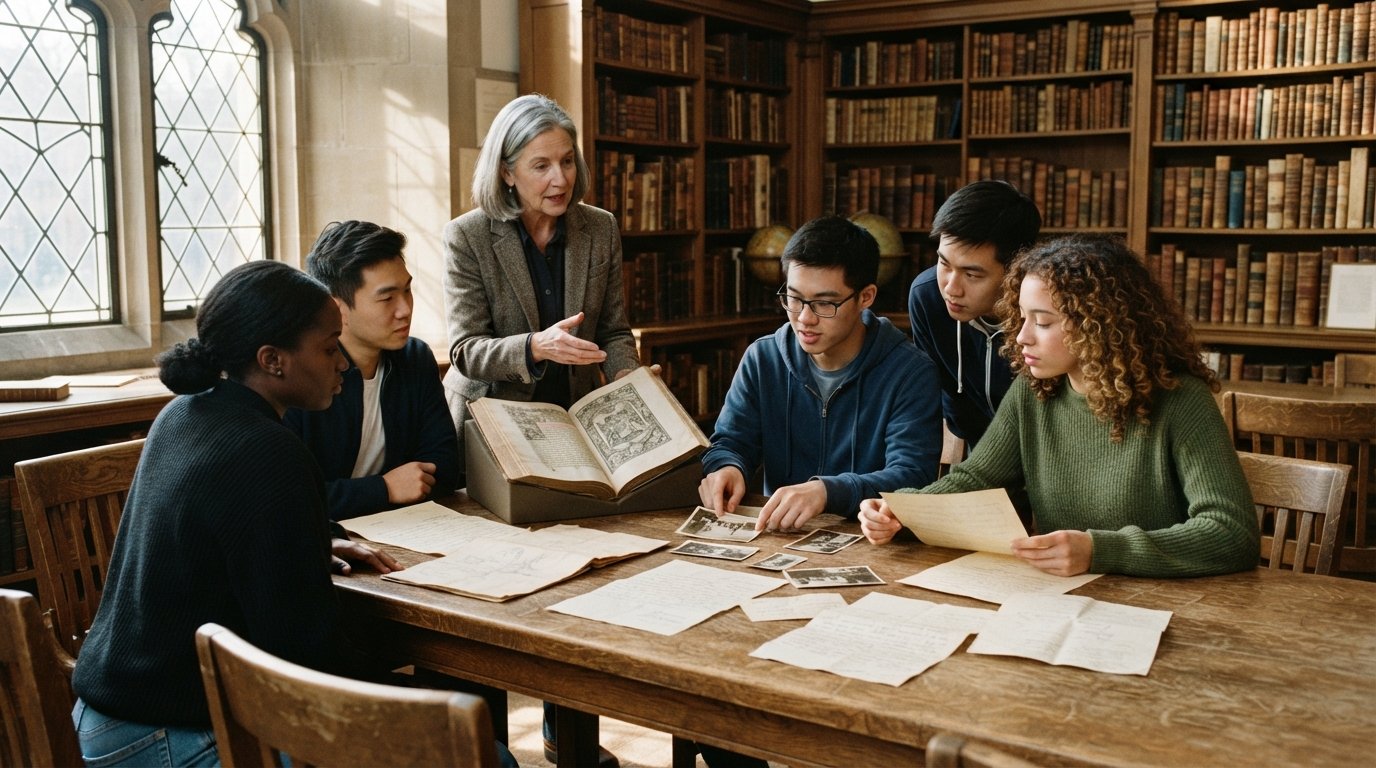
What separates a history degree from passive reading is method. Students learn historiography, the study of how history is written and argued, and they practice primary source analysis with documents, letters, photographs, and artifacts. Writing is not incidental to the degree; it is the core skill. By graduation, history majors can construct a research question, locate credible sources, evaluate competing interpretations, and present an argument in clear prose. Those are transferable skills that apply far beyond a library.
The typical program also builds in flexibility. A History, General Bachelor's degree, usually 4 years In-person at East Central University, includes general education requirements, history core courses, upper-division history electives, and free electives. Many students use those electives to add a minor in political science, English, education, or business, which can sharpen a career direction without extending time to graduation. If you are still exploring related liberal arts paths, a guide like the Music General Bachelor's Degree at Andrews University shows how another general liberal arts program structures its curriculum and electives, which is useful for comparing approaches.
Why the In-Person Format at East Central University Matters
Online degrees are flexible, but history is a discipline built on discussion. In an in-person seminar, you defend an interpretation in real time, respond to a classmate's counterargument, and revise your thinking on the spot. At East Central University, small class sizes in upper-division history courses make that kind of exchange routine rather than occasional. Faculty know students by name, and that familiarity translates into mentorship, research supervision, and honest letters of recommendation for graduate school or employment.
The residential campus setting also offers access to archives and regional history resources. Oklahoma has a rich and complicated past, from Indigenous nations and the Trail of Tears to the Dust Bowl and the oil boom, and students can connect coursework to local sites, museums, and collections. For students who learn best through structure and community, the in-person format provides accountability: scheduled classes, office hours, study groups, and campus organizations such as history clubs or honor societies.
Cost and location are part of the comparison too. East Central University is a public regional institution in Ada, Oklahoma, which generally means lower tuition than private colleges and a smaller, more personal campus than a large research university. Students should confirm current tuition, fees, housing costs, and scholarship options directly with the university, since rates change and financial aid packages vary. It also helps to ask about course rotation, because a general history degree depends on enough upper-level sections being offered each semester to keep four-year graduation on track.
Admission and Degree Requirements to Expect
Admission to a regional public university like East Central University is typically accessible for students with a standard high school record, and transfer students are common. The university sets its own criteria for GPA, test scores, and required high school courses, so applicants should check the current admissions page rather than rely on general assumptions. Transfer students should request a transcript evaluation early to see which completed courses satisfy general education and history core requirements.
Once enrolled, degree requirements usually fall into four buckets. A typical breakdown looks like this:
- General education courses in composition, mathematics, science, social science, and the arts
- A history core covering U.S., European, and world history plus historical methods
- Upper-division history electives, often with at least one seminar or research-intensive course
- Free electives or a minor to reach the total credit hours required for graduation
Most students complete the degree in four years, but the timeline depends on course availability and whether a student arrives with dual credit or transfer hours. Meeting with an academic advisor each semester is the simplest way to avoid a missed prerequisite that adds a fifth year. Students considering graduate study should also ask about senior thesis or independent research options, since a substantial research paper strengthens applications to master's and doctoral programs.
Careers and Salaries for History Graduates
The most common myth about history majors is that teaching is the only destination. In reality, the degree feeds a wide range of fields that reward research, writing, and judgment. Graduates work in education, museums and archives, government, law, publishing, nonprofits, and business roles that require clear communication. Some pursue graduate study in history, library science, public history, or law; others enter the workforce directly and build careers in compliance, communications, or operations.
Salary expectations vary widely by role and region, and students should research specific occupations rather than rely on a single average. Resources such as Careers.org are useful for understanding typical job duties, work settings, and the education or licensure each path requires. For a realistic picture, compare entry-level postings in your target field and location, and talk with alumni about their actual career trajectories.
Several career paths are especially common for history graduates:
- K-12 teaching: Requires a teaching certificate or alternative certification, often earned alongside or after the bachelor's degree.
- Museums and archives: Roles in curation, collections management, and public history, sometimes requiring a master's in public history or library science.
- Government and public service: Positions in parks, cultural agencies, and administrative offices that value research and writing skills.
- Law and policy: History is a traditional pre-law major because it trains argumentation and source analysis.
- Business and communications: Roles in technical writing, marketing content, compliance, and human resources.
Internships matter more than most students expect. A semester interning at a museum, historical society, law office, or nonprofit gives you concrete work samples and references. East Central University's location and faculty connections can help identify regional opportunities, but students should start planning internships by their junior year.
Paying for the Degree and Comparing Alternatives
Affordability is a legitimate concern for any four-year degree. Students should complete the FAFSA, apply for university scholarships, and look at state grant programs. Oklahoma residents may qualify for state aid, and transfer students should ask about articulation agreements with community colleges that can lower total cost. Working adults and veterans should also explore employer tuition benefits and veterans education benefits, which can substantially reduce out-of-pocket expense.
It also helps to compare the in-person history degree with alternatives. Online history programs offer flexibility for working students, but they may lack the seminar discussion and local archive access that define the East Central University experience. A general liberal arts degree in another field may be equally broad but less focused on research and writing. The right choice depends on how you learn, where you live, and what you plan to do after graduation.
For students who want help identifying accredited programs and comparing costs, CollegeDegree.Education's matching tools can simplify the search. The platform connects prospective students with accredited colleges and universities, lets you compare sponsored programs by level and field, and provides guides on financial aid and application steps. Because featured placements are influenced by school partnerships, treat the results as a starting point and verify details directly with each institution.
Making the Most of the Four Years
Four years passes quickly, and history majors who plan ahead graduate with stronger resumes. In the first year, focus on general education and introductory history surveys while building relationships with professors. In the second year, declare the major, choose a minor deliberately, and begin attending campus events related to history. By the third year, pursue an internship or research assistantship and start preparing for whatever comes next, whether that is student teaching, law school applications, or job hunting.
In the final year, complete a capstone or senior research project if available, update your resume with concrete accomplishments, and ask faculty for references while your work is fresh in their minds. Keep a portfolio of papers and projects that demonstrate your writing and analytical skills. Employers rarely ask for transcripts alone; they want evidence that you can research, write, and reason, and a history degree provides plenty of that if you collect it intentionally.
A History, General Bachelor's degree, usually 4 years In-person at East Central University, is a practical choice for students who want a broad, rigorous education with strong writing and research training. The degree prepares graduates for teaching, graduate study, public history, law, and a wide range of professional roles, and the in-person format offers mentorship and community that are hard to replicate online. Students who verify costs, plan their courses, and pursue internships will leave with both a credential and a set of skills that hold value across industries.