
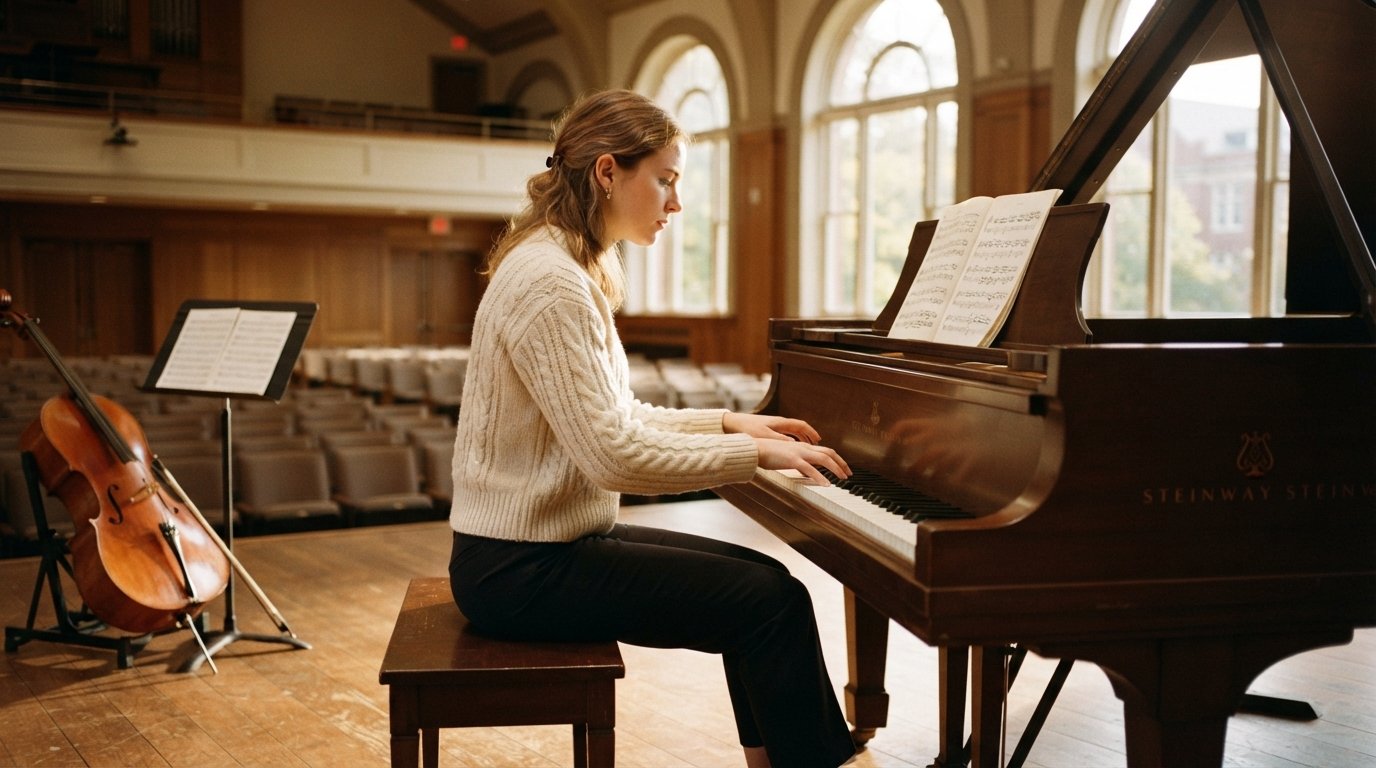
Music General Bachelor's Degree at Andrews University
Explore the Music, General Bachelor's degree at Andrews University: a four-year, in-person program blending performance, theory, and faith-based study.

By Lucas Martin
Choosing a music degree is about more than learning to perform or teach. It is about finding a program that shapes your musicianship, your faith, and your career in equal measure. The Music, General Bachelor's degree, usually 4 years In-person at Andrews University, offers a distinctive path for students who want a broad foundation in music within a Christian liberal arts environment. If you are weighing options between conservatory training, state university programs, and faith-based departments, this degree deserves a close look. It combines rigorous coursework with performance opportunities and a campus culture that treats music as both craft and calling.
What the Music, General Bachelor's Degree at Andrews University Actually Covers
The general music degree at Andrews University is designed as a broad-based Bachelor of Arts or Bachelor of Science track rather than a narrowly specialized performance or education degree. That distinction matters. Instead of locking you into a single lane from day one, the general concentration lets you build competencies across music theory, history, applied lessons, and ensemble participation while leaving room for electives that match your interests. Students who are unsure whether they want to perform, teach privately, work in church music, or pursue graduate study often find this flexibility valuable.
Core coursework typically includes music theory sequences, aural skills, music history surveys, conducting fundamentals, and applied study on a primary instrument or voice. You will also participate in ensembles, which at Andrews range from choir and orchestra to smaller chamber groups and worship teams. Because the degree is general rather than specialized, you can often tailor upper-level projects and recitals toward your own goals. That could mean a senior recital with a performance emphasis, a research paper on hymnology, or a portfolio project in music technology.
One of the practical questions prospective students ask is how this program compares to a Bachelor of Music in performance or a Bachelor of Music Education. The general degree usually requires fewer credit hours in a single specialization and more elective space. For students who want to double major, add a minor in business or communication, or simply explore other academic interests, that structure is a real advantage. It also means you should be intentional about using your electives: the freedom is a feature, but only if you plan it well with your advisor.
Why the In-Person Format Matters for Musicians
Music is one of the few disciplines where online study cannot fully replicate the learning experience. Yes, online programs exist for music business, music appreciation, and some education tracks, but applied lessons, ensemble rehearsals, and recital preparation depend on real-time, in-person collaboration. The Music, General Bachelor's degree, usually 4 years In-person at Andrews University, is built around that reality. You will spend time in practice rooms, on stage, in rehearsal halls, and in one-on-one lessons with faculty who can hear and respond to your playing in the moment.
The four-year residential format also creates the kind of peer network that musicians need. Playing in ensembles week after week builds listening skills, timing, and professional relationships that are hard to manufacture at a distance. Many graduates say the friendships and collaborations formed in ensemble settings became their first professional contacts after graduation. If you are comparing online versus on-campus music degrees, it helps to think about what you actually want to do after graduation. A performer or teacher usually benefits from the in-person route, while a student aiming at music administration or audio production might have more flexibility.
Andrews University's campus setting in Berrien Springs, Michigan, adds another layer. The department is small enough that students get individual attention but large enough to support a range of ensembles and recital opportunities. For students coming from outside the region, the residential requirement is also a chance to immerse fully in campus life, including chapel programs, student ministries, and the broader Christian academic community.
Admissions, Auditions, and What to Prepare
Applying to a music program usually involves two tracks: general university admission and a music department audition or placement evaluation. At Andrews, prospective music students should expect to complete the standard undergraduate application, submit transcripts, and arrange an audition or interview with the music faculty. The audition is not just a gatekeeping exercise; it helps faculty place you with the right applied teacher and ensemble.
Here is a practical sequence to follow if you are serious about this program:
- Complete the university application and confirm the music department's audition requirements, including repertoire and deadlines.
- Prepare two or three contrasting pieces that show your range, plus scales or technical exercises if requested.
- Schedule your audition early, ideally during a campus visit so you can also meet faculty and tour practice facilities.
- Submit any scholarship applications for music or academic awards at the same time, since deadlines often align.
Beyond the audition, a short interview or theory placement exam may be part of the process. Do not panic about the theory exam: it is used for advising, not elimination. Students with limited formal theory background are often placed in a preparatory course. The key is honesty about your current level so the department can support you properly. If you are also comparing other liberal arts degrees, our guide on the Clark University English Bachelor's Degree four-year path shows how another residential liberal arts program structures its four-year plan, which can help you benchmark what to expect.
Cost, Financial Aid, and Return on Investment
Cost is the question every family asks, and it deserves a straight answer. Private Christian universities like Andrews typically post higher sticker prices than public institutions, but the actual net cost after institutional aid, federal aid, and scholarships is often lower than families expect. Music students may qualify for talent-based scholarships in addition to academic awards, and those awards can renew for all four years if you maintain satisfactory progress and participate in ensembles.
To estimate your real cost, work through these steps:
- File the FAFSA early to establish federal aid eligibility and any need-based institutional funds.
- Ask the music department specifically about talent scholarships, ensemble assistantships, and renewal criteria.
- Compare net price, not sticker price, across every school on your list using each financial aid office's net price calculator.
- Factor in hidden music costs such as instrument maintenance, recital attire, travel, and private lesson fees beyond the standard curriculum.
Return on investment for a general music degree depends heavily on what you build alongside it. Graduates who pair music with teaching certification, church ministry training, audio technology skills, or business coursework tend to have more diversified options. The degree itself develops discipline, collaboration, and communication skills that employers value, but the specific career lane is something you construct intentionally. For broader occupation research, resources like Careers.org can help you explore how music-related roles are described in the labor market and what training paths they typically require.
Career Paths and Graduate Study Options
A general music bachelor's degree does not point to one job title. It points to a set of related fields where musicianship, communication, and organizational skill intersect. Some graduates go directly into church music ministry, private teaching studios, or community arts organizations. Others pursue graduate study in performance, musicology, conducting, or music education. Still others move into adjacent fields such as arts administration, music therapy (which requires additional credentialing), or media production.
Common entry points include:
- Private studio teaching and K-12 music support roles, sometimes with additional certification.
- Church music leadership, worship planning, and choir direction.
- Community ensemble management, arts nonprofit work, and event coordination.
- Freelance performance, accompaniment, and recording session work.
Graduate school is a realistic option for many general music graduates, especially those who discover a research or performance specialty during their undergraduate years. Faculty mentorship matters here: a small department can give you the kind of individual guidance that makes graduate applications stronger. If you are considering advanced study, keep your theory and history grades strong and build a recital or research portfolio that demonstrates depth. The four-year residential structure gives you time to develop that portfolio with faculty feedback rather than scrambling in your final semester.
How to Decide If This Program Fits You
The right music program is the one that matches your goals, your values, and your learning style. The Music, General Bachelor's degree, usually 4 years In-person at Andrews University, fits students who want a broad musical education, a faith-integrated campus environment, and the flexibility to shape their own emphasis. It may not fit students who want a single-minded conservatory track or who need fully online delivery. Being honest about those trade-offs now saves time and money later.
A campus visit is the single best way to test fit. Sit in on a theory class, attend an ensemble rehearsal, take a lesson with a faculty member, and talk to current students about their schedules and opportunities. Ask specific questions about recital requirements, ensemble participation, and how the department supports students who want to double major or add a minor. Those conversations reveal more than any brochure. You can also use program comparison tools to line up sponsored options side by side and request information from schools that match your criteria, without any obligation to apply.
Music degrees reward students who plan deliberately and practice consistently. If you bring curiosity and discipline, a general music program can open doors to performance, teaching, ministry, and graduate study. The key is to treat the flexibility as a tool, not a default, and to build relationships with faculty who can guide your choices. With the right preparation, this four-year residential path can be a strong foundation for a lifelong musical career.