
EMT Paramedic Certificate at Columbia Basin College
Earn your EMT Paramedic Certificate at Columbia Basin College in under two years with hands-on clinical training that prepares you for certification and a career in emergency medicine.

By Lucas Martin
When a cardiac arrest happens on a rural highway or a multi-vehicle collision shuts down an interstate, the first trained professionals on scene are often EMTs and paramedics. If you want to be the person who stabilizes a patient, starts an IV, interprets an EKG, and makes split-second decisions that save lives, the Emergency Medical Technology/Technician (EMT Paramedic) Certificate, 1 year to less than 2 years In-person at Columbia Basin College offers a direct, hands-on route into that career. This program is designed for students who want rigorous clinical training, real ambulance experience, and a credential that employers recognize across Washington State, all without committing to a four-year degree.
What the Columbia Basin College EMT Paramedic Certificate Covers
Columbia Basin College, located in Pasco, Washington, has built its Emergency Medical Technology/Technician (EMT Paramedic) Certificate as a concentrated pathway for students who are ready to move quickly from the classroom to the field. The certificate is structured as a 1 year to less than 2 years in-person program, which means you should expect a full-time schedule of lectures, skills labs, and clinical rotations rather than a leisurely part-time pace. The curriculum typically begins with foundational emergency medical technician training and then advances into paramedic-level competencies, including advanced airway management, pharmacology, cardiology, trauma care, and medical emergency response.
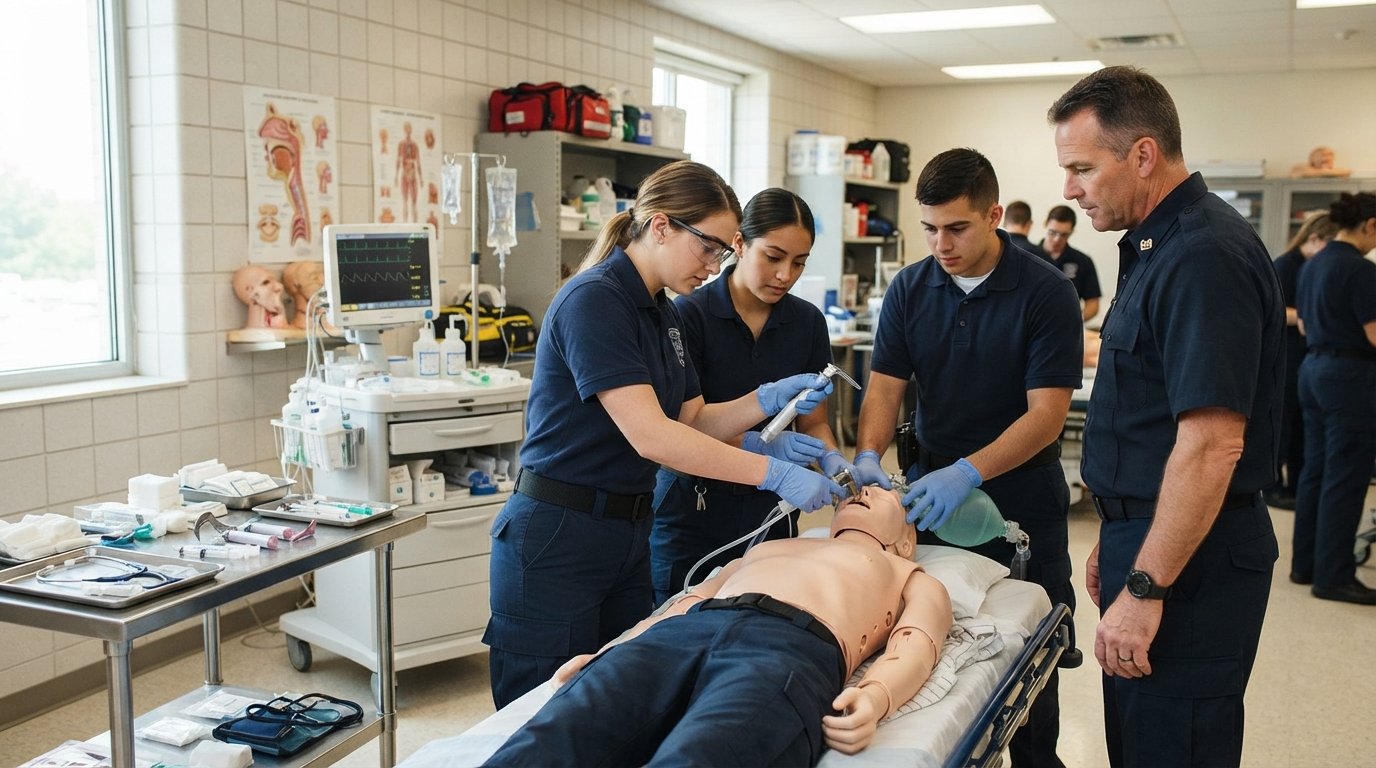
Because the program is delivered in person, you will spend significant time practicing hands-on skills with actual equipment: backboards, stretchers, defibrillators, intubation trainers, and simulated patients. This face-to-face format is a major advantage in emergency medicine, where muscle memory and team communication matter as much as textbook knowledge. Students who thrive here tend to be calm under pressure, physically capable of lifting and moving patients, and comfortable working irregular hours during clinical placements.
The certificate is not a generic first aid course. It is a career credential that aligns with state and national certification expectations for EMTs and paramedics. Graduates are prepared to sit for certification exams and to enter the workforce in fire departments, private ambulance services, hospitals, and emergency rooms. If you are comparing this program to other allied health pathways, it may help to read about a biomedical tech certificate at Anoka-Ramsey, which shows how other one-year healthcare credentials structure their training and job outcomes.
Admission Requirements and How to Prepare
Admission to the Emergency Medical Technology/Technician (EMT Paramedic) Certificate, 1 year to less than 2 years In-person at Columbia Basin College is competitive, and the program expects applicants to arrive with a baseline of academic and physical readiness. While specific requirements can change from year to year, most students should plan for the following steps and prerequisites before they apply:
- Complete college placement assessments in reading, writing, and math, or qualify for exemption through prior coursework.
- Hold current CPR certification for healthcare providers, which is often a prerequisite for the EMT portion of the program.
- Provide proof of immunizations, including Hepatitis B, MMR, and varicella, along with a negative TB test.
- Pass a background check and drug screen, which are standard for clinical placements in healthcare settings.
- Meet physical requirements for patient lifting and demonstrate the ability to work in high-stress environments.
Beyond the checklist, strong applicants prepare by volunteering with local fire departments or EMS agencies, shadowing EMTs, and strengthening their science background in anatomy and biology. Because the program is in person and fast-paced, time management and reliable transportation to clinical sites are essential. Financial aid is available for eligible students, and the college's workforce education office can help you understand grants, loans, and work-study options tied to certificate programs. For a broader look at how career guides help students map out occupations and training paths, Careers.org offers plain-language descriptions of job duties, required credentials, and work settings that can inform your decision before you enroll.
Clinical Training and Real-World Experience
One of the defining features of this certificate is its clinical component. Students do not simply read about emergency care; they ride along with ambulance crews, rotate through hospital emergency departments, and practice in skills labs that simulate everything from pediatric emergencies to mass casualty incidents. The 1 year to less than 2 years timeline is intensive precisely because clinical hours are built into the schedule, giving you supervised exposure to real patients and real decision-making.
During clinical rotations, you will be evaluated on your ability to assess patients, communicate with medical direction, document care accurately, and function as part of a team. These rotations also give you a realistic preview of the work environment: long shifts, unpredictable calls, and the emotional weight of helping people on their worst days. Students who complete the program successfully often say the clinical experience was the most valuable part of their training because it built confidence and professional judgment that no classroom can fully replicate.
It is worth noting that the program emphasizes safety, protocol adherence, and ethical practice. You will learn how to operate within the scope of practice for your certification level, when to call for advanced support, and how to protect both patients and yourself in hazardous scenes. These habits are what employers look for when hiring new EMTs and paramedics, and they are the foundation of a sustainable career in emergency services.
Career Outcomes and Certification Pathways
Graduates of the Emergency Medical Technology/Technician (EMT Paramedic) Certificate, 1 year to less than 2 years In-person at Columbia Basin College are prepared for entry-level and advanced roles in emergency medical services. Typical employers include fire departments, private ambulance companies, hospital-based EMS systems, and event medical services. With additional experience and testing, paramedics can move into supervisory roles, critical care transport, flight medicine, or instructor positions.
Certification is a multi-step process. After completing the certificate, graduates must pass the National Registry of Emergency Medical Technicians (NREMT) exam for their level and apply for state licensure in Washington. Many employers also require continuing education, recertification every two years, and ongoing clinical competency checks. The Bureau of Labor Statistics projects steady demand for EMTs and paramedics, driven by an aging population and the expansion of prehospital care. Salaries vary by region and employer, but the credential offers a stable return on a relatively short educational investment.
For students who want to keep advancing, the certificate can serve as a stepping stone to associate or bachelor's degrees in emergency management, public health, or healthcare administration. The hands-on skills and clinical hours you earn here often count toward those broader credentials, making this program a practical first step rather than a dead end.
Is This Certificate Right for You?
The Emergency Medical Technology/Technician (EMT Paramedic) Certificate, 1 year to less than 2 years In-person at Columbia Basin College is a strong fit for people who want to work in emergency services quickly, learn by doing, and serve their communities in a visible, high-impact way. It is less suitable for students who need a fully online format, who cannot commit to daytime labs and clinical shifts, or who are unsure about working in high-stress, physically demanding environments. Before applying, visit the campus, speak with faculty, and talk to working EMTs and paramedics about their day-to-day experience.
If you are still exploring healthcare and trades credentials, use a program matching service to compare accredited options side by side, review financial aid possibilities, and understand application timelines. The right program is the one that matches your schedule, your budget, and your career goals, and for many students in the Tri-Cities region, this in-person certificate is exactly that match. Take the next step by contacting Columbia Basin College's admissions office and confirming current prerequisites, cohort start dates, and clinical placement requirements.