
Computer Science Bachelor's at Augusta University
Earn a Computer Science Bachelor's degree, usually 4 years In-person at Augusta University, and gain hands-on labs, internships, and strong career outcomes in tech.

By Noah Collins
Choosing where to earn a Computer Science Bachelor's degree, usually 4 years In-person at Augusta University, is a decision that shapes your career trajectory, your technical foundation, and your professional network. Augusta University offers a residential, cohort-based experience in Georgia's second-largest metro area, combining rigorous coursework with access to a growing technology corridor that includes cybersecurity, healthcare IT, and defense contracting. If you are weighing whether a traditional on-campus program fits your goals, understanding what this specific degree entails, from admission requirements to internship pipelines, will help you decide with confidence.
Why Augusta University for a Computer Science Bachelor's Degree
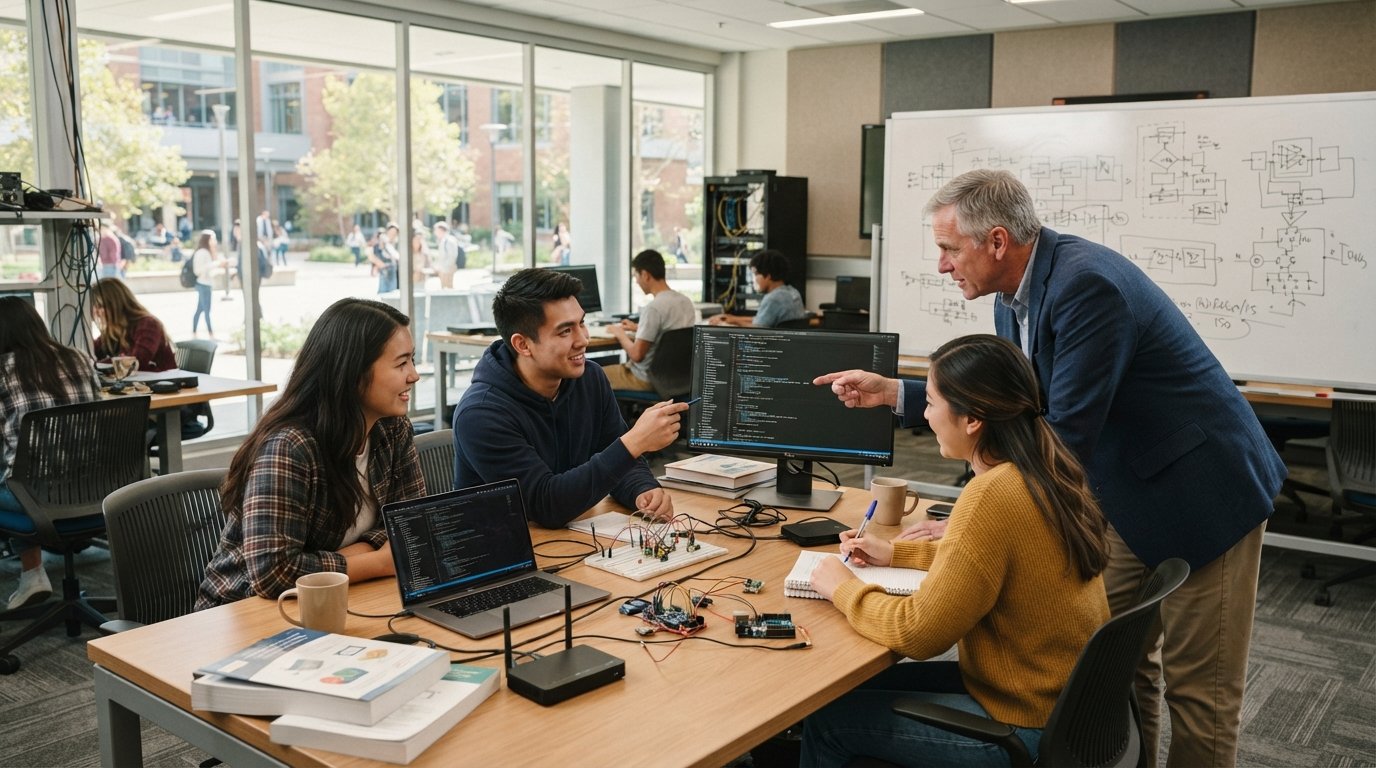
Augusta University is a public research institution within the University System of Georgia, and its computer science program sits inside the School of Computer and Cyber Sciences. That placement matters. The school has invested heavily in cybersecurity education, and students in the Computer Science Bachelor's degree, usually 4 years In-person at Augusta University, benefit from faculty who actively research network security, artificial intelligence, and software engineering. The in-person format means you attend labs, collaborate on team projects, and build relationships with professors who can write meaningful recommendation letters for graduate school or industry roles.
Location is another advantage. Augusta is home to the Georgia Cyber Center, a $100 million facility that hosts private companies, government agencies, and academic programs under one roof. Students pursuing the Computer Science Bachelor's degree, usually 4 years In-person at Augusta University, often find internships and part-time roles within walking distance of campus. The city also supports a lower cost of living than Atlanta, which reduces the overall financial burden of a four-year residential degree.
The program itself balances theory and practice. You will take courses in data structures, algorithms, operating systems, databases, and software engineering, alongside electives that let you specialize in areas like machine learning, cybersecurity, or game development. Small class sizes in upper-division courses mean you get direct feedback on code and design decisions rather than sitting in a 300-person lecture hall.
Admission Requirements and Application Steps
Admission to the Computer Science Bachelor's degree, usually 4 years In-person at Augusta University, follows the standard undergraduate process, but with some program-specific expectations. You will apply through the university's undergraduate admissions portal, submit high school transcripts or GED scores, and provide SAT or ACT scores unless you qualify for a test-optional pathway. The university also considers your GPA, course rigor, and personal essay.
For students transferring from another institution, Augusta University evaluates college-level coursework for equivalency. If you have completed calculus, introductory programming, or discrete mathematics with a C or better, those credits often transfer directly. The following steps outline a typical application timeline for a fall start:
- Submit the undergraduate application by the priority deadline (typically December 1 for fall admission).
- Send official high school and college transcripts to the admissions office.
- Complete the Free Application for Federal Student Aid (FAFSA) to determine eligibility for grants, loans, and work-study.
- Apply for university scholarships and external awards specific to computer science or STEM fields.
- Attend orientation and meet with your academic advisor to map your four-year course sequence.
After admission, you will be assigned a faculty advisor who helps you select courses each semester. Because the Computer Science Bachelor's degree, usually 4 years In-person at Augusta University, requires a specific sequence of prerequisites, falling behind in math or programming courses can delay graduation. Meeting with your advisor early and often keeps you on track.
If you are also considering online options as a backup or alternative, resources like our Bachelor of Computer Science Degree Guide explain how online programs compare in terms of accreditation, cost, and flexibility. That guide can help you weigh whether the in-person format at Augusta University aligns with your learning style and schedule.
Curriculum and Coursework Overview
The Computer Science Bachelor's degree, usually 4 years In-person at Augusta University, requires approximately 120 credit hours. The first two years focus on foundational math and programming: calculus I and II, discrete mathematics, introduction to programming in Java or Python, object-oriented design, and data structures. These courses build the analytical skills you need for upper-division work.
In your junior and senior years, you take core courses in algorithms, computer architecture, operating systems, database management, and software engineering. You also choose technical electives. Popular electives include artificial intelligence, computer networks, cryptography, mobile app development, and human-computer interaction. A capstone project or senior design course ties everything together, often in partnership with a local employer or research lab.
Beyond computer science courses, you complete general education requirements in English, history, social sciences, and fine arts. These classes improve your communication and critical thinking skills, which employers consistently rank as essential for software developers and IT professionals. The in-person format makes it easier to participate in study groups, attend office hours, and join student organizations like the Association for Computing Machinery (ACM) chapter or the cybersecurity club.
Tuition, Fees, and Financial Aid
Cost is a major factor for any bachelor's degree. For the Computer Science Bachelor's degree, usually 4 years In-person at Augusta University, tuition depends on whether you are a Georgia resident or an out-of-state student. Georgia residents pay significantly lower rates per credit hour, while non-residents pay a higher rate. Additional fees cover technology, library access, and campus facilities.
Financial aid options include federal Pell Grants, Georgia's HOPE Scholarship (for eligible residents), institutional scholarships, and student loans. The university also offers work-study positions, and many computer science students work part-time in IT support or tutoring roles. Because the program is in-person, you cannot rely on asynchronous online scheduling to fit a full-time job, so budgeting for living expenses, transportation, and books is essential.
To reduce costs, consider starting at a community college and transferring into the Computer Science Bachelor's degree, usually 4 years In-person at Augusta University. Many students complete their first two years at a lower cost per credit and then finish the final two years at Augusta University. Just confirm that your community college courses transfer by checking with the registrar or using the university's transfer equivalency tool.
For a broader look at how to evaluate online degree costs and financial aid, you can explore resources like DegreesOnline.Education, which provides guides on accredited programs and funding options for adult learners and career changers. That site complements the in-person experience by helping you compare alternatives if your circumstances change.
Internships, Co-ops, and Career Outcomes
One of the strongest arguments for the Computer Science Bachelor's degree, usually 4 years In-person at Augusta University, is access to experiential learning. The university's career services office connects students with internships at companies like ADP, Unisys, Savannah River Nuclear Solutions, and various healthcare IT firms. The Georgia Cyber Center hosts job fairs and networking events where students meet hiring managers face to face.
Internships typically occur during the summer after sophomore or junior year. Many are paid, and some lead to full-time offers upon graduation. Co-op programs, which alternate semesters of work and study, are also available for students who want longer industry exposure. Because the program is in-person, you can attend interview days, participate in hackathons, and build a professional network that remote students often miss.
Graduates with a Computer Science Bachelor's degree, usually 4 years In-person at Augusta University, pursue roles such as software developer, systems analyst, cybersecurity analyst, data engineer, and IT project manager. According to the U.S. Bureau of Labor Statistics, software developer roles are projected to grow much faster than average, with median pay exceeding $120,000 per year. Augusta's local tech market continues to expand, and many graduates stay in the region or move to Atlanta, Charlotte, or remote positions.
Comparing In-Person and Online Options
Not everyone can commit to a four-year residential program. The Computer Science Bachelor's degree, usually 4 years In-person at Augusta University, is ideal for students who thrive in structured environments, want face-to-face mentorship, and value campus resources like labs, libraries, and career fairs. However, if you are a working adult, a military veteran, or a parent with caregiving responsibilities, an online program may offer the flexibility you need.
Online computer science degrees from accredited universities can be completed part-time, often in three to five years. They typically cost less per credit for out-of-state students, and you can study from anywhere. The trade-off is less spontaneous collaboration and fewer opportunities to work directly with professors on research. If you are weighing both paths, consider your learning style, your schedule, and your long-term career goals.
Augusta University itself offers some online courses, but the core computer science sequence is designed for in-person delivery. If you need a fully online option, research programs that hold ABET accreditation or regional accreditation, and confirm that they accept transfer credits from your previous coursework. The key is to choose a program that fits your life without sacrificing educational quality.
Tips for Success in the Program
Succeeding in the Computer Science Bachelor's degree, usually 4 years In-person at Augusta University, requires more than showing up to class. Here are practical strategies that help students graduate on time and with strong job prospects:
- Build a study routine early. Programming assignments take time, so start projects the day they are assigned and use campus tutoring centers when you get stuck.
- Form a study group. Working through algorithms and debugging code with peers improves retention and prepares you for technical interviews.
- Attend office hours. Professors notice students who ask questions, and those relationships often lead to research opportunities or internship referrals.
- Create a GitHub portfolio. Employers want to see your code. Post class projects, personal apps, and contributions to open-source repositories.
- Apply for internships every year. Even a freshman-year IT support role builds your resume and helps you clarify your interests.
Beyond these habits, take advantage of the university's writing center and math lab. Computer science requires clear documentation and strong mathematical reasoning, and these resources are included in your tuition. Also, monitor your degree audit each semester to ensure you are meeting graduation requirements. A single missed prerequisite can add an extra semester, so stay proactive.
Finally, consider joining professional organizations like the ACM or IEEE student chapters. Membership gives you access to journals, conferences, and networking events that can jump-start your career. The in-person format of the Computer Science Bachelor's degree, usually 4 years In-person at Augusta University, makes it easy to attend meetings and take on leadership roles.
Earning a Computer Science Bachelor's degree, usually 4 years In-person at Augusta University, is a significant commitment of time and money, but the return on investment can be substantial. You gain technical skills, a professional network, and a credential that opens doors in nearly every industry. Whether you enroll as a first-year student or transfer from another institution, the program's blend of rigorous coursework and real-world experience prepares you for a dynamic career in technology.