
Your Guide to an Associates in Dental Hygiene Degree and Career Path
An Associates in Dental Hygiene degree is your direct path to becoming a licensed dental hygienist, a stable career with strong earning potential and high demand.

By Elena Markova
Choosing a career that offers stability, strong earning potential, and the chance to make a tangible difference in people’s health is a significant goal. For many, the answer lies in the allied health field, specifically through an Associates in Dental Hygiene degree. This focused educational path serves as the primary gateway to becoming a licensed dental hygienist, a role consistently ranked among the best healthcare support jobs. In just two to three years, a dental hygiene program equips students with the clinical expertise, scientific knowledge, and professional judgment needed for a rewarding career at the forefront of oral healthcare. This comprehensive guide will walk you through every step of the journey, from selecting the right accredited dental hygienist associate degree to launching and advancing in your professional career path.
Understanding the Dental Hygiene Associate Degree
An Associate of Applied Science (A.A.S.) in Dental Hygiene is a career-focused degree designed to prepare students for licensure and immediate entry into the workforce. Unlike a bachelor’s program, which includes more general education, the associate degree curriculum is intensely concentrated on the technical and clinical skills required for the profession. The degree typically requires between 70 and 90 credit hours and can be completed in as little as two years of full-time study, though many programs, especially those with competitive admission, may span three years including prerequisite courses. The blend of classroom instruction, laboratory simulation, and supervised clinical experience is what makes this degree so effective and highly regarded by employers.
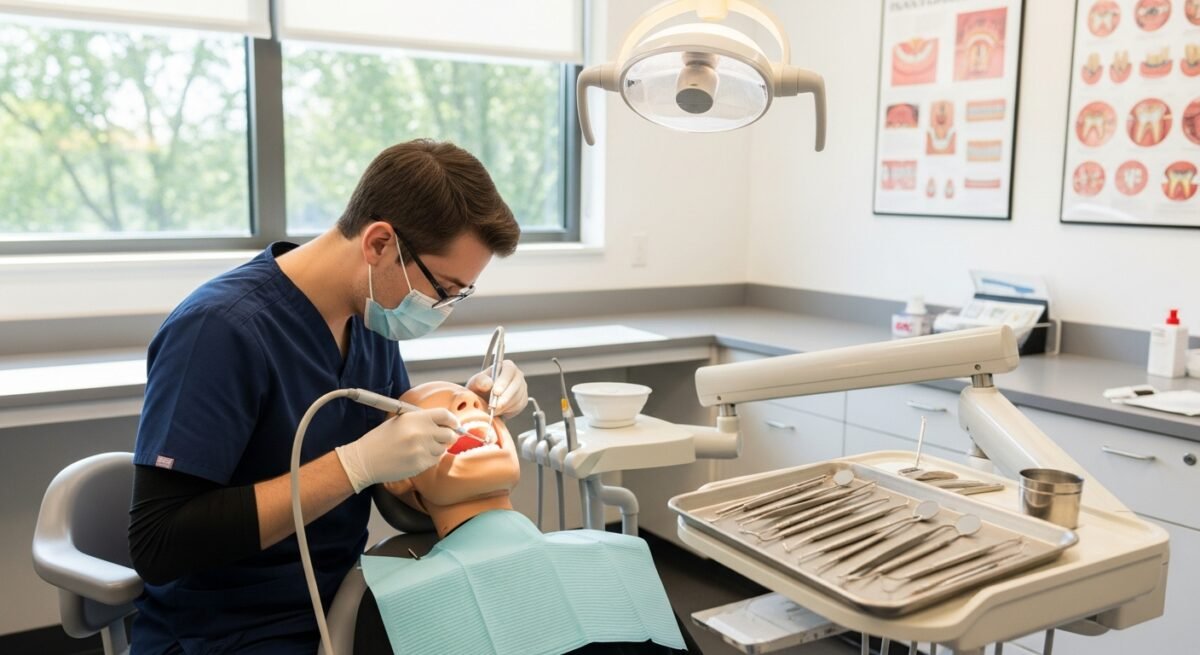
The core curriculum of a dental hygiene program is rigorous and multifaceted. Students dive deep into head and neck anatomy, oral pathology, radiography, periodontology (the study of gum disease), and dental materials. A significant portion of the education is dedicated to mastering clinical procedures: performing oral health assessments, taking and developing dental X-rays, conducting periodontal charting, applying preventive agents like fluoride and sealants, and providing critical patient education on oral hygiene techniques. This hands-on training is conducted in on-campus clinics where students treat patients under the close supervision of licensed dental hygiene instructors and dentists, ensuring competency and confidence upon graduation.
The Path to Becoming a Dental Hygienist
The journey from prospective student to practicing Registered Dental Hygienist (RDH) follows a clear, structured path. It begins well before the first day of class with meeting prerequisite requirements. Most programs require specific college-level courses in biology, chemistry, anatomy, physiology, and microbiology, often with minimum grade requirements. Because dental hygiene programs are highly competitive, excelling in these prerequisites is essential. The next step is navigating the application process, which often includes standardized tests (like the Test of Essential Academic Skills, TEAS), background checks, health clearances, and interviews. Successfully securing a spot is the first major milestone.
Once enrolled, students embark on an intensive course of study. The progression is logical, building from foundational sciences to advanced clinical theory and finally to comprehensive patient care. A typical sequence might start with introductory courses in dental hygiene theory and pre-clinical techniques, move into radiography and periodontology, and culminate in clinical practicums where students manage a full roster of patients. Time management and dedication are crucial, as the workload is demanding. Upon successful completion of the dental hygienist associate degree, graduates are eligible to sit for the national and regional board examinations required for state licensure. These exams test both theoretical knowledge and clinical competency, and passing them is the final step to earning the RDH credential and beginning your career.
Licensure and Certification Requirements
Licensure is non-negotiable for practicing dental hygienists in the United States. The process is governed by individual state dental boards, but generally follows a uniform structure. All states require graduation from an accredited dental hygiene program. Accreditation, typically from the Commission on Dental Accreditation (CODA), is critical as it ensures the program meets national standards; graduating from a non-accredited program will make you ineligible for licensure. The national examination is administered by the Joint Commission on National Dental Examinations (JCNDE) and is known as the National Board Dental Hygiene Examination (NBDHE). This written test covers all aspects of dental hygiene science and practice.
In addition to the national board, candidates must pass a state or regional clinical board exam. These are hands-on tests where candidates perform dental hygiene procedures on live patients or simulated models under observation. Common regional exams include the Central Regional Dental Testing Service (CRDTS) or the Western Regional Examining Board (WREB). Some states also have their own jurisprudence exam covering state laws and regulations governing dental practice. It is vital to check the specific requirements of the state where you intend to practice, as they can vary. Maintaining licensure requires completing continuing education (CE) credits periodically, which ensures hygienists stay current with evolving techniques, technologies, and standards of care.
Career Opportunities and Advancement
Graduates with an Associates in Dental Hygiene degree enter a job market with robust demand. The U.S. Bureau of Labor Statistics projects employment of dental hygienists to grow much faster than the average for all occupations, driven by ongoing research linking oral health to overall health and an aging population retaining more of their natural teeth. The most common work setting is a private dental office, where hygienists are integral members of the patient care team. However, the career path is far more diverse than many realize. Dental hygienists can find fulfilling roles in public health clinics, school systems, corporate settings for insurance companies or dental product manufacturers, hospital dental departments, and long-term care facilities.
Career advancement for a dental hygienist often means specialization, education, or branching into related fields. With additional training and certification, hygienists can become experts in areas like local anesthesia administration, nitrous oxide sedation, or laser therapy. Some move into corporate roles as sales representatives, educators for dental product companies, or consultants. Others choose to continue their education, leveraging their associate degree as a foundation to complete a Bachelor of Science in Dental Hygiene (BSDH) or even a Master’s degree. A bachelor’s degree opens doors to roles in public health, education as a clinical instructor, research, or administrative management. For those interested in a broader scope of practice, our guide on career paths in specialized health sciences illustrates how focused degrees can lead to diverse opportunities.
For individuals contemplating their educational investment, it is wise to explore college degree programs and scholarship opportunities that can help manage the cost of a dental hygiene education. Financial planning is a key component of a successful academic journey.
Key Considerations Before Enrolling
Pursuing a dental hygienist associate degree is a major commitment of time, finances, and effort, so informed decision-making is crucial. Start by thoroughly researching programs. Ensure every program on your list is accredited by CODA. Consider the program’s format: traditional on-campus, hybrid, or accelerated. Look closely at graduation rates, first-time pass rates on national and regional boards, and job placement statistics for graduates. These metrics are strong indicators of program quality and support. The total cost, including tuition, fees, instruments, uniforms, and licensing exam fees, can vary widely between public community colleges and private institutions, so a detailed financial plan is necessary.
Beyond academics, self-assessment is important. The role of a dental hygienist requires a specific set of personal attributes. Successful hygienists possess excellent manual dexterity for working in a small oral cavity, keen attention to detail for identifying subtle signs of disease, and strong interpersonal skills to put anxious patients at ease and motivate them to improve their home care. Physical stamina is also required, as the job involves long periods of sitting and leaning over patients. Job shadowing a practicing dental hygienist is one of the best ways to gain a realistic understanding of the daily workflow, challenges, and rewards of the profession before you apply.
Frequently Asked Questions
How much can I earn with an Associates in Dental Hygiene degree?
According to the U.S. Bureau of Labor Statistics (May 2023 data), the median annual wage for dental hygienists was $88,050. Earnings can vary based on geographic location, years of experience, work setting (private practice, public health, etc.), and hours worked. Many hygienists are paid hourly, and part-time positions with competitive hourly rates are common.
Is an Associate’s degree enough, or will I need a Bachelor’s?
An Associate’s degree is the standard educational requirement for entry-level practice and licensure. The vast majority of practicing dental hygienists hold an associate degree. A Bachelor’s or Master’s degree is typically pursued for career advancement into areas like education, public health, research, or administration, not for general clinical practice.
What is the job outlook for dental hygienists?
The job outlook is very positive. The BLS projects 7% employment growth for dental hygienists from 2022 to 2032, which is faster than the average for all occupations. Demand is fueled by an increasing emphasis on preventive oral healthcare and the needs of an aging population.
Can I complete a dental hygiene program online?
While the didactic (classroom) portions of some programs may be offered online or in a hybrid format, the clinical component cannot be completed online. All accredited programs require extensive, supervised hands-on patient care in a clinical setting. Be wary of any program claiming to offer a fully online dental hygiene degree.
What are the biggest challenges in a dental hygiene career?
Common challenges include physical demands like back and neck strain, the potential for exposure to infectious diseases (mitigated by strict infection control protocols), and managing patients with dental anxiety. The repetitive nature of some tasks can also be a factor for some individuals.
The decision to pursue an Associates in Dental Hygiene degree is the first step toward a profession defined by growth, stability, and meaningful patient interaction. This educational path provides a direct and efficient route to a licensed career with a solid financial foundation and the flexibility to shape your professional life. By carefully selecting an accredited dental hygiene program, dedicating yourself to the rigorous curriculum, and successfully navigating the licensure process, you position yourself for a future where you can positively impact community health every day. The demand for skilled, compassionate dental hygienists ensures that this investment in your education is one that will yield personal and professional rewards for years to come.