
Your Education Degree Certification Path: A Step-by-Step Guide
This step-by-step guide clarifies the traditional and alternative routes to teacher certification, helping you plan your academic and professional milestones efficiently.

By Elena Markova
Navigating the journey to become a certified educator can feel like a complex maze of degrees, tests, and state requirements. Whether you dream of teaching kindergarten, leading a high school science lab, or shaping educational policy, understanding the structured education degree certification path is your first critical lesson. This roadmap is not one-size-fits-all, it branches and adapts based on grade level, subject area, and career ambitions. From your initial bachelor’s degree to advanced licensure and potential specializations, each step builds upon the last, creating a professional foundation designed to ensure you are prepared to inspire and lead in the classroom. This guide demystifies the entire process, providing clarity on the sequential stages, key decision points, and strategic choices that define a successful career in education.
Understanding the Foundational Steps
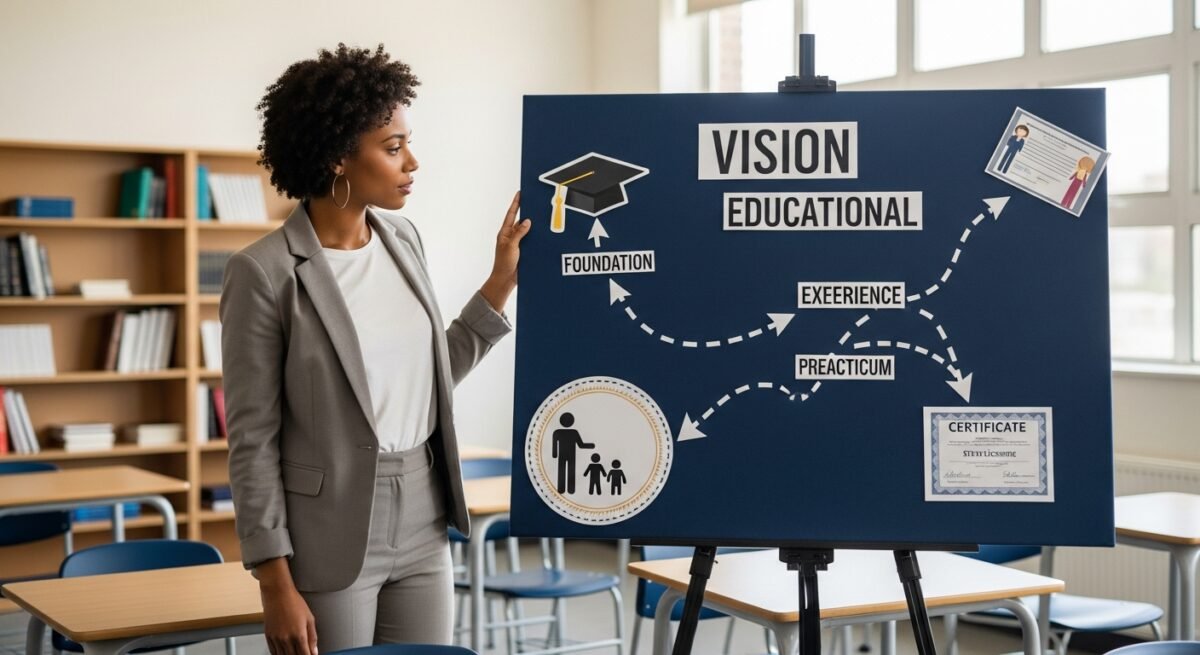
The core education degree certification path typically follows a logical progression, though variations exist for alternative certification routes. The traditional pathway is built on a scaffold of academic achievement and practical experience, sanctioned by state departments of education. It begins with a foundational academic degree, moves through supervised teaching practice, requires passing standardized examinations, and culminates in state-issued licensure. This structured approach ensures that all certified teachers meet a baseline of pedagogical knowledge and classroom competency. It is essential to research the specific requirements of the state where you intend to teach, as mandates for coursework, testing, and experience hours can differ significantly. A well-planned path not only leads to certification but also positions you for long-term career growth and specialization.
The Essential Bachelor’s Degree in Education
The cornerstone of the traditional certification path is a bachelor’s degree from an accredited institution. For most aspiring teachers, this means enrolling in a state-approved teacher preparation program. These programs are specifically designed to integrate subject-matter expertise with pedagogical theory and are often structured to fulfill state certification requirements upon graduation. You will typically choose a focus area early on, such as elementary education, secondary education (with a specific subject major like mathematics or history), or special education. The curriculum blends general education courses, advanced coursework in your content area, and dedicated classes in educational psychology, curriculum design, assessment methods, and classroom management. Crucially, these programs include embedded field experiences, observations, and a culminating student teaching internship. This immersive semester-long experience places you in a classroom under the mentorship of a cooperating teacher, providing real-world application of your studies. For those who already hold a bachelor’s degree in another field, post-baccalaureate teacher certification programs offer a streamlined route to meet these educational prerequisites without completing a second full undergraduate degree.
Choosing Between Specialized Tracks
Your choice of specialization at the bachelor’s level sets the trajectory for your entire career. Elementary education programs prepare you for a broad-spectrum approach, teaching all subjects to a single class of younger children. Secondary education paths demand deep content knowledge in a specific discipline, paired with methods for teaching that subject to adolescents. Special education programs equip you with strategies for supporting students with a wide range of learning, emotional, and physical disabilities, often leading to certifications that are in high demand. Early childhood education focuses on developmental stages from birth through primary grades. Each track has distinct coursework and practicum requirements, so aligning your choice with your passions and strengths is vital. For a deeper exploration of how to align your academic choices with your goals, our guide to education degree planning and pathways offers detailed strategic advice.
State Certification Exams and Requirements
Upon completing or while finishing your degree program, you must demonstrate your knowledge and skills through a series of standardized tests. These exams are a non-negotiable component of the education degree certification path and are mandated by each state. The most common national test series is the Praxis, though some states use their own proprietary examinations. The testing requirements generally fall into three categories: Core Academic Skills tests (assessing basic competency in reading, writing, and mathematics), Subject Assessments (testing your knowledge of the specific content you will teach), and Principles of Learning and Teaching (PLT) exams (evaluating your pedagogical knowledge for a specific age group). Passing scores are set by individual states. Preparation for these exams is critical, and many teacher preparation programs integrate review sessions into their curriculum. It is important to check your state’s education department website for the exact exam requirements and register for tests well in advance of your anticipated certification application date.
Student Teaching and Clinical Practice
Student teaching is the capstone experience of your initial preparation, transforming theory into practice. This full-time, semester-long commitment places you in a classroom setting under the direct supervision of an experienced mentor teacher and a university supervisor. You will progressively take on more responsibility, from observing and assisting to planning and delivering full lessons, managing classroom dynamics, and assessing student work. This intensive practicum is evaluated heavily and is a requirement for program completion and state licensure recommendation. It provides an invaluable opportunity to refine your teaching style, receive constructive feedback, and build a portfolio of demonstrated competencies. The relationships forged during this period often lead to mentorship, strong references, and even job opportunities. Success in student teaching requires professionalism, adaptability, and reflective practice, solidifying the practical arm of your education degree certification path.
Applying for Initial State Licensure
With your degree conferred, exams passed, and student teaching successfully completed, you can apply for your initial teaching license or certificate. This process is administered entirely by your state’s board of education. The application is typically detailed, requiring official transcripts, passing test scores, a recommendation from your accredited preparation program, a completed background check with fingerprinting, and an application fee. This initial license is often provisional, meaning it is valid for a set number of years (commonly 2-5) and carries conditions for converting it to a professional or standard license. These conditions almost always include completing a period of induction, such as a formal mentorship program during your first years of teaching, and sometimes additional professional development coursework. Navigating this bureaucratic step carefully is essential to legally securing your first teaching position.
Alternative Certification Pathways
For career changers or individuals with a bachelor’s degree in a non-education field, alternative certification provides a viable and often accelerated route into teaching. These programs are designed to meet the urgent demand for teachers in specific subject areas or geographic regions. Alternative routes allow candidates to begin teaching, often as the teacher of record, while simultaneously completing required pedagogical coursework and supervision. Pathways include residency programs, where you co-teach with a mentor before leading your own class, and internship programs, where you teach full-time while taking night or weekend classes. While the sequence differs from the traditional education degree certification path, the end goal, a state teaching license, is the same. These programs are rigorous, as they combine the immediate pressures of classroom management with the academic demands of certification coursework. They are an excellent option for mature, self-directed individuals bringing rich real-world experience into the teaching profession.
Advancing Your Career with Graduate Degrees
Once you hold an initial license and gain classroom experience, the next phase of your professional education degree certification path often involves pursuing advanced credentials. A master’s degree in education, educational leadership, curriculum and instruction, or a specific content area serves multiple purposes. It can lead to salary increases in many public school districts, provide deeper expertise for roles like instructional coach or reading specialist, and fulfill the requirements to upgrade an initial license to a professional or permanent license. For those aspiring to move into school administration, a Master’s in Educational Leadership or Administration is typically required to obtain a principal or superintendent certification. Furthermore, doctorate degrees (Ed.D. or Ph.D.) open doors to high-level district administration, policymaking, and university-level teaching and research. The flexibility of distance education degree options makes pursuing these advanced degrees more accessible than ever for working educators.
Specialized Certifications and Endorsements
Beyond the base teaching license, educators can enhance their qualifications and marketability through add-on certifications or endorsements. These credentials allow you to specialize in high-need areas and often come with additional compensation. Common add-ons include certifications in English as a Second Language (ESL), Special Education (across various disability categories), Gifted and Talented education, Reading Specialist, or specific technology integrations. The process for earning an endorsement usually involves completing a state-approved sequence of graduate-level courses and may require an additional Praxis exam. Pursuing these specializations not only makes you a more versatile and effective educator but also provides greater job security and opportunities for leadership within a school. It represents a strategic investment in the long-term trajectory of your education degree certification path. For comprehensive support in comparing these advanced academic tracks, seeking college degree guidance from knowledgeable advisors can be invaluable.
Frequently Asked Questions
How long does the entire education degree certification path take?
The traditional path via a bachelor’s degree program typically takes four years of full-time study, including the integrated student teaching semester. Alternative certification programs can range from one to two years, often while the candidate is already teaching.
Can I teach in a different state than where I got certified?
Yes, through reciprocity agreements. Most states have reciprocity with others, but it is rarely automatic. You will likely need to apply for licensure in the new state and may have to meet additional requirements, such as taking that state’s specific exams or completing extra coursework.
What is the difference between certification and licensure?
In the context of teaching, the terms are often used interchangeably. Technically, “certification” can refer to the professional credential awarded by the state, while “licensure” is the state’s legal authority to practice. For all practical purposes, they mean the same thing: official state permission to teach.
Do I need a master’s degree to become a teacher?
No, a bachelor’s degree is the minimum requirement for an initial teaching license. However, some states require teachers to earn a master’s degree within a certain timeframe (e.g., five years) to maintain or advance their license. Additionally, a master’s degree frequently leads to a higher salary.
What if I fail a state certification exam?
All testing agencies allow you to retake exams, though there are usually mandatory waiting periods between attempts (e.g., 28 days for the Praxis) and you must pay the registration fee each time. Utilize detailed score reports to identify weak areas and seek out study resources before retesting.
Your journey through the education degree certification path is a commitment to professional excellence and lifelong learning. It begins with a deliberate choice to pursue a structured academic and practical training regimen, leading to state recognition as a qualified educator. This path does not end with the first classroom assignment, it evolves through continued professional development, advanced study, and specialized certifications. By understanding each phase, from undergraduate preparation to licensure application and beyond, you can navigate the process with confidence. The result is a rewarding career built on a solid foundation, equipping you to make a lasting impact on students and the future of education.