
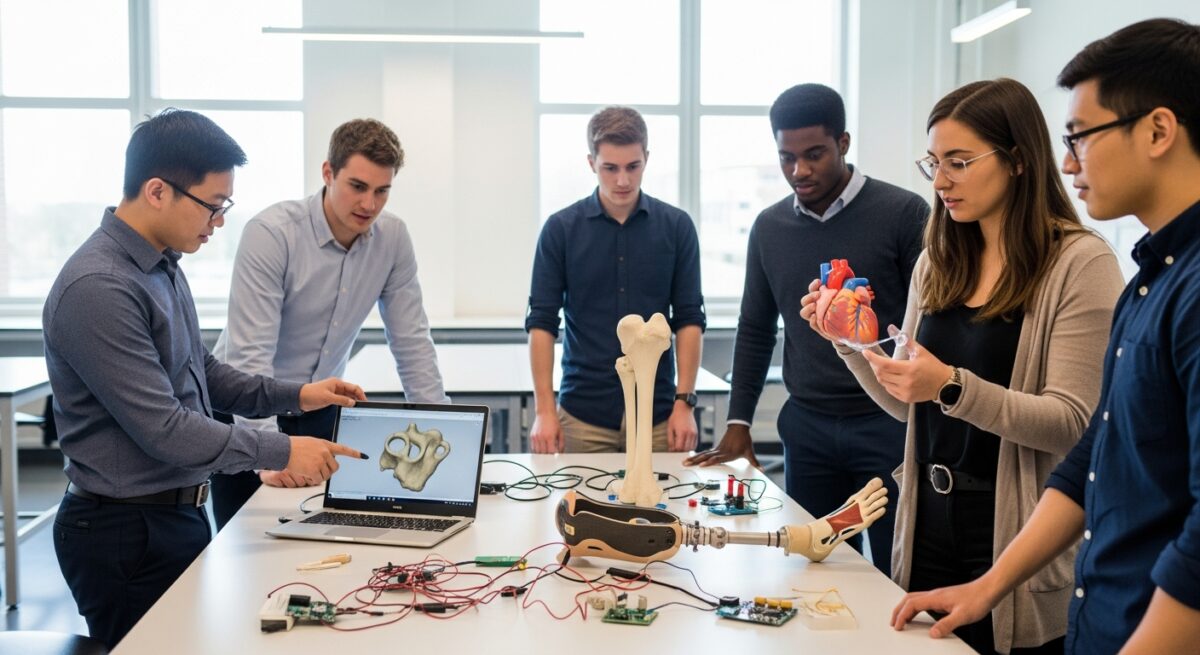
Biomedical engineering sits at the crossroads of medicine, biology, and engineering. It is the field that designs the artificial heart, the MRI machine, the prosthetic limb, and the software that helps doctors analyze patient data. If you are drawn to both science and problem solving, you may have asked yourself: what is a biomedical engineering degree, and is it the right path for you? This guide will walk you through the curriculum, the skills you will gain, the career options, and the practical steps to enroll in a program that fits your goals, whether you are a high school student, a working adult, or a career changer.
The Core of a Biomedical Engineering Degree
At its simplest, a biomedical engineering degree is an undergraduate or graduate program that trains you to apply engineering principles to medical and biological problems. You will learn how to design devices, create diagnostic tools, and develop therapies that improve patient care. The program combines rigorous coursework in mathematics, physics, and engineering with specialized classes in anatomy, physiology, and biomechanics.
The curriculum is intentionally broad. In the first two years, you will take foundational courses in calculus, chemistry, and statics. In the upper years, you will dive into topics like biomaterials, medical imaging, and signal processing. Many programs also include a capstone design project where you work in a team to build a prototype, often in partnership with a hospital or medical device company. This hands-on experience is what sets a biomedical engineering major apart from a traditional engineering degree.
What You Will Learn in the Classroom
Classroom learning is the backbone of the degree. You will spend hours in lectures, labs, and study groups, but the material is far from abstract. For example, in a biomechanics class, you might calculate the forces on a knee joint during walking. In a biomaterials class, you will study why certain metals or polymers are safe for implantation in the body. These lessons are directly tied to real-world medical advances.
You will also develop strong quantitative skills. Courses in differential equations and statistics help you model biological systems and interpret clinical data. By graduation, you will be comfortable with programming languages like MATLAB or Python, which are essential for analyzing medical images or simulating device performance.
Why Choose a Biomedical Engineering Major?
Choosing a biomedical engineering major is a decision to work at the frontier of healthcare innovation. The field is driven by an aging population, a growing demand for minimally invasive procedures, and the rapid digitization of medicine. As a result, biomedical engineers are in steady demand across hospitals, research labs, and private industry.
Another reason to choose this major is the variety of career paths it opens. You are not locked into a single job title. A graduate with a biomedical engineering degree can work as a design engineer, a quality assurance specialist, a regulatory affairs manager, a clinical engineer, or a research scientist. The degree also provides a strong foundation for medical school, since it covers both life sciences and quantitative reasoning.
Here are some of the core skills you will gain from a biomedical engineering degree:
- Problem solving: You learn to break down complex medical problems into solvable engineering tasks.
- Technical proficiency: You become skilled in CAD software, programming, and lab equipment.
- Interdisciplinary communication: You practice translating between engineers, doctors, and regulatory bodies.
- Ethical awareness: You study the safety and ethical implications of medical devices.
These skills are highly transferable. Even if you later decide to move into management or entrepreneurship, the analytical mindset you develop will serve you well. Many biomedical engineering graduates go on to start their own device companies or lead product development teams.
Career Paths and Salary Potential
One of the most common questions is, what can you do with a biomedical engineering degree? The answer is, quite a lot. According to the U.S. Bureau of Labor Statistics, employment for biomedical engineers is projected to grow faster than the average for all occupations. This growth is fueled by an increased focus on health technology and the need for cost-effective medical solutions.
Entry-level positions typically start in manufacturing, where engineers help produce medical devices like pacemakers or insulin pumps. Other graduates move into hospital settings as clinical engineers, responsible for maintaining and improving medical equipment. Research and development roles are also popular, especially for those with a master’s degree or PhD. In these positions, you might design a new imaging system or test a biodegradable stent.
Salary is another factor. The median annual wage for biomedical engineers is around $99,000, though this varies by industry and location. Those in research and development tend to earn more, while those in government or hospital settings may earn slightly less. With experience and advanced certification, you can move into senior roles that command six-figure salaries.
Online and Flexible Options for Your Degree
Not everyone can attend a traditional four-year campus program. If you are a working adult, a parent, or a military veteran, you may need a more flexible path. Fortunately, many accredited universities now offer online biomedical engineering degrees, or hybrid programs that combine online coursework with short on-campus labs.
Online programs are especially attractive for those who want to continue working while studying. You can watch lectures on your own schedule, participate in virtual labs, and collaborate with classmates through discussion forums. Some programs even allow you to complete internships at local hospitals or companies, giving you practical experience without relocating.
When evaluating online options, look for programs that are accredited by the Accreditation Board for Engineering and Technology (ABET). ABET accreditation ensures that the curriculum meets industry standards and that employers will recognize your degree. It is also important to check if the program offers dedicated career services, since those can help you secure internships and job placements after graduation.
If you are considering a more traditional path, you might also explore related engineering disciplines. For instance, our guide on BS mechanical engineering degree covers a field that overlaps with biomedical engineering in areas like robotics and device design. Understanding these connections can help you decide which major best aligns with your interests.
How to Choose the Right Program
Choosing the right biomedical engineering degree program is a decision that will shape your career. Here are some factors to consider:
- Accreditation: Ensure the program is ABET-accredited, which is a mark of quality and a requirement for many professional licenses.
- Curriculum: Look for a balance of theory and hands-on projects. Check if there are electives in your area of interest, such as neural engineering or tissue engineering.
- Research opportunities: If you are considering graduate school, look for programs that offer undergraduate research with faculty.
- Internship and co-op programs: These provide real-world experience and often lead to job offers.
- Cost and financial aid: Compare tuition rates and explore scholarships, grants, and employer tuition reimbursement.
It is also wise to visit the campus or attend an online information session. Talk to current students and professors to get a feel for the culture and the support services. A program that offers strong academic advising and career coaching can make a big difference in your success.
Once you have a shortlist, use the matching service at CollegeDegree.Education to compare programs side by side. The platform allows you to filter by degree level, online availability, and cost, so you can find the best fit for your needs. You can also request information from multiple schools at once, saving you time during the application process.
Frequently Asked Questions
Is biomedical engineering a difficult major?
Yes, it is challenging, but it is also rewarding. The coursework is rigorous, combining heavy math and science with engineering applications. Students who succeed are typically strong in math and physics, and they are willing to put in consistent study time. However, most programs offer tutoring, study groups, and faculty office hours to help you succeed.
Can I work as a biomedical engineer with just a bachelor’s degree?
Yes. Many entry-level positions in manufacturing, quality testing, and clinical engineering are open to bachelor’s degree holders. For research or advanced design roles, a master’s degree is often preferred. But a bachelor’s degree is sufficient to start your career and gain valuable experience.
What is the difference between biomedical engineering and bioengineering?
The terms are sometimes used interchangeably, but bioengineering is broader and can include agricultural or environmental applications. Biomedical engineering focuses specifically on medical and healthcare applications. In practice, the distinction is often small, but you should check the curriculum of each program to see which aligns with your goals.
What kinds of jobs can I get with this degree?
You can work in medical device companies, hospitals, research institutions, regulatory agencies, or even start your own venture. Common job titles include biomedical engineer, clinical engineer, quality engineer, and product development engineer. Some graduates also go to medical school or pursue a PhD.
Your Next Step Toward a Biomedical Engineering Degree
Deciding to pursue a biomedical engineering degree is a significant commitment, but it is also a chance to make a tangible impact on people’s lives. Whether you dream of designing a better prosthetic, improving diagnostic imaging, or developing a new drug delivery system, this degree gives you the tools to do it.
The first step is to research programs and find one that matches your academic background, career goals, and lifestyle. Use the resources at CollegeDegree.Education to explore accredited options, compare costs, and connect with schools that offer the flexibility you need. With the right preparation and support, you can earn a degree that opens doors to a dynamic and meaningful career. Learn more