
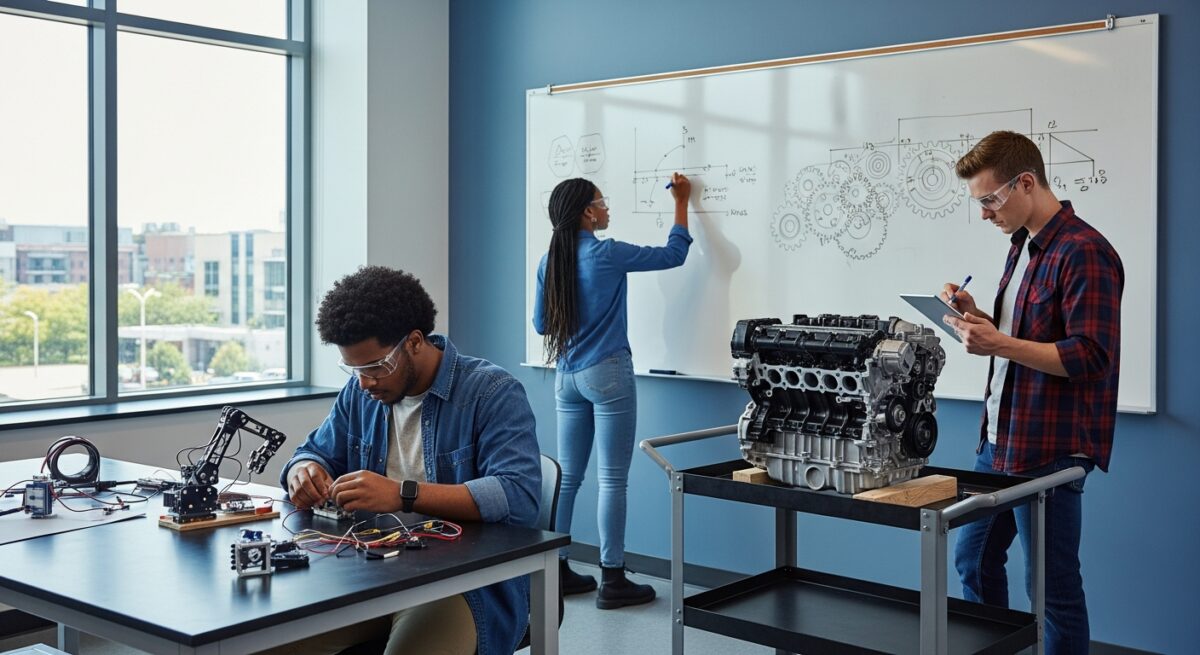
Mechanical engineering remains one of the most versatile and rewarding fields in engineering. A Bachelor of Science in Mechanical Engineering (BSME) opens doors to careers in aerospace, automotive, energy, robotics, and manufacturing. This article provides a comprehensive overview of the BS Mechanical Engineering degree, including its structure, core subjects, specializations, and what students can expect from the program. Whether you are a high school student exploring options or a working adult considering a career change, understanding the framework of this degree is the first step toward making an informed decision.
What Is a BS in Mechanical Engineering?
The BS in Mechanical Engineering is a four-year undergraduate degree that blends theoretical principles with hands-on application. Students learn how to design, analyze, and manufacture mechanical systems ranging from tiny microdevices to massive power plants. The curriculum is built on a foundation of mathematics, physics, and materials science, then progresses to specialized topics like thermodynamics, fluid mechanics, and machine design.
Graduates of this program are prepared to solve complex engineering problems, work in interdisciplinary teams, and communicate technical ideas effectively. Many programs also emphasize professional ethics and sustainability, reflecting the growing demand for responsible engineering practices. For those interested in related fields, our guide on top 5 benefits of chemical engineering degrees online offers a useful comparison of engineering disciplines.
Core Curriculum Structure
Most BSME programs follow a structured progression that builds knowledge incrementally. The first two years focus on foundational sciences and introductory engineering courses. The final two years delve into advanced mechanical engineering topics and elective specializations. Below is a typical breakdown of the curriculum by year.
Year One: Foundations in Math and Science
The first year establishes the mathematical and scientific groundwork essential for all engineering disciplines. Students typically take courses in calculus, physics, chemistry, and introductory programming. These courses develop analytical thinking and problem-solving skills that are critical for later coursework.
Some programs also include a freshman engineering seminar that introduces the profession, covers study strategies, and explains how to use campus resources. This early exposure helps students build a network and understand the demands of the major.
Year Two: Engineering Fundamentals
In the second year, students begin taking core engineering courses such as statics, dynamics, thermodynamics, and materials science. These subjects form the backbone of mechanical engineering knowledge. Students also learn computer-aided design (CAD) software and basic manufacturing processes.
Laboratory components become more common during this period. Hands-on experiments in thermodynamics or mechanics allow students to apply theory to real-world scenarios, reinforcing classroom learning through practical experience.
Year Three: Specialized Mechanical Engineering Courses
The third year introduces advanced topics like fluid mechanics, heat transfer, machine design, and system dynamics. Students learn how to analyze complex systems and design components that meet specific performance criteria. Courses in instrumentation and measurements teach data acquisition and experimental methods.
Many programs also require a course in engineering economics or project management, preparing students for the business aspects of engineering. Group projects become more frequent, simulating the collaborative nature of professional work.
Year Four: Capstone Design and Electives
The final year culminates in a capstone design project. Working in teams, students identify a real engineering problem, develop a solution, build a prototype, and present their results. This project integrates all the knowledge gained over the previous three years and is often sponsored by industry partners.
Students also choose elective courses to tailor their degree to specific interests. Electives may include robotics, renewable energy systems, automotive engineering, biomechanics, or aerospace structures. This flexibility allows graduates to enter specialized fields immediately after graduation.
Key Subjects in the BSME Program
While curricula vary by institution, certain subjects are nearly universal in accredited mechanical engineering programs. Understanding these core areas helps students anticipate the intellectual demands of the degree.
- Thermodynamics: The study of energy conversion, heat transfer, and the laws governing thermal systems. Critical for power generation, HVAC, and engine design.
- Fluid Mechanics: Analysis of fluid behavior in motion and at rest. Applied in piping systems, aerodynamics, and hydraulic machinery.
- Solid Mechanics and Materials Science: Understanding how materials deform and fail under stress. Essential for selecting materials in structural and mechanical components.
- Dynamics and Control Systems: Study of motion, forces, and feedback systems. Used in robotics, vehicle dynamics, and automation.
- Machine Design: Principles of designing mechanical elements like gears, bearings, and shafts. Emphasizes safety, reliability, and manufacturability.
Each of these subjects is taught through a combination of lectures, problem sets, and laboratory work. Students are expected to master both the theoretical derivations and the practical applications. This dual focus ensures that graduates can step into engineering roles with confidence.
Accreditation and Program Quality
When choosing a BSME program, accreditation is a critical factor. In the United States, the Accreditation Board for Engineering and Technology (ABET) sets the standard for engineering education. ABET-accredited programs meet rigorous criteria for curriculum, faculty qualifications, facilities, and student outcomes.
Graduating from an ABET-accredited program is often a prerequisite for obtaining a Professional Engineering (PE) license. Many employers also prefer or require degrees from accredited programs. Prospective students should verify the accreditation status of any program they consider. CollegeDegree.Education provides tools to compare accredited programs and connect with schools that fit your needs.
Specializations and Concentrations
Many BSME programs offer concentrations that allow students to focus their studies on a particular area of mechanical engineering. Common specializations include:
- Robotics and Automation: Covers kinematics, control systems, sensors, and artificial intelligence. Prepares students for careers in manufacturing and autonomous systems.
- Energy Systems: Focuses on power generation, renewable energy, and thermal management. Relevant for roles in the energy sector and sustainable design.
- Manufacturing Engineering: Emphasizes production processes, quality control, and supply chain management. Ideal for careers in industrial and manufacturing settings.
- Biomechanical Engineering: Applies mechanical principles to biological systems. Leads to work in medical device design, prosthetics, and rehabilitation technology.
Choosing a specialization can enhance job prospects in a competitive field. However, a general BSME degree also provides strong career flexibility, as many employers value the broad foundation over niche expertise.
Career Opportunities After Graduation
A BS in Mechanical Engineering opens the door to a wide range of career paths. According to the U.S. Bureau of Labor Statistics, mechanical engineers earn a median annual wage well above the national average, and the field is projected to grow steadily over the next decade.
Common job titles for BSME graduates include design engineer, project engineer, manufacturing engineer, quality engineer, and test engineer. Industries that consistently hire mechanical engineers include automotive, aerospace, consumer electronics, energy, defense, and medical devices. Many graduates also pursue advanced degrees in engineering, business, or law.
The versatility of the degree means that engineers can work in small startups or large multinational corporations. Some choose consulting roles, while others move into technical sales or management. The problem-solving skills developed during the program are transferable to many fields beyond traditional engineering.
Online and Flexible Learning Options
For working adults or students with other commitments, online BSME programs offer flexibility without sacrificing quality. Many accredited universities now offer fully online or hybrid bachelor’s degrees in mechanical engineering. These programs deliver the same curriculum as on-campus versions but allow students to complete coursework on their own schedule.
Online students typically access lectures, virtual labs, and discussion forums through a learning management system. Some programs require on-campus residencies for lab-intensive courses, while others have developed remote lab kits that enable experiments at home. When evaluating online programs, it is important to confirm that the degree is ABET-accredited, as this ensures the same standards as traditional programs.
CollegeDegree.Education helps prospective students find accredited online mechanical engineering programs that fit their lifestyle and budget. The platform’s matching service connects users with schools that offer the flexibility they need.
Frequently Asked Questions
Is a BS in Mechanical Engineering hard?
Yes, mechanical engineering is considered a challenging major. It requires strong skills in mathematics, physics, and analytical thinking. However, with consistent effort, effective study habits, and support from professors and peers, most students succeed. Many programs offer tutoring centers and study groups to help.
Can I get a job with just a BS in Mechanical Engineering?
Absolutely. A bachelor’s degree is the standard entry-level qualification for most mechanical engineering positions. Many graduates find jobs immediately after graduation. Advanced degrees can lead to higher salaries and specialized roles, but they are not required for a successful career.
What is the difference between a BSME and a BSE in Mechanical Engineering?
BSME stands for Bachelor of Science in Mechanical Engineering. BSE (Bachelor of Science in Engineering) with a mechanical concentration is similar, but may include fewer electives and more general engineering coursework. Both degrees typically lead to the same career opportunities if ABET-accredited.
How long does it take to complete a BSME degree?
A traditional BSME program takes four years of full-time study. Accelerated programs may allow completion in three years, while part-time or online students may take longer. Some programs offer co-op or internship options that extend the timeline but provide valuable work experience.
Taking the Next Step
Choosing to pursue a BS in Mechanical Engineering is a significant decision that can shape your career for decades. The degree offers a strong return on investment, intellectual challenge, and the opportunity to work on technologies that improve people’s lives. By understanding the curriculum structure, accreditation requirements, and career possibilities, you can make an informed choice that aligns with your goals.
Whether you are just starting your educational journey or looking to switch fields, CollegeDegree.Education can help you explore programs, compare options, and connect with accredited schools. Start your search today and take the first step toward a rewarding career in mechanical engineering. Learn more