
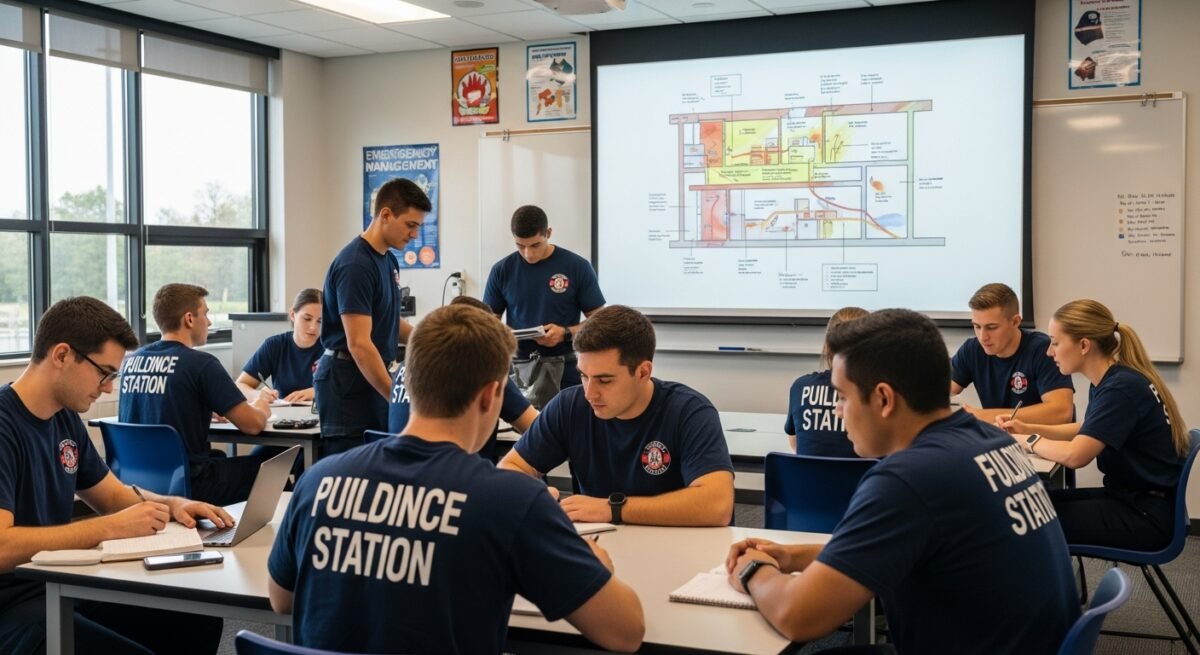
What an Associate in Fire Science Degree Covers
An Associate in Fire Science degree covers fire behavior, emergency operations, and leadership, providing a critical edge for hiring and promotion in the fire service.

By Elena Markova
For individuals drawn to a career of service, leadership, and technical skill, the fire service offers a dynamic and rewarding path. While many enter the field through fire academy training alone, an increasing number of aspiring and current firefighters are turning to higher education to build a stronger foundation and accelerate their careers. An Associate in Fire Science degree serves as this critical educational cornerstone, blending essential firefighting theory with practical leadership and technical knowledge. This two-year program is designed not just to teach you how to fight fires, but to understand them, manage emergency scenes, and lead teams under pressure. It transforms raw skill into professional expertise, preparing you for the complex, modern challenges of emergency services.
The Core Curriculum of a Fire Science Associate Degree
The curriculum of a fire science associate degree is meticulously structured to provide a comprehensive education that spans from fundamental fire behavior to advanced emergency management. The goal is to create well-rounded professionals who are as proficient in prevention and investigation as they are in suppression and rescue. Programs accredited by bodies like the International Fire Service Accreditation Congress (IFSAC) or through regional accreditors ensure a standardized, high-quality education that is respected by fire departments nationwide. This academic journey typically requires 60 to 70 credit hours, balancing general education courses with specialized fire science coursework.
At its heart, the program delves into the chemistry and physics of fire. You will study fire behavior and combustion, learning how different materials ignite, burn, and spread under varying conditions. This scientific understanding is crucial for making split-second, life-saving decisions on the fireground. Courses in fire prevention and building codes teach you how to inspect structures, identify hazards, and understand the regulations designed to keep communities safe, a proactive side of the profession that saves countless lives before a fire ever starts. Furthermore, the degree covers fire protection systems, from sprinklers and alarms to specialized suppression agents, giving you an in-depth knowledge of the technology that supports firefighter safety and mission success.
Key Technical and Operational Courses
Beyond the science, the degree immerses students in the hands-on, operational aspects of firefighting and emergency response. This is where theory meets practice in the classroom setting. A significant portion of the curriculum is dedicated to tactical operations and strategy. You will learn incident command system (ICS) principles, which provide the standardized framework for managing emergencies of all sizes, from a single-structure fire to a large-scale disaster. Hazardous materials (HazMat) operations is another critical component, covering identification, containment, and mitigation procedures for dangerous chemical, biological, and radiological agents.
Rescue procedures form another pillar of the operational curriculum. This includes technical rescue concepts involving confined spaces, trench collapses, and high-angle rope rescues. Many programs also integrate emergency medical services (EMS) training, often up to the Emergency Medical Technician (EMT) level, recognizing that the majority of modern fire department calls are for medical aid. Understanding building construction for fire service is a vital course that teaches how different construction materials and methods behave under fire conditions, directly impacting structural integrity and firefighter safety during interior attacks. To manage the financial aspects of running a department, courses in fire department administration and public policy are also common, covering budgeting, resource allocation, and the intersection of fire service with local government.
Building Leadership and Investigative Skills
A distinguishing feature of an associate degree, compared to basic certification, is its emphasis on leadership and specialized investigative skills. These courses prepare you for promotion and greater responsibility. Fire service leadership and ethics courses explore management theories, communication strategies, and the ethical dilemmas faced by emergency responders. This training is essential for those aiming to become company officers, captains, or chiefs. Another advanced area is fire investigation, which teaches the methodology for determining a fire’s origin and cause. This involves understanding burn patterns, evidence collection, and the legal procedures required for presenting findings in court, a career path that can lead to becoming a fire investigator or arson specialist.
Career Outcomes and Advancement Opportunities
Earning an Associate in Fire Science degree opens doors and accelerates career progression in several tangible ways. For the new recruit, it can make your application stand out in a competitive hiring process, demonstrating a serious commitment to the profession that goes beyond the minimum requirements. Many departments offer additional points on civil service exams or higher starting pay for candidates with a degree. For the incumbent firefighter, this credential is often a prerequisite for promotion to officer ranks such as Lieutenant, Captain, or Battalion Chief. The leadership and administrative knowledge gained is directly applicable to these supervisory roles.
The degree also serves as a launchpad for specialized positions within the fire service that require deeper analytical or technical knowledge. These include roles like Fire Inspector, Fire Prevention Specialist, Fire Investigator, or HazMat Officer. Furthermore, the associate degree creates a seamless pathway to a bachelor’s degree in fire science, emergency management, or public administration. Completing a two-year degree first allows you to enter the workforce sooner while building a stackable credential; you can then pursue a bachelor’s degree online while working, a path we see many career-focused professionals take. The financial investment in an associate degree can be managed through various avenues, and for guidance on navigating tuition and aid options, you can learn more about college degrees and associated costs.
Here are the primary career paths enhanced by an Associate in Fire Science degree:
- Firefighter/Officer Candidate: Provides a competitive edge in hiring and promotion processes.
- Fire Inspector/Investigator: Offers the technical knowledge for careers in fire prevention and cause determination.
- Emergency Management Coordinator: Lays the groundwork for roles in community disaster planning and response.
- Insurance Industry Specialist: The knowledge of fire cause and building codes is valuable for risk assessment and claims investigation.
- Advanced Educational Pathway: Serves as the foundational step toward a bachelor’s degree and executive-level fire service positions.
Frequently Asked Questions
Is an Associate in Fire Science degree the same as fire academy training?
No, they are complementary but distinct. Fire academy training provides the hands-on, practical skills and certifications (like Firefighter I & II) required to become a firefighter. The associate degree provides the broader theoretical, technical, and administrative education that supports a long-term career, leadership, and specialization. Many students complete both concurrently or in sequence.
Can I get this degree online?
Yes, many accredited colleges offer the fire science associate degree in a fully online or hybrid format. This is especially beneficial for current firefighters working shifting schedules or those who do not live near a college campus. Online programs cover the same core curriculum, though practical skill components may require in-person sessions or be fulfilled through your fire academy training.
What are the typical admission requirements?
Requirements vary by institution but generally include a high school diploma or GED, placement tests in math and English, and possibly prerequisites like EMT certification for some programs. For those already in the service, professional experience may count for credit.
How long does it take to complete?
A full-time student can typically complete an associate degree in fire science in about two years. Part-time students, often those already working in the field, may take three to four years. Many programs offer accelerated terms or credit for prior learning and professional experience.
Will this degree guarantee me a firefighter job?
While not a guarantee, it significantly strengthens your candidacy. Hiring is competitive, and a degree demonstrates dedication, knowledge, and the potential for leadership. It must be combined with the necessary physical agility, EMT certification, and success in the department’s specific testing and interview process.
Pursuing an Associate in Fire Science degree is an investment in your professional future within emergency services. It provides the intellectual framework that turns practical skills into expert judgment. The curriculum’s coverage of fire behavior, operational strategy, leadership, and investigation creates a versatile professional prepared not only to respond to emergencies but to lead the response, prevent future incidents, and advance the field. In an era where firefighters are community health and safety leaders, this educational foundation is more valuable than ever, opening doors to promotion, specialization, and a deeper, more impactful career serving the public.