
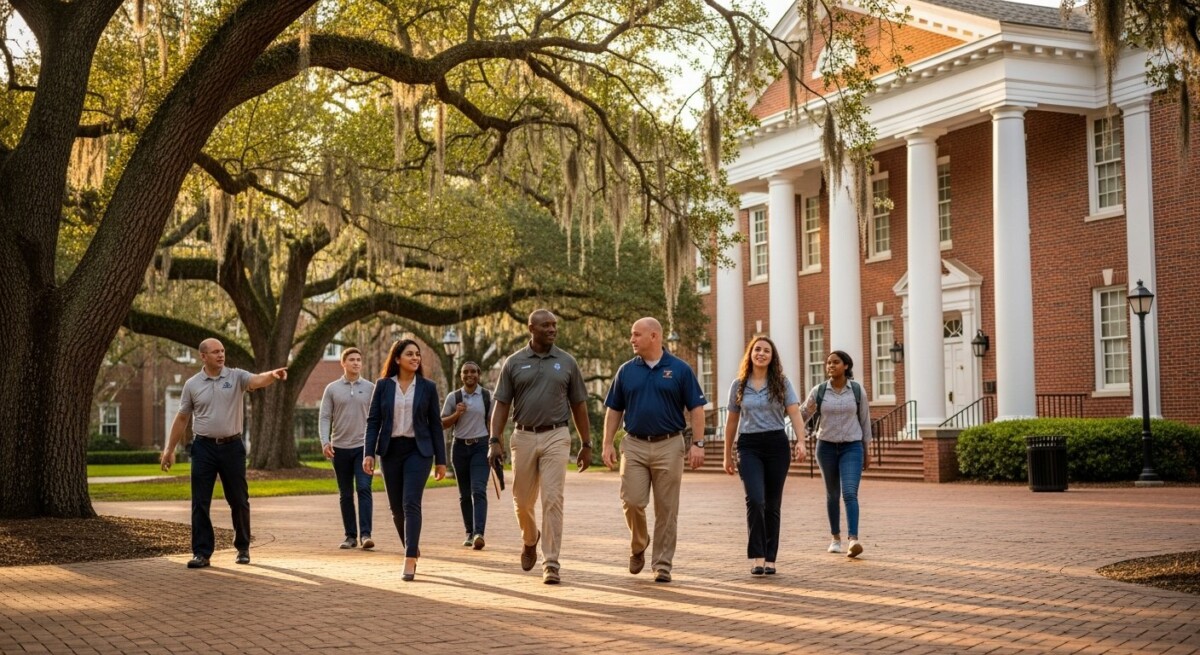
Choosing where to earn a bachelor’s degree is one of the most significant decisions a student can make. For those considering the Magnolia State, the landscape is rich with options that blend academic rigor, cultural heritage, and affordability. Mississippi institutions offering bachelor’s degrees range from large research universities to smaller liberal arts colleges, each providing unique pathways into careers and advanced study. Whether you are a high school senior mapping out your future, a working adult seeking a career change, or a military veteran using education benefits, understanding the strengths of these schools is essential. This article explores the major universities, specialized programs, and practical considerations that can help you find the right fit.
Flagship Research Universities and Their Academic Strengths
Mississippi is home to two flagship research universities that anchor the state’s higher education system. The University of Mississippi (Ole Miss) in Oxford and Mississippi State University (MSU) in Starkville both offer comprehensive bachelor’s programs across dozens of fields. Ole Miss is particularly known for its Sally McDonnell Barksdale Honors College, which attracts high-achieving students with small seminars and undergraduate research opportunities. Its schools of Business Administration, Engineering, and Pharmacy are nationally recognized. Mississippi State, a land-grant institution, excels in agriculture, engineering, and veterinary medicine. The Bagley College of Engineering at MSU produces a significant number of graduates who enter the aerospace and automotive industries in the Southeast.
Both institutions emphasize experiential learning. At Ole Miss, students in the journalism program work on the student-run newspaper and radio station, while MSU’s Center for Advanced Vehicular Systems gives engineering students hands-on experience with robotics and manufacturing. These universities also participate in the National Science Foundation’s Research Experiences for Undergraduates program, allowing students to collaborate on funded projects. For students exploring broad academic interests before committing to a major, these large universities offer hundreds of degree tracks and the flexibility to change direction without losing progress.
Regional Universities and Liberal Arts Colleges
Beyond the flagships, Mississippi institutions offering bachelor’s degrees include several regional universities that serve distinct geographic and demographic needs. The University of Southern Mississippi (USM) in Hattiesburg is known for its polymer science and music programs, while Delta State University in Cleveland offers strong aviation and business degrees. Jackson State University, a historically black university (HBCU), provides a nurturing environment with a focus on social justice, STEM, and health professions. These regional schools often have smaller class sizes and lower tuition, making them attractive for first-generation college students and those who prefer a more intimate academic setting.
Liberal arts colleges such as Millsaps College in Jackson and Tougaloo College also contribute to the state’s educational fabric. Millsaps, a private liberal arts institution, emphasizes critical thinking and writing through its core curriculum. Tougaloo, another HBCU, has a strong track record of producing graduates who go on to medical and law schools. These smaller colleges often provide personalized advising and close faculty mentorship, which can be especially valuable for students who need guidance navigating the transition from high school to college-level work. For those interested in exploring what a specific degree plan entails, resources like our guide on what a bachelor’s in biology degree teaches you can offer insight into curriculum and career outcomes.
Online and Flexible Degree Pathways
For students who cannot relocate or need to balance work and family, online bachelor’s programs are increasingly vital. Several Mississippi institutions offering bachelor’s degrees have developed robust online platforms. Mississippi State University’s Center for Distance Education delivers fully online degrees in fields such as business administration, educational psychology, and interdisciplinary studies. The University of Mississippi offers an online bachelor’s in criminal justice and a completion program for registered nurses seeking a Bachelor of Science in Nursing (RN-to-BSN). These programs are designed to be as rigorous as their on-campus counterparts, with the same faculty teaching courses and the same diploma upon graduation.
Accreditation remains a critical factor. All of the public universities mentioned are accredited by the Southern Association of Colleges and Schools Commission on Colleges (SACSCOC). For online learners, verifying that a program holds regional accreditation ensures that credits will transfer and that the degree will be recognized by employers and graduate schools. Many online programs also offer accelerated eight-week terms, allowing students to complete a degree faster than the traditional four-year timeline. This flexibility is especially useful for adult learners who may have accumulated some college credits previously and need a streamlined path to completion.
Programs for Military Veterans and Working Adults
Mississippi has a strong military tradition, and its universities actively support veterans. The Mississippi Veterans Affairs office partners with schools to ensure that GI Bill benefits are applied correctly. Institutions like the University of Southern Mississippi have dedicated veterans’ centers that assist with enrollment, financial aid, and career placement. Many schools also accept military training and experience for college credit through the American Council on Education (ACE) recommendations. This can reduce the time and cost required to earn a bachelor’s degree.
Working adults benefit from evening and weekend classes at several regional universities. Delta State University, for instance, offers a Bachelor of Applied Science that allows students with technical associate degrees to apply their credits toward a four-year degree. Similarly, Mississippi University for Women (MUW) in Columbus, despite its name, admits men and offers flexible scheduling in nursing and education. These programs are designed to accommodate students who work full-time, providing the same quality of instruction without the need to attend daytime classes.
Financial Aid and Affordability
Cost is a primary concern for most families. Mississippi institutions offering bachelor’s degrees are generally affordable compared to national averages, especially for in-state residents. Tuition at public universities ranges from approximately $8,000 to $10,000 per year for in-state students, not including room and board. Out-of-state tuition can be significantly higher, but many schools offer competitive scholarships that reduce the gap. The Mississippi Tuition Assistance Grant (MTAG) provides up to $1,000 per year for eligible students attending public or private colleges in the state. Additionally, the Mississippi Resident Tuition Reduction Grant helps students who attend private colleges within the state.
Students should also explore federal aid by completing the Free Application for Federal Student Aid (FAFSA). Many universities, including Jackson State and Alcorn State, have dedicated financial aid offices that help students apply for Pell Grants, work-study programs, and federal loans. For those seeking to compare costs and potential outcomes, using a matching service like CollegeDegree.Education can simplify the process. Their platform connects students with accredited programs that align with their budget and career goals, and they provide guidance on financial aid applications. You can learn more about different degree options and start comparing programs by visiting their academic program insights resource.
Career Outcomes and Graduate School Preparation
A bachelor’s degree from a Mississippi institution can open doors to diverse career paths. Engineering graduates from Mississippi State are recruited by companies like Nissan, Toyota, and Airbus, which have manufacturing plants in the region. Nursing graduates from the University of Mississippi Medical Center (UMMC) in Jackson are in high demand across the state’s hospital systems. Business graduates from Ole Miss often enter banking, insurance, and logistics firms located in the Memphis-to-Gulf Coast corridor. For students aiming for graduate school, the honors colleges and undergraduate research programs at these universities provide strong preparation for master’s and doctoral programs.
Internships and cooperative education programs are embedded in many curricula. The University of Southern Mississippi requires all students in the College of Business and Economic Development to complete an internship before graduation. Similarly, Delta State’s aviation program places students in flight training rotations that lead directly to commercial pilot certifications. These practical experiences not only build resumes but also help students build professional networks that can lead to job offers before commencement.
Frequently Asked Questions
What is the largest university in Mississippi?
Mississippi State University is the largest, with an enrollment of over 22,000 students. The University of Mississippi follows closely with around 21,000 students.
Are there any historically black colleges and universities in Mississippi?
Yes. Mississippi has several HBCUs, including Jackson State University, Alcorn State University, and Tougaloo College. These schools have a long tradition of serving African American students and offer strong academic programs.
Can I earn a bachelor’s degree entirely online from a Mississippi school?
Yes. Mississippi State University, the University of Mississippi, and the University of Southern Mississippi all offer fully online bachelor’s degree programs. These programs are regionally accredited and carry the same weight as on-campus degrees.
What are the admission requirements for Mississippi public universities?
Admission varies by institution. Most require a high school diploma or GED, a minimum GPA (usually 2.5 or higher), and ACT or SAT scores. Some universities have open admission policies for in-state residents who meet minimum criteria.
How much does a bachelor’s degree cost in Mississippi?
In-state tuition at public universities ranges from $8,000 to $10,000 per year. Private colleges and out-of-state tuition can be higher, but scholarships and grants can significantly reduce costs.
Do Mississippi colleges accept transfer credits?
Yes. All public universities in Mississippi have articulation agreements with community colleges to facilitate smooth transfer of credits. It is advisable to have official transcripts evaluated before enrolling.
Final Thoughts on Choosing a Mississippi Institution
Selecting the right college involves weighing multiple factors: academic reputation, location, cost, campus culture, and career services. Mississippi institutions offering bachelor’s degrees present a range of choices that can accommodate nearly any student profile. Whether you prefer the vibrant campus life of a large research university, the close-knit community of a liberal arts college, or the flexibility of an online program, the state’s schools are committed to student success. By researching thoroughly, visiting campuses if possible, and using educational matching tools, you can find the program that best fits your aspirations. The investment in a bachelor’s degree remains one of the most reliable ways to increase earning potential and open doors to lifelong learning.