
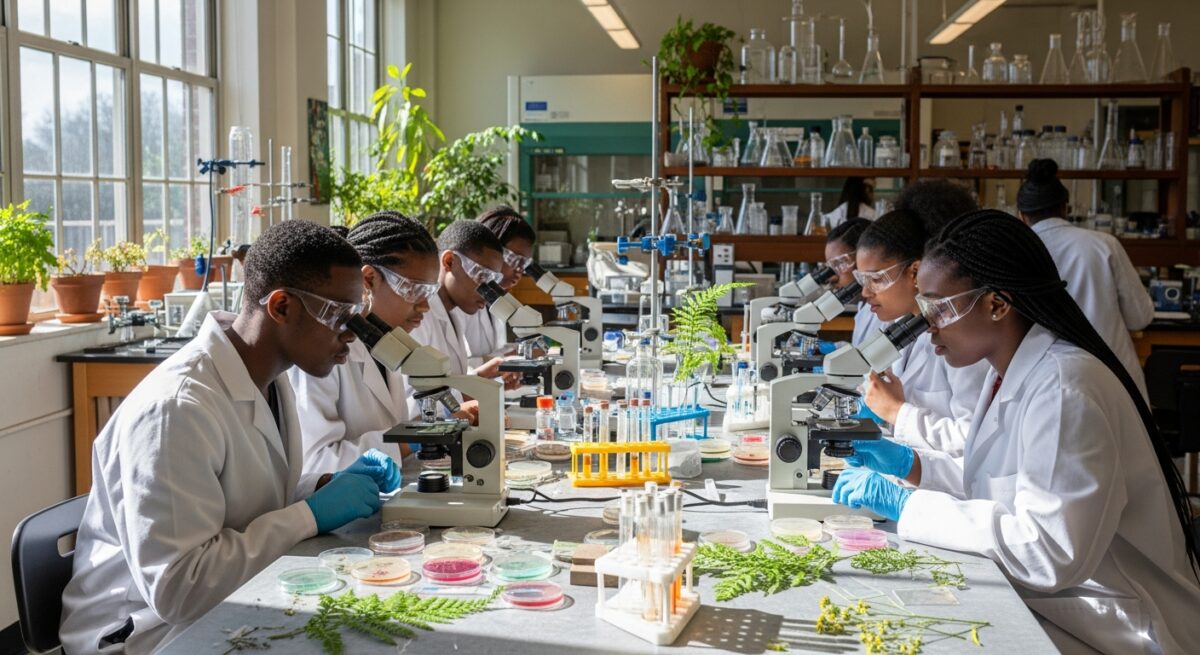
Biology is the study of life itself. From the microscopic machinery inside a single cell to the vast interactions within entire ecosystems, this field asks fundamental questions about how living organisms function, evolve, and relate to one another. If you are considering a bachelor’s in biology, you are likely curious about what this degree actually covers, what skills you will develop, and how the program prepares you for a career. A bachelors in biology degree teaches you more than just facts about plants and animals. It builds a foundation in scientific reasoning, laboratory techniques, data analysis, and communication that opens doors to healthcare, research, environmental science, biotechnology, and education. This article provides a comprehensive biology degree overview, detailing the core subjects, practical experiences, and career outcomes you can expect.
Core Scientific Foundations: The First Two Years
The first half of a bachelor’s in biology program establishes a broad scientific base. You will take introductory courses that cover the major branches of biology, including cell biology, genetics, evolution, and ecology. These courses are designed to give you a vocabulary and conceptual framework for understanding more advanced topics later. For example, a typical introductory biology sequence might cover the structure and function of DNA, the mechanisms of natural selection, and the flow of energy through food webs.
Alongside biology courses, you will complete foundational work in chemistry, physics, and mathematics. General chemistry with lab is almost always required, followed by organic chemistry. Physics courses (often two semesters) cover mechanics, electricity, and thermodynamics as they apply to biological systems. Mathematics requirements typically include at least one semester of calculus and one semester of statistics. Statistics is especially important because it teaches you how to analyze experimental data, assess variability, and determine whether results are significant. Many students find that a strong performance in these supporting sciences is critical for success in upper-level biology courses and for competitive graduate or professional school applications.
Laboratory work begins early. Introductory lab courses teach basic techniques such as microscopy, pipetting, bacterial culture, gel electrophoresis, and spectrophotometry. You learn to record observations in a lab notebook, follow protocols, and write formal lab reports. These hands-on experiences are where theoretical knowledge meets practical application. They also help you decide which areas of biology interest you most. Some students discover a passion for microbiology, while others gravitate toward ecology or anatomy.
Upper-Level Specialization and Advanced Coursework
After completing introductory requirements, you will move into upper-division courses that allow you to go deeper into specific areas. Most programs require advanced classes in genetics, cell biology, molecular biology, and biochemistry. These courses explore topics like gene regulation, signal transduction, protein synthesis, and the molecular basis of disease. You will read primary research articles, analyze data from published experiments, and learn to critique scientific evidence.
Many biology degrees also require one or more courses in organismal biology. These might include vertebrate zoology, plant physiology, entomology, or marine biology. The goal is to ensure that you understand biology at multiple levels of organization, from molecules to ecosystems. Electives let you tailor the degree to your interests. Popular electives include immunology, neurobiology, developmental biology, conservation biology, and bioinformatics. For instance, a student interested in medical school might take human anatomy, physiology, and microbiology. A student interested in environmental work might choose courses in ecology, environmental toxicology, and wildlife management.
Some programs offer concentration tracks such as pre-medical sciences, molecular and cellular biology, ecology and evolutionary biology, or microbiology. These tracks provide a structured set of courses that prepare you for specific career paths. If you are considering medical or dental school, a pre-med track typically includes additional requirements like anatomy, physiology, biochemistry, and sometimes psychology or sociology. If you are more interested in research, a molecular biology track might emphasize advanced lab techniques, bioinformatics, and independent research projects.
Research Methods and Capstone Experiences
Most bachelor’s in biology programs require a capstone or senior seminar course. This course often involves designing and conducting an original research project, analyzing data, and presenting your findings in a written thesis and oral presentation. Some programs offer a separate research methods course that teaches experimental design, literature searching, statistical analysis using software like R or SPSS, and scientific writing. These experiences are invaluable because they simulate the actual process of scientific inquiry. You learn to formulate a hypothesis, choose appropriate methods, troubleshoot problems, and communicate results clearly. For students planning to apply to graduate school or jobs in research, a strong capstone project can be a highlight of your portfolio.
Key Skills You Will Develop
A bachelors in biology degree builds both hard and soft skills that are highly valued across many industries. Below is a list of the most important competencies you can expect to gain.
- Scientific literacy and critical thinking. You learn to evaluate claims, interpret data, and distinguish between correlation and causation. This skill set helps you make informed decisions in your career and daily life.
- Laboratory and technical skills. Proficiency with microscopes, centrifuges, PCR machines, gel electrophoresis, sterile technique, and spectrophotometry is standard. Depending on your coursework, you may also learn cell culture, DNA sequencing, or bioinformatics tools.
- Data analysis and statistical reasoning. You will use software to analyze experimental results, perform t-tests and ANOVA, create graphs, and interpret p-values. This quantitative ability is essential for research and many healthcare roles.
- Written and oral communication. You write lab reports, research papers, and literature reviews. You also present findings to classmates and faculty. These skills prepare you for grant writing, patient education, or corporate communication roles.
- Problem-solving and adaptability. Experiments rarely work perfectly the first time. You learn to troubleshoot, revise protocols, and think creatively when results are unexpected.
These skills are transferable beyond traditional biology careers. For example, data analysis and critical thinking are highly sought after in business consulting, data science, and public policy. Communication and problem-solving abilities benefit roles in education, law, and nonprofit management. A biology degree does not lock you into one path. It provides a flexible foundation that adapts to many fields.
Career Paths and Further Education
One of the most common questions students ask is, “What can I do with a bachelor’s in biology?” The answer is broad. Many graduates go directly into the workforce in roles such as laboratory technician, research assistant, environmental consultant, pharmaceutical sales representative, or science teacher (with additional certification). Others work in government agencies like the Environmental Protection Agency, the National Institutes of Health, or state health departments. Biotechnology and pharmaceutical companies frequently hire biology graduates for quality control, manufacturing, and research support positions.
A significant percentage of biology majors pursue further education. Medical school, dental school, veterinary school, pharmacy school, and physician assistant programs all accept biology degrees as excellent preparation. The rigorous science coursework and lab experience make biology majors competitive applicants. Graduate school in biology, ecology, neuroscience, or bioinformatics is another common path, leading to careers in university research, industry R&D, or academia. For those interested in the business side of science, combined programs like an MBA with a science background are increasingly popular.
If you are exploring online academic pathways, many accredited universities now offer bachelor’s in biology degrees online or in hybrid formats. These programs provide flexibility for working adults or students who cannot relocate. Online biology degrees still require lab components, which are often completed through at-home lab kits, virtual simulations, or local lab facilities. This option makes a biology education accessible to a wider range of students.
Frequently Asked Questions
Is a bachelor’s in biology hard?
Biology is a demanding major because it requires memorization, conceptual understanding, and quantitative skills. The workload includes lectures, labs, and independent study. However, students who are genuinely curious about life science and willing to develop strong study habits typically succeed. Many programs offer tutoring, study groups, and academic advising to support students.
Can I get a job with just a bachelor’s in biology?
Yes. Entry-level positions in research labs, environmental consulting, pharmaceutical sales, and government agencies are available. However, some career paths (like independent research or clinical practice) require advanced degrees. A bachelor’s degree is a strong starting point that can lead to advancement with experience and additional certifications.
What is the difference between a BA and a BS in biology?
A BS (Bachelor of Science) typically requires more math and science courses, including additional chemistry, physics, and calculus. A BA (Bachelor of Arts) often includes more liberal arts requirements, such as foreign language or humanities electives. Both degrees cover core biology content. The BS is more common for students pursuing medical or graduate school, while the BA offers more flexibility for double majors or interdisciplinary studies.
Do biology majors make good money?
Salaries vary widely by career. Entry-level laboratory technicians may earn $35,000 to $45,000 annually. With experience and specialization, biotech researchers, environmental scientists, and healthcare professionals can earn $60,000 to $100,000 or more. Advanced degrees significantly increase earning potential. According to the Bureau of Labor Statistics, medical scientists (who typically hold a PhD) earn a median salary above $95,000.
What skills from a biology degree transfer to other fields?
Critical thinking, data analysis, technical writing, and problem-solving are highly valued in business, law, information technology, and public policy. Many biology graduates find success in data science, healthcare administration, science communication, and intellectual property law. For more information about program options and career planning, online academic pathways offers detailed guides and resources.
Choosing a bachelor’s in biology is an investment in a versatile and rewarding education. The curriculum provides a deep understanding of the living world, practical laboratory skills, and analytical abilities that serve you in many careers. Whether you aim to become a doctor, a research scientist, an environmental advocate, or a science educator, this degree gives you the foundation to succeed. Take the time to explore different programs, talk to current students and alumni, and consider how the degree aligns with your personal and professional goals. The journey through a biology degree is challenging, but it is also filled with discovery, curiosity, and the satisfaction of understanding the mechanisms of life itself.