
Speech-Language Pathology Bachelor's at CSU Long Beach
Earn your Speech-Language Pathology bachelor's at CSULB in four years. Call (877)-218-7081 to explore financial aid and enrollment steps.

By Ethan Clark
Students who want to help children find their first words, adults regain speech after a stroke, or individuals overcome swallowing disorders often begin with a bachelor's degree in speech-language pathology. At California State University-Long Beach, that path takes the form of a rigorous, in-person program completed in about four years. The degree blends linguistics, psychology, anatomy, and clinical observation into a single sequence designed to prepare graduates for graduate study and eventual licensure. If you are mapping out a healthcare or education career, understanding exactly what this program demands, how to get in, and what comes after graduation will save you time, money, and uncertainty.
What the Speech-Language Pathology Bachelor's Degree at CSULB Covers
The Speech-Language Pathology/Pathologist Bachelor's degree, usually 4 years In-person at California State University-Long Beach, is housed in the College of Health and Human Services. The program is structured as a pre-professional degree: it does not by itself qualify you for state licensure or the Certificate of Clinical Competence, but it satisfies the prerequisite coursework that graduate programs require. That distinction matters because speech-language pathologists in California must hold a master's degree before they can practice independently.
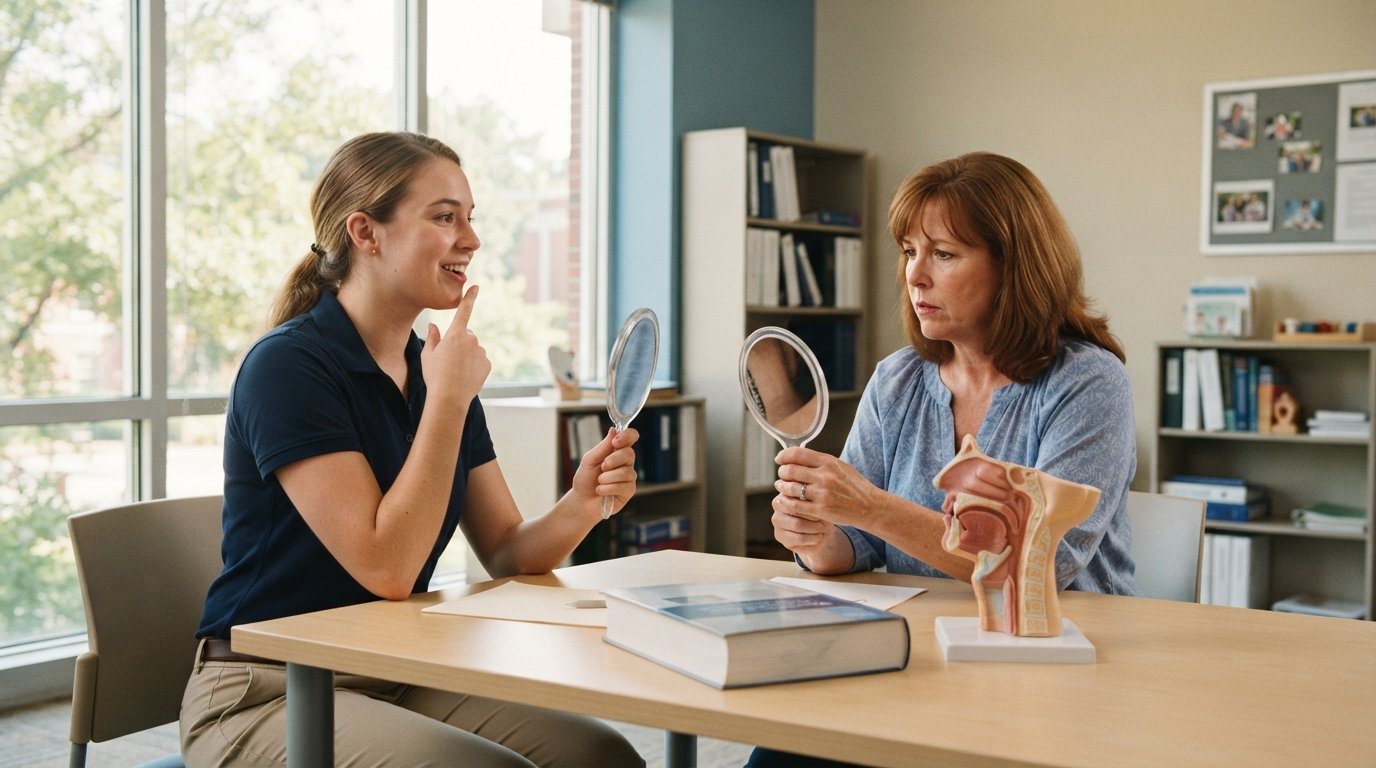
The curriculum moves from foundational science to applied communication disorders. Early semesters emphasize normal speech and language development, phonetics, and the anatomy and physiology of the speech and hearing mechanisms. Later coursework introduces acquired neurogenic disorders, pediatric language impairments, fluency disorders, and voice disorders. Students also complete guided observation hours, which are required before they can begin clinical practicum work at the graduate level.
Because the program is in-person, students benefit from face-to-face access to faculty who are active clinicians and researchers. Lab work, group projects, and observation sessions happen on campus, and the department maintains relationships with local schools, hospitals, and clinics in the Long Beach and greater Los Angeles area. That local network is one of the quieter advantages of the program: it gives undergraduates early exposure to the settings where speech-language pathologists actually work.
Core Coursework and Sequencing
Most students follow a cohort-style sequence that begins with general education and lower-division prerequisites, then transitions into major coursework by the junior year. Typical required courses include introduction to communication disorders, speech science, language development, and audiology fundamentals. Upper-division courses cover aphasia, motor speech disorders, autism spectrum disorders, and cultural and linguistic diversity in communication sciences.
Sequencing is not flexible in the same way it is for a general liberal arts major. Many courses are offered only once per year, and some require a grade of C or better before you can enroll in the next course in the chain. That means failing or dropping a required course can push graduation back by a full semester or more. Prospective students should plan their general education requirements carefully and avoid overloading semesters with too many major courses at once.
Students should also expect a statistics or research methods course, because graduate programs in speech-language pathology increasingly expect applicants to understand evidence-based practice. If you are comparing this program with other healthcare pathways, it helps to look at how different degree structures handle clinical hours and prerequisites, much like the way a bachelor of civil engineering degree guide explains how engineering programs sequence labs and design courses. The principle is similar: early planning prevents late surprises.
Admission Requirements and How to Strengthen Your Application
CSULB admits students to the university first, then to the speech-language pathology major. Freshman applicants need to meet California State University eligibility standards, including the A-G course pattern, a qualifying GPA, and standardized test scores if applicable under current CSU policy. Because the major is impacted, meeting minimum eligibility does not guarantee admission. The department reviews grades in prerequisite courses, overall GPA, and evidence of interest in the field.
Transfer students from California community colleges have a well-defined pathway through the Associate Degree for Transfer system and the department's articulation agreements. If you are transferring, complete as many of the lower-division science and communication courses as possible before you arrive, and confirm that your courses are articulated through the official assist.org database. Transfer students who arrive missing two or three prerequisites often need an extra year to finish the degree.
Beyond grades, competitive applicants demonstrate that they understand the profession. Volunteering in a school for children with special needs, working as a behavioral therapist, or observing in a clinic all signal genuine interest. The program does not require a formal interview for freshman admission, but strong applicants can describe specific experiences that led them to the field.
- Maintain a strong GPA in prerequisite science and communication courses.
- Complete observation or volunteer hours in schools, clinics, or rehabilitation settings.
- Confirm course articulation if transferring from a community college.
- Meet with an academic advisor in your first semester to map the four-year sequence.
- Apply for financial aid and scholarships early, since deadlines fall before the academic year begins.
These steps matter because the major is competitive and the course sequence is tight. Students who treat the first two years as a trial period often find themselves unable to catch up. Treating the program as a four-year plan from day one is the single most reliable way to graduate on time.
Costs, Financial Aid, and Scholarship Options
As a public university, CSULB offers one of the more affordable routes to a speech-language pathology career in California. Tuition and fees for California residents are substantially lower than at private universities, though the total cost of attendance includes housing, books, transportation, and personal expenses. Nonresident students pay higher tuition, and all students should budget for the cost of observation materials, background checks, and any required immunizations or CPR certification before clinical placements.
Financial aid comes from several sources: federal Pell Grants, Cal Grants for eligible California residents, federal student loans, and institutional scholarships. The university's financial aid office publishes deadlines each year, and the Free Application for Federal Student Aid is the starting point for most aid. Students should also search for outside scholarships, including awards specifically for communication sciences and disorders majors. Resources such as Scholarship.Education aggregate scholarship opportunities and financial aid guidance for students at every level, which can reduce the amount you borrow.
Working while enrolled is common, but students should be careful about taking on too many hours during semesters with observation requirements. A part-time job in a related setting, such as a school paraprofessional role or a clinic assistant position, can double as valuable experience. Paid research assistantships with faculty are another option for upper-division students who want to strengthen their graduate school applications.
Clinical Observation, Fieldwork, and What to Expect
Undergraduate programs in speech-language pathology include guided observation hours, typically 25 hours, that introduce students to clinical practice before graduate school. At CSULB, these hours are completed under the supervision of certified professionals and are often arranged through the department's community partners. Students observe assessments, therapy sessions, and family consultations, then reflect on what they saw in written assignments.
These observation hours are not the same as the clinical practicum required for licensure. Graduate students complete hundreds of supervised clinical hours before they can sit for the Praxis exam and apply for their state license. The undergraduate observation requirement exists to confirm your interest and to give you a realistic picture of the work. Many students discover during observation that they prefer pediatric settings, while others gravitate toward adult rehabilitation or hospital-based care.
Students should also plan for the practical logistics of fieldwork: transportation to off-campus sites, background checks, health clearances, and schedules that may not match a standard class timetable. The department provides guidance, but the responsibility for arranging many of these details falls on the student. Building a relationship with the clinical placement coordinator early can make the process smoother.
Career Outcomes and the Path to Licensure
Graduates with a bachelor's degree in speech-language pathology typically continue to a master's program, because licensure and most clinical positions require a graduate degree. The bachelor's degree is the foundation, not the finish line. That said, the undergraduate credential opens several immediate options: working as a speech-language pathology assistant in some settings, serving as a special education aide, or taking research assistant roles in university labs. Each of these can strengthen a graduate school application.
Master's programs in speech-language pathology are competitive, and admission depends on GPA, prerequisite completion, observation hours, letters of recommendation, and personal statements. Students who maintain strong grades and build relationships with faculty are better positioned to secure interviews. The CSULB program's in-person format helps here, because faculty know students by name and can write detailed recommendations.
Once admitted to a master's program, students complete academic coursework and supervised clinical practicum, then pass the Praxis examination in speech-language pathology. Licensure in California requires a master's degree, supervised professional experience, and a passing score on the required exams. The national Certificate of Clinical Competence from the American Speech-Language-Hearing Association follows a similar pathway. Salaries vary by setting and region, but speech-language pathologists in California generally earn competitive wages in schools, hospitals, and private practice.
Is the In-Person Format at CSULB Right for You?
The in-person format offers clear advantages for this field. Communication disorders require hands-on practice, face-to-face feedback, and exposure to real clients and clinicians. Students who learn on campus can use the department's labs, attend guest lectures, and join student organizations related to communication sciences and disorders. These opportunities build the professional network that eventually helps with job placement and graduate school references.
The trade-off is flexibility. Students who need to work full-time or who live far from Long Beach may find the schedule challenging. The program is designed as a traditional four-year sequence, and part-time enrollment is possible but can extend the timeline. Prospective students should weigh the value of in-person mentorship against their personal and financial constraints.
For students who are certain about a career in speech-language pathology, the structured, cohort-based format at CSULB is a strong fit. For students who are still exploring healthcare or education careers, the first two years of coursework provide a useful foundation that can transfer to related fields such as audiology, special education, or public health. Either way, early advising and a clear plan make the four years more manageable.
If you are ready to explore programs and compare options, CollegeDegree.Education can help you find accredited colleges and degree paths that match your goals. The platform connects prospective students with programs, financial aid information, and application guidance, so you can make an informed decision before you commit. Call (877)-218-7081 to speak with a team member about your next steps.