
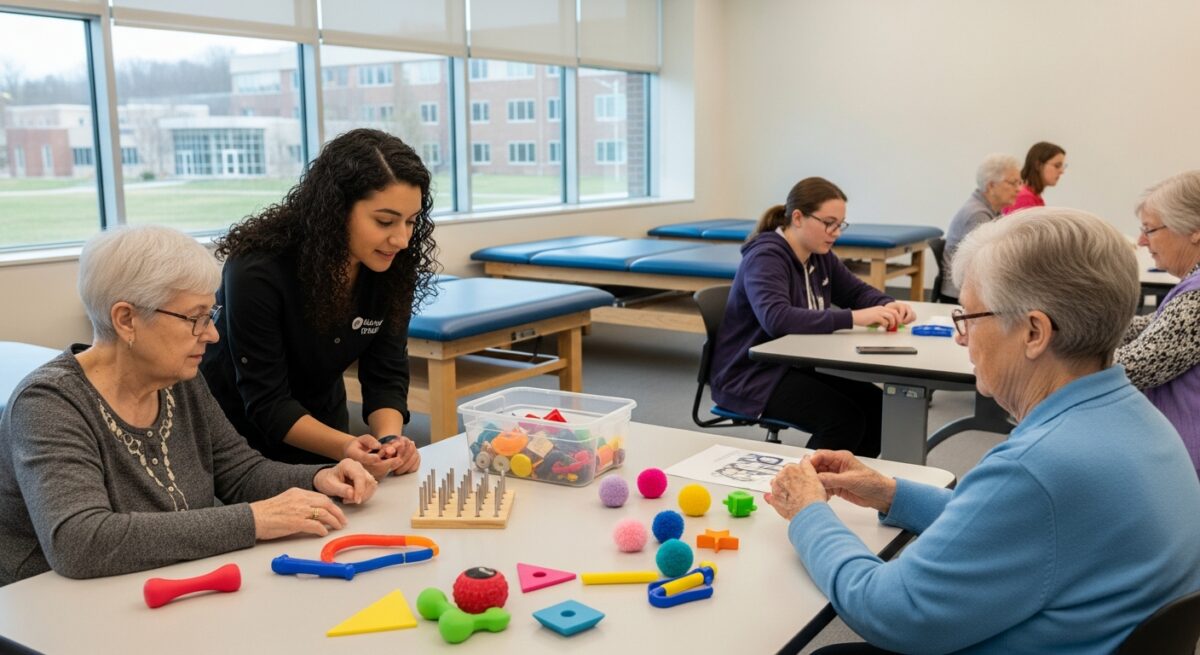
Choosing an occupational therapy major means stepping into a field that blends health science, psychology, and hands-on patient care. Students often ask what sets this degree apart from other allied health programs. The answer lies in its holistic approach: occupational therapists help people of all ages regain or develop the skills they need for daily living and work. Whether you are a high school graduate exploring career options or a working adult considering a change, understanding what students learn in this major will help you decide if it aligns with your goals. This article unpacks the core curriculum, clinical experiences, and career pathways that define an occupational therapy degree.
The Core Curriculum of an Occupational Therapy Degree
An occupational therapy major is structured around the science of human occupation, which is the meaningful activities that occupy our time. Students begin with foundational courses in anatomy, physiology, and neuroscience. These classes provide the biological framework for understanding how the body moves and functions. For example, a course in kinesiology teaches students how muscles and joints work together, which is essential when designing exercises for someone recovering from a stroke.
Alongside the hard sciences, students take psychology and human development courses. These cover lifespan development from infancy through older adulthood. A key topic is psychosocial dysfunction, which explores how mental health conditions affect a person’s ability to participate in daily routines. Students learn to assess cognitive, emotional, and social factors that influence occupational performance. This dual focus on body and mind is what makes the therapy studies major unique compared to other healthcare degrees.
Occupational Therapy Theory and Practice Models
Beyond basic sciences, the major introduces students to theoretical models that guide clinical reasoning. The Model of Human Occupation (MOHO) and the Person-Environment-Occupation (PEO) model are two frameworks taught in most programs. These models help students analyze why a patient struggles with a specific task and how to adapt the environment or task to promote independence. For instance, a student might use the PEO model to redesign a kitchen layout for a client with limited mobility, making cooking safer and more accessible.
Students also study the occupational therapy process, which includes evaluation, intervention, and outcome measurement. They learn to administer standardized assessments, such as the Canadian Occupational Performance Measure, and interpret results to create individualized treatment plans. This training ensures graduates can think critically and adapt interventions for diverse populations, from children with autism to older adults with dementia.
Clinical Skills and Hands-On Training
Classroom knowledge is only half of the equation. An accredited occupational therapy major requires supervised fieldwork experiences. These placements typically occur in hospitals, rehabilitation centers, schools, or community clinics. During Level I fieldwork, students observe licensed therapists and assist with basic tasks. Level II fieldwork is more intensive, requiring full-time participation over several months. Students apply everything they have learned, from splinting and therapeutic exercise to cognitive retraining and home modifications.
Practical labs on campus also play a critical role. Students practice using adaptive equipment, such as dressing aids or ergonomic tools, and learn to fabricate custom splints. They simulate patient scenarios, like helping someone with a spinal cord injury learn to dress independently or guiding a child with sensory processing disorder through a calming activity. These experiences build confidence and competence before graduation.
For those considering advanced roles, the curriculum may include elective courses in hand therapy, pediatrics, or mental health. Some programs offer interprofessional education, where occupational therapy students collaborate with nursing, physical therapy, and social work students. This teamwork mirrors real-world healthcare settings and prepares graduates for collaborative practice.
Research and Evidence-Based Practice
Occupational therapy is a research-driven profession. Students learn to critically evaluate scientific literature and apply evidence-based interventions. Courses in research methods and statistics teach how to design studies, analyze data, and interpret findings. Many programs require a capstone project or thesis, where students investigate a clinical question under faculty mentorship. For example, a student might study the effectiveness of sensory integration therapy for children with ADHD and present findings at a conference.
This emphasis on research ensures that graduates stay current with best practices. It also opens doors to doctoral-level study for those interested in academia or advanced clinical specialization. Understanding research is particularly important as healthcare systems increasingly demand measurable outcomes and cost-effective treatments.
Specialized Areas of Study
While the core curriculum covers general practice, many occupational therapy majors offer concentrations or elective tracks. Popular specializations include:
- Pediatrics: Focuses on developmental delays, sensory processing disorders, and school-based therapy. Students learn play-based interventions and family-centered care.
- Mental Health: Addresses conditions like depression, anxiety, and schizophrenia. Training includes group therapy, stress management, and community reintegration.
- Gerontology: Concentrates on age-related changes, fall prevention, and home safety modifications. Students study programs that help older adults age in place.
- Hand Therapy: Requires advanced knowledge of upper extremity anatomy and rehabilitation after injuries or surgeries. This often leads to certification as a Certified Hand Therapist (CHT).
Choosing a specialization early can shape fieldwork placements and job prospects. However, many graduates start in general practice and later pursue certifications through continuing education. The flexibility of the occupational therapy degree allows for career evolution over time.
Licensure and Certification Requirements
Graduating from an accredited program is the first step toward becoming a licensed occupational therapist (OT) or occupational therapy assistant (OTA). In the United States, all states require passing the National Board for Certification in Occupational Therapy (NBCOT) exam. The exam tests knowledge across eight domains, including evaluation, intervention, and professional ethics. Most students prepare through review courses, practice tests, and study groups.
After passing the NBCOT exam, graduates apply for state licensure, which may have additional requirements such as background checks or jurisprudence exams. Continuing education is mandatory to maintain licensure, ensuring therapists stay updated on emerging techniques and regulations. Some therapists also pursue specialty certifications in areas like driving rehabilitation or low vision therapy, which can enhance job opportunities and earning potential.
Career Paths and Job Outlook
An occupational therapy major opens doors to diverse work settings. According to the Bureau of Labor Statistics, employment of occupational therapists is projected to grow 12% from 2022 to 2032, much faster than the average for all occupations. This demand is driven by an aging population, increased awareness of mental health services, and medical advances that allow more people to survive traumatic injuries. Graduates find jobs in hospitals, schools, nursing homes, home health agencies, outpatient clinics, and mental health facilities.
Entry-level salaries for occupational therapists vary by location and setting, but the median annual wage was over $93,000 in 2023. Occupational therapy assistants, who typically hold an associate degree, earn a median of around $64,000. For those seeking leadership or academic roles, a post-professional doctorate (OTD) or PhD can lead to positions as program directors, researchers, or professors.
In our guide on Human Biology Major: What Students Learn and Career Paths, we explain how foundational science knowledge can complement clinical training in health professions. Understanding human biology is particularly valuable for occupational therapy students who work with complex medical conditions.
Frequently Asked Questions
What is the difference between an occupational therapy major and a physical therapy major?
Occupational therapy focuses on helping people perform daily activities (occupations) like dressing, cooking, and working. Physical therapy emphasizes restoring movement and function after injury or illness. While both fields overlap, OT addresses cognitive, sensory, and psychosocial factors, whereas PT concentrates on biomechanics and physical rehabilitation.
Can I become an occupational therapist with a bachelor’s degree?
No. Entry-level practice as an occupational therapist requires a master’s or doctoral degree from an accredited program. However, you can become an occupational therapy assistant (OTA) with an associate degree. Many students complete a bachelor’s in a related field, such as psychology or exercise science, before applying to a graduate OT program.
How long does it take to complete an occupational therapy degree?
A master’s program typically takes 2 to 3 years of full-time study, while an entry-level doctoral program takes 3 to 4 years. Prerequisites and undergraduate coursework add additional time. Accelerated programs are available for students who already hold a bachelor’s degree in a related field.
Is occupational therapy a good career for introverts?
Yes. While the job involves direct patient interaction, many OTs work one-on-one or in small groups. Specialties like home health or research allow for quieter work environments. The profession also offers roles in administration, consulting, and academia that may appeal to introverts.
What skills are most important for success in this major?
Strong communication, empathy, problem-solving, and creativity are essential. Students should also be comfortable with anatomy, psychology, and basic statistics. Manual dexterity is helpful for tasks like splint fabrication, and organizational skills are needed for documentation and treatment planning.
Finding the Right Program for You
When researching occupational therapy degrees, look for programs accredited by the Accreditation Council for Occupational Therapy Education (ACOTE). Accreditation ensures the curriculum meets professional standards and qualifies graduates for licensure. Consider factors like location, cost, fieldwork opportunities, and faculty expertise. Many schools offer online or hybrid options for prerequisite courses, though fieldwork must be completed in person.
Financial aid is available through federal loans, scholarships, and graduate assistantships. Some employers offer tuition reimbursement for employees pursuing OT degrees. To explore accredited programs and compare options, visit DegreesOnline.Education, a platform that connects students with flexible degree pathways and financial resources.
Ultimately, an occupational therapy major equips you with the knowledge and skills to make a tangible difference in people’s lives. From helping a child with autism succeed in school to enabling a stroke survivor to cook again, the work is both challenging and rewarding. If you are drawn to a career that combines science, compassion, and creativity, this path deserves serious consideration.