
Choosing a college major is a pivotal decision that shapes your academic journey and professional future. For students fascinated by the intricate workings of the human body, from the molecular level to whole systems, a human biology major offers a compelling and versatile path. This field of study bridges the gap between the life sciences and health professions, providing a deep understanding of human health, disease, and development. In this guide, we explore exactly what students learn in a human biology degree program and the diverse career paths this major unlocks.
What Is a Human Biology Major?
A human biology major is an interdisciplinary program that focuses specifically on the biological, chemical, and physical aspects of the human organism. Unlike a general biology major, which may encompass the entire tree of life, a human biology degree zooms in on human anatomy, physiology, genetics, evolution, and health. It integrates concepts from biology, chemistry, psychology, and even anthropology to give students a holistic view of what makes us function, grow, and sometimes fall ill.
This major is an excellent choice for students who are passionate about medicine, research, or public health but want a broader foundation than a pre-med track alone might provide. It offers the scientific rigor of a biology degree while directly applying that knowledge to human health and disease. Many programs also emphasize critical thinking, data analysis, and laboratory skills, preparing graduates for both immediate employment and advanced study.
Core Curriculum: What Students Learn in a Human Biology Degree
The curriculum for a human biology major is rigorous and comprehensive. While specific courses vary by institution, the core learning objectives remain consistent. Students can expect to build a strong foundation in the natural sciences before diving into specialized human-focused topics.
Foundational Sciences
Every human biology program begins with a series of foundational courses that provide the necessary context for advanced study. These typically include general biology, general chemistry, organic chemistry, and physics. These courses are not merely prerequisites; they are essential for understanding the chemical reactions that power cells and the physical principles that govern the body’s mechanics. For example, understanding osmosis and diffusion in chemistry is critical for later learning about kidney function or nutrient absorption.
Human Anatomy and Physiology
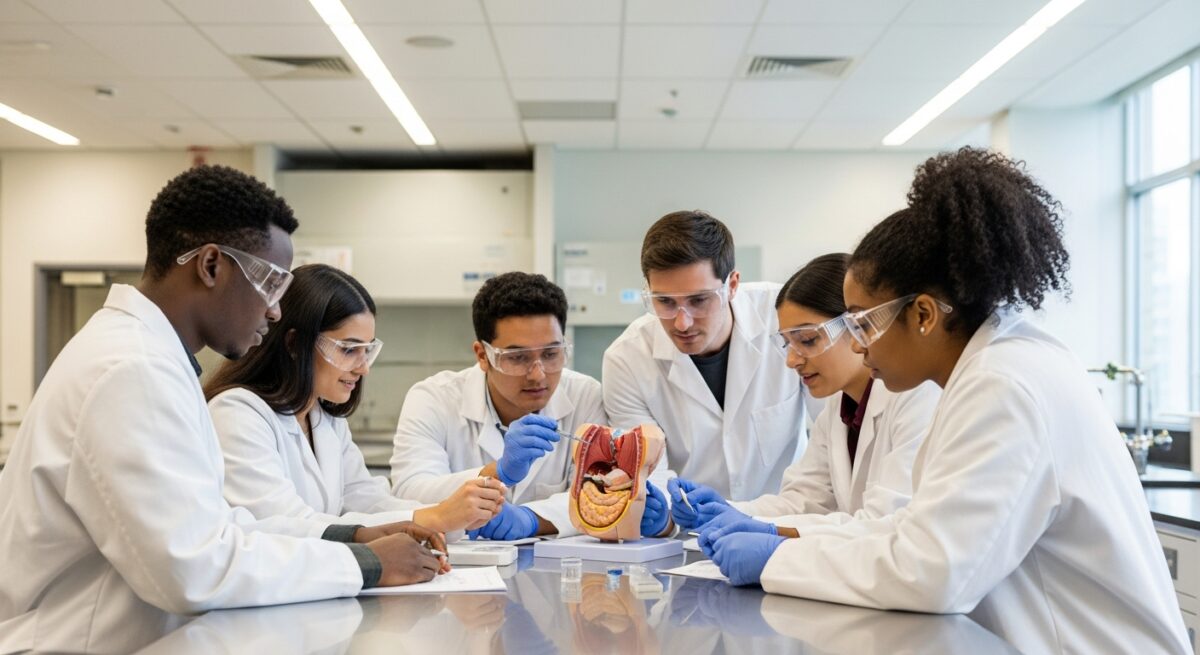
These are the cornerstone courses of the major. Human anatomy involves the study of the body’s structures, from bones and muscles to organs and tissues. Physiology examines how those structures function, both independently and as integrated systems. Students learn about the cardiovascular, respiratory, nervous, endocrine, and immune systems in depth. Laboratory work often includes cadaver dissection, which provides an unparalleled appreciation for the complexity and variability of the human form. This knowledge is directly applicable to careers in healthcare, fitness, and research.
Genetics and Molecular Biology
A human biology major delves into the blueprint of life: DNA. Courses in genetics and molecular biology explore how genes are inherited, expressed, and regulated. Students study genetic disorders, the role of mutations in diseases like cancer, and the principles of heredity. Laboratory techniques often include DNA extraction, gel electrophoresis, and PCR analysis. This knowledge is foundational for careers in genetic counseling, biotechnology, and medical research. It also provides the scientific context for understanding personalized medicine and the ethical debates surrounding genetic engineering.
Cell Biology and Biochemistry
Understanding the cell is fundamental to understanding human health. Cell biology courses explore the structure and function of cellular organelles, cell signaling, and the cell cycle. Biochemistry focuses on the chemical processes within living organisms, including metabolism, enzyme function, and the molecular basis of energy production. Together, these courses explain how cells communicate, how they gain energy, and what goes wrong at the microscopic level during disease. This knowledge is crucial for students pursuing research or advanced degrees in medicine or pharmacology.
Specialized Areas of Study in Human Biology
Beyond the core curriculum, many programs allow students to specialize or choose elective concentrations that align with their career goals. These specializations add depth and context to the general knowledge gained in the major.
Common areas of focus include:
- Neuroscience: The study of the nervous system, including brain structure, cognitive function, and neurological disorders.
- Immunology: The study of the immune system, including how the body defends against pathogens and the mechanisms of autoimmune diseases.
- Human Evolution and Anthropology: The study of human origins, adaptation, and biological variation across populations.
- Public Health and Epidemiology: The study of health patterns in populations, disease prevention, and health policy.
- Exercise Science and Physiology: The study of how the body responds to physical activity, including muscle physiology and cardiovascular adaptation.
Choosing a specialization can make graduates more competitive for specific roles. For instance, a student focusing on neuroscience might be better prepared for a career as a research assistant in a brain lab, while a student focusing on public health might seek a role in community health education. It is important to research which specializations are offered by your target programs and how they align with your career aspirations. For those exploring their options, a broad biology major overview can help contextualize where human biology fits within the larger landscape of life science degrees.
Skills Developed Through a Human Biology Program
Completing a human biology degree equips students with a powerful set of transferable skills that are highly valued across many industries. These skills go beyond memorizing facts and include practical, analytical, and communication abilities.
Key skills include:
- Critical Thinking and Problem-Solving: Analyzing complex data, identifying patterns, and drawing evidence-based conclusions.
- Laboratory and Technical Skills: Proficiency with microscopes, spectrometers, and cell culture techniques, as well as data analysis software.
- Research and Data Analysis: Designing experiments, collecting data, performing statistical analysis, and interpreting results.
- Written and Oral Communication: Writing scientific reports, presenting findings, and explaining complex concepts to diverse audiences.
- Ethical Reasoning: Understanding the ethical implications of research involving human subjects, genetic testing, and medical interventions.
These skills make human biology graduates adaptable employees who can thrive in fast-paced, detail-oriented environments. Whether they enter the workforce immediately or pursue further education, they are equipped to handle challenging problems and communicate their findings effectively.
Career Paths for Human Biology Graduates
One of the greatest strengths of a human biology degree is its versatility. Graduates are prepared for a wide range of careers in healthcare, research, education, and business. The path you choose often depends on your level of education and your specific interests.
Many graduates use this degree as a springboard for advanced professional programs. The most common next step is medical school, but other options include dental school, veterinary school, physician assistant programs, pharmacy school, and nursing programs. The rigorous science foundation of a human biology major makes it an ideal pre-professional track. For students interested in research, a master’s or PhD in fields like neuroscience, genetics, or epidemiology is a natural progression.
For those who wish to enter the workforce directly after earning their bachelor’s degree, several rewarding careers are available. These include roles as clinical research coordinators, medical laboratory technologists, pharmaceutical sales representatives, health educators, and biotechnology research assistants. The demand for these roles is steady, driven by an aging population and ongoing advances in medical technology. Graduates can find opportunities in hospitals, universities, government agencies, and private companies. For those seeking affordable options to advance their education, exploring resources like college and tuition information can help identify programs that fit their budget and career timeline.
Human Biology vs. General Biology: Key Differences
Prospective students often wonder how a human biology major differs from a general biology major. While both share a core of scientific knowledge, their focus and applications diverge. A general biology major covers a broad spectrum of life, including plants, animals, microorganisms, and ecosystems. It is ideal for students interested in ecology, marine biology, or conservation. In contrast, a human biology major narrows its focus exclusively to humans, emphasizing topics like medical physiology, human genetics, and disease processes.
This distinction matters for career planning. A general biology major might be better suited for a career in wildlife management or environmental science, while a human biology major is more directly aligned with healthcare and human-focused research. However, both degrees can prepare students for medical school, as long as prerequisite courses are completed. The choice ultimately depends on whether you want to study life in general or the specific biology of our own species.
Frequently Asked Questions
Is human biology a hard major?
Yes, human biology is considered a challenging major due to its heavy emphasis on science, mathematics, and laboratory work. It requires strong memorization skills, analytical thinking, and dedication. However, students who are genuinely interested in how the human body works often find the material engaging and rewarding.
Can you get a job with just a bachelor’s in human biology?
Yes, many entry-level jobs are available with a bachelor’s degree in human biology. Common roles include research assistant, medical lab technician, pharmaceutical sales representative, and health educator. However, some of the highest-paying and most advanced roles, such as physician or research scientist, require graduate or professional degrees.
What is the difference between human biology and biomedical science?
Human biology is a broader field that studies the biological aspects of humans, including evolution, genetics, and physiology. Biomedical science is more focused on the application of biology to medicine, including disease mechanisms, diagnostics, and therapeutics. Both overlap significantly, but biomedical science is often more lab-intensive and clinically oriented.
Choosing the Right Program for You
Selecting a human biology degree program requires careful research. Look for programs that offer strong laboratory facilities, opportunities for undergraduate research, and access to health-related internships. Accreditation is also critical: ensure the program is offered by an accredited institution to guarantee the quality of education and eligibility for federal financial aid. The CollegeDegree.Education platform can help you compare programs, understand financial aid options, and connect with schools that match your interests and needs.
Consider the location of the school, the size of the program, and the availability of advisors who specialize in pre-health advising. Some programs offer direct pathways to medical or graduate schools, which can be a significant advantage. Talking to current students and alumni can also provide valuable insights into the program’s strengths and weaknesses. Your college years are an investment in your future, so take the time to choose a program that aligns with your personal and professional goals.
The human biology major offers a fascinating and practical education for anyone captivated by the science of human life. It provides the knowledge and skills needed to pursue a wide range of impactful careers in healthcare, research, and beyond. Whether you dream of becoming a doctor, a genetic counselor, or a public health advocate, this degree provides a solid foundation. By understanding what you will learn and the paths available to you, you can make an informed decision that sets you on a trajectory for success. The next step is to explore accredited programs and take action toward your future.