
Choosing a career in mortuary science means entering a field that blends compassion, technical skill, and professionalism. Many people do not realize that funeral directors, embalmers, and crematory operators all require specialized education and licensure. If you are considering this path, understanding the specific degree options, licensing requirements, and daily responsibilities will help you make an informed decision. This article explores the major career paths available with a mortuary science degree, the educational requirements for each role, and the steps you need to take to launch a stable and meaningful career in funeral service.
What Is a Mortuary Science Degree?
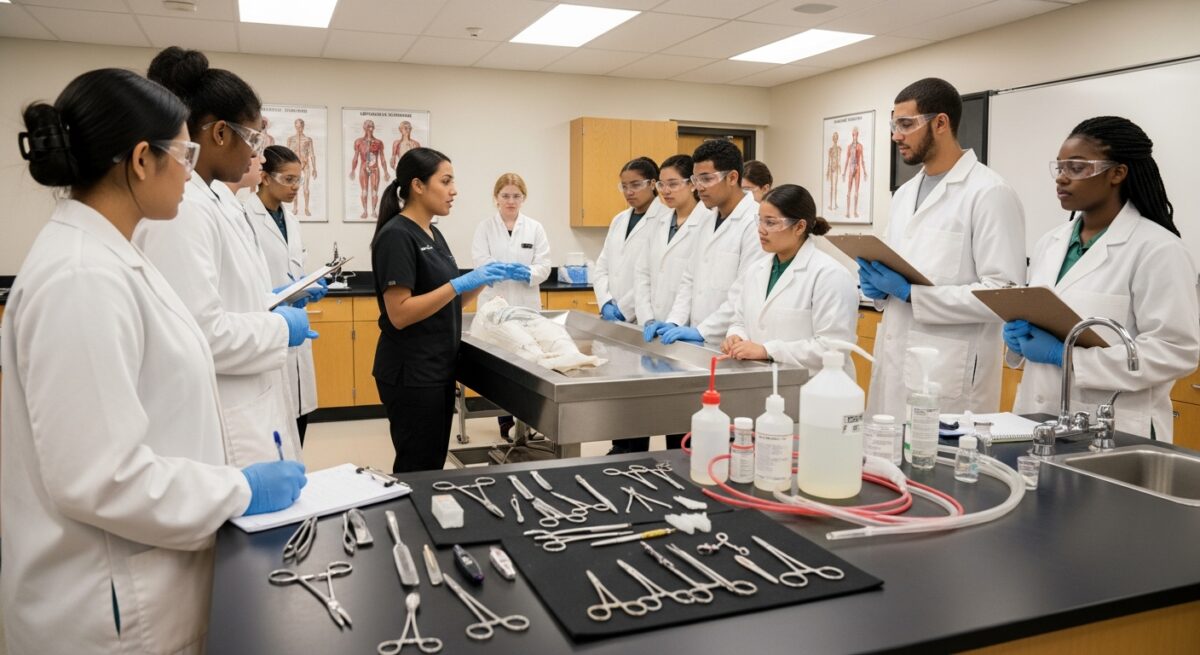
A mortuary science degree is a specialized associate or bachelor’s program that prepares students for careers in funeral service, embalming, and grief support. These programs combine classroom instruction in anatomy, chemistry, and ethics with hands-on training in embalming techniques, restorative art, and funeral home management. Most accredited programs require between 60 and 120 credit hours and include a supervised internship or clinical rotation at a licensed funeral home.
Curricula typically cover subjects such as microbiology, pathology, mortuary law, business management, and counseling. Students learn how to prepare bodies for viewing, arrange transportation, file death certificates, and support grieving families. The degree also emphasizes legal and regulatory compliance, because funeral directors must navigate state and federal laws regarding death care, disposition of remains, and consumer protection. Graduates emerge with the technical expertise and interpersonal skills needed to serve families during their most vulnerable moments.
Core Career Paths With a Mortuary Science Degree
A mortuary science degree opens doors to several distinct roles within the death care profession. Each path has unique responsibilities, work environments, and advancement opportunities. Below are the primary career paths you can pursue.
Funeral Director
Funeral directors are the face of the funeral home. They meet with families to plan services, coordinate with cemeteries and crematories, handle paperwork, and oversee the logistics of visitations and ceremonies. Many funeral directors also perform embalming, though some states allow individuals to hold separate licenses for directing and embalming. The role requires strong organizational skills, empathy, and the ability to remain calm under pressure. Funeral directors often work evenings and weekends, especially when services are scheduled outside standard business hours.
Embalmer
Embalmers focus on the technical aspects of body preparation. They sanitize, preserve, and restore deceased individuals using chemicals and cosmetic techniques. Embalming is often required for open-casket viewings, and it is a specialized skill that demands precision and knowledge of human anatomy. Embalmers may work in funeral homes, hospitals, medical schools, or forensic facilities. Some states require embalmers to complete additional coursework beyond the core mortuary science degree, including advanced anatomy and embalming theory.
Crematory Operator
Crematory operators manage the cremation process, which includes operating cremation chambers, processing remains, and ensuring compliance with environmental and health regulations. This role requires mechanical aptitude, attention to detail, and a thorough understanding of cremation laws. Many crematory operators also handle the transfer of remains from the place of death to the crematory and coordinate with funeral directors regarding memorial services. As cremation rates rise across the United States, demand for trained crematory operators continues to grow.
Funeral Home Manager or Owner
With experience and additional business training, mortuary science graduates can move into management or ownership roles. Funeral home managers oversee daily operations, including staff scheduling, inventory management, budgeting, and marketing. Owners must also comply with state regulations regarding funeral home licensing, trust accounts, and pre-need contracts. This path suits individuals who enjoy entrepreneurship and have strong financial acumen. Many successful funeral directors eventually open their own funeral homes, often serving multigenerational families in their communities.
Educational Requirements for Mortuary Science Programs
To enroll in a mortuary science degree program, you must typically hold a high school diploma or GED. Most programs require prerequisite coursework in biology, chemistry, and communication. Some associate degree programs take two years to complete, while bachelor’s programs require four years. Both levels include general education courses alongside specialized mortuary science classes.
Accreditation is critical when choosing a program. The American Board of Funeral Service Education (ABFSE) accredits mortuary science programs in the United States. Graduating from an ABFSE-accredited program is often a prerequisite for state licensure. You can verify a school’s accreditation status on the ABFSE website or by contacting the program directly. Additionally, some states require completion of a national board examination, such as the National Board Exam (NBE) administered by the International Conference of Funeral Service Examining Boards.
For those seeking flexibility, several accredited institutions offer online mortuary science degrees. These programs allow students to complete academic coursework remotely while arranging clinical experiences at local funeral homes. Online study can be ideal for working adults or individuals who do not live near a campus with a traditional program. However, hands-on embalming labs and internships must still be completed in person. Prospective students should confirm that any online program they consider is ABFSE-accredited and meets their state’s licensing requirements.
Licensing and Certification Requirements
Licensing requirements vary by state, but most jurisdictions mandate the following steps for funeral directors and embalmers:
- Completion of an accredited mortuary science degree program
- Passing a national board examination (NBE)
- Completion of a one- to two-year apprenticeship under a licensed funeral director or embalmer
- Passing a state-specific law exam
- Submission of an application with fees and proof of good moral character
Some states issue separate licenses for funeral directors and embalmers, while others offer a combined license. Continuing education is often required to renew licenses, typically every one to two years. Topics may include new embalming techniques, grief counseling, ethics, and changes in state regulations. Failing to complete continuing education can result in license suspension, so it is important to stay current.
Certification is also available through professional organizations. For example, the Academy of Professional Funeral Service Practice offers the Certified Funeral Service Practitioner (CFSP) designation. This credential recognizes professionals who engage in ongoing education and community service. While not mandatory, certification can enhance your resume and demonstrate a commitment to excellence.
Job Outlook and Salary Expectations
The Bureau of Labor Statistics projects that employment of funeral directors will grow about as fast as the average for all occupations through 2032. Population growth and an aging demographic will sustain demand for funeral services. However, the industry is also evolving, with more families choosing cremation over traditional burial. This shift may affect job duties and revenue models, but it also creates opportunities for professionals who specialize in cremation and memorialization.
Salary varies by location, experience, and employer. According to recent data, the median annual wage for funeral directors is around $60,000. Embalmers earn a median salary closer to $55,000. Crematory operators and funeral home managers can earn between $45,000 and $80,000 depending on their responsibilities and geographic region. Large metropolitan areas and funeral homes with high case volumes tend to offer higher pay. Benefits often include health insurance, retirement plans, and paid time off.
How to Choose the Right Mortuary Science Program
Selecting the right school is one of the most important decisions you will make. Start by confirming that the program is ABFSE-accredited. Then consider factors such as location, cost, curriculum, and internship opportunities. If you plan to work in a specific state, choose a program that covers that state’s licensing laws. Some programs offer specialized tracks in grief counseling, business management, or forensic embalming, which can give you a competitive edge.
Visit campuses if possible, or attend virtual open houses. Talk to current students and alumni about their experiences. Ask about job placement rates and the types of funeral homes that hire graduates. Many programs have strong relationships with local funeral homes, which can facilitate apprenticeship placements after graduation. Also, review tuition costs and financial aid options. Community colleges often offer affordable associate degree programs, while universities may provide bachelor’s degrees with broader business and liberal arts coursework.
For students who value flexibility, online programs can be a good fit. However, ensure that the online program includes a structured plan for completing clinical hours. Some online programs partner with funeral homes nationwide to arrange internships, while others require students to secure their own placement. If you are a career changer or a working adult, look for programs that offer evening or weekend classes and accelerated pathways.
Frequently Asked Questions
How long does it take to earn a mortuary science degree?
An associate degree typically takes two years of full-time study. A bachelor’s degree takes four years. Accelerated programs may allow completion in 18 months for the associate level, but this is less common. After graduation, you must also complete a state-mandated apprenticeship, which can last one to two years.
Can I become a funeral director without a degree?
Most states require a degree from an ABFSE-accredited program for licensure. A few states allow on-the-job training in lieu of formal education, but these exceptions are rare and often require many years of apprenticeship. Earning a degree is the most reliable path to licensure and career advancement.
Is a mortuary science degree difficult?
The coursework is academically rigorous, especially in science subjects like anatomy, microbiology, and chemistry. Students must also develop strong communication and organizational skills. However, dedicated students who are passionate about helping families succeed. Programs offer tutoring and study resources to support learners.
What is the difference between a funeral director and an embalmer?
A funeral director handles service planning, logistics, and family support. An embalmer specializes in body preparation and preservation. In many states, you can hold one license without the other, but many professionals earn both to increase their versatility and employability.
Start Your Journey in Mortuary Science
Earning a mortuary science degree is the first step toward a career that combines science, service, and compassion. Whether you aspire to be a funeral director, embalmer, crematory operator, or funeral home owner, the educational path is clear: choose an accredited program, complete your clinical hours, pass your licensure exams, and commit to lifelong learning. The field offers stable employment, meaningful work, and the opportunity to support families during their most difficult moments. If you are ready to explore your options, compare accredited mortuary science programs to find one that fits your goals and schedule. For additional insight into how different degree paths compare, our guide on Kinesiology and Exercise Science Degree Overview offers a helpful framework for evaluating specialized programs. Take the next step today and build a future in this essential profession.