
Massage Therapy Certificate at Douglas Education Center
Complete a Massage Therapy/Therapeutic Massage Certificate, 12 weeks to less than 1 year In-person at Douglas Education Center and start a hands-on career fast.

By Janet Wilson
If you want to enter the healthcare field quickly, without committing to a multi-year degree, a Massage Therapy/Therapeutic Massage Certificate, 12 weeks to less than 1 year In-person at Douglas Education Center offers one of the fastest routes to a hands-on career. Douglas Education Center, located in Monessen, Pennsylvania, delivers this program in a face-to-face format so you can practice techniques under direct supervision and graduate ready for entry-level work in spas, clinics, and wellness centers. The short timeline keeps tuition costs down and gets you earning sooner, which matters if you are a career changer, a recent high school graduate, or a working adult who needs flexible training options.
This article explains what the certificate covers, how the 12-week to under-one-year schedule works, admission steps, costs, licensing considerations, and career outcomes. You will also see how to compare this program with other massage training paths and how to use tools like CollegeDegree.Education to find accredited schools and financial aid. Whether you are exploring massage therapy for the first time or comparing programs, the details below will help you decide if this in-person certificate is the right fit.
Why an In-Person Massage Therapy Certificate Makes Sense for Career Changers
Massage therapy is a tactile profession. You cannot learn proper body mechanics, palpation skills, or client communication from a textbook alone. In-person instruction gives you supervised practice, immediate feedback from instructors, and access to equipment like massage tables, bolsters, and linens. At Douglas Education Center, the certificate is structured so students spend most of their time in hands-on labs and clinical practice rather than passive lectures. That format builds confidence and muscle memory, which employers value when hiring new therapists.
The short duration is another advantage. A 12-week to less than one year certificate means you can complete training in a single semester or two, depending on the schedule you choose. Compare that to associate degrees in massage therapy, which often take two years and include general education courses you may not need for licensure. For adults who already have a degree or work experience, the certificate is a targeted credential that focuses only on the skills required to pass licensing exams and start working.
Career changers also benefit from the in-person cohort model. You learn alongside peers who share similar goals, and you build a local professional network before you graduate. Instructors often have industry connections and can recommend you for entry-level positions. Plus, on-campus learning provides structure and accountability, which helps students who have been out of school for years adjust to a study routine.
Inside the Douglas Education Center Massage Therapy Certificate
Douglas Education Center designs its therapeutic massage program to meet entry-level licensing requirements in Pennsylvania and prepare students for the Massage and Bodywork Licensing Examination (MBLEx). Coursework typically covers anatomy and physiology, kinesiology, pathology, massage techniques (Swedish, deep tissue, sports, and chair massage), ethics and professionalism, business practices, and client assessment. You will also study contraindications and safety protocols so you can work with clients who have medical conditions or injuries.
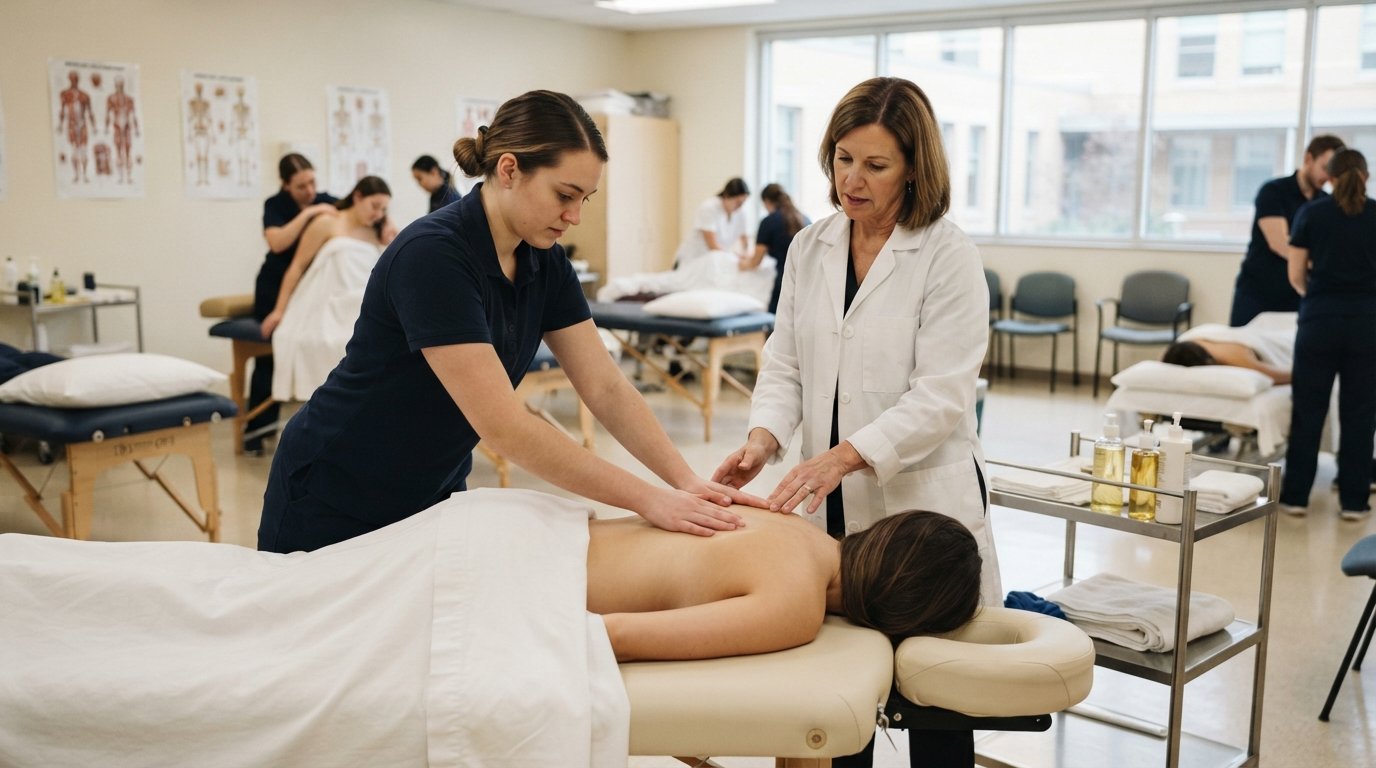
The in-person format means you practice each technique on classmates under instructor supervision. You learn how to set up a treatment room, drape clients professionally, document sessions, and communicate about pressure and comfort. Many programs include a student clinic where you work on members of the public at a reduced rate, which gives you real-world experience and helps you build a client base before graduation. Douglas Education Center emphasizes small class sizes, so you receive individualized attention and correction as you refine your skills.
Assessment methods usually include written exams, practical skills checkoffs, and clinic hours. You must demonstrate competency in both knowledge and technique before earning the certificate. The program also covers resume writing, interview skills, and job search strategies, which helps graduates transition into employment quickly.
Timeline, Schedule, and What 12 Weeks to Under a Year Really Looks Like
The phrase 12 weeks to less than 1 year reflects the range of completion times depending on the schedule you select. Some students enroll in an accelerated format that runs about 12 weeks of full-time study, while others choose a part-time schedule that spreads coursework over several months but still finishes in under a year. Accelerated formats suit students who can dedicate most of their week to training and want to enter the workforce as soon as possible. Part-time formats suit working adults who need to keep a job while they retrain.
Most programs require a minimum number of clock hours to qualify for licensure. In Pennsylvania, massage therapists must complete at least 600 hours of education from a licensed school. Douglas Education Center structures its certificate to meet or exceed that requirement, so you should confirm the exact hour count and schedule options with an admissions representative. A typical full-time week might include lectures in the morning and hands-on labs in the afternoon, with clinic shifts added later in the program.
Because the program is in-person, you need to plan for travel and campus time. If you live far from Monessen, ask about parking, public transportation, and whether any evening or weekend cohorts are available. The compressed timeline means attendance is critical; missing labs can delay your progress. Before enrolling, map out childcare, work, and transportation so you can commit fully to the schedule.
Admission Steps and How to Enroll
Admission to the massage therapy certificate is straightforward, but you should complete each step early to secure a seat. Most cohort sizes are limited because of equipment and supervision requirements. The process generally follows this sequence:
- Request information from Douglas Education Center and confirm the next start date and schedule format.
- Submit an application with your high school diploma or equivalency, identification, and any required transcripts.
- Complete an admissions interview or tour to discuss your goals, schedule, and financial plan.
- Apply for financial aid by completing the FAFSA if you are eligible, and explore payment plans or scholarships.
- Confirm enrollment, pay any deposit, and complete orientation requirements before the first day of class.
During the admissions interview, ask about licensure exam pass rates, graduate employment rates, and clinic requirements. These data points help you compare programs objectively. Also ask whether the school provides exam preparation or review sessions for the MBLEx, since passing that exam is required to practice in most states. If you have a criminal record or prior healthcare training, discuss it with admissions early so you understand any additional requirements.
Costs, Financial Aid, and Return on Investment
Certificate programs generally cost less than associate degrees because they take less time and exclude general education credits. However, you still need to budget for tuition, fees, textbooks, massage supplies (such as lotions and sheets), uniforms, and licensing exam fees. Douglas Education Center publishes tuition and fees on its website or in its catalog; request a written cost breakdown so you can compare it with other schools. Financial aid may include federal grants, loans, work-study, and institutional scholarships, depending on your eligibility.
To estimate return on investment, research typical massage therapist wages in Pennsylvania and nearby states. The U.S. Bureau of Labor Statistics reports median pay for massage therapists and provides outlook data by state. Entry-level therapists often work in spas, chiropractic offices, or self-employment. Income varies with location, client base, and hours worked. Many therapists work part-time or build a solo practice, which offers flexibility but requires business skills. The certificate program includes business and ethics coursework to help you navigate self-employment, insurance billing, and marketing.
Use the career guides on Careers.org to explore day-to-day duties, work settings, and advancement paths for massage therapists. Careers.org explains how to become a massage therapist, what licenses and certifications are required, and how training programs fit into the career path. Comparing that information with local job postings gives you a realistic picture of demand and pay in your area.
Licensing, Certification, and Continuing Education
Licensing rules vary by state. Pennsylvania requires massage therapists to hold a state license, which involves completing an approved education program, passing a recognized exam, and submitting an application with fees. Some municipalities have additional zoning or business licensing requirements if you plan to operate a home studio. Always verify requirements with the Pennsylvania State Board of Massage Therapy or the equivalent board in the state where you intend to work.
National certification through the National Certification Board for Therapeutic Massage and Bodywork (NCBTMB) is optional but can enhance your credentials and support insurance reimbursement. Many employers prefer or require it. Certification typically involves passing an exam and completing continuing education hours every renewal cycle. The Douglas Education Center program should prepare you for entry-level exams, but confirm which exams graduates typically take and whether the school offers review sessions.
Continuing education is a regular part of a massage therapist's career. You will need to complete approved courses to renew your license, and many therapists specialize in areas like prenatal massage, oncology massage, sports massage, or myofascial release. These specialties can increase your earning potential and open doors to healthcare settings. Plan for ongoing training costs as part of your career budget.
Career Outlook and Job Settings for Program Graduates
Massage therapists work in diverse settings, including day spas, resort spas, chiropractic clinics, physical therapy offices, hospitals, wellness centers, and private practice. Some therapists work as independent contractors who travel to clients' homes or offices. Others join multidisciplinary healthcare teams where massage complements physical therapy or pain management. The variety means you can shape a career around your strengths, whether you prefer a quiet clinical environment or a bustling spa.
Demand for massage therapy tends to track with interest in wellness, stress reduction, and non-pharmacological pain management. The BLS projects steady growth for massage therapists over the next decade, though demand can vary by region. Earning potential increases with experience, specialization, and a loyal client base. Therapists who build strong communication skills and reliable schedules often develop repeat clients and referrals, which stabilize income.
If you want to advance beyond direct client care, you can pursue roles in spa management, education, or program administration. Some therapists eventually open their own businesses or teach at massage schools. The certificate is a foundation; additional training and experience open those pathways.
How to Compare This Certificate with Other Massage Programs
When comparing programs, look beyond tuition. Accreditation, clock hours, licensure exam pass rates, clinic experience, schedule flexibility, and job placement support all affect your outcome. Use this checklist to evaluate Douglas Education Center against other schools:
- Is the program licensed or approved by the state board that regulates massage therapy?
- Does it include at least 600 clock hours, and how many hours are hands-on versus lecture?
- What are the graduation and licensure exam pass rates for recent cohorts?
- Does the school offer a student clinic, externship, or job placement assistance?
- What is the total cost, including fees, supplies, and exam fees, and what financial aid is available?
Also consider location and format. An in-person program near your home reduces travel costs and lets you build local connections. If you need to work while studying, ask about part-time or evening options. Finally, read the school's catalog and student handbook to understand attendance policies, refund policies, and graduation requirements. These documents protect you as a student and help you avoid surprises.
CollegeDegree.Education can help you compare accredited programs and connect with schools that match your goals. The platform's matching service lets you filter by program type, location, and format, and it provides guides on financial aid and application steps. Use it alongside your own research to make an informed decision.
Is the Douglas Education Center Certificate Right for You?
The Massage Therapy/Therapeutic Massage Certificate, 12 weeks to less than 1 year In-person at Douglas Education Center suits students who want fast, hands-on training and a direct path to licensure. If you learn best by doing, value small classes, and can commit to an in-person schedule, this program offers an efficient route into the profession. It is less suitable if you need a fully online option or want a broad liberal arts education alongside massage training. In those cases, an associate degree or a different program format may be a better fit.
Before you enroll, visit the campus, meet instructors, and talk with current students or graduates. Ask specific questions about schedules, costs, and job support. A short program moves quickly, so confirming the fit early prevents wasted time and money. With the right preparation, a certificate can launch a rewarding career in a growing wellness field.