
Humanities Graduate Studies In Person at Central Michigan
Explore in-person graduate humanities and humanistic studies at Central Michigan University, from choosing a program to funding it and building a career.

By Mia Roberts
You have finished your bachelor's degree in the humanities, and you are not done yet. Perhaps you want to teach, research, write, curate, or lead in a nonprofit, and you know that a graduate credential will open doors that a bachelor's alone cannot. The question is where to go, and how to do it without losing the mentorship and intellectual community that only a physical campus provides. Central Michigan University offers a distinctive answer: advanced study in humanities and humanistic studies, delivered in person, on a residential campus in Mount Pleasant, Michigan. This article walks you through what that pathway looks like, how to choose among the options, how to pay for it, and how to turn the degree into a career. It is written for the prospective graduate student who wants depth, not just a credential.
Why pursue humanities or humanistic studies beyond the bachelor's degree?
A bachelor's degree in the humanities gives you a broad foundation in interpretation, argument, and cultural literacy. A graduate degree turns that foundation into a specialization. At the master's level, you begin to practice the discipline as a professional: you read scholarship critically, design original inquiries, and produce work that contributes to a field. At the doctoral level, you train to become a steward of the discipline itself. For many students, the difference between an undergraduate and a graduate experience is the difference between learning about a conversation and joining it.
The return on that investment is not only intellectual. Graduate study in the humanities develops skills that employers in education, publishing, public history, law, ministry, and nonprofit leadership consistently rank highly: written communication, research design, cultural analysis, and the ability to synthesize complex information for different audiences. If you are also considering professional paths adjacent to the humanities, such as urban and community planning, it helps to understand how related graduate credentials compare. Our guide on what a city planning degree is worth explains how a planning-focused graduate program differs from a humanities-centered one, which can clarify your direction before you apply.
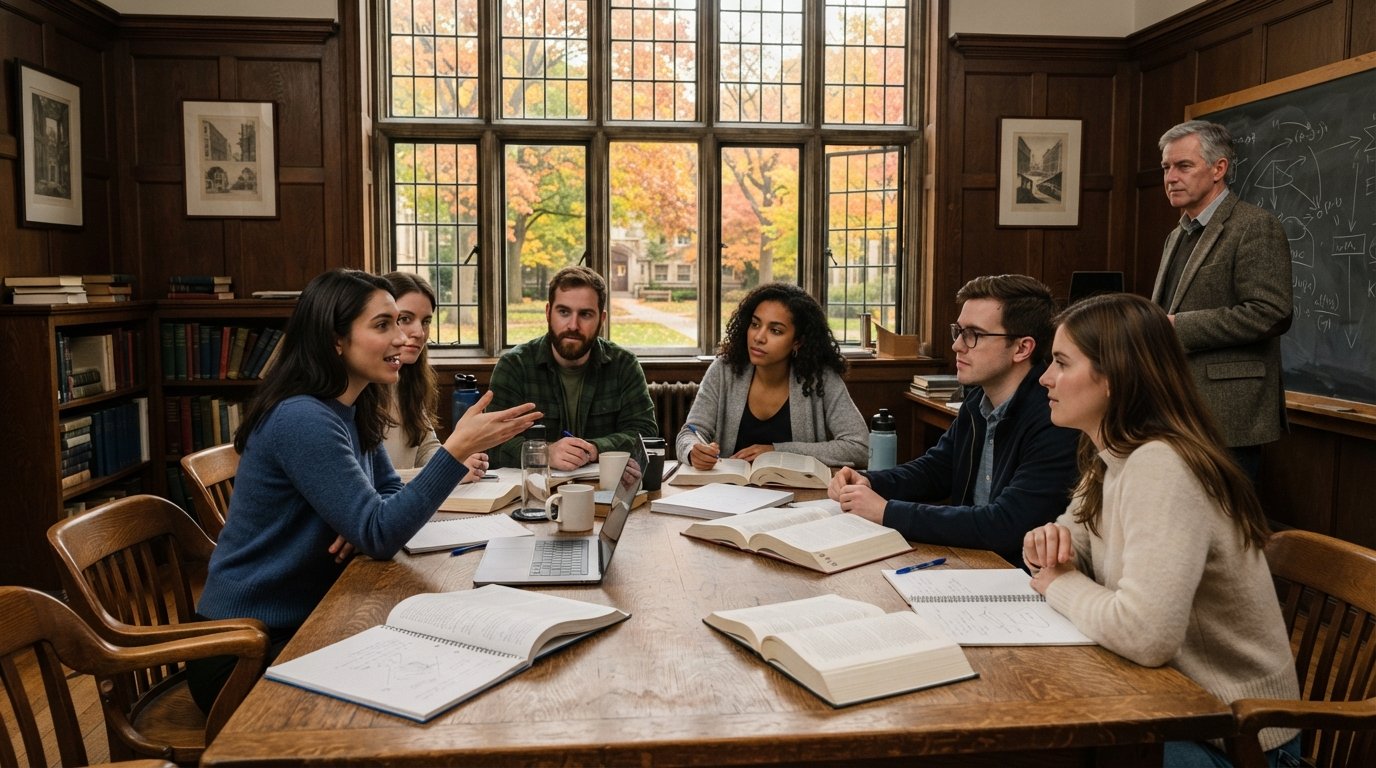
Central Michigan University's in-person format matters here. Graduate seminars in the humanities depend on sustained discussion, archival access, and face-to-face mentorship from faculty who know your work. Online programs can be excellent for some fields, but the humanities thrive on the seminar table. Studying on campus also connects you to lectures, symposia, and a community of scholars who will read your drafts and challenge your assumptions. That is the environment CMU provides.
What advanced humanities study at Central Michigan University looks like
Central Michigan University is a public research university with a strong liberal arts tradition and a graduate school that supports both master's and doctoral work across its colleges. The Department of English, Language, and Literature, along with interdisciplinary programs in the humanities, houses faculty with expertise in literary studies, rhetoric and writing, cultural studies, and related humanistic fields. In-person graduate study at CMU typically means a mix of seminar courses, independent research, and, for some programs, a thesis or capstone project. You should verify current program offerings directly with the department, because graduate curricula evolve and not every concentration is available every term.
At the master's level, students often pursue one of several broad pathways. Some prepare for doctoral study by building a research portfolio and a writing sample. Some prepare for teaching at the community college or secondary level. Others use the degree as a bridge to careers in writing, editing, publishing, or arts administration. At the doctoral level, the focus shifts toward original research, comprehensive examinations, and a dissertation that advances knowledge in the field. In all cases, the in-person format allows for the close advising that graduate work demands.
The application process for graduate humanities programs at CMU generally includes several components. The exact requirements vary by program, but you can expect most of the following:
- A completed online graduate application and application fee.
- Official transcripts from all colleges and universities you have attended.
- A statement of purpose that explains your research interests and career goals.
- A writing sample, typically a substantial paper from your undergraduate or prior graduate work.
- Letters of recommendation from faculty who can speak to your scholarly potential.
- Standardized test scores only if the specific program requires them (many humanities programs have moved away from GRE requirements).
Beyond the checklist, the most important part of your application is fit. Faculty in the humanities admit students they believe they can mentor effectively. Before you apply, read the faculty profiles in the department, identify two or three potential advisors, and reach out with a brief, professional email describing your interests. That single step can transform an application from anonymous to memorable. It also helps you decide whether the program's strengths align with your own questions.
Choosing the right graduate humanities program at CMU
Not all graduate humanities programs are built the same, even within one university. Some are designed as terminal master's degrees for students who want to teach or work in cultural institutions. Others are explicitly preparatory for doctoral study. Some emphasize literary history and criticism; others emphasize rhetoric, composition, or interdisciplinary cultural analysis. Your first task is to be honest about your goal. If you want to teach writing at a community college, a master's with a rhetoric and composition focus may serve you better than a literature-heavy curriculum. If you want to pursue a PhD in literature, you need a program that produces strong writing samples and research experience.
Once your goal is clear, evaluate programs on these dimensions:
- Faculty expertise and availability: who will actually supervise your work?
- Funding: teaching assistantships, fellowships, and tuition waivers for graduate students.
- Program length and structure: thesis versus capstone, part-time versus full-time options.
- Placement record: where recent graduates have gone for further study or employment.
- Campus resources: library holdings, archives, writing centers, and research support.
Because CMU is a residential campus, visiting before you commit is worth the trip. Sit in on a seminar if you can, meet with the graduate coordinator, and talk to current students about their experience. Ask them what surprised them about graduate study, what they wish they had known, and how accessible faculty really are. Those conversations will tell you more than any brochure. If you are comparing in-person study with online options, our matching tools can help you see which accredited programs fit your schedule and budget, but do not underestimate the value of standing in the room where the intellectual work happens.
Funding your graduate humanities degree
Graduate study in the humanities is often more affordable than prospective students expect, provided you pursue funding deliberately. At CMU and similar public universities, many master's and doctoral students in the humanities receive graduate assistantships that include a stipend and partial or full tuition remission in exchange for teaching or research duties. These positions are competitive, so apply early and make your application materials as strong as possible. Departmental funding is the first place to look, but it is not the only place.
External scholarships and fellowships can close the remaining gap. Resources like Scholarship.Education maintain searchable databases of scholarships and financial aid opportunities for graduate and non-traditional students, including awards specifically for humanities and liberal arts candidates. Spend an afternoon building a list of deadlines and eligibility requirements, and treat the search as part of your application work rather than an afterthought. A single named scholarship can cover books, travel to conferences, or a summer of research.
Also consider the total cost of attendance, not just tuition. Moving to Mount Pleasant, commuting, and conference travel all add up. Ask the graduate coordinator whether the program offers travel funding for presenting at conferences, because presenting your work is a core part of professional development in the humanities. Finally, remember that the cheapest program is not always the best value. A funded position at a program with strong mentorship is worth more than an unfunded position at a program that leaves you to navigate graduate school alone. Compare net costs after assistantships and scholarships, and weigh them against placement outcomes.
Career outcomes for humanities graduate students
The most common question prospective humanities graduate students ask is simple: what will I do with this degree? The honest answer is that the degree does not determine a single career path. It equips you with a set of transferable capabilities, and your outcomes depend on how deliberately you build experience alongside your coursework. Graduates of in-person humanities programs at CMU and peer institutions pursue roles in higher education, secondary teaching, publishing, editing, technical writing, museum and archival work, nonprofit leadership, ministry, law, and public service. Some continue to doctoral study; others enter the workforce directly after the master's.
To make the most of the degree, treat professional development as part of the curriculum. Teach a course if the program offers the opportunity. Present at a regional conference. Intern at a press, archive, or cultural organization. Build a public-facing writing portfolio. These experiences signal to employers that you can translate humanistic training into practical value. They also help you discover which parts of the work you love most, which is the surest way to choose a career path that sustains you.
If your goal is a faculty position, be realistic about the academic job market and prepare broadly. Many doctoral graduates find rewarding careers in administration, assessment, writing centers, and student success roles, and master's graduates often build satisfying teaching careers at community colleges and secondary schools. The key is to start preparing early, seek mentors who understand the market, and keep your options open. A humanities graduate degree is a foundation, not a cage.
Central Michigan University's in-person graduate programs in humanities and humanistic studies offer something increasingly rare: a residential intellectual community where you can read deeply, argue productively, and be mentored by scholars who know your work. If that is the kind of graduate education you want, start by contacting the department, visiting campus, and mapping out your funding plan. The next chapter of your education can begin with a single conversation.