
Bellevue College Sonography Associate's Degree Guide
The Bellevue College sonography associate's degree takes about two years in person and prepares you for credentialing and entry-level ultrasound roles.

By Janet Wilson
Diagnostic medical sonography is one of the most direct routes into a high-demand healthcare career that does not require a four-year degree. At Bellevue College in Washington State, the Diagnostic Medical Sonography/Sonographer and Ultrasound Technician Associate's degree, usually 2 years In-person at Bellevue College, gives students a structured, hands-on pathway into this field. If you are weighing a fast entry into healthcare against the cost and time of a bachelor's degree, this program deserves a close look. It combines rigorous coursework, supervised clinical experience, and preparation for national credentialing exams, all within a two-year window.
This article breaks down what the program covers, who it suits, how to apply, what it costs, and how to think about your career after graduation. It also explains how to compare this in-person option with other healthcare programs if you are still exploring. By the end, you should have a clear picture of whether this associate's degree fits your goals and lifestyle.
What the Bellevue College Sonography Associate's Degree Covers
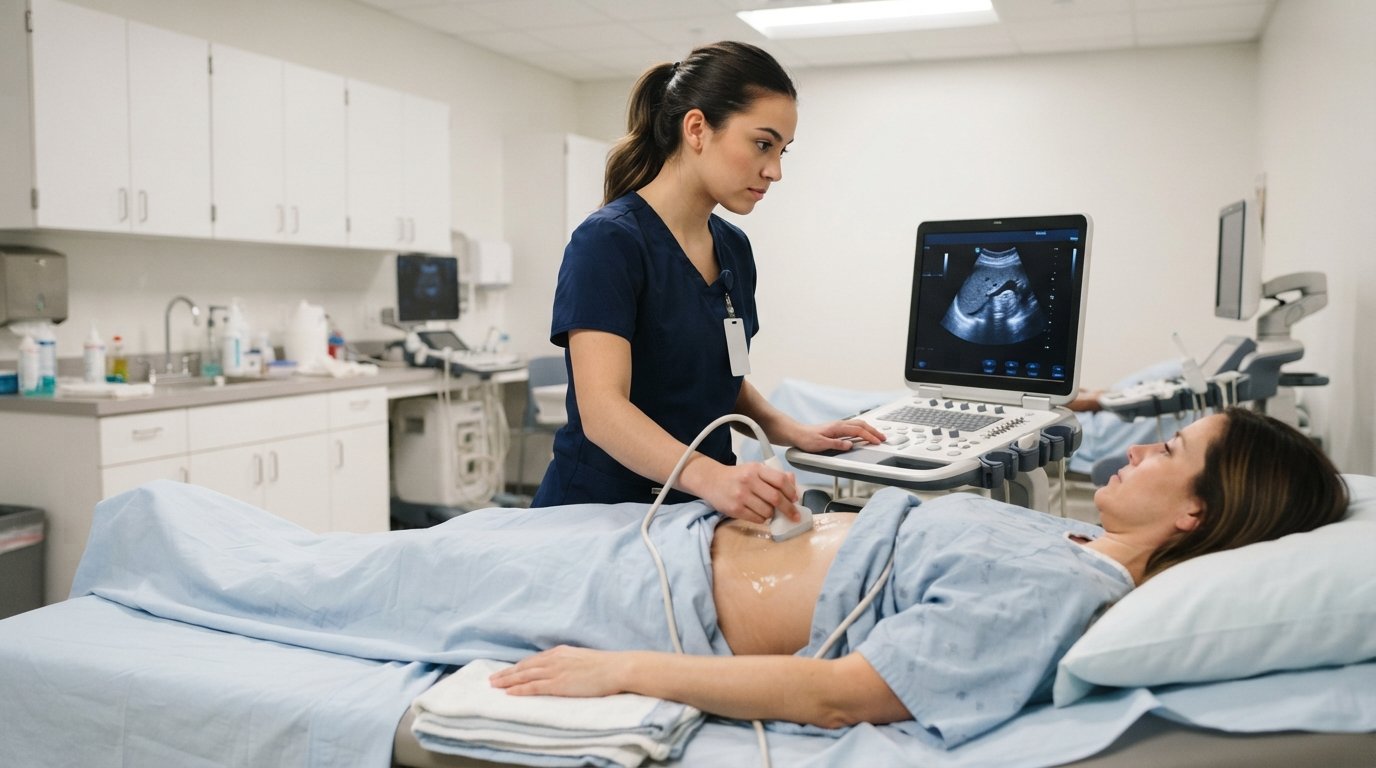
The Diagnostic Medical Sonography/Sonographer and Ultrasound Technician Associate's degree, usually 2 years In-person at Bellevue College, is built around a blend of classroom instruction, lab practice, and real clinical rotations. Students learn to operate ultrasound equipment, interpret images, and communicate findings that support physicians in diagnosing and monitoring conditions. The curriculum typically includes anatomy and physiology, medical terminology, physics of ultrasound, cross-sectional anatomy, and patient care skills. Because sonography is highly operator-dependent, the program emphasizes repetitive hands-on scanning under supervision so that graduates can produce diagnostic-quality images.
Bellevue College's program is designed to prepare students for entry-level positions in hospitals, clinics, imaging centers, and physician offices. Coursework usually progresses from foundational science and instrumentation to specialized scanning protocols in abdominal, obstetric, gynecologic, and vascular sonography, depending on the program's concentration. Clinical placements are a central component, giving students direct exposure to patient interaction, workflow, and the pace of a working imaging department. This in-person format is important because sonography requires physical technique, real-time feedback, and direct mentorship that online formats cannot replicate.
Accreditation matters when choosing any sonography program. Prospective students should confirm that the program is accredited by a recognized body such as the Commission on Accreditation of Allied Health Education Programs (CAAHEP), which helps ensure eligibility for national credentialing exams and smoother employer acceptance. Bellevue College's program is structured to align with these standards, and applicants should verify current accreditation status directly with the college before applying.
Who Should Consider This Two-Year In-Person Program
This degree is a strong fit for students who want a healthcare career with direct patient contact, technical skill, and a relatively short training timeline. It suits recent high school graduates, career changers from administrative or customer service roles, and working adults who can commit to a full-time, in-person schedule for two years. Because sonography programs typically require daytime clinical hours, applicants should plan for limited flexibility during the clinical phase.
It is also a good option for people who prefer structured, hands-on learning over fully online study. The in-person format at Bellevue College means access to scanning labs, faculty demonstrations, and immediate correction of technique, which is critical in a field where image quality depends on probe angle, pressure, and patient positioning. Students who thrive in team-based clinical environments and are comfortable with direct patient care tend to do well.
That said, this path is not for everyone. If you need maximum schedule flexibility, a fully online program may be a better fit for general education requirements, though clinical sonography training itself remains in-person by necessity. If you are unsure about healthcare altogether, it helps to compare related roles in medical billing, administration, or health information management before committing. For a broader look at non-clinical healthcare pathways, the medical billing and coding programs degree guide explains how administrative healthcare degrees compare in cost and timeline.
Admission Requirements and Application Steps
Admission to a competitive sonography program usually involves more than a standard college application. Bellevue College, like many allied health programs, typically requires applicants to complete prerequisite courses in anatomy, physiology, and medical terminology, often with minimum grades. Applicants may also need to take placement tests, attend an information session, and submit transcripts. Because cohort sizes are limited, meeting minimum requirements does not guarantee admission.
A practical way to approach the process is to treat it as a sequence of checkpoints. First, confirm the current prerequisite list and GPA expectations on the college's program page. Second, complete prerequisites with strong grades, since many programs rank applicants by GPA or a points system. Third, prepare for any required observation hours, interviews, or essays. Fourth, submit the application by the posted deadline and keep backup plans in mind in case the cohort fills.
Here is a simplified view of the typical steps:
- Review the program's current admission criteria and accreditation status.
- Complete prerequisite coursework in anatomy, physiology, and related sciences.
- Attend a required information session or advising appointment.
- Submit transcripts, application forms, and any supporting documents by the deadline.
- Prepare for clinical placement requirements such as immunizations and background checks.
After admission, students should expect a structured schedule that includes classroom lectures, lab sessions, and clinical rotations. Clinical placements often require travel to partner sites, so it helps to plan transportation and childcare in advance. Because the program is in-person, students should also budget time for commuting and for the physical demands of scanning labs.
Cost, Financial Aid, and Return on Investment
An associate's degree in sonography is generally more affordable than a bachelor's degree, but costs still add up when you include tuition, fees, books, uniforms, background checks, and clinical travel. Bellevue College is a public institution, which typically means lower tuition for in-state residents, though out-of-state and international students should check current rates. Prospective students should request a current cost estimate from the college and compare it against the earning potential of entry-level sonographer roles.
Financial aid options for this type of program include federal student aid, state grants, institutional scholarships, and workforce development funding. Because sonography is a high-demand healthcare field, some employers offer tuition assistance or repayment programs for employees who pursue credentials. Students should complete the FAFSA early and speak with the college's financial aid office about program-specific scholarships. It is also worth asking whether the program qualifies for any workforce grants tied to healthcare shortages.
When estimating return on investment, look beyond tuition. Consider the cost of clinical travel, the income you forgo while studying full-time, and the time to credentialing. Sonographers typically earn competitive wages relative to the length of training, and demand remains steady in hospitals and outpatient imaging centers. However, outcomes vary by region and employer, so prospective students should research local job postings and salary data rather than relying on national averages alone.
Clinical Training and Credentialing Preparation
Clinical training is the heart of the Diagnostic Medical Sonography/Sonographer and Ultrasound Technician Associate's degree, usually 2 years In-person at Bellevue College. Students rotate through different imaging settings, learning to scan patients under the supervision of credentialed sonographers. These rotations build speed, confidence, and professional judgment, and they often serve as informal job interviews if the clinical site has openings.
Credentialing is a key milestone after graduation. Many employers prefer or require sonographers to hold credentials from bodies such as the American Registry for Diagnostic Medical Sonography (ARDMS). Program accreditation and clinical experience are usually prerequisites for exam eligibility, which is why choosing an accredited program matters. Students should ask the program director which credentialing exams graduates typically take and what pass rates look like. Preparation often includes mock exams, review sessions, and structured study plans during the final terms.
Beyond technical scanning, clinical training develops soft skills that employers value: patient communication, empathy, cultural competence, and the ability to explain procedures clearly. Sonographers often work with anxious patients, including pregnant patients and people awaiting diagnostic results, so professionalism and reassurance matter as much as image quality. Students who treat clinical rotations as a chance to build these skills tend to transition more smoothly into their first jobs.
Career Outlook and Advancement Paths
Demand for diagnostic medical sonographers has remained strong because ultrasound is a non-invasive, relatively low-cost imaging method used across many specialties. Graduates typically start in hospitals, outpatient imaging centers, obstetric and gynecologic clinics, or vascular labs. With experience, sonographers can specialize in areas such as echocardiography, vascular sonography, or pediatric sonography, often adding credentials that increase earning potential.
Advancement can take several forms. Some sonographers move into lead technologist or supervisor roles, while others pursue education, application specialist positions with equipment manufacturers, or sales and training roles. A small number return to school for bachelor's degrees in healthcare administration or related fields to move into management. Because the field is hands-on, many sonographers value the ability to step into adjacent roles without leaving healthcare entirely.
For students who want to explore how different healthcare careers compare in training length and job duties, career guides can help clarify the landscape. For example, Careers.org provides occupation profiles that explain typical duties, work settings, and the education or licensure each role requires, which can be useful when comparing sonography with nursing, radiologic technology, or health administration.
Comparing Bellevue College with Other Sonography Programs
Bellevue College is not the only option for sonography training, and comparing programs is a smart step before applying. Key comparison points include accreditation status, cohort size, clinical placement support, pass rates on credentialing exams, tuition, and schedule format. In-person programs generally offer stronger hands-on lab access, while some schools may offer hybrid didactic coursework with in-person clinicals. Students should also check whether the program has articulation agreements with four-year institutions if they might want to continue their education later.
Location and cost of living matter as well. Bellevue is part of the Seattle metropolitan area, which offers a dense healthcare job market but also a higher cost of living than many other regions. Students who plan to work while studying should confirm whether the program schedule allows for part-time employment, especially during clinical rotations. It is also worth asking about job placement support and employer relationships, since local clinical partners can influence hiring pipelines.
Prospective students can use program comparison tools to explore other healthcare and allied health degrees side by side, including online options for general education and administration. A matching service can help narrow down accredited programs based on your academic level, field of interest, and location preferences. That said, sonography clinical training will always require an in-person component, so students should prioritize programs with strong clinical partnerships over purely online convenience.
Practical Tips for Prospective Students
Preparing early can make the difference between a competitive application and a missed cycle. Students should start by meeting with an academic advisor to map out prerequisites and confirm timelines. It also helps to shadow a sonographer or volunteer in a healthcare setting to confirm interest before committing two years to clinical training. Building strong science grades and practicing patient communication skills are equally important.
Budgeting should include more than tuition. Clinical rotations may require travel, parking, scrubs, and updated immunizations. Students should also plan for the cost of credentialing exams after graduation. Scholarship searches should start at least six months before the application deadline, and students should ask the program office about any internal awards or employer-sponsored opportunities.
Finally, keep the big picture in mind. The Diagnostic Medical Sonography/Sonographer and Ultrasound Technician Associate's degree, usually 2 years In-person at Bellevue College, is a focused investment in a specific career. It rewards students who are organized, hands-on, and comfortable with direct patient care. With careful planning, it can lead to a stable healthcare role without the time and cost of a four-year degree.
If you are still early in your search, take time to compare programs, verify accreditation, and talk to current students or graduates. The right program should fit your schedule, budget, and career goals, and a two-year in-person sonography degree at a reputable public college is a practical starting point for many aspiring sonographers.