
Choosing a college major is a big decision, and for those drawn to creativity, a fine arts degree often feels like the natural path. Yet many students worry about the return on investment. Will a fine arts course lead to a stable career? The answer is more nuanced than a simple yes or no. A fine arts major develops a powerful skill set that extends far beyond the studio. It teaches visual literacy, critical thinking, and the discipline to see a project through from concept to completion. In today’s economy, where creative problem-solving is highly valued by employers, the abilities you gain from a fine arts degree can open doors to industries you might not have considered. This article explores what you actually study in a fine arts program and the diverse career options available to graduates. We will also address common questions about earning potential and job stability, helping you make an informed decision about whether this path is right for you.
What You Actually Study in a Fine Arts Program
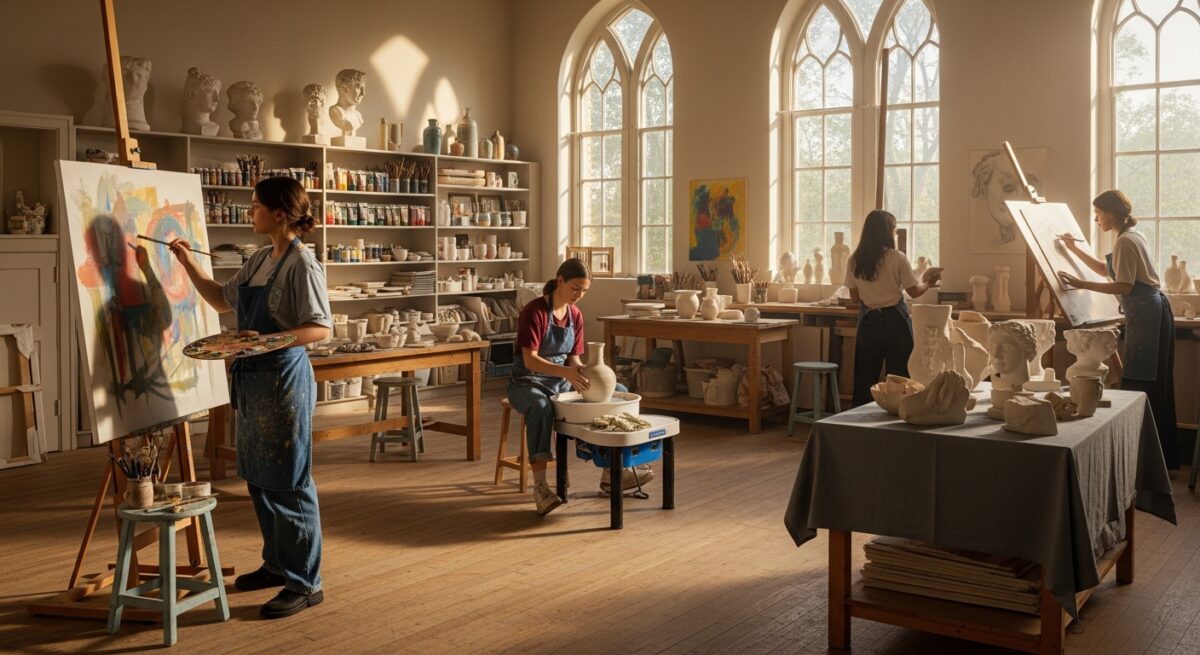
A fine arts degree is not a single, narrow track. It is an umbrella term for a range of studio-based disciplines. Most programs require a foundation year where you experiment with drawing, painting, sculpture, printmaking, and digital media. After that, you choose a concentration. The core of the curriculum is hands-on practice. You will spend hours in the studio, learning techniques like color theory, composition, and material handling. But the academic side is equally important. Art history courses give you context, showing you how movements like Impressionism or Bauhaus influence contemporary work. You will also take seminars in criticism and aesthetics, learning how to analyze and talk about art with precision.
Beyond technical skills, a fine arts course trains you in conceptual development. You learn to generate ideas, research them, and translate them into visual form. This process involves constant critique. In group reviews, you present your work and receive feedback from peers and professors. This experience teaches you to accept criticism constructively and to defend your creative choices with logic. Many programs also require a senior thesis or capstone project, which culminates in a public exhibition. This is a major professional milestone. It forces you to plan, budget, and promote your work, giving you a taste of what it means to be a practicing artist.
Common Specializations Within a Fine Arts Major
As you progress, you will likely choose a specialization. Here are some of the most common paths, each with its own focus and career trajectory:
- Painting and Drawing: Focuses on traditional and experimental approaches to two-dimensional works. You study color, form, and narrative.
- Sculpture: Involves working with materials like clay, metal, wood, and found objects. You learn about space, mass, and installation.
- Printmaking: Covers techniques like etching, screen printing, and lithography. It emphasizes process and reproducibility.
- Digital Media and New Genres: Explores video, animation, interactive art, and virtual reality. This is a rapidly growing field.
Each specialization has its own set of technical challenges. A sculptor, for example, must understand structural engineering and safety protocols for power tools. A digital media artist must master software like Adobe Creative Suite, Blender, or Unity. The key is to find a medium that aligns with your natural interests, because you will spend a huge amount of time working in it. Your choice of specialization also influences your career options. A painter might aim for gallery representation, while a digital media artist might find work in game design or film production.
The Hidden Curriculum: Skills Employers Actually Want
Many people underestimate the professional skills embedded in a fine arts degree. Employers across sectors value the ability to think visually and solve complex problems. When you work on a large canvas or a multi-part sculpture, you are managing a long-term project with many variables. You are budgeting for materials, meeting deadlines, and documenting your progress. These are project management skills. The critique process also builds resilience and communication skills. You learn to articulate why you made specific choices and how to adjust your work based on feedback without losing your vision. This is invaluable in a corporate environment where collaboration and iteration are routine.
Furthermore, fine arts graduates are trained to work with ambiguity. In a business setting, problems often have no single right answer. Artists are comfortable exploring multiple solutions and iterating until they find a compelling result. This design-thinking approach is why many tech companies hire fine arts graduates for user experience (UX) roles. For example, a fine arts major who studied sculpture has a strong understanding of three-dimensional space, which translates directly to designing intuitive interfaces and physical products. The ability to empathize with the viewer’s perspective is also a core part of art training. This empathy is crucial for roles in marketing, advertising, and product development where understanding the customer is key.
Direct Career Paths for Fine Arts Graduates
The most obvious career path is becoming a practicing studio artist. This means creating work for exhibition and sale. However, it is important to be realistic. Very few fine arts graduates support themselves solely through gallery sales. Most working artists have multiple income streams. They might teach community workshops, take on commissions, or work part-time in a related field. If you are drawn to this path, you will need to develop business skills. You will need to market yourself, manage your finances, and network with gallerists and collectors. A fine arts degree gives you the artistic foundation, but the business side is often learned on the job.
Another direct path is art education. With a fine arts degree and a teaching credential, you can teach at the K-12 level. Many community colleges and art centers also hire instructors with a bachelor’s degree to teach continuing education classes. Teaching offers stability and the chance to inspire the next generation of artists. It also keeps you connected to your own practice, as many art teachers continue to make work during summers and breaks. For those who want to work in a museum or gallery setting, curatorial roles are an option. This involves researching and organizing exhibitions, writing wall text and catalog essays, and managing collections. A fine arts degree, paired with an internship, is a strong starting point for a career as a curator or gallery director.
There are also technical roles in the art world. Art handling and installation requires knowledge of materials and preservation. Art restoration is a specialized field that combines chemistry and art history. Fine arts graduates with strong organizational skills can work as studio managers for established artists, handling scheduling, materials ordering, and client communication. These roles provide a steady income and exposure to the professional art world. If you are interested in these paths, it is wise to seek internships while you are still in school. Many programs have partnerships with local museums and galleries that can provide practical experience. For a deeper look at managing your time during such a demanding program, see our guide on 3 time management tips for studying a master’s degree online.
Applied Careers: Where Fine Arts Meets Industry
A fine arts degree is not a ticket to poverty. Many graduates find lucrative careers in creative industries. One of the most common applied paths is graphic design. While a BFA in Graphic Design is a specific degree, many fine arts majors with strong digital skills transition into this field. They work on branding, layout, and visual identity for companies. The salary range is broad. Entry-level graphic designers might earn $40,000 to $50,000 per year, while experienced art directors can earn over $100,000. Another high-demand area is user experience (UX) and user interface (UI) design. Tech companies pay well for people who understand how people interact with screens. A fine arts background gives you an edge because you understand color, composition, and hierarchy of information.
Other applied careers include illustration, animation, and motion graphics. Illustrators work in publishing, advertising, and fashion. Animators and motion designers work in film, television, and gaming. The gaming industry, in particular, values fine arts graduates for concept art and character design. There is also a growing market for fine artists in the entertainment industry. Set designers, prop makers, and scenic painters all draw on fine arts skills. The film and theater industries need people who can create realistic environments and objects. These jobs can be project-based, but they pay well and are creatively satisfying. If you are willing to relocate to a production hub like Los Angeles or New York, opportunities increase.
Finally, consider the world of arts administration and nonprofit management. Museums, galleries, and cultural centers need people to handle fundraising, marketing, event planning, and public relations. A fine arts degree is valuable here because you understand the product you are promoting. You can write compelling grant proposals and create educational programming that resonates with the public. Many arts administrators start as interns or entry-level assistants and work their way up to executive director roles. The pay in the nonprofit sector is often lower than in tech, but the work is mission-driven and offers great benefits like flexible schedules and creative autonomy. For those who want to explore these options, platforms like Scholarship Education can help you find funding for further training or certification programs.
Frequently Asked Questions
Is a fine arts degree worth the money?
This depends on your career goals and how you use the degree. If you expect a high salary immediately after graduation, you may be disappointed. However, the skills you gain are transferable. Graduates who actively network, seek internships, and develop a portfolio of work tend to find good jobs. The degree is worth it if you are committed to building a creative career and you choose a program with strong career services and industry connections.
What can I do with a fine arts degree besides be an artist?
Many things. You can work in graphic design, UX/UI design, art therapy, museum education, art restoration, illustration, animation, set design, or arts administration. You can also use the degree as a stepping stone to graduate programs in architecture, urban planning, or library science. The critical thinking and visual skills are valued in many fields.
Do I need a master’s degree to succeed in fine arts?
Not always. A Master of Fine Arts (MFA) is often required for teaching at the university level or for serious gallery representation. However, for many applied careers like graphic design or UX, a strong portfolio is more important than a graduate degree. Many professionals earn an MFA later in their career to advance or shift focus.
How do I build a portfolio while in school?
Treat every project as a portfolio piece. Document your work with high-quality photographs or video. Keep a sketchbook to show process. Take elective courses in photography or digital documentation if they are offered. Your senior thesis exhibition is a perfect opportunity to create a cohesive body of work. Ask your professors for portfolio reviews and advice on presentation.
Choosing a fine arts degree is a decision that involves both passion and practicality. The curriculum is rigorous and demands self-discipline. The career paths are diverse, ranging from the traditional studio artist to the in-demand UX designer. What matters most is your willingness to apply the skills you learn to real-world opportunities. The creative economy is growing, and companies are hungry for people who can think differently. If you are willing to work hard, build a network, and adapt, a fine arts degree can be the foundation for a fulfilling and sustainable career. Take the time to research programs carefully, talk to alumni, and visit campuses. The right program will not only teach you technique but will also prepare you for the business of being a creative professional.