
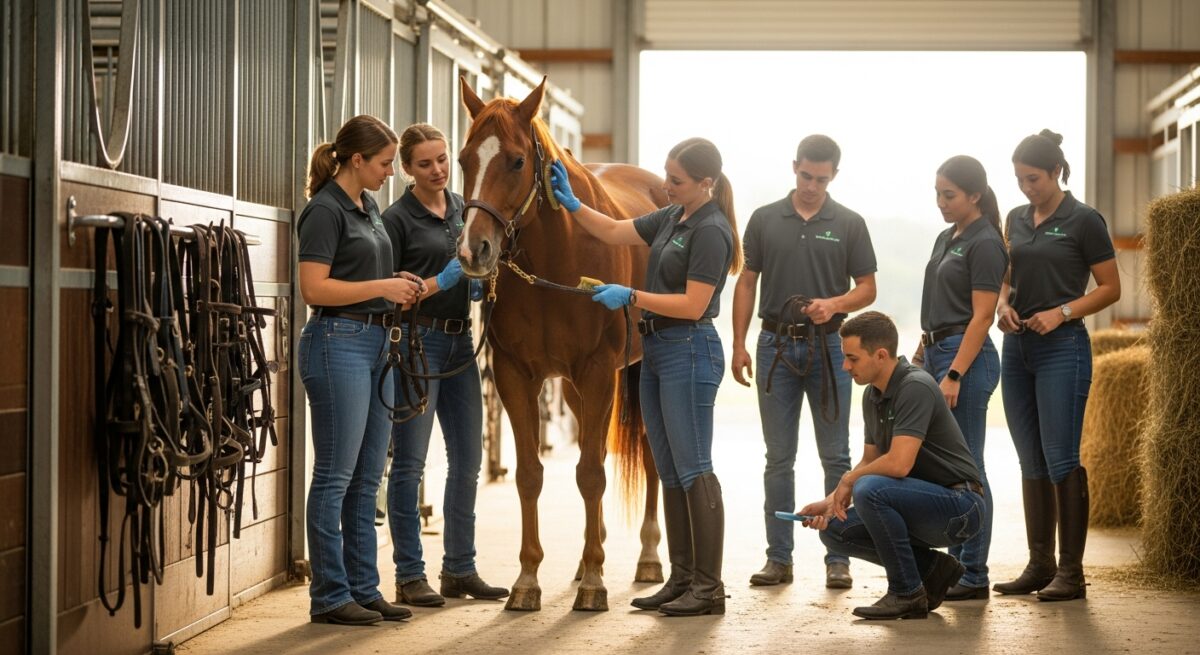
If you have a deep passion for horses and want to build a professional career around their care, training, or management, an equine science degree offers a structured path to turn that passion into a livelihood. This specialized field of study combines animal biology, business management, and hands-on horsemanship to prepare graduates for a range of rewarding roles. Whether you dream of managing a breeding farm, working as an equine nutritionist, or pursuing veterinary medicine, understanding what an equine science degree entails and the career opportunities it unlocks is the first step toward a successful future in the horse industry.
What Is an Equine Science Degree?
An equine science degree is an academic program that focuses on the biology, management, and business of horses. Unlike a general animal science degree, which covers multiple species, this program dives deeply into the unique physiological, nutritional, and behavioral needs of equids. Students learn about equine anatomy, reproduction, genetics, exercise physiology, and stable management, often combining classroom theory with significant hands-on experience at university farms or equestrian centers.
Most equine science programs are offered at the bachelor’s level, though associate degrees and master’s programs are also available. Coursework typically includes foundational sciences such as chemistry and biology, followed by specialized equine courses like equine nutrition, lameness diagnosis, and breeding technology. Many programs also require internships or practicums, giving students real-world experience before graduation. For those who cannot attend on-campus programs, several accredited online options exist, though they often require in-person lab components or local internship arrangements. Exploring a related animal science degree career guide can help you compare pathways and understand how equine science fits into the broader agricultural education landscape.
Core Components of an Equine Studies Program
Equine studies programs are designed to be interdisciplinary, blending hard sciences with practical management skills. A typical curriculum covers several key areas that prepare students for diverse career paths.
Science and Health Foundations
The scientific backbone of an equine science degree includes courses in equine anatomy and physiology, nutrition, genetics, and reproductive physiology. Students learn how the horse’s body works, from digestive efficiency to muscle function during exercise. Understanding common diseases, parasite control, and preventive health care is also essential. These science courses often involve laboratory work, dissection, and field observations to reinforce textbook knowledge.
Business and Management Skills
Many graduates eventually manage or own equine businesses, so programs incorporate business fundamentals. Courses in farm management, equine facility operations, marketing, and financial planning teach students how to run a profitable stable, boarding facility, or breeding operation. Students also learn about liability issues, insurance requirements, and regulatory compliance, which are critical for protecting both animals and clients.
Hands-On Horsemanship
Practical experience is a hallmark of quality equine programs. Students typically spend time at university equestrian centers learning stable management routines, grooming, basic veterinary care, and handling techniques. Some programs offer riding instruction as part of the curriculum, while others focus primarily on management and require riding experience as a prerequisite. Regardless of the approach, hands-on time with horses is considered essential for building competence and confidence.
Career Opportunities With an Equine Science Degree
Graduates of equine science programs enter a vibrant industry that includes racing, showing, recreational riding, and therapeutic riding. The job market values both technical knowledge and practical skills, and opportunities exist across private farms, veterinary practices, nonprofit organizations, and government agencies. Below are some of the most common and promising career paths.
Equine Farm and Stable Manager
Farm and stable managers oversee daily operations at breeding farms, boarding stables, training facilities, or lesson barns. Responsibilities include scheduling feedings, coordinating veterinary and farrier visits, managing staff, maintaining facilities, and ensuring the health and safety of all horses on the property. This role requires strong organizational skills, knowledge of equine nutrition and health, and the ability to handle both people and animals. According to industry data, experienced stable managers can earn between $40,000 and $70,000 annually, with top earners at large breeding operations exceeding $80,000.
Equine Nutritionist
Equine nutritionists develop feeding programs for individual horses or entire herds, taking into account factors like age, workload, health status, and breed. They work for feed companies, research institutions, private farms, or as independent consultants. A bachelor’s degree in equine science provides a solid foundation, but many nutritionists pursue graduate degrees or specialized certifications to deepen their expertise. The demand for customized nutrition plans has grown as owners become more aware of how diet affects performance and longevity. Salaries for equine nutritionists typically range from $45,000 to $75,000, depending on experience and employer.
Breeding and Reproduction Specialist
Breeding specialists manage artificial insemination programs, maintain stud books, monitor mare cycles, and assist with foaling. They work at stud farms, veterinary clinics, or artificial insemination centers. This career requires a strong grasp of equine reproductive anatomy, hormone therapy, and ultrasound technology. Many employers prefer candidates who have completed advanced coursework or certification in equine reproduction. Starting salaries often fall between $35,000 and $55,000, with experienced specialists earning more at high-profile breeding operations.
Equine-Assisted Therapy Professional
Therapeutic riding centers employ equine science graduates as instructors, program coordinators, or barn managers. These professionals work with individuals who have physical, emotional, or cognitive disabilities, using horseback riding and horse care as therapeutic tools. Certification through organizations like PATH International (Professional Association of Therapeutic Horsemanship International) is typically required. This field offers immense personal satisfaction, though salaries are often modest, ranging from $30,000 to $50,000 for program coordinators. Many professionals supplement income by offering private lessons or consulting.
Equine Extension Agent or Educator
Extension agents work for universities or government agencies, delivering educational programs to horse owners and industry professionals. They conduct workshops on topics like pasture management, hoof care, and biosecurity, and often write articles or create online resources. This role requires excellent communication skills and a broad knowledge base across multiple equine disciplines. Salaries for extension agents with a bachelor’s degree typically start around $40,000 and can exceed $65,000 with experience and advanced degrees.
How to Choose the Right Program
Selecting an equine science degree program requires careful evaluation of several factors. Accreditation is critical: ensure the program is offered by an accredited institution to maintain transferability of credits and eligibility for federal financial aid. Look for programs with strong industry connections, internship opportunities, and modern facilities. Consider whether you prefer a program that emphasizes riding and training versus one focused on science and management. Visit campuses, talk to current students and faculty, and ask about job placement rates for graduates.
Online options can be a flexible choice for working adults or those who live far from traditional campuses. However, verify how the program handles hands-on requirements. Some online equine studies programs partner with local farms or stables where students complete practical hours, while others require short on-campus intensives. If you are considering an online route, compare multiple programs to find one that matches your learning style and career goals.
Frequently Asked Questions
What is the difference between an equine science degree and a horse science degree? These terms are often used interchangeably. Both refer to academic programs that study the biology, management, and business of horses. Some schools use “equine science” to emphasize the scientific aspects, while “horse science” may be used by programs with a more practical, hands-on focus. The core curriculum is typically very similar.
Can I become a veterinarian with an equine science degree? Yes, an equine science degree is an excellent pre-veterinary track, especially if you plan to specialize in equine medicine. However, you must complete additional prerequisite courses (such as organic chemistry, biochemistry, and physics) and apply to veterinary school. Many equine science programs are designed to fulfill these prerequisites, but confirm with your advisor.
Is an equine science degree worth it if I don’t want to be a vet? Absolutely. The degree prepares you for many non-veterinary careers, including stable management, nutrition consulting, breeding, sales, and education. The horse industry employs thousands of people in roles that do not require a DVM.
How long does it take to complete an equine science degree? A bachelor’s degree typically takes four years of full-time study. Associate degrees take two years, and master’s programs usually require an additional one to two years beyond a bachelor’s. Accelerated or online programs may offer faster completion timelines.
What salary can I expect with an equine science degree? Salaries vary widely by role and location. Entry-level positions like stable hand or barn assistant may pay $25,000 to $35,000 annually, while experienced managers, nutritionists, and breeding specialists can earn $50,000 to $80,000 or more. Advanced degrees and certifications tend to increase earning potential.
For those looking to explore degree options and compare accredited programs, platforms like DegreesOnline.Education can help you find schools that offer equine science, animal science, and related agricultural degrees with flexible learning formats to fit your schedule.
Building Your Future in the Equine Industry
An equine science degree provides the knowledge, skills, and credentials needed to pursue a meaningful career working with horses. Whether you envision yourself managing a premier breeding farm, advising owners on nutrition, or educating the next generation of equestrians, this degree opens doors to a field that combines science, business, and a love for animals. Take the time to research programs, visit campuses, and connect with professionals already working in the industry. With the right education and dedication, you can build a career that is both professionally fulfilling and personally rewarding.