
Earn Your Associate Degree in Nursing in Delaware
An Associate Degree in Nursing in Delaware provides a fast, affordable path to becoming a Registered Nurse. This guide covers top programs, admission steps, and career outcomes.

By Elena Markova
For many aspiring nurses in the First State, the Associate Degree in Nursing (ADN) represents the most direct and accessible pathway to a rewarding healthcare career. This two-year degree, offered at community colleges and select universities across Delaware, provides the foundational knowledge and clinical skills required to sit for the NCLEX-RN licensure exam and begin practicing as a Registered Nurse (RN). With a strong emphasis on hands-on patient care and critical thinking, an ADN program efficiently prepares graduates to meet the growing demand for nursing professionals in Delaware’s hospitals, clinics, and long-term care facilities. The combination of relatively low tuition, a shorter time to completion compared to a four-year degree, and strong employment outcomes makes this an attractive option for career-starters and career-changers alike.
The Value of an ADN in Delaware’s Healthcare Landscape
Delaware, like much of the nation, faces a consistent need for skilled nurses. An Associate Degree in Nursing serves as a critical pipeline for filling these roles. Graduates are prepared for entry-level RN positions where they perform essential duties such as patient assessment, administering medications, coordinating with healthcare teams, and providing patient education. The practical, focused curriculum is designed to translate directly to the bedside. Furthermore, an ADN is often considered a “stair-step” degree. Many nurses begin their careers with an ADN, gain valuable experience and income, and then pursue a Bachelor of Science in Nursing (BSN) through RN-to-BSN completion programs, which are widely available online and in-person. This approach allows individuals to enter the workforce quickly while planning for future academic advancement. Financial planning for this step is crucial, and resources for college degree guidance can help map out the costs of both the initial ADN and any future BSN completion.
Key Components of Delaware ADN Programs
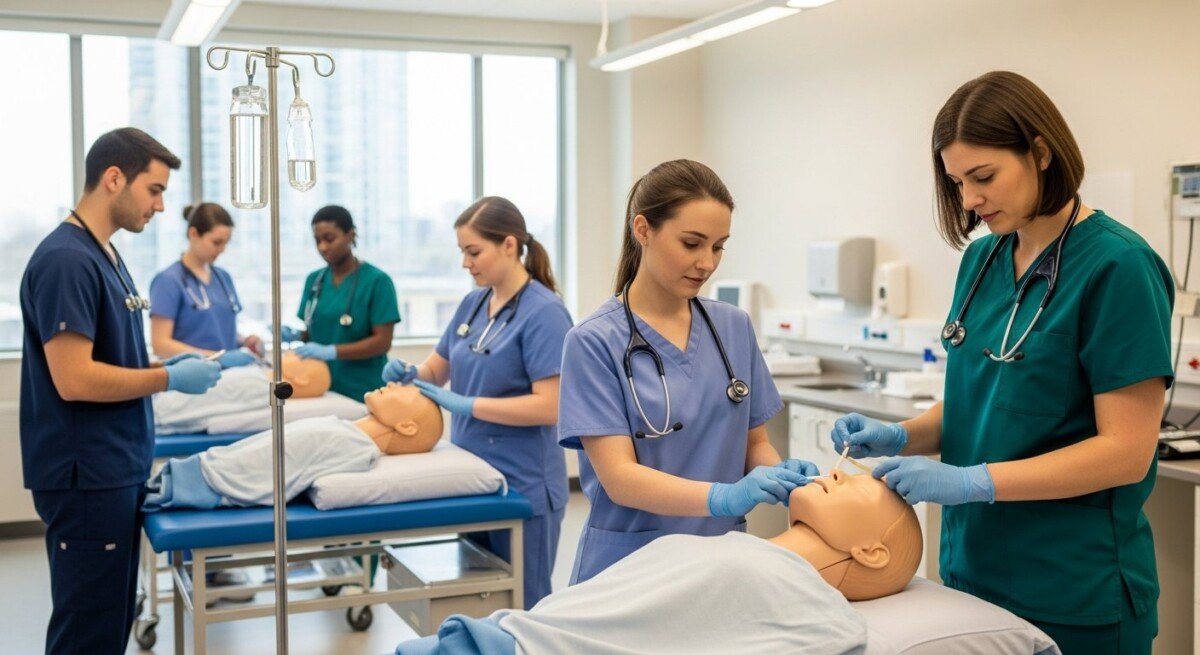
Accredited ADN programs in Delaware blend rigorous academic coursework with supervised clinical rotations. The curriculum typically spans four to five semesters of full-time study. Coursework covers core sciences like anatomy, physiology, and microbiology, alongside specialized nursing subjects such as fundamentals of nursing, pharmacology, mental health nursing, maternal-child health, and medical-surgical nursing. The clinical component is indispensable. Students complete hundreds of hours of hands-on training in real healthcare settings, including local hospitals, community health centers, and specialty clinics. This experience is where theoretical knowledge is applied, and professional competencies are developed under the guidance of experienced instructors and nurse preceptors. Successful completion of the program awards the Associate of Science (AS) or Associate of Applied Science (AAS) in Nursing, making the graduate eligible to take the NCLEX-RN.
Admission Requirements and Process
Admission to ADN programs in Delaware is competitive, as seats are often limited. Prospective students must meet a set of prerequisites, which commonly include:
- A high school diploma or GED with a minimum GPA (often 2.5 or higher).
- Completion of prerequisite college courses with a grade of “C” or better, such as English composition, college-level math, psychology, and the core science courses (biology, chemistry, anatomy & physiology).
- Satisfactory scores on a pre-admission exam, like the TEAS (Test of Essential Academic Skills).
- Current CPR certification for healthcare providers.
- Clearance of a criminal background check and drug screening.
- Submission of health records and immunizations.
It is vital to research the specific requirements of each program, as they can vary. Many programs use a point-based or competitive ranking system that considers GPA, prerequisite grades, and TEAS scores. Meeting minimum requirements does not guarantee admission, so applicants should aim for the strongest possible academic record. Planning ahead to complete prerequisites at a community college can strengthen an application. For those considering the flexibility of online study for prerequisite courses, our guide on earning an associates degree in nursing online explores the options and considerations for remote learning in nursing education.
Top Schools Offering ADN Programs in Delaware
Delaware hosts several accredited institutions with reputable ADN programs. The Delaware Technical Community College (Delaware Tech) system is a primary provider, with nursing programs at its campuses in Wilmington, Dover, and Georgetown. These programs are highly regarded for their affordability, strong community ties, and excellent NCLEX pass rates. Additionally, some private colleges and universities in the region offer ADN pathways. When evaluating programs, key factors to consider include accreditation status (crucial for licensure and transfer), NCLEX-RN first-time pass rates, program cost and fee structure, clinical partnership networks, and the availability of student support services. Prospective students should schedule appointments with admissions counselors and, if possible, speak with current students or alumni to gain insights into the program culture and outcomes.
Career Outlook and Next Steps for ADN Graduates
The career outlook for RNs in Delaware is positive. Graduates of ADN programs can seek employment in a variety of settings, including hospitals (the largest employer), physicians’ offices, outpatient care centers, nursing care facilities, and home healthcare services. Upon graduation, the immediate next step is to apply for licensure with the Delaware Board of Nursing and schedule the NCLEX-RN exam. Passing this exam is mandatory to practice as an RN. Once licensed, many new nurses find that healthcare employers in Delaware offer tuition reimbursement or assistance programs to encourage them to continue their education toward a BSN. This professional development is increasingly valued for leadership roles, specialized positions, and meeting the evolving standards of magnet hospital recognition. The ADN provides a solid, employable foundation from which a long and dynamic nursing career can be built.
Frequently Asked Questions
How long does it take to complete an ADN program in Delaware?
Most traditional, full-time ADN programs in Delaware are designed to be completed in two years, or four to five semesters. This timeframe includes prerequisite courses if they are not completed prior to enrollment. Part-time options may extend the timeline to three or more years.
Can I complete an ADN program entirely online in Delaware?
While the core nursing coursework and clinical components cannot be completed fully online due to the hands-on nature of the training, many programs offer hybrid options. In a hybrid format, theoretical coursework is delivered online, but students must attend in-person skills labs, simulations, and all clinical rotations at approved healthcare sites in Delaware or the surrounding region.
What is the approximate cost of an ADN program in Delaware?
Costs vary significantly between public community colleges and private institutions. At Delaware Tech, a public community college, total program costs (including tuition and fees) for in-state residents are typically in the range of $10,000 to $15,000. Private college programs can cost considerably more. Financial aid, scholarships, and grants are widely available to eligible students.
Is an ADN from Delaware accepted in other states?
Yes, Delaware is part of the Nurse Licensure Compact (NLC). This means an RN licensed in Delaware can practice in other NLC member states without obtaining additional licenses. However, you must graduate from a program that meets Delaware’s Board of Nursing standards to be eligible for licensure there first.
What is the salary potential for an ADN-prepared RN in Delaware?
According to data from the U.S. Bureau of Labor Statistics, the median annual wage for Registered Nurses in Delaware is competitive with national averages. Entry-level salaries will be on the lower end of the scale, but with experience, specialization, and shift differentials (e.g., for night or weekend work), earnings can increase substantially.
Pursuing an Associate Degree in Nursing in Delaware is a strategic investment in a stable and fulfilling future. It opens the door to a profession dedicated to caring for others, offers strong job security, and provides a clear path for lifelong learning and career growth. By carefully selecting an accredited program, meeting admission requirements, and dedicating oneself to the rigorous curriculum, students can efficiently transition into the vital role of a Registered Nurse, ready to serve the health needs of their community.