
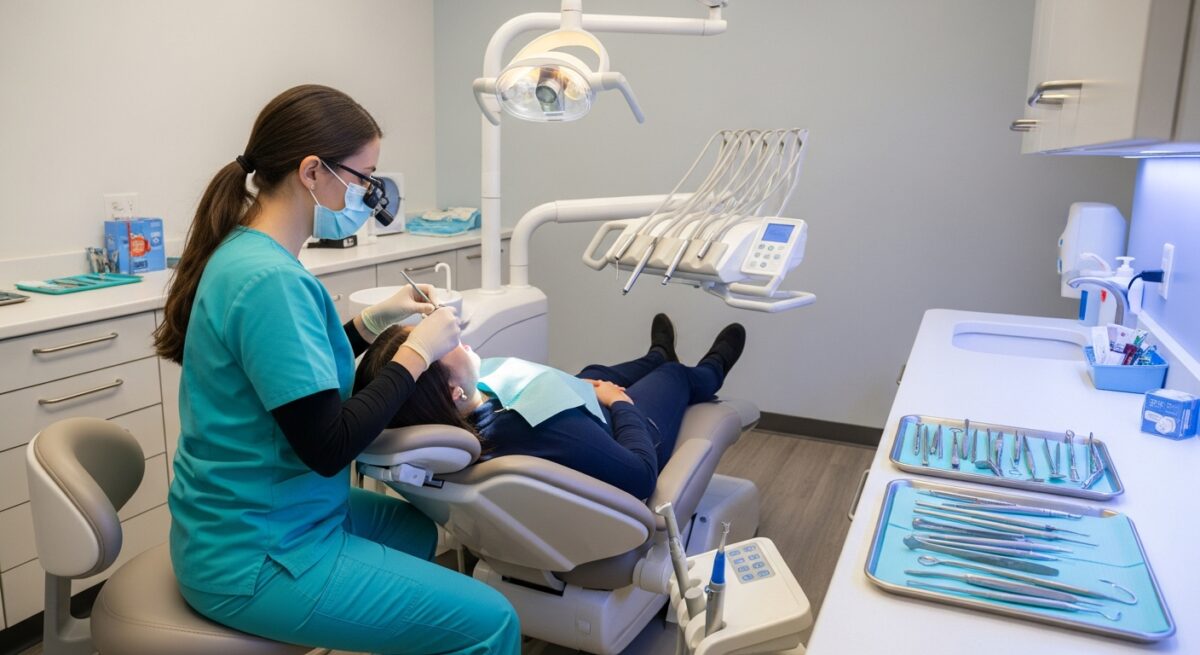
Becoming a dental hygienist is one of the most rewarding and stable career paths in allied health. You will work directly with patients, prevent oral disease, and enjoy a schedule that often allows for a healthy work-life balance. But before you can step into a dental office and pick up a scaler, you need to earn the proper credentials. This Dental Hygienist Degree Complete Guide and Requirements will walk you through every step, from choosing the right program to passing the board exams and launching your career.
The demand for dental hygienists is strong. The Bureau of Labor Statistics projects faster-than-average growth, driven by an aging population and increased awareness of the link between oral health and overall wellness. If you are looking for a hands-on healthcare role that does not require the decade-long commitment of medical school, this field is an excellent option. However, the path requires dedication, a solid educational foundation, and a clear understanding of state licensing rules.
What Is a Dental Hygienist Degree?
A dental hygienist degree is the academic credential required to practice as a licensed dental hygienist. The most common entry point is an associate’s degree, but bachelor’s and master’s degrees are also available for those who want to pursue advanced clinical roles, teaching, or research. The core curriculum blends classroom instruction in anatomy, periodontology, and radiology with hands-on clinical training where you treat real patients under supervision.
The term “dental hygienist degree” often refers specifically to the associate-level program, but the field offers multiple pathways. Your choice depends on your career goals, timeline, and budget. For most students, a dental hygienist associate’s degree is the fastest and most affordable route to licensure. It typically takes three years to complete, including prerequisites, and qualifies you to take the national board exam.
Accreditation is non-negotiable. You must attend a program accredited by the Commission on Dental Accreditation (CODA). Without CODA accreditation, you cannot sit for the National Board Dental Hygiene Examination (NBDHE) or apply for a state license. Always verify a school’s accreditation status before enrolling.
Dental Hygienist Associate’s Degree: The Standard Path
The dental hygienist associate’s degree is the most common entry-level credential. It is offered at community colleges, technical schools, and some universities. Programs are intense and competitive. You will need to complete general education prerequisites such as biology, chemistry, and English before starting the dental hygiene core.
Once admitted to a dental hygiene program, your coursework will include:
- Oral anatomy and histology
- Dental radiography (taking and interpreting X-rays)
- Periodontology (study of gums and supporting structures)
- Pharmacology and pain management (local anesthesia and nitrous oxide)
- Clinical dental hygiene (practicing on patients in a supervised clinic)
- Community dental health and public education
Clinical hours are a major component. You will spend hundreds of hours treating patients, scaling teeth, applying fluoride, and documenting care. This hands-on experience builds the confidence and speed you need to succeed in a real practice. Many programs also require you to complete a community outreach project, such as providing screenings at a school or nursing home.
After graduation, you will take the NBDHE, a comprehensive written exam, plus a state or regional clinical board exam. Passing both grants you eligibility for state licensure. Some states also require a jurisprudence exam on local dental laws.
Bachelor’s and Master’s Degrees in Dental Hygiene
While the associate’s degree is sufficient for clinical practice, a bachelor’s or master’s degree opens doors to higher pay, leadership roles, and non-clinical careers. A Bachelor of Science in Dental Hygiene (BSDH) is ideal for hygienists who want to work in public health, corporate sales, or education. It is also a prerequisite for most graduate programs.
Many schools offer degree completion programs for hygienists who already hold an associate’s degree. These programs are often online, allowing you to work while you learn. They focus on advanced topics such as research methods, healthcare administration, and teaching strategies.
A master’s degree (MSDH or MHS in Dental Hygiene) prepares you for leadership positions. Graduates become program directors at dental hygiene schools, clinical coordinators, or researchers. Some move into healthcare policy or advocacy. The return on investment can be substantial, with master’s-level hygienists often earning 20-30% more than those with an associate’s degree.
If you are considering a bachelor’s or master’s, think about your long-term goals. If you love direct patient care and want to start working quickly, the associate’s path is best. If you dream of teaching, managing a clinic, or influencing public health, invest in a higher degree. Our guide on BS in Chemistry Degree Complete Guide and Career Scope illustrates how advanced education in science-related fields can broaden your career horizons, a principle that applies equally to dental hygiene.
Admission Requirements for Dental Hygiene Programs
Getting into a dental hygiene program is competitive. Most schools receive far more applicants than they have seats. You need a strong application to stand out. Common requirements include:
- High school diploma or GED
- Completion of prerequisite courses (typically anatomy, physiology, microbiology, chemistry, and English) with a minimum GPA, often 3.0 or higher
- TEAS or HESI entrance exam scores (check specific program requirements)
- Letters of recommendation, usually from a science instructor or a practicing dental professional
- A personal statement explaining your motivation and career goals
- Shadowing or work experience in a dental office (strongly recommended)
Some programs also require an interview. Be prepared to discuss why you chose dental hygiene, how you handle stress, and your understanding of the profession. Programs value candidates who demonstrate professionalism, empathy, and a genuine commitment to patient care.
Prerequisite courses are a critical gate. If you are still in high school, take as many science and math classes as possible. If you are a career changer, you may need to spend a semester or two at a community college completing prerequisites before applying. Plan ahead and check each program’s specific list, as requirements vary.
Licensing and Certification Requirements
After earning your degree, you must obtain a license to practice. Licensure is regulated by each state’s dental board, but most states follow a similar process. The steps include:
- Graduate from a CODA-accredited dental hygiene program.
- Pass the National Board Dental Hygiene Examination (NBDHE), a written test covering all areas of dental hygiene science and practice.
- Pass a state or regional clinical board exam. Common clinical exams include the ADEX (Administrators of Dental Examiners) exam or the WREB (Western Regional Examining Board) exam.
- Pass a state jurisprudence exam on dental laws and regulations (required in most states).
- Submit an application and fee to the state dental board. You may also need to undergo a background check.
Once licensed, you must complete continuing education (CE) credits to renew your license. Requirements vary by state, typically ranging from 10 to 30 CE hours per year. Many hygienists also pursue additional certifications in areas such as local anesthesia, nitrous oxide administration, or laser therapy to expand their scope of practice.
Some states allow hygienists to practice in public health settings without direct supervision by a dentist. This is known as direct access. If you are interested in working in underserved communities, research which states offer this privilege and consider pursuing a bachelor’s or master’s degree to qualify.
Cost of a Dental Hygienist Degree and Financial Aid
The cost of a dental hygienist degree varies widely. An associate’s degree from a public community college may cost $10,000 to $30,000 total, including tuition, fees, and supplies. A bachelor’s degree from a university can cost $40,000 to $80,000 or more. Private schools and accelerated programs are the most expensive.
Supplies add up. You will need a dental hygiene kit (instruments, loupes, and a uniform) which can cost $2,000 to $5,000. Some programs include these in the tuition, but many do not. Plan your budget accordingly.
Financial aid is available. Start by filling out the Free Application for Federal Student Aid (FAFSA) to determine eligibility for grants, loans, and work-study. Many community colleges offer scholarships specifically for health science students. The American Dental Hygienists’ Association (ADHA) also maintains a list of scholarships for dental hygiene students.
If cost is a barrier, consider starting at a community college for your associate’s degree. You can then work as a hygienist and pursue a bachelor’s degree online later, often with employer tuition reimbursement. This approach minimizes debt while keeping your career on track.
For additional resources on finding affordable programs, visit degreeonline.education to explore flexible and cost-effective online degree options that can complement your educational journey.
Career Outlook and Salary
The job outlook for dental hygienists is excellent. The Bureau of Labor Statistics projects 11% growth from 2023 to 2033, much faster than the average for all occupations. The median annual wage for dental hygienists was over $80,000 in 2023. The top 10% earned more than $100,000. Hygienists who work in dental offices typically earn an hourly wage, with full-time hygienists often working four days per week.
Benefits vary by employer. Many dental offices offer paid time off, retirement plans, and continuing education allowances. Some hygienists work for temporary staffing agencies, which can offer higher hourly rates but fewer benefits. Others work in public health clinics, schools, or hospitals.
Geographic location matters. Hygienists in states with higher costs of living, such as California, New York, and Washington, tend to earn more. However, salaries in these areas are offset by higher living expenses. Research your local market before committing to a program.
Frequently Asked Questions
How long does it take to become a dental hygienist?
Most students complete a dental hygienist associate’s degree in three years, including prerequisites. Some accelerated programs take two years if prerequisites are already complete. A bachelor’s degree typically takes four years total.
Is a dental hygienist degree hard?
Yes, it is academically challenging. You must master complex medical terminology, anatomy, and clinical techniques. The program requires strong study habits and manual dexterity. However, dedicated students who stay organized and seek help when needed can succeed.
Can I become a dental hygienist online?
You cannot complete a clinical dental hygiene program fully online. The hands-on requirements demand in-person training. However, some schools offer hybrid programs where didactic courses are online and clinical sessions are on campus. Bachelor’s degree completion programs are often available online for already-licensed hygienists.
What is the difference between a dental assistant and a dental hygienist?
Dental assistants support the dentist by preparing instruments, taking X-rays, and assisting during procedures. Dental hygienists perform independent clinical tasks such as scaling, root planing, and applying sealants. Hygienists require a degree and license; assistants typically complete a shorter training program and may not need a license in all states.
Do dental hygienists need to be licensed in every state?
Yes, all states require a license to practice. Licensure requirements are similar across states, but some have additional exams or continuing education mandates. If you plan to move, check the new state’s requirements early.
Your Next Step Toward a Dental Hygiene Career
Earning a dental hygienist degree is a significant investment of time, money, and effort. But the payoff is a stable, well-paying career that makes a real difference in people’s lives. You will help patients prevent disease, improve their smiles, and feel confident about their health. If you are ready to start, research CODA-accredited programs in your area, complete your prerequisites, and apply to multiple schools to maximize your chances of acceptance. Use the resources available through CollegeDegree.Education to compare programs, explore financial aid options, and connect with schools that fit your needs. Your future in dental hygiene starts today.