
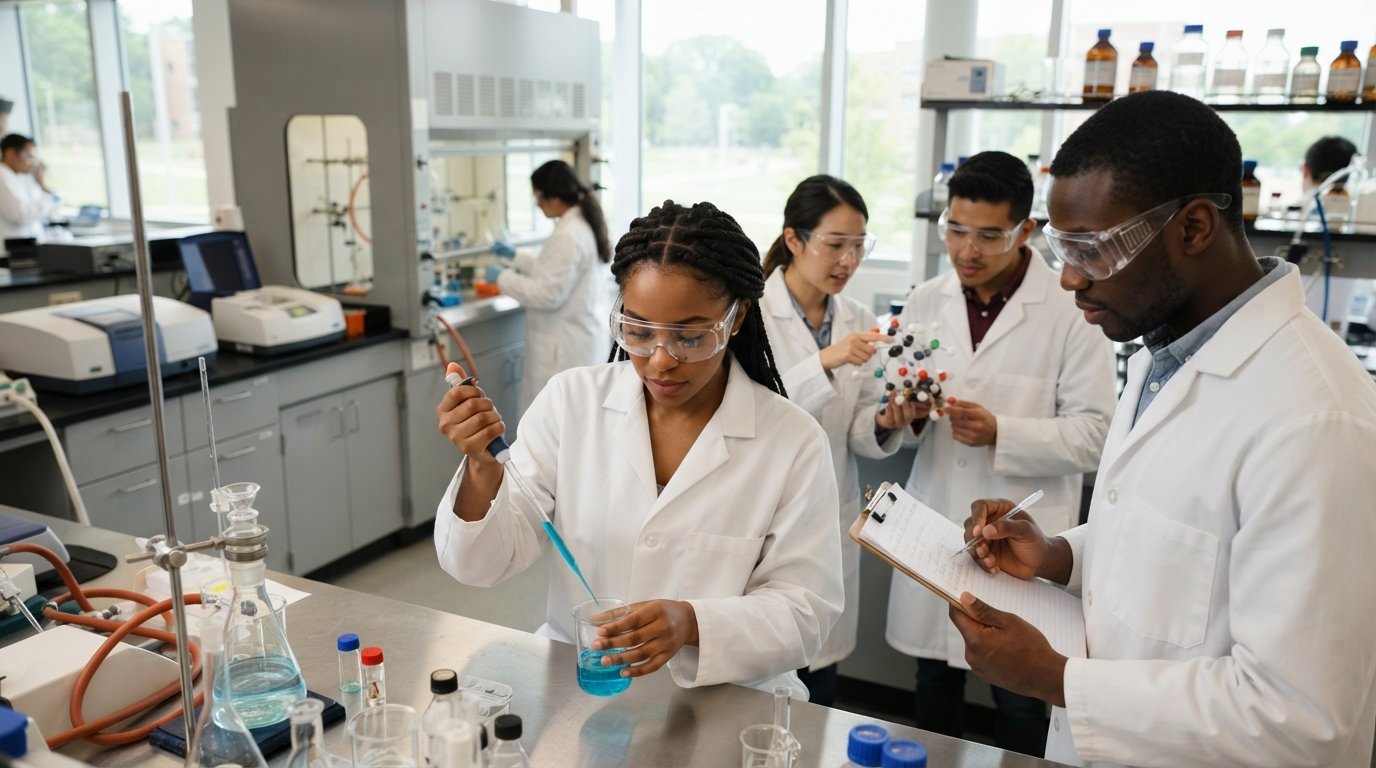
Chemistry Graduate Studies at Delaware State
Advance your chemistry career with Delaware State University's in-person graduate program. Call 8772187081 for guidance on admissions and funding.
By Scott Thompson
Earning a bachelor's degree in chemistry opens the door to a wide range of scientific careers, but for many professionals, the journey does not stop there. The demand for advanced chemical expertise continues to grow across pharmaceuticals, environmental science, materials research, and education. Delaware State University offers a distinctive pathway for learners who want to pursue Chemistry, General Beyond bachelor's degree In-person at Delaware State University, combining rigorous academics with the flexibility of face-to-face instruction. Whether you are a recent graduate considering a master's program or a working chemist seeking to deepen your knowledge, understanding what this university provides can help you make an informed decision about your next academic step.
Delaware State University, a historically Black land-grant institution located in Dover, Delaware, has built a reputation for excellence in STEM education. Its chemistry department emphasizes hands-on laboratory work, faculty mentorship, and research opportunities that prepare students for doctoral study or direct entry into industry. The in-person format ensures that learners benefit from direct access to instrumentation, collaborative problem-solving, and the kind of networking that only face-to-face interaction can provide. For those weighing the benefits of on-campus versus virtual study, exploring options through a trusted online degree resource can clarify how different formats align with your career goals and lifestyle.
Why Pursue Chemistry Beyond a Bachelor's Degree?
A bachelor's degree in chemistry qualifies graduates for entry-level positions such as laboratory technician, quality control analyst, or research assistant. However, advancing into senior research roles, teaching at the university level, or leading scientific teams often requires a master's or doctoral degree. According to the U.S. Bureau of Labor Statistics, chemists and materials scientists with advanced degrees enjoy higher median salaries and lower unemployment rates than those with only undergraduate credentials. The additional training also opens doors to specialized fields like computational chemistry, medicinal chemistry, and polymer science.
Beyond salary and job security, graduate study in chemistry fosters critical thinking, experimental design skills, and the ability to interpret complex data, competencies that are valuable in academia, government agencies, and private industry. Many students also find that graduate research allows them to contribute to solving real-world problems, from developing sustainable materials to discovering new drug therapies. Delaware State University's in-person program is structured to nurture these abilities through small class sizes and close collaboration with faculty who are active in their fields.
For individuals who are still exploring broader academic pathways, resources like the guide on What Is a Business and Law Degree: Career Guide illustrate how interdisciplinary studies can complement a science background, particularly for those interested in patent law, regulatory affairs, or science management.
Program Overview: Chemistry, General Beyond Bachelor's Degree at Delaware State University
Delaware State University's chemistry graduate offerings are designed for students who wish to deepen their understanding of chemical principles while gaining practical research experience. The program typically leads to a Master of Science in Chemistry, although doctoral pathways may be available through partnerships or specialized tracks. Coursework covers advanced topics such as organic synthesis, physical chemistry, analytical techniques, and biochemistry. Students also complete a thesis or capstone project based on original research conducted under faculty supervision.
The in-person format means that learners attend classes and laboratory sessions on the Dover campus, benefiting from state-of-the-art facilities and direct interaction with professors. This environment is especially beneficial for students who thrive in structured settings and value immediate feedback on their experimental work. The university's location also provides access to regional chemical and pharmaceutical companies, creating opportunities for internships and collaborative projects.
Admission Requirements and Application Steps
Prospective students should prepare for a competitive admissions process. While specific criteria may vary, typical requirements include a bachelor's degree in chemistry or a related field, a minimum GPA (often 3.0 or higher), letters of recommendation, a personal statement, and GRE scores (though some programs have waived this requirement in recent years). International applicants may need to demonstrate English proficiency through TOEFL or IELTS scores.
To apply, follow these general steps:
- Complete the online graduate application and pay the application fee.
- Submit official transcripts from all previously attended institutions.
- Provide two or three letters of recommendation from academic or professional references.
- Write a statement of purpose outlining your research interests and career goals.
- Submit standardized test scores if required by the department.
After submitting your application, you may be invited for an interview with faculty members. This is an opportunity to discuss your research interests and learn more about available funding opportunities, such as teaching or research assistantships. These assistantships often include tuition remission and a stipend, making graduate study more affordable.
Career Outcomes and Professional Pathways
Graduates with an advanced chemistry degree from Delaware State University pursue diverse careers. Some continue to doctoral programs at institutions across the country, while others enter the workforce directly. Common job titles include analytical chemist, research scientist, quality assurance manager, and chemistry instructor. Employers range from pharmaceutical giants and environmental consulting firms to government laboratories and secondary schools.
The university's alumni network and career services office provide support with job searches, resume writing, and interview preparation. Additionally, the in-person nature of the program allows students to build strong relationships with faculty mentors who can offer valuable referrals and guidance. For those interested in teaching, the program can also serve as a stepping stone to obtaining state certification or pursuing a doctoral degree in chemistry education.
It is worth noting that career outcomes vary based on individual effort, market conditions, and geographic location. However, the rigorous training and practical experience gained at Delaware State University position graduates well for a range of opportunities in the chemical sciences.
Financial Aid and Funding Options
Paying for graduate school is a significant concern for many students. Fortunately, Delaware State University offers several avenues for financial support. Graduate assistantships, which involve teaching or research responsibilities, are among the most common forms of aid for chemistry students. These positions typically cover tuition and provide a monthly stipend. Fellowships, scholarships, and grants may also be available through the university, professional organizations, and government programs.
Prospective students should complete the Free Application for Federal Student Aid (FAFSA) to determine eligibility for federal loans and work-study programs. Additionally, some employers offer tuition reimbursement for employees pursuing advanced degrees, so it is worth checking with your current or prospective employer. The university's financial aid office can provide personalized guidance and help students navigate the various options.
For a broader overview of funding strategies and program comparisons, CollegeDegree.Education serves as a valuable resource for prospective graduate students. The platform connects learners with accredited institutions and provides detailed information on financial aid, career outlooks, and application processes.
Is the In-Person Format Right for You?
Choosing between in-person and online graduate programs depends on your learning style, personal commitments, and career objectives. The in-person format at Delaware State University offers distinct advantages, including immediate access to laboratory equipment, face-to-face mentorship, and a structured environment that can enhance focus and accountability. It also fosters a sense of community among students and faculty, which can be invaluable for networking and collaboration.
However, in-person study may require relocation or a lengthy commute, and it can be challenging to balance with full-time employment. Prospective students should carefully weigh these factors against the benefits. If flexibility is a priority, exploring hybrid or online options may be worthwhile, but for those who value hands-on learning and direct interaction, the on-campus experience is hard to replicate.
Delaware State University's commitment to student success is evident in its support services, including academic advising, tutoring, and career counseling. The university also emphasizes diversity and inclusion, creating a welcoming environment for students from all backgrounds.
Taking the Next Step Toward Your Chemistry Career
Advancing your education in chemistry can be a transformative decision, opening doors to leadership roles, research opportunities, and higher earning potential. Delaware State University's in-person graduate program offers a rigorous, supportive environment for students who are ready to take that step. By combining advanced coursework, hands-on research, and close faculty mentorship, the program prepares graduates to excel in a variety of scientific careers.
If you are considering this path, start by researching the specific requirements and deadlines for the upcoming academic year. Reach out to faculty members whose research aligns with your interests, and explore funding options early. With careful planning and a clear sense of your goals, you can make the most of your graduate experience and position yourself for long-term success in the chemical sciences.