
Become an RN in South Carolina with an Associate Degree in Nursing
Launch your nursing career in South Carolina with an affordable, two-year associate degree in nursing. Gain the skills to pass the NCLEX-RN and secure in-demand hospital jobs.

By Elena Markova
South Carolina’s healthcare landscape is growing, and the demand for skilled, compassionate Registered Nurses (RNs) has never been higher. For many aspiring nurses in the Palmetto State, the most direct and efficient path to entering this rewarding profession is through an Associate Degree in Nursing (ADN). This two-year program provides the essential clinical knowledge and hands-on training required to pass the NCLEX-RN licensure exam and begin a career at the bedside. With numerous community colleges and technical schools offering accredited ADN programs across South Carolina, this accessible educational route serves as a critical pipeline for the state’s nursing workforce, offering a balance of speed, affordability, and rigorous preparation.
Understanding the ADN Pathway in South Carolina
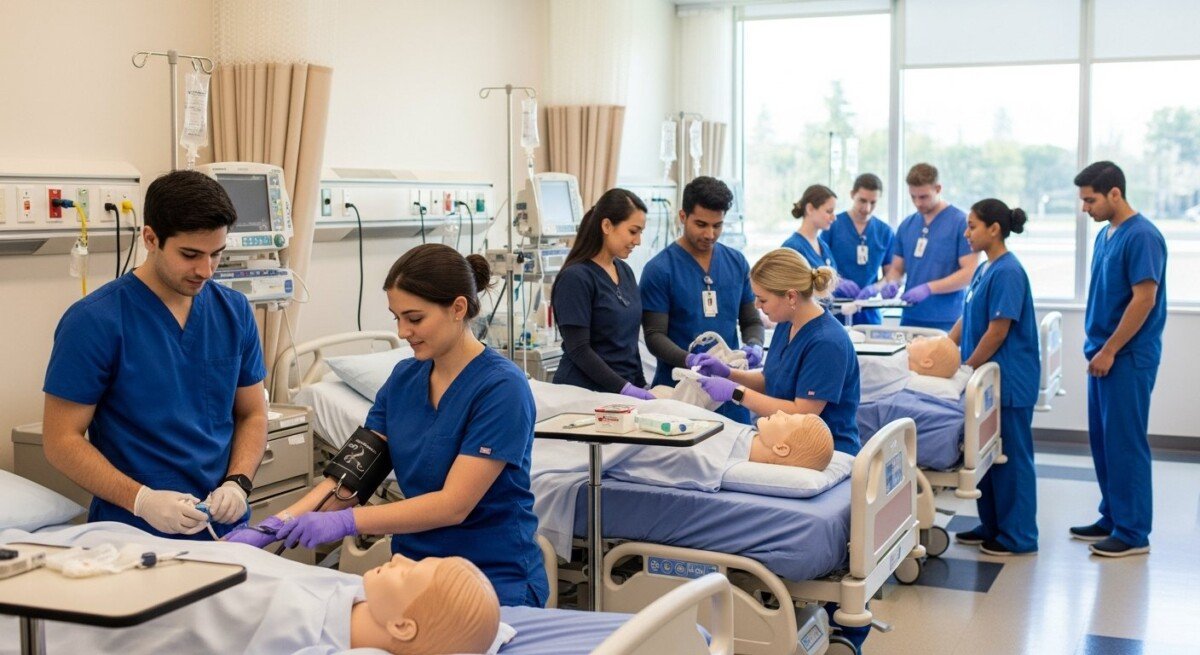
An Associate Degree in Nursing is a focused, career-oriented program typically completed in two years of full-time study. It is designed to equip students with the core competencies of nursing practice: patient care, clinical judgment, pharmacology, and professional ethics. In South Carolina, these programs are offered primarily through the state’s technical college system, as well as some private institutions. The curriculum blends classroom instruction in sciences like anatomy, physiology, and microbiology with extensive clinical rotations in local hospitals, clinics, and long-term care facilities. This combination ensures graduates are not just theoretically prepared but are ready to handle the realities of patient care from day one. The ultimate goal is to prepare students to sit for the National Council Licensure Examination for Registered Nurses (NCLEX-RN), which is mandatory for practice in any state.
Choosing an ADN is often a strategic decision for career-changers, recent high school graduates, and healthcare support staff seeking advancement. It provides a faster entry into the nursing field compared to a four-year Bachelor of Science in Nursing (BSN), often at a significantly lower tuition cost. This is a crucial consideration for managing student debt. Furthermore, the high demand for RNs in South Carolina means ADN graduates are readily employable, with many hospitals offering tuition reimbursement programs to encourage nurses to later pursue their BSN online while working. This “earn while you learn” model makes the ADN an incredibly practical first step.
Key Components of a Quality ADN Program
Not all nursing programs are created equal. When researching an associate degree in nursing in South Carolina, prospective students must evaluate several critical factors to ensure they receive an education that will properly prepare them for licensure and career success. The most important of these is accreditation. Accreditation signifies that a program meets rigorous national standards for nursing education. In South Carolina, you should look for programs accredited by the Accreditation Commission for Education in Nursing (ACEN) or the Commission on Collegiate Nursing Education (CCNE). Additionally, the program must have approval from the South Carolina Board of Nursing (SCBN). Attending a board-approved program is a non-negotiable requirement for eligibility to take the NCLEX-RN.
Beyond accreditation, the structure and support of the program are vital. A strong ADN curriculum will have a clear sequence of prerequisites, such as English composition, psychology, and college algebra, which must often be completed before starting core nursing courses. The core nursing component itself should offer a logical progression from fundamentals to more complex care, with integrated clinical hours each semester. Look for programs that boast high NCLEX-RN first-time pass rates; this data is publicly available and is the clearest indicator of a program’s effectiveness. Other supportive elements include simulation labs with high-fidelity manikins, dedicated academic and career advising, and strong relationships with clinical sites that provide diverse patient care experiences.
Admission Requirements and Process
Admission to an ADN program in South Carolina is typically competitive, as seats are limited by clinical placement availability and faculty ratios. While requirements vary slightly by institution, most share a common set of prerequisites. Generally, applicants must have a high school diploma or GED and have completed specific prerequisite courses with a minimum grade, often a “C” or better. These commonly include anatomy and physiology, microbiology, and chemistry. Many programs require applicants to take a standardized entrance exam, such as the Test of Essential Academic Skills (TEAS), which assesses skills in reading, math, science, and English.
The application process is multi-faceted. It usually involves submitting official transcripts from all previous colleges, a completed application form, and the required test scores. Some programs may also require letters of recommendation, a personal essay, or completion of a certified nursing assistant (CNA) course. Due to the competitiveness, many schools use a selective or points-based admission system, where points are awarded for GPA, TEAS scores, completion of prerequisites, and sometimes healthcare experience. It is imperative to research the specific requirements of each program well in advance, as missing a single prerequisite can delay an application by a full semester or more. Planning your academic path with a clear timeline is essential for success.
Career Outlook and Advancement for ADN Graduates
The career outlook for RNs in South Carolina is exceptionally positive. The U.S. Bureau of Labor Statistics projects steady growth for the profession nationwide, and South Carolina’s aging population and expanding healthcare facilities contribute to strong local demand. ADN graduates are qualified for a wide array of entry-level RN positions in hospitals, physician’s offices, long-term care facilities, outpatient surgery centers, and home health agencies. Starting salaries for RNs in South Carolina are competitive, and shift differentials for nights and weekends can further increase earning potential. The role provides not just financial stability but also immense personal fulfillment and the flexibility to work in various specialties.
An ADN is a foundation, not a ceiling. Career advancement often involves pursuing a Bachelor of Science in Nursing (BSN). Many healthcare employers, especially large hospital systems, strongly prefer or require a BSN for leadership roles, specialty positions, and management. Fortunately, South Carolina’s educational ecosystem supports this progression through numerous RN-to-BSN programs. These programs are designed specifically for working RNs, offering online coursework that can be completed in one to two years. Many hospitals have partnerships with universities and offer substantial tuition assistance to employees. This creates a clear and supported pathway: earn your ADN and start working, then leverage employer benefits to obtain your BSN with minimal out-of-pocket cost. This strategic approach to college degree guidance can maximize your educational investment and career trajectory.
Financial Considerations and Aid Resources
Understanding the financial investment is a key part of planning for an associate degree in nursing in South Carolina. Tuition costs can vary significantly between public technical colleges and private institutions. In-state tuition at a South Carolina technical college is typically the most affordable option. However, the total cost includes more than tuition: fees, textbooks, uniforms, stethoscopes, liability insurance, and background checks all add up. Creating a detailed budget is the first step. The next is aggressively pursuing financial aid. All students should start by completing the Free Application for Federal Student Aid (FAFSA), which determines eligibility for federal grants, work-study programs, and loans.
South Carolina offers several state-specific resources for nursing students. The South Carolina Nurses Foundation awards scholarships, and many individual technical colleges have their own scholarship endowments. The South Carolina Commission on Higher Education also lists available aid. Furthermore, service-based programs like the Nurse Corps Scholarship Program or the military can cover educational costs in exchange for a service commitment post-graduation. Some healthcare systems also offer “nurse apprentice” or tuition reimbursement programs for employees who commit to working for them after licensure. Exploring all these avenues can make nursing school financially feasible.
Frequently Asked Questions
Can I complete an ADN program online in South Carolina?
While the core nursing lectures for some programs may be offered online or in a hybrid format, the clinical component of an ADN cannot be completed online. Clinical hours require in-person, hands-on patient care under supervision at approved healthcare facilities. Therefore, even “online” ADN programs will require you to attend clinical rotations locally.
How long does it take to become an RN via an ADN in South Carolina?
If attending full-time and starting with all prerequisites completed, the ADN program itself is typically two years (four to five semesters). However, the total timeline from start to licensed RN may be longer if you need to complete prerequisites first, which can add one or two semesters.
Is an ADN from South Carolina valid in other states?
Yes. Once you pass the NCLEX-RN and are licensed in South Carolina, you can apply for licensure by endorsement in another state. This process involves verifying your original license and may have additional requirements, but your education is recognized nationally. The process for transferring a license to another state, such as Nevada, shares similarities; for specific details on that pathway, our guide on becoming an RN in Nevada outlines the endorsement steps.
What is the difference between an ADN and a nursing diploma?
Nursing diploma programs are hospital-based, not college-based, and are much less common today. An ADN is a college degree awarded by a community or technical college. The ADN is more prevalent, includes more general education, and is often required for later progression to a BSN.
What if I already have a bachelor’s degree in another field?
You may be an excellent candidate for an Accelerated BSN (ABSN) program, which is designed for individuals with a non-nursing bachelor’s degree. These are intensive, full-time programs that can prepare you for the NCLEX-RN in 12-18 months. However, they are often more expensive than an ADN. If cost and timing are primary concerns, the ADN remains a valid and efficient option.
Pursuing an associate degree in nursing in South Carolina is a decisive step toward a stable and impactful career. By carefully selecting an accredited program, navigating the admission process strategically, and utilizing available financial resources, you can position yourself for success on the NCLEX-RN and beyond. The path requires dedication, but the outcome, a career dedicated to healing and helping others in your community, is a profoundly worthy goal.