
Become an RN in Rhode Island With an Associate Degree in Nursing
Launch your nursing career in Rhode Island with an ADN. This two-year path leads to RN licensure, strong job demand, and a practical start in healthcare.

By Elena Markova
For many aspiring nurses in the Ocean State, the most direct and efficient path to a rewarding healthcare career begins with an Associate Degree in Nursing (ADN). Rhode Island, with its respected hospitals, community health centers, and aging population, presents a strong and steady demand for skilled Registered Nurses (RNs). An ADN program offers a focused, practical education that prepares graduates to sit for the NCLEX-RN licensure exam and enter the workforce in approximately two years, often at a fraction of the cost of a four-year degree. This pathway is particularly valuable for career-changers, working adults, and those seeking a faster return on their educational investment while providing essential patient care in their communities.
Understanding the ADN Pathway in Rhode Island
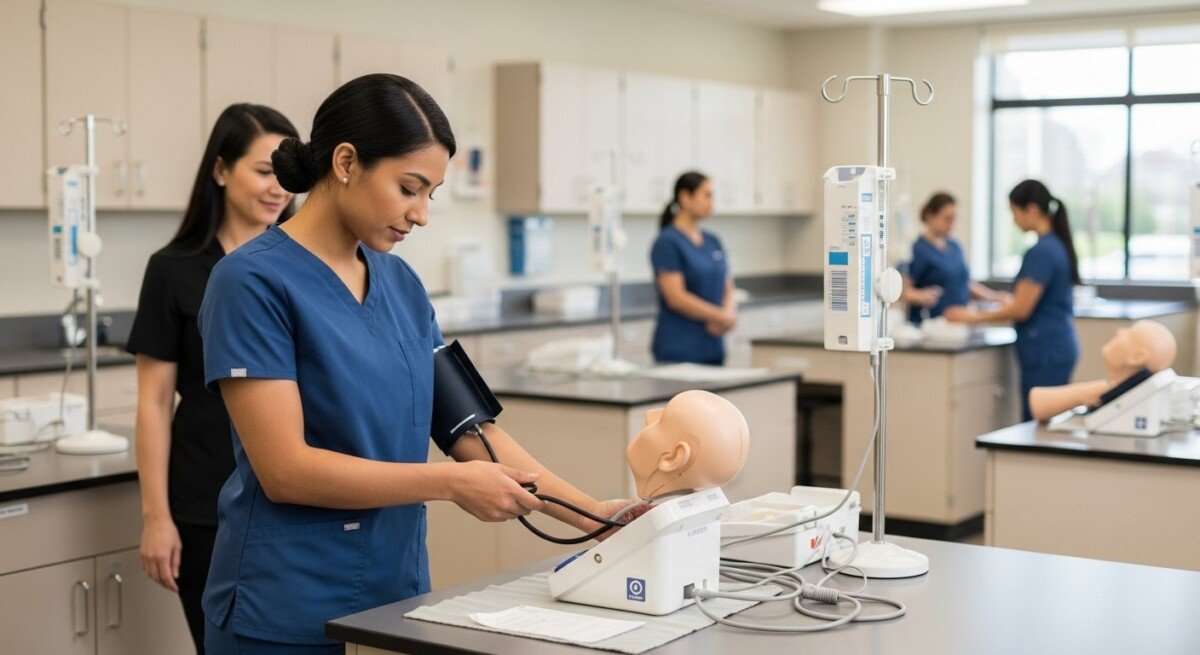
An Associate Degree in Nursing is a two-year academic program offered by community colleges and technical schools. It blends classroom instruction in sciences and nursing theory with extensive clinical rotations in real healthcare settings. The core objective is to equip students with the foundational knowledge and hands-on skills required for safe, competent nursing practice. Upon successful completion, graduates are awarded an Associate of Science in Nursing (ASN) or Associate Degree in Nursing (ADN) and are eligible to take the National Council Licensure Examination for Registered Nurses (NCLEX-RN). Passing this exam is the final step to becoming a licensed RN in Rhode Island.
This pathway is distinct from a Bachelor of Science in Nursing (BSN), which is a four-year degree. While both lead to RN licensure, the ADN is often viewed as a stepping stone. Many RNs begin working with their ADN and then pursue an RN-to-BSN completion program online while gaining experience and income. This “earn while you learn” model is financially pragmatic and allows nurses to meet the growing preference of some healthcare employers for a BSN. However, an ADN alone fully qualifies you for RN licensure and a vast array of nursing positions across Rhode Island.
Key Components of a Quality ADN Program
Not all nursing programs are created equal. When researching an associate degree in nursing in Rhode Island, prospective students must evaluate several critical components to ensure they receive an education that will properly prepare them for licensure and practice.
First and foremost is accreditation. The program must be accredited by a recognized body such as the Accreditation Commission for Education in Nursing (ACEN) or the Commission on Collegiate Nursing Education (CCNE). Accreditation ensures the program meets national standards for nursing education, which is crucial for your eligibility to take the NCLEX-RN and for the transferability of your credits should you pursue a BSN later. Secondly, examine the program’s NCLEX-RN pass rates. The Rhode Island Board of Nursing publishes these rates for all state-approved programs. Consistently high pass rates are a strong indicator of a program’s effectiveness. Finally, consider the structure of clinical placements. Strong programs have established relationships with a variety of clinical sites (hospitals, clinics, long-term care facilities) to provide students with diverse patient care experiences.
Admission Requirements and Program Curriculum
Admission to ADN programs in Rhode Island is typically competitive, as seats are limited. Programs seek candidates who demonstrate academic readiness for a rigorous course of study. Common prerequisites and requirements include:
- A high school diploma or GED with a strong GPA, particularly in science and math courses.
- Completion of prerequisite college courses, such as Anatomy & Physiology I & II, Microbiology, English Composition, and Psychology, often with a minimum grade of “C” or higher.
- Satisfactory scores on a standardized entrance exam, like the TEAS (Test of Essential Academic Skills).
- Background checks, immunization records, CPR certification, and a physical exam.
- Some programs may require prior healthcare experience, like a Certified Nursing Assistant (CNA) license.
The curriculum itself is intensive and sequential. The first year generally focuses on prerequisite and core general education courses alongside introductory nursing concepts. The second year delves deeply into specialized nursing care across the lifespan, including medical-surgical nursing, pediatric nursing, obstetric nursing, psychiatric-mental health nursing, and leadership. This theoretical learning is continuously applied during supervised clinical hours, where students perform skills, develop clinical judgment, and learn to collaborate within healthcare teams.
Top ADN Programs and Schools in Rhode Island
Rhode Island is home to several reputable institutions offering state-approved ADN programs. Prospective students should research each thoroughly, as factors like schedule format (day, evening, hybrid), cost, and campus location can significantly impact their decision.
The Community College of Rhode Island (CCRI) hosts the state’s largest and most well-known ADN program. With campuses in Warwick, Lincoln, Providence, and Newport, CCRI offers accessibility and a strong reputation for producing practice-ready nurses. The program is ACEN-accredited and boasts a comprehensive curriculum with clinical partnerships across the region. Another prominent option is the New England Institute of Technology (NEIT) in East Greenwich. NEIT offers an associate degree program with a focus on hands-on, technology-integrated learning, often appealing to students who prefer a more immersive lab environment. For those considering pathways in other states, it’s useful to compare structures and requirements; for example, the process for an associate degree in nursing in Louisiana involves similar steps but different state-specific regulations and school options.
When comparing programs, create a checklist. Visit campuses, speak with admissions counselors and, if possible, current students. Ask detailed questions about student support services, tutoring availability, job placement assistance, and the program’s culture. The right fit is about more than just statistics, it’s about finding an environment where you can succeed.
Career Outlook and Salary for RNs in Rhode Island
The career outlook for Registered Nurses in Rhode Island is promising. According to the U.S. Bureau of Labor Statistics, employment of RNs is projected to grow steadily, fueled by an increased emphasis on preventive care, the healthcare needs of the aging baby-boom population, and higher rates of chronic conditions. Rhode Island’s dense network of healthcare providers, including major systems like Lifespan and Care New England, along with numerous community health centers and specialty clinics, ensures a consistent demand for nursing talent.
While salaries vary based on experience, education, specialization, and place of employment, the median annual wage for RNs in Rhode Island is competitive. Entry-level ADN graduates can expect a solid starting salary that often increases significantly with shift differentials, overtime, and clinical specialization. Furthermore, the financial planning for your degree is a critical step. Seeking out college degree guidance can help you navigate tuition costs, compare financial aid packages, and explore scholarship opportunities specifically for nursing students in Rhode Island, making your career transition more affordable.
Frequently Asked Questions (FAQs)
Can I complete an ADN program online in Rhode Island?
While the lecture-based theoretical components of an ADN program are increasingly offered in hybrid or online formats, the clinical training must be completed in person at approved healthcare facilities. Therefore, you will need to reside in or near Rhode Island to attend clinical rotations, even if your coursework is online.
How long does it actually take to become an RN via the ADN path?
The program itself is typically two years of full-time study. However, if you need to complete prerequisites first, that can add a semester or more. After graduation, you must apply for licensure and schedule the NCLEX-RN exam. The entire process from program start to licensed RN often takes between 2.5 to 3.5 years.
Is an ADN enough to get a good nursing job in Rhode Island?
Yes. Hospitals, nursing homes, rehabilitation centers, and clinics throughout Rhode Island hire ADN-prepared RNs. Some major hospital systems may have policies encouraging or requiring ADN nurses to enroll in a BSN completion program within a certain timeframe after hire, but they will still hire ADN graduates.
What is the cost difference between an ADN and a BSN in Rhode Island?
The cost difference is substantial. An ADN at a public community college like CCRI costs a fraction of the tuition at a four-year public university or private college. This lower upfront investment allows you to start earning an RN salary sooner, which can then help fund an online RN-to-BSN program if you choose.
What are the steps to get licensed as an RN in Rhode Island after my ADN?
After graduating from a state-approved program, you must apply for licensure by examination with the Rhode Island Board of Nursing. This involves submitting an application, fees, and an official transcript. Once deemed eligible, you will receive an Authorization to Test (ATT) to schedule your NCLEX-RN exam. Passing the exam grants you your RN license.
Pursuing an associate degree in nursing in Rhode Island is a strategic and achievable goal for dedicated individuals. It opens the door to a profession defined by purpose, stability, and continuous growth. By carefully selecting an accredited program, understanding the commitment required, and planning your finances, you can embark on a journey that not only transforms your own future but also contributes vitally to the health and well-being of communities across the Ocean State.