
Become an RN in New Jersey: Your Associate Degree in Nursing Guide
An Associate Degree in Nursing in New Jersey provides the fastest path to becoming a licensed RN, offering strong job prospects and a foundation for career advancement.

By Elena Markova
For many aspiring nurses in the Garden State, the most direct and efficient path to a rewarding healthcare career begins with an Associate Degree in Nursing (ADN). This focused, typically two-year program provides the essential clinical knowledge and hands-on skills required to sit for the National Council Licensure Examination for Registered Nurses (NCLEX-RN). In New Jersey, a state with a robust and demanding healthcare sector that includes world-class hospitals and diverse community health settings, ADN programs serve as a critical pipeline for qualified nursing professionals. Choosing this educational route represents a strategic decision to enter the workforce quickly while building a foundation for lifelong career growth.
Understanding the ADN Pathway in New Jersey
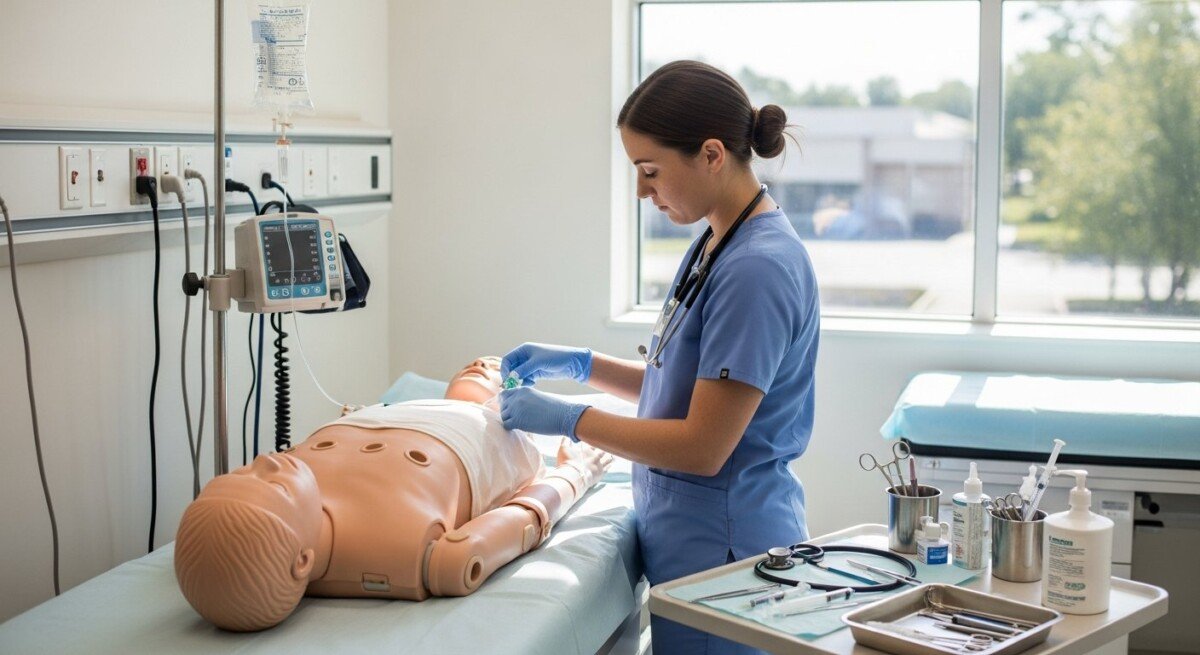
An Associate Degree in Nursing is a practical, career-focused academic program offered by community colleges, technical schools, and some four-year universities. The curriculum blends rigorous coursework in anatomy, physiology, microbiology, and nursing theory with extensive clinical rotations in real healthcare environments. This combination ensures graduates are not just test-ready, but practice-ready. In New Jersey, all ADN programs must be approved by the New Jersey Board of Nursing (NJBON) and accredited by a recognized body like the Accreditation Commission for Education in Nursing (ACEN) to ensure their graduates are eligible for licensure. The goal is unambiguous: to prepare competent, safe, and ethical entry-level registered nurses who can immediately contribute to patient care across the state’s medical facilities.
The structure of these programs is intensive. Students can expect a full-time commitment, with programs often spanning four to six semesters. The first year generally covers prerequisite and core science courses, while the second year delves deeply into specialized nursing subjects and clinical practice. Clinical placements are a cornerstone, providing experience in areas like medical-surgical nursing, pediatrics, obstetrics, mental health, and community health. This real-world training is invaluable, transforming theoretical knowledge into practical competency. For those balancing other responsibilities, some New Jersey schools offer part-time or evening/weekend tracks, though these will extend the overall timeline to completion.
Key Admissions Requirements and Program Selection
Gaining admission to a competitive ADN program in New Jersey requires careful planning and preparation. Requirements are stringent by design, ensuring students are prepared for the academic rigor ahead. While specifics vary by institution, common prerequisites include a high school diploma or GED, minimum GPA thresholds (often 2.5 or higher on prerequisite courses), and completion of specific college-level classes before entry. These prerequisite courses frequently include English composition, psychology, sociology, and the core sciences with lab components.
Beyond academics, programs look for candidates who demonstrate a clear understanding of the nursing profession. This can be shown through prior healthcare experience (even as a volunteer), strong letters of recommendation, and a compelling personal statement. Many programs also require standardized tests like the Test of Essential Academic Skills (TEAS) to assess baseline skills in reading, math, science, and English. When evaluating programs, prospective students should prioritize NJBON approval and national accreditation. They should also consider factors like NCLEX-RN pass rates, graduate employment rates, clinical partnership networks, and the availability of student support services. Financial planning is also crucial; exploring federal aid, state grants like the New Jersey Student Tuition Assistance Reward Scholarship (NJ STARS), and institutional scholarships is a necessary step. For comprehensive resources on managing educational expenses, prospective students can seek college degree guidance to compare costs and financial aid options effectively.
The Licensure Process: From Graduate to New Jersey RN
Successfully completing an ADN program is a major milestone, but the final step to practicing as a Registered Nurse is securing a license from the New Jersey Board of Nursing. This process is multi-faceted and begins with submitting an application for licensure by examination. The central component is passing the NCLEX-RN, a computerized adaptive test that measures the competencies needed to perform safely and effectively as an entry-level nurse. ADN programs are specifically designed to align their curricula with the test plan for this exam.
Before you can even schedule your NCLEX, you must apply to the NJBON for authorization to test. This involves submitting an application, paying fees, and completing a criminal background check with fingerprinting. Once the Board declares you eligible, you will receive an Authorization to Test (ATT) from the testing vendor, Pearson VUE, which allows you to schedule your exam date. After passing the NCLEX, the NJBON will issue your RN license. It is critical to understand that nursing is a licensed profession with strict ethical and continuing education requirements. New Jersey RNs must renew their license every two years, which includes completing 30 contact hours of continuing education to ensure skills and knowledge remain current.
Career Outlook and Advancement Opportunities for ADN Graduates
The career outlook for Registered Nurses in New Jersey is exceptionally strong. According to state labor data, demand for RNs continues to outpace supply, driven by an aging population, retirement of existing nurses, and expanded healthcare services. ADN graduates typically find employment in hospitals, long-term care facilities, clinics, and outpatient centers. Starting roles are often in medical-surgical units, which provide a broad foundation in patient care. With experience, nurses can move into specialized areas or assume charge nurse responsibilities.
One of the greatest advantages of the ADN path is that it allows you to begin working and earning a professional salary relatively quickly, often within two to three years of starting your education. This creates a powerful opportunity for career advancement while working. Many New Jersey RNs then pursue a Bachelor of Science in Nursing (BSN) through RN-to-BSN completion programs, which are widely available online and designed for working nurses. These bridge programs can often be completed in 12 to 18 months and are increasingly supported by hospital tuition reimbursement benefits. A BSN degree opens doors to leadership positions, specialized clinical roles, and graduate education for becoming a nurse practitioner, nurse educator, or nurse administrator. The ADN is rightly seen not as a final destination, but as the launchpad for a dynamic and progressive career in nursing.
Frequently Asked Questions
How long does it take to complete an ADN program in New Jersey?
Most full-time Associate Degree in Nursing programs in New Jersey are designed to be completed in two years (four semesters). However, time can vary if a student needs to complete prerequisites first, opts for a part-time schedule, or attends a program with a summer cohort. The total timeframe from program start to NCLEX licensure is typically 2.5 to 3 years.
Can I complete an ADN program online in New Jersey?
While the theoretical coursework for an ADN is increasingly offered in hybrid or online formats, the clinical component cannot be completed online. All NJBON-approved programs mandate in-person, supervised clinical rotations at approved healthcare facilities. Therefore, you can find programs with online classwork, but you must be physically present in New Jersey or the region to fulfill clinical requirements.
What is the cost of an ADN program in New Jersey?
Costs vary significantly between public community colleges and private institutions. At a New Jersey community college, total tuition and fees for an in-district resident can range from $10,000 to $15,000. Private college programs may cost $25,000 to $40,000 or more. These estimates do not include books, uniforms, supplies, or living expenses.
Is an ADN from New Jersey recognized in other states?
Yes, but you must apply for licensure by endorsement in the new state. New Jersey is part of the Nurse Licensure Compact (NLC), which allows nurses with a multistate license from one compact state to practice in other compact states without obtaining additional licenses. However, as of now, New Jersey is not an NLC member state, so nurses moving out of New Jersey will need to apply for a new license in their new state of residence, a process that is generally straightforward if you hold an active, unencumbered NJ license.
How does an ADN compare to a BSN in New Jersey?
Both degrees lead to RN licensure and allow you to take the same NCLEX-RN exam. The ADN is typically shorter and more focused on direct clinical skills. The BSN is a four-year degree that includes more coursework in leadership, research, public health, and humanities, which some employers, particularly large hospital systems, may prefer for career advancement. Many nurses start with an ADN and later earn a BSN through an efficient RN-to-BSN program. For a look at a similar pathway in a neighboring state, you can explore our guide on how to earn your associate degree in nursing in Delaware.
Pursuing an Associate Degree in Nursing in New Jersey is a proven and pragmatic route to a stable, respected, and deeply fulfilling profession. By carefully selecting an accredited program, understanding the licensure process, and planning for both immediate employment and long-term education, you can build a nursing career that makes a tangible difference in the health and well-being of your community. The journey demands dedication, but for those called to care for others, the reward is a lifetime of meaningful work.