
Become an RN in Missouri: Your Associate Degree in Nursing Guide
An associate degree in nursing in Missouri offers a fast, affordable path to becoming a licensed RN. This guide covers accredited programs, admission steps, and the strong career outlook.

By Elena Markova
For many aspiring nurses in the Show-Me State, the most direct and efficient path to a rewarding career is an Associate Degree in Nursing (ADN). This practical, focused program provides the essential clinical skills and theoretical knowledge needed to sit for the NCLEX-RN licensure exam and enter the healthcare workforce as a Registered Nurse. In Missouri, with its diverse healthcare landscape ranging from major urban hospitals in St. Louis and Kansas City to critical rural health centers, ADN graduates are in consistent demand. This guide will navigate the specifics of pursuing an associate degree in nursing in Missouri, from choosing an accredited program to understanding the licensure process and launching your career.
Understanding the ADN Pathway in Missouri
An Associate Degree in Nursing is typically a two-year program offered by community colleges, technical schools, and some four-year universities. It is designed to prepare students for the technical and practical aspects of nursing care, providing a balance of classroom instruction in subjects like anatomy, physiology, microbiology, and pharmacology, alongside extensive hands-on clinical rotations in real healthcare settings. The core advantage of the ADN route is its speed to licensure and entry into the profession, often at a significantly lower cost than a four-year Bachelor of Science in Nursing (BSN). For career-changers or those eager to start working quickly, the ADN is a powerful springboard. Upon successful completion, graduates are eligible to take the National Council Licensure Examination for Registered Nurses (NCLEX-RN). Passing this exam grants you a license to practice as an RN in Missouri, opening doors to immediate employment in hospitals, clinics, long-term care facilities, and more.
Choosing an Accredited ADN Program in Missouri
Accreditation is the non-negotiable first filter when evaluating any nursing program. It ensures the education provided meets rigorous national standards for quality and rigor, which is critical for both your learning and your future licensure. In Missouri, you should look for programs accredited by the Accreditation Commission for Education in Nursing (ACEN) or the Commission on Collegiate Nursing Education (CCNE). Additionally, the program must be approved by the Missouri State Board of Nursing. This state approval is mandatory for graduates to be deemed eligible to sit for the NCLEX-RN. Beyond accreditation, consider factors like NCLEX-RN pass rates (a strong indicator of program effectiveness), clinical rotation partnerships with local healthcare facilities, program length and schedule flexibility (including hybrid or evening options), and overall cost, including fees and supplies. Researching these elements will help you find a program that aligns with your career goals and personal circumstances. For broader financial planning context, resources that offer college degree guidance can be invaluable when comparing total costs across different educational paths.
Admission Requirements and Program Curriculum
Admission to ADN programs in Missouri is often competitive, requiring applicants to meet a set of prerequisite criteria. While requirements vary by institution, there are common expectations you should prepare for.
Typical prerequisites and admission steps include:
- Completion of prerequisite courses with a minimum grade, often including anatomy & physiology I & II, microbiology, English composition, and psychology.
- A minimum cumulative GPA, frequently between 2.5 and 3.0, on previous college coursework.
- Satisfactory scores on a pre-admission exam, such as the TEAS (Test of Essential Academic Skills).
- Submission of official transcripts from all previously attended schools.
- A clear criminal background check and drug screening, as required for clinical placement.
- Current CPR certification for healthcare providers.
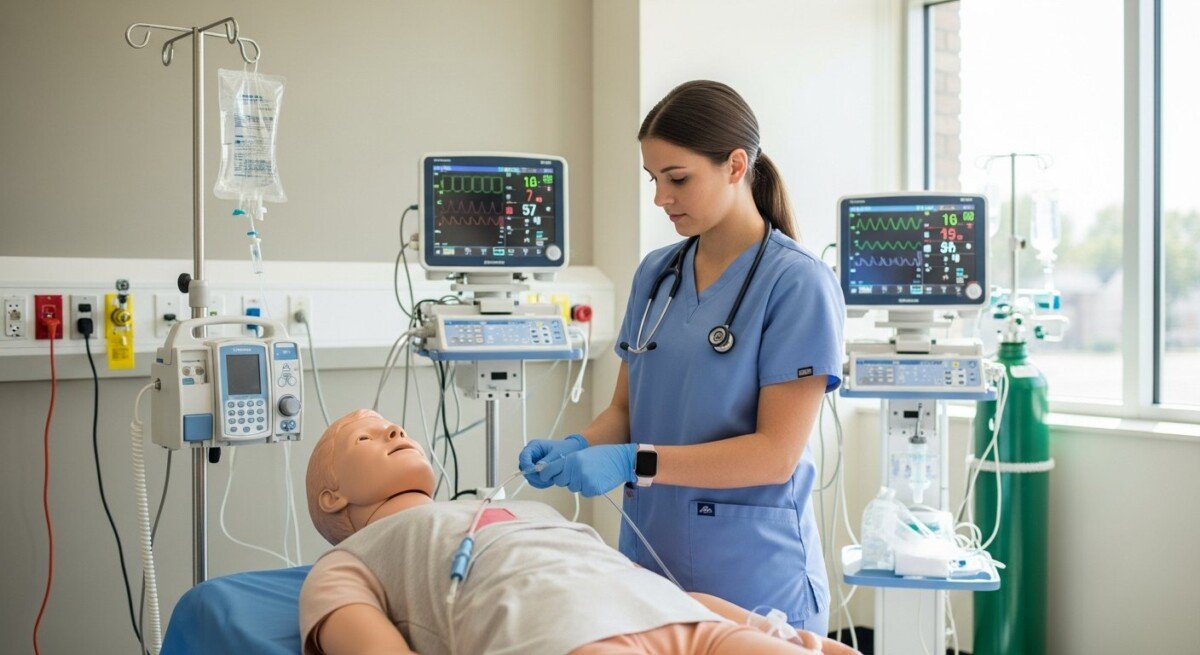
The ADN curriculum itself is intensive and sequential. The first year generally focuses on core sciences and foundational nursing principles, while the second year delves into specialized areas of care and more complex clinical experiences. You can expect coursework and clinical rotations in areas like adult health (medical-surgical nursing), pediatric nursing, maternal-newborn nursing, mental health nursing, and leadership. The clinical component is where theory transforms into practice, allowing you to develop patient assessment, medication administration, and critical thinking skills under the supervision of experienced instructors and nurse preceptors.
Licensure and Career Outlook for Missouri ADN Graduates
After graduating from an approved ADN program, your next step is to apply for licensure with the Missouri State Board of Nursing and register for the NCLEX-RN exam. The application process involves submitting an application, fees, and an official transcript showing degree conferral. Once the Board authorizes you to test, you will schedule your NCLEX-RN at a Pearson VUE testing center. This computerized adaptive exam tests your competency to perform safe and effective entry-level nursing. Passing the NCLEX-RN is the final gate to receiving your Missouri RN license.
The career outlook for RNs in Missouri is strong. The U.S. Bureau of Labor Statistics projects steady growth for the profession nationwide, driven by an aging population and increased focus on preventive care. In Missouri, hospitals, outpatient centers, physicians’ offices, and home healthcare services all seek qualified RNs. While an ADN qualifies you for most staff nurse positions, it is important to understand the broader educational landscape. Many healthcare employers, especially large hospital systems, are encouraging or requiring nurses to obtain a BSN through RN-to-BSN completion programs. These programs, often offered online, allow working ADN-prepared RNs to earn their bachelor’s degree in 1-2 years while continuing to work. This creates a clear career pathway: earn your ADN and start working quickly, then leverage tuition reimbursement benefits from your employer to complete your BSN, a process we detail in our guide on how to become an RN through an associate degree pathway.
Financial Considerations and Support Resources
Pursuing an ADN is a significant investment, but it is generally more affordable than a four-year degree. Tuition costs at Missouri community colleges are notably lower than at universities. However, students must also budget for textbooks, uniforms, stethoscopes and other equipment, lab fees, background checks, and licensure exam fees. Fortunately, financial aid is widely available. The first step for any student is to complete the Free Application for Federal Student Aid (FAFSA) to determine eligibility for federal grants, loans, and work-study programs. Missouri also offers state-specific aid, such as the Access Missouri Financial Assistance Program and the Marguerite Ross Barnett Memorial Scholarship for students who are employed while attending school. Additionally, many healthcare organizations and foundations offer scholarships for nursing students, often with a commitment to work in certain regions or specialties after graduation.
Frequently Asked Questions
How long does it take to complete an ADN program in Missouri?
Most full-time ADN programs are designed to be completed in two years (four semesters). Part-time options are available at some schools but will extend the timeline.
Can I complete an ADN program online in Missouri?
While the theoretical coursework for some ADN programs may be offered in a hybrid or online format, the clinical training components require in-person, hands-on experience at approved healthcare facilities. There are no fully online ADN programs due to this essential clinical requirement.
What is the salary range for an ADN-prepared RN in Missouri?
According to recent data, the annual salary for Registered Nurses in Missouri varies by experience, location, and setting, but typically ranges from approximately $60,000 to $85,000. Metropolitan areas like St. Louis and Kansas City often offer higher wages.
Is there a waiting list for ADN programs in Missouri?
Many programs, due to high demand and limited clinical slot availability, have competitive admission or waiting lists. This underscores the importance of applying early, excelling in prerequisites, and exploring multiple program options.
Do Missouri hospitals hire nurses with an ADN?
Yes, many hospitals and healthcare facilities across Missouri actively hire ADN-prepared RNs. However, some major hospital systems may have policies encouraging nurses to obtain a BSN within a certain timeframe after hire, often supported by employer tuition assistance.
Earning an associate degree in nursing in Missouri is a proven and practical strategy to launch a stable, in-demand, and personally fulfilling career in healthcare. By carefully selecting an accredited program, diligently preparing for the NCLEX-RN, and planning for potential continued education, you can efficiently transition from student to skilled professional, ready to contribute to the health and well-being of communities throughout the state.