
If you have ever listened to a perfectly mixed song, watched a film with crystal-clear dialogue, or attended a live concert where every instrument sounded balanced, you have experienced the work of an audio engineer. These professionals shape how we hear sound across music, film, television, gaming, and live events. But how do you become one? Many aspiring audio professionals ask themselves: what is an audio engineering degree, and do I need one to break into this competitive field? This guide answers those questions by exploring the structure, benefits, and career outcomes of earning an audio engineering degree. Whether you are a high school graduate exploring options or a working adult considering a career change, understanding this degree will help you decide if it aligns with your goals.
Defining the Audio Engineering Degree
An audio engineering degree is a specialized academic program that teaches students how to record, mix, edit, and reproduce sound. The curriculum blends technical knowledge with creative application. Students learn to operate recording equipment, understand acoustics, use digital audio workstations (DAWs), and apply signal processing techniques. While some programs focus narrowly on music production, others cover broader applications such as film sound, broadcast audio, video game sound design, and live sound reinforcement.
At its core, an audio engineering degree prepares students for the technical side of audio production. It differs from a music production degree, which often emphasizes composition, arrangement, and artist development. An audio engineering degree is more concerned with the science of sound: microphone placement, frequency analysis, compression, equalization, and the physics of recording spaces. Many programs also include hands-on lab time in professional recording studios, giving students practical experience before they enter the workforce.
For prospective students exploring their options, it is helpful to compare an audio engineering degree with related programs. An audio production degree, for example, may blend engineering fundamentals with music business or media production courses. Some schools offer an audio technology degree that leans more heavily into electronics and acoustical engineering. The key is to review each program’s curriculum and facilities to ensure they match your career ambitions. In our guide on BS Mechanical Engineering Degree: Overview and Structure, we explain how technical degrees differ from creative ones, a distinction that applies to audio engineering as well.
Core Subjects and Skills You Will Learn
An audio engineering degree typically covers a range of subjects that build both theoretical understanding and practical competence. Students can expect to take courses in acoustics, electronics, signal flow, recording techniques, mixing, mastering, and post-production. Many programs also include classes on music theory, ear training, and critical listening to develop the refined hearing that professional work demands.
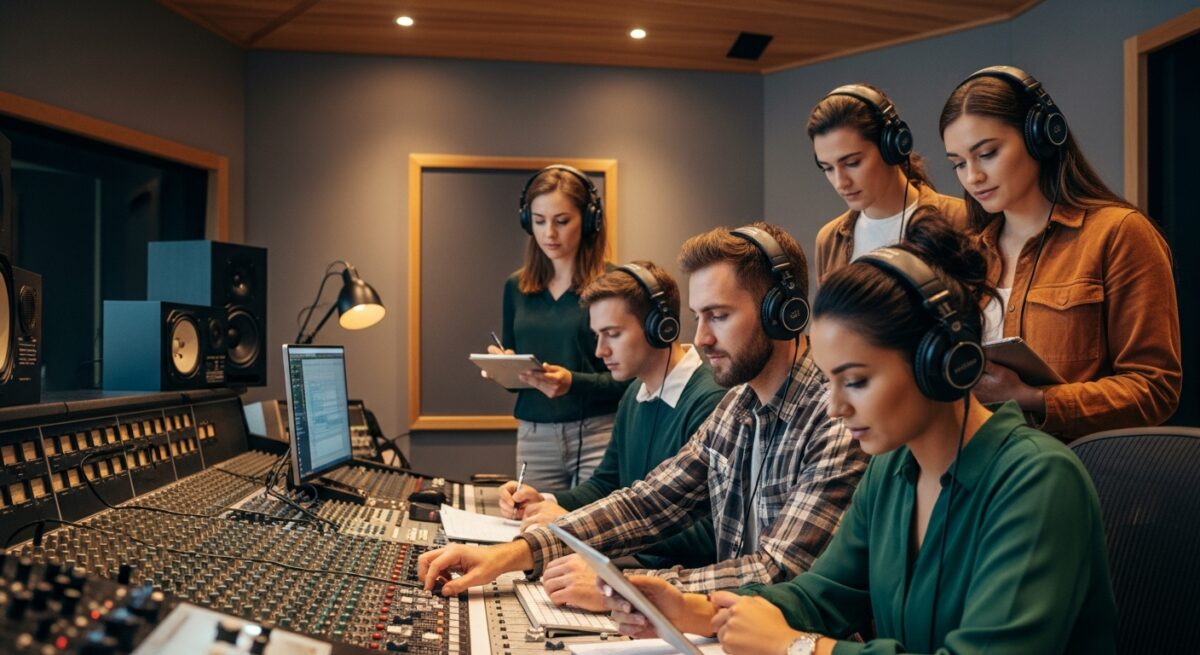
Beyond classroom lectures, the most valuable learning happens in studio environments. Students work with microphones, mixing consoles, outboard gear, and DAW software such as Pro Tools, Logic Pro, or Ableton Live. They learn to troubleshoot equipment, manage session files, and collaborate with musicians and producers. These hands-on projects often result in a portfolio of work, which is essential when applying for jobs after graduation.
Here are some of the key skills you can expect to develop in an audio engineering degree program:
- Critical listening and audio analysis: You learn to identify frequency imbalances, phase issues, and dynamic problems by ear.
- Signal flow and routing: Understanding how audio moves through analog and digital chains is fundamental to every engineering task.
- DAW proficiency: You become fluent in industry-standard software for recording, editing, and mixing.
- Microphone techniques: Different instruments and voices require specific microphone choices and placement strategies.
- Acoustic treatment and room correction: You learn to optimize recording and listening environments for accuracy.
These skills are not just academic. They directly translate to real-world scenarios such as recording a band live, mixing a podcast, designing sound effects for a video game, or setting up a PA system for a concert. Employers in the audio industry look for candidates who can demonstrate both technical competence and creative problem-solving. An audio engineering degree provides a structured path to developing that combination.
Types of Audio Engineering Degrees
Audio engineering degrees are available at multiple levels, from associate to master’s. The right choice depends on your current education level, career goals, and budget. Below is a breakdown of the most common options.
Associate Degree in Audio Engineering
An associate degree typically takes two years to complete and focuses on foundational skills. It is a good starting point for students who want to enter the workforce quickly or who plan to transfer to a four-year program later. Community colleges and some technical schools offer these programs at a lower cost than universities. Graduates often work as assistant engineers, live sound technicians, or audio equipment sales representatives.
Bachelor’s Degree in Audio Engineering or Audio Production
A bachelor’s degree is the most common credential for aspiring audio engineers. It usually takes four years and provides a more comprehensive education. Students take general education courses alongside specialized audio classes. This degree opens doors to a wider range of roles, including recording engineer, mixing engineer, sound designer, and broadcast audio operator. Many employers prefer or require a bachelor’s degree for higher-level positions.
Master’s Degree in Audio Engineering or Related Fields
A master’s degree is less common but valuable for those seeking advanced roles in research, academia, or high-level studio management. These programs often include thesis projects and deeper exploration of acoustics, psychoacoustics, or audio software development. A master’s can also help working engineers move into teaching positions at colleges and universities.
Career Paths and Salary Expectations
An audio engineering degree can lead to a variety of career paths. The most obvious is working in a recording studio as a tracking or mixing engineer. However, the industry is much broader. Audio engineers are needed in film and television post-production, video game development, live sound reinforcement, broadcast radio and television, podcast production, and even corporate event production. Some graduates become freelance engineers, building their own client base and working on diverse projects.
According to the U.S. Bureau of Labor Statistics, the median annual wage for broadcast, sound, and video technicians was around $49,000 as of 2023. However, earnings vary widely by specialization and location. Top engineers in major music markets or film production hubs can earn six figures, while entry-level positions may start closer to $30,000. Many audio engineers supplement their income with teaching, gear sales, or side projects. The field rewards persistence, networking, and continuous skill development.
For students concerned about affordability and flexibility, platforms like CollegeAndTuition.com offer tools to compare program costs and explore financial aid options. Understanding the total investment and potential return is an important step in deciding whether an audio engineering degree is the right choice for you.
Online vs. On-Campus Programs
Many accredited schools now offer online audio engineering degrees. These programs use virtual labs, video tutorials, and remote access to studio equipment. Online options provide flexibility for working adults or students who cannot relocate to a campus with a physical studio. However, they require self-discipline and a reliable computer setup. On-campus programs offer the advantage of direct access to professional studios, in-person collaboration with peers and instructors, and networking opportunities with visiting industry professionals.
When evaluating programs, consider the following factors:
- Accreditation: Ensure the school and program are accredited by a recognized agency. This affects financial aid eligibility and transfer of credits.
- Studio facilities: Visit the campus or request a virtual tour of the recording studios and labs. Quality equipment and maintenance matter.
- Internship and job placement: Look for programs with strong industry connections and a track record of placing graduates in relevant positions.
- Faculty experience: Instructors with real-world credits in music, film, or broadcast bring invaluable perspective.
Whether online or on-campus, the best program is one that fits your learning style, schedule, and career goals. Many students start with an associate degree online and later transfer to a bachelor’s program on campus.
Frequently Asked Questions
What is an audio engineering degree compared to a music production degree?
An audio engineering degree focuses on the technical aspects of recording, mixing, and sound reproduction. A music production degree often includes more coursework in songwriting, arranging, and the music business. Both can lead to careers in audio, but the emphasis differs.
Do I need a degree to become an audio engineer?
Not necessarily. Some successful audio engineers are self-taught or learned through internships. However, a degree provides structured training, access to equipment, and networking opportunities that can accelerate your career. Many employers prefer candidates with formal education.
How long does it take to earn an audio engineering degree?
An associate degree takes about two years, a bachelor’s degree takes four years, and a master’s degree adds one to two more years. Some schools offer accelerated programs.
Can I work while studying for an audio engineering degree?
Yes. Many programs offer evening or online classes to accommodate working students. Part-time study may extend the time to completion but allows you to gain experience in the field simultaneously.
What equipment do I need for an online audio engineering program?
Most online programs require a computer with sufficient processing power, a digital audio workstation (DAW), an audio interface, headphones, and sometimes a microphone. Check with the school for specific requirements before enrolling.
Choosing to pursue an audio engineering degree is a decision that blends passion with practicality. The field offers creative fulfillment, diverse job opportunities, and the chance to shape how people experience sound. By understanding what this degree entails, you can make an informed choice that aligns with your talents and aspirations. Whether you aim to work in a world-class recording studio or produce your own projects, the right education can open the door. Start by researching programs, visiting campuses, and talking to professionals already working in the industry. Your journey into the world of audio engineering begins with that first step.