
Your Guide to Physician Assistant Programs and Degrees
This guide explains physician assistant program requirements, the PA degree path, and how to build a competitive application for this high-demand healthcare career.

By Lucas Martin
Embarking on the journey to become a Physician Assistant (PA) is a significant commitment to a rewarding and dynamic healthcare career. This comprehensive guide is designed to demystify the process, providing a clear roadmap from initial prerequisites to graduation and beyond. Understanding what a physician assistant program degree guide entails is crucial for any prospective student. It’s more than just a list of schools, it’s a detailed exploration of the academic rigor, clinical training, and professional development required to succeed in this high-demand field. With the healthcare landscape evolving rapidly, PAs play an increasingly vital role in delivering patient care, making this career path both challenging and immensely fulfilling.
The Core of a Physician Assistant Education
A Physician Assistant program is a rigorous, graduate-level course of study that typically culminates in a Master of Science in Physician Assistant Studies (MSPAS), Master of Medical Science (MMS), or a similar master’s degree. These programs are designed to compress a vast amount of medical knowledge and clinical skill development into a relatively short timeframe, usually 24 to 36 months. The curriculum is modeled on the medical school model, emphasizing a strong foundation in medical sciences followed by intensive hands-on clinical rotations. The goal is to produce competent, compassionate healthcare providers who can practice medicine under the supervision of a physician, conducting physical exams, diagnosing and treating illnesses, ordering and interpreting tests, assisting in surgery, and prescribing medications.
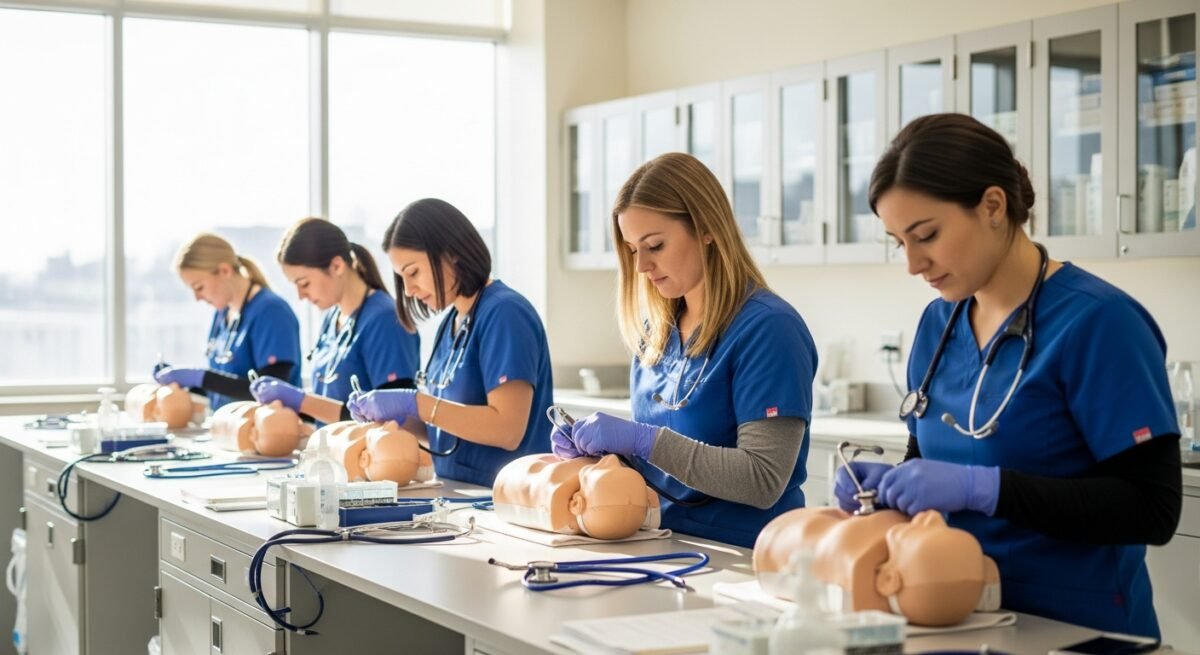
The structure of a PA program is intense and immersive. The first year, or didactic phase, is classroom and lab-based. Students dive deep into subjects like human anatomy, physiology, pharmacology, clinical medicine, pathophysiology, and physical diagnosis. This phase requires immense dedication, as the volume of information is comparable to that of medical school. Following this, students enter the clinical phase, where they rotate through various medical specialties such as family medicine, internal medicine, pediatrics, surgery, emergency medicine, psychiatry, and obstetrics and gynecology. These rotations provide the real-world experience necessary to develop clinical reasoning and patient care skills. For those exploring different entry points into healthcare, understanding the distinctions between roles is key, as detailed in our guide on online medical assistant programs and career paths.
Prerequisites and Admissions: Building a Competitive Application
Gaining admission to a PA program is highly competitive. Programs seek candidates who not only have excellent academic records but also possess significant, direct patient care experience and a demonstrated commitment to healthcare. A strong application is built over years of preparation. The foundational step involves completing specific undergraduate prerequisite courses. While requirements vary by program, most mandate coursework in biology, general chemistry, organic chemistry, biochemistry, human anatomy, physiology, microbiology, statistics, and psychology. Excelling in these courses, often with a minimum grade requirement, is non-negotiable.
Beyond academics, healthcare experience is the cornerstone of a successful application. Admissions committees look for hands-on, direct patient care roles. This is not shadowing or volunteering (though those are beneficial), but paid positions where the applicant has tangible responsibility for patients. Common roles include emergency medical technician (EMT), paramedic, registered nurse (RN), medical assistant, certified nursing assistant (CNA), surgical technologist, or phlebotomist. Programs typically require a minimum number of hours, often ranging from 500 to over 2,000. This experience proves an applicant’s understanding of the healthcare environment and confirms their career choice. Other critical components include strong letters of recommendation from healthcare professionals or professors, a compelling personal statement, and performance in a personal interview. The entire process of researching and applying to these graduate programs underscores the value of thorough educational planning, and you can always learn more about college degrees and academic pathways to strengthen your foundational knowledge.
To organize your preparation, focus on these key pillars:
- Academic Excellence: Maintain a high GPA, particularly in science prerequisites. Aim for a cumulative and science GPA above 3.5.
- Direct Patient Care: Secure a meaningful job in healthcare and accumulate hours consistently over time.
- Standardized Testing: Most programs require the Graduate Record Examination (GRE). Some may accept the MCAT. Prepare thoroughly.
- Professional Development: Shadow PAs in different specialties to gain insight into the profession and secure strong letters of recommendation.
- Application Crafting: Write a genuine personal statement that tells your unique story and prepares diligently for interviews.
Accreditation and Program Selection
Choosing the right PA program is a decision with long-term implications for your education and career. The single most critical factor in this choice is accreditation. In the United States, accreditation is granted by the Accreditation Review Commission on Education for the Physician Assistant (ARC-PA). Graduating from an ARC-PA accredited program is an absolute requirement to sit for the Physician Assistant National Certifying Exam (PANCE) and subsequently obtain state licensure. Attending a non-accredited program will render you ineligible to practice as a PA. Always verify a program’s accreditation status directly on the ARC-PA website.
Once you have confirmed accreditation, other factors come into play. Consider the program’s curriculum emphasis, the length and structure of clinical rotations, and the affiliations with hospitals and clinics. Location is important, as it affects cost of living and potential clinical opportunities. Tuition and financial aid options are major practical considerations. Some programs are known for strong ties to underserved communities, while others may have robust research components. You should also evaluate program outcomes, which are often published on program websites. Key metrics include first-time PANCE pass rates (a indicator of how well the program prepares students for the board exam), graduation rates, and job placement rates for recent graduates. A holistic program selection aligns your career goals, learning style, and personal circumstances with an institution that can best support your success.
The Path After Graduation: Certification, Licensure, and Career
Earning your PA degree is a monumental achievement, but it is not the final step to practicing. Upon graduation, you must pass the PANCE, administered by the National Commission on Certification of Physician Assistants (NCCPA). This comprehensive exam tests the medical and surgical knowledge essential for entry-level practice. After passing the PANCE, you become a Physician Assistant-Certified (PA-C). Certification must be maintained through ongoing continuing medical education (CME) and periodic recertification exams.
With certification in hand, you must then obtain a state license to practice. Licensure requirements vary by state but universally require graduation from an accredited program and passing the PANCE. Some states have additional requirements. Once licensed, PAs practice in a collaborative agreement with a supervising physician, but the scope of this collaboration is defined by state law and can be quite broad. The career opportunities for PAs are vast and growing. They work in every medical setting and specialty, including:
- Primary Care: Family medicine, internal medicine, pediatrics.
- Surgical Specialties: Assisting in surgery and providing pre- and post-operative care.
- Emergency Medicine: Working in hospital emergency departments.
- Specialty Medicine: Dermatology, cardiology, orthopedics, psychiatry.
- Hospital Medicine: Managing inpatient care.
The profession offers competitive salaries, strong job growth projected for years to come, and the profound satisfaction of making a direct impact on patients’ lives. The flexibility to change specialties without additional formal residency training is a unique and attractive aspect of the PA career.
Frequently Asked Questions
What is the difference between a PA and a Medical Assistant?
This is a common point of confusion. Physician Assistants are advanced practice medical providers with a master’s degree who diagnose, treat, and prescribe under physician supervision. Medical Assistants are clinical support staff who typically complete a shorter certificate or diploma program and perform administrative and basic clinical tasks like taking vitals and drawing blood under direct supervision.
Can I work while in a PA program?
It is strongly discouraged and often prohibited by programs. The intensity of the curriculum is designed to be a full-time commitment, with classroom and study demands mirroring a more-than-full-time job.
How does a PA’s role differ from a Nurse Practitioner’s (NP)?
Both are advanced practice providers, but their educational models differ. PA education follows the medical model (disease-centered) and prepares graduates for a generalist foundation with flexibility across specialties. NP education follows the nursing model (patient-centered) and is often focused on a specific population (like family, pediatrics, or psychiatry) from the start. Both are critical to healthcare delivery.
Is there a lot of debt associated with PA school?
PA programs can be expensive, with tuition at private institutions often exceeding $100,000. However, the return on investment is generally positive due to high starting salaries. Financial planning, seeking scholarships, and exploring federal loan programs are essential.
What personal qualities make a successful PA student and practitioner?
Resilience, empathy, strong communication skills, intellectual curiosity, teamwork, and the ability to perform under pressure are paramount. A genuine desire to serve and care for people is the foundation of the profession.
Navigating the path to becoming a Physician Assistant requires careful planning, dedication, and a clear understanding of each step involved. This guide to physician assistant programs and degrees serves as your starting point, outlining the academic journey, the competitive admissions landscape, and the fulfilling career that awaits. By thoroughly researching programs, gaining meaningful healthcare experience, and preparing a standout application, you position yourself to join this essential and growing healthcare profession. The road is challenging, but for those committed to patient care, it is an exceptionally rewarding destination.