
Your Guide to an Associate’s Degree in Surgical Technology
This guide details how an associate’s degree in surgical technology prepares you for a stable, hands-on healthcare career in the operating room, including certification and job outlook.

By Lucas Martin
Operating rooms are high-stakes environments where precision, calm, and expertise are paramount. Behind every successful surgeon is a skilled team, and a critical member of that team is the surgical technologist. If you are drawn to a fast-paced, hands-on healthcare career that doesn’t require a decade of schooling, an associate’s degree in surgical technology could be your ideal pathway. This comprehensive guide will walk you through everything from program specifics and certification to career outlook and how to begin your journey toward this vital profession.
What Is a Surgical Technologist?
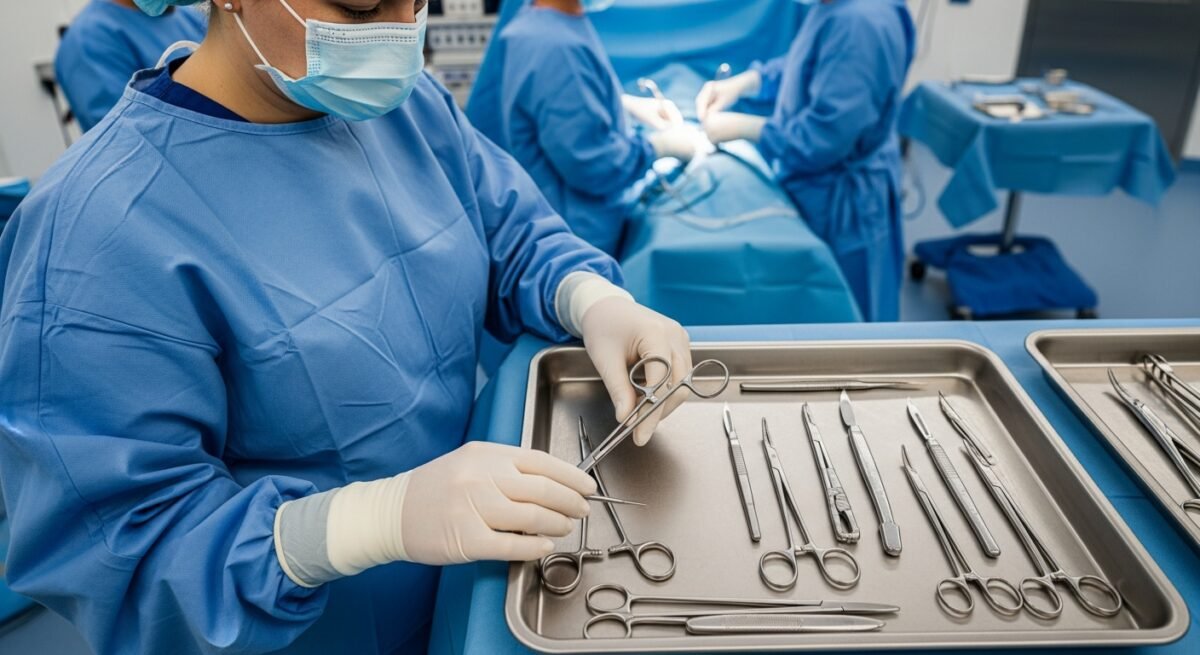
Surgical technologists, often called surgical techs or operating room technicians, are allied health professionals who work alongside surgeons, anesthesiologists, and registered nurses to ensure that surgical procedures run smoothly and safely. Their role is multifaceted, encompassing the preparation of the operating room, the sterilization and arrangement of instruments, and the direct assistance to the surgical team during operations. They are the guardians of the sterile field and the experts on surgical instrumentation. Earning an associate’s degree in surgical technology provides the foundational knowledge and clinical skills necessary to excel in this demanding role. It is the most common and widely recognized educational path for entering this field, balancing depth of training with a relatively efficient timeline.
The Structure of a Surgical Tech Associate Degree Program
A typical surgical technology program leading to an Associate of Applied Science (A.A.S.) degree is designed to be completed in approximately two years of full-time study. The curriculum is a blend of general education, core medical sciences, and specialized surgical technology courses, all culminating in hands-on clinical externships. This structure ensures graduates are not only technically proficient but also possess the critical thinking and communication skills essential in healthcare. Understanding the general associate degree requirements can help you prepare for the academic commitment across all subjects.
The first year often focuses on prerequisite and general education courses such as anatomy and physiology, microbiology, medical terminology, and English composition. These courses build the essential scientific vocabulary and understanding of the human body that every surgical tech must have. The second year dives deeply into the surgical technology core. Students learn about surgical procedures across various specialties (like general surgery, orthopedics, neurosurgery, and obstetrics), sterile processing, pharmacology for the surgical patient, and the principles of aseptic technique. A significant portion of the program, often hundreds of hours, is dedicated to clinical rotations in actual hospital operating rooms and ambulatory surgical centers, where students apply their classroom knowledge under the supervision of experienced professionals.
Key Skills and Competencies You Will Develop
Beyond textbook knowledge, a quality surgical tech associate degree program hones a specific set of practical and interpersonal skills. These competencies are what make a surgical technologist indispensable in the OR.
- Aseptic Technique and Sterile Field Management: The absolute cornerstone of the profession. You will master the methods of creating and maintaining a sterile environment to prevent surgical site infections.
- Surgical Instrumentation: You will learn to identify, prepare, and handle hundreds of specialized instruments, understanding their use in different procedures and how to pass them efficiently to the surgeon.
- Patient Preparation and Positioning: This includes proper skin prep (prepping), draping the patient with sterile sheets, and assisting in positioning the patient to provide optimal surgical access while ensuring patient safety.
- Anticipating Surgical Needs: A great surgical tech thinks several steps ahead. You will develop the ability to anticipate the surgeon’s next move and have the correct instruments and supplies ready.
- Team Communication and Composure Under Pressure: The OR requires clear, concise communication and the ability to remain calm and focused during emergencies or complicated procedures.
Accreditation and Certification: Why They Matter
When researching surgical technology programs, accreditation is the most critical factor to consider. Attending a program accredited by the Commission on Accreditation of Allied Health Education Programs (CAAHEP) or the Accrediting Bureau of Health Education Schools (ABHES) is essential. Graduation from an accredited program is a prerequisite to sit for the national certification exam, which is itself a requirement for employment in most hospitals and states.
Upon completion of your accredited associate’s degree, you are eligible to take the Certified Surgical Technologist (CST) examination offered by the National Board of Surgical Technology and Surgical Assisting (NBSTSA). Earning the CST credential demonstrates to employers that you have met a national standard of knowledge and competence. Many states also require certification for licensure or registration. Maintaining certification requires continuing education, ensuring that you stay current with the latest techniques and standards in surgical care throughout your career.
Career Pathways and Job Outlook for Surgical Techs
Graduates with a surgical tech associate degree primarily find employment in hospital operating rooms. However, opportunities extend to outpatient surgery centers, labor and delivery rooms, cardiac catheterization labs, and sterile processing departments. With experience, surgical technologists can specialize in areas like open-heart surgery, organ transplantation, or neurosurgery. Career advancement can include roles such as a circulating technologist, first assistant (with additional education and certification), surgical technology instructor, or manager of a sterile processing department.
The job outlook for surgical technologists is strong. The U.S. Bureau of Labor Statistics projects growth in this field, driven by an aging population requiring more surgical interventions and advances in medical technology that make more procedures possible. This demand translates into a career path with stability and opportunity for those with the right training. For individuals comparing different educational tracks, exploring degree planning resources can provide valuable context on how an associate’s degree fits into broader academic and career landscapes.
Choosing the Right Program for You
Selecting the surgical technology program that fits your goals requires careful research. Start by verifying the program’s accreditation status with CAAHEP or ABHES. Next, examine the program’s outcomes: what is its graduation rate, CST exam pass rate, and job placement rate for graduates? These metrics are strong indicators of program quality. Consider the learning format; while many programs are on-campus due to the hands-on nature of the training, some may offer hybrid options for theoretical coursework. Finally, visit the campus if possible, speak with faculty and current students, and assess the quality and modernity of the lab facilities where you will train.
Frequently Asked Questions (FAQs)
What is the difference between a surgical technologist and a surgical assistant?
A surgical technologist primarily focuses on preparing the OR, maintaining sterility, and passing instruments. A surgical first assistant (CSFA), a role that often requires additional education and certification, works directly under the surgeon’s direction to perform tasks like controlling bleeding, suturing, and retracting tissue during the procedure itself.
How much does a surgical tech associate degree cost?
Costs vary widely based on institution type (community college vs. private career school) and location. It is crucial to factor in tuition, fees, books, uniforms, and potential costs for certification exams. Financial aid, scholarships, and grants are often available for qualified students.
Is the career physically demanding?
Yes. Surgical technologists spend long hours on their feet, must lift and turn patients (with assistance), and wear heavy lead aprons during certain procedures. Strength, stamina, and proper body mechanics are important.
Can I complete a surgical technology program online?
The core clinical skills cannot be learned online. However, some programs offer a hybrid format where general education and some theoretical coursework can be completed online, with lab and clinical components requiring in-person attendance at designated facilities.
What are the typical prerequisites for enrolling in a program?
Common prerequisites include a high school diploma or GED, completion of courses like biology or chemistry with a minimum grade, a background check, drug screening, immunization records, and CPR certification. Specific requirements vary by program.
An associate’s degree in surgical technology opens the door to a rewarding career at the heart of modern medicine. It is a path defined by continuous learning, teamwork, and the profound satisfaction of contributing directly to patient care. By choosing an accredited program, committing to mastering both the science and the art of the role, and obtaining professional certification, you can build a stable and impactful future in the operating room. Start your research today to find the program that will equip you with the skills to become an essential member of the surgical team.