
Your Guide to an Associate Degree in Ultrasound Technology
An Associate Degree in Ultrasound Technology Explained provides a direct, two-year path to becoming a certified diagnostic medical sonographer, a high-demand healthcare career.

By Lucas Lucas
Imagine a career where you use advanced technology to see inside the human body, providing critical information that directly impacts patient diagnosis and care. This is the daily reality for diagnostic medical sonographers, and the most direct pathway to entering this rewarding allied health field is through an associate degree in ultrasound technology. This degree, often called a sonography associate degree, is specifically designed to equip students with the technical knowledge, clinical skills, and professional competencies needed to excel. In just two years, you can transition from a student to a skilled professional ready to sit for national certification exams and begin a stable, well-compensated career in healthcare. This comprehensive guide will explain the associate degree in ultrasound technology, detailing what it entails, the curriculum you can expect, the career outcomes it enables, and how to choose the right program for your goals.
What Is an Associate Degree in Ultrasound Technology?
An Associate of Science (A.S.) or Associate of Applied Science (A.A.S.) in Diagnostic Medical Sonography is a focused, career-oriented degree program typically completed in 18 to 24 months of full-time study. It is the entry-level educational requirement for most sonography positions. Unlike a broader bachelor’s degree, the sonography associate degree is intensely practical, blending classroom instruction in anatomy, physiology, physics, and patient care with extensive hands-on clinical training. The primary objective is to prepare competent, entry-level general sonographers who can perform examinations safely and effectively. Graduates are eligible to take certification exams administered by the American Registry for Diagnostic Medical Sonography (ARDMS), which is the industry standard for employment. This degree represents an efficient and targeted investment in education, offering a clear and relatively swift route to a specialized healthcare career with strong job prospects.
Core Curriculum and Learning Outcomes
The curriculum for an associate degree in ultrasound technology is rigorous and multifaceted, designed to build a comprehensive skill set. Students begin with foundational courses in medical terminology, human anatomy and physiology, and basic patient care. The core of the program delves into sonographic principles, including the physics of sound waves, instrumentation, and image optimization. A significant portion of the education is dedicated to cross-sectional anatomy, learning to identify normal and pathological structures in organs like the liver, kidneys, gallbladder, and reproductive system. Coursework also covers obstetrical sonography, where students learn to assess fetal development. Importantly, ethical, legal, and professional issues in healthcare are integrated throughout the program. The learning outcomes are clear: graduates should be able to produce diagnostic-quality images, recognize sonographic patterns of disease, communicate effectively with patients and healthcare teams, and adhere to strict safety and ethical standards. This structured approach ensures that every aspect of the associate degree in ultrasound technology explained here translates directly to clinical competency.
Clinical Externships: The Hands-On Heart of Training
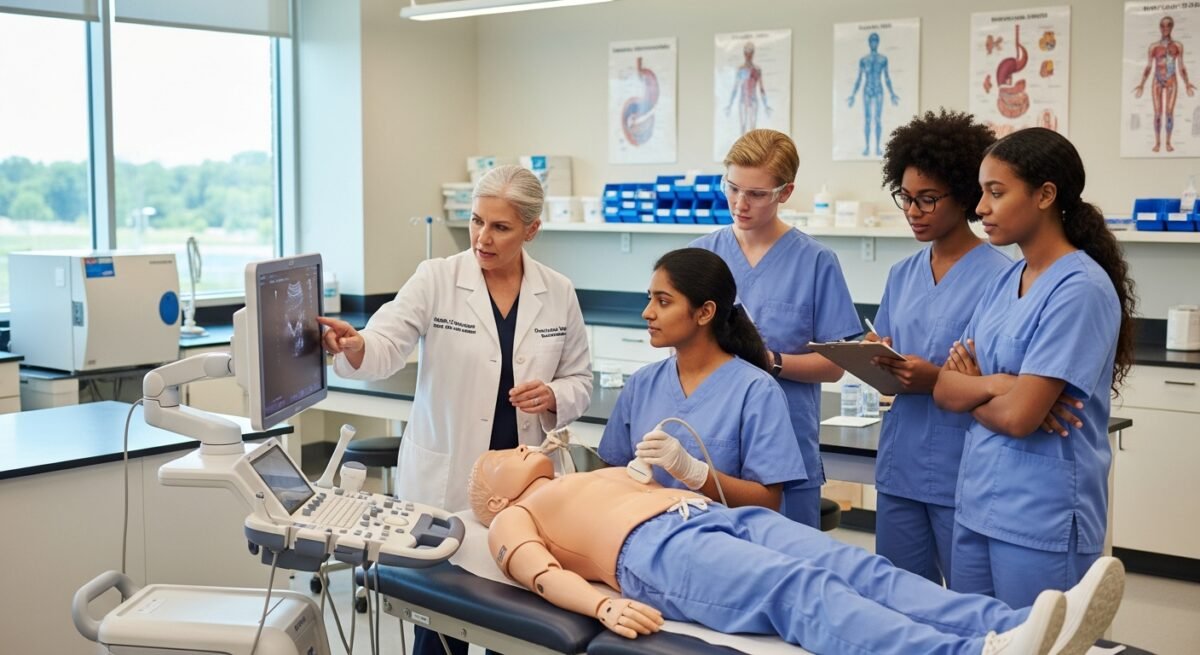
No explanation of a sonography associate degree is complete without emphasizing the critical role of clinical externships. These are not mere add-ons, they are the essential component where theoretical knowledge is applied in real-world healthcare settings. Programs typically require between 1,000 and 1,600 hours of supervised clinical experience. Students are placed in hospitals, imaging centers, and clinics, where they work alongside registered sonographers and radiologists. Under supervision, they progress from observing exams to performing them independently, learning to handle various patient types, operate different ultrasound machines, and adapt protocols to specific clinical questions. This immersive experience develops not only technical scanning skills but also soft skills like patient interaction, time management, and professionalism under pressure. The clinical site often serves as a key networking opportunity, with many students receiving job offers from their externship locations. Therefore, when evaluating programs, the quality, diversity, and support structure of their clinical partnerships are paramount considerations.
Career Pathways and Earning Potential
Graduating with an associate degree in ultrasound technology opens the door to a stable and growing field. According to the U.S. Bureau of Labor Statistics, employment of diagnostic medical sonographers is projected to grow much faster than the average for all occupations. Sonographers work in diverse settings, including hospitals, physicians’ offices, medical and diagnostic laboratories, and outpatient care centers. While many begin as general sonographers, the field offers numerous opportunities for specialization. With additional experience and credentials, sonographers can focus on areas such as cardiac sonography (echocardiography), vascular sonography, or pediatric sonography. The earning potential is attractive, with the median annual wage for diagnostic medical sonographers significantly exceeding the median for all occupations. Salary can increase with specialization, experience, geographic location, and shift differentials (e.g., evening or weekend work). This strong career outlook makes the two-year investment in a sonography associate degree a strategically sound decision for long-term professional and financial stability. For those considering broader educational pathways, understanding different degree types is valuable. In our guide on an Associate Degree in Early Childhood Education, we explain how associate degrees serve as both career-ready credentials and stepping stones to further education, a principle that applies equally to sonography.
Choosing the Right Accredited Program
Selecting the right program is the most critical step after deciding to pursue this career. The single most important factor is accreditation. You must ensure the program is accredited by the Commission on Accreditation of Allied Health Education Programs (CAAHEP), specifically for diagnostic medical sonography. Graduation from a CAAHEP-accredited program is a prerequisite for sitting for the ARDMS certification exams, which are required by most employers. Beyond accreditation, consider the program’s specialization tracks (e.g., general, cardiac, vascular), the depth and breadth of its clinical rotation network, the credentials and experience of its faculty, and its graduate pass rates on the ARDMS exams. The format is also key: many schools now offer hybrid or accelerated options, blending online theory courses with in-person labs and clinicals, which can provide flexibility for adult learners. Prospective students should also investigate the program’s career placement assistance and total cost, including fees for uniforms, liability insurance, and required testing. Thorough research here ensures your educational investment yields the intended return: a seamless transition to a certified, employed sonographer. Financing this education is a common concern, and exploring all options is wise. Students can learn more about college degrees and funding through dedicated scholarship resources.
Frequently Asked Questions
Is an associate degree enough to become a sonographer?
Yes. An associate degree in ultrasound technology is the most common and widely accepted entry-level education for the profession. It fulfills the educational requirements to sit for national certification exams, which are the key to employment.
Can I complete this degree online?
While the lecture-based theoretical components can often be completed online, the nature of sonography training requires significant in-person hands-on lab work and mandatory clinical externships. Therefore, most “online” programs are actually hybrid, combining online coursework with scheduled on-campus labs and full-time clinical placements in your local area.
What is the difference between a certificate, an associate degree, and a bachelor’s degree in sonography?
Certificate programs are typically for healthcare professionals (like registered nurses or radiologic technologists) seeking to cross-train into sonography. An associate degree is the standard primary pathway for those new to the field. A bachelor’s degree often includes more management, research, or advanced clinical coursework and can be beneficial for leadership roles or for those who plan to pursue a master’s degree later.
How difficult is the program?
The sonography associate degree is academically challenging, requiring a strong grasp of science, physics, and detailed anatomy. The clinical hours are demanding and the workload is heavy. Success requires dedication, good time management, and the ability to integrate complex information. However, for students passionate about healthcare and technology, the challenge is rewarding.
What are the physical demands of the job?
Sonographers are on their feet for long periods, may need to help position patients, and often perform repetitive motions with the ultrasound transducer. Ergonomics is a major component of training to prevent work-related musculoskeletal injuries, which are a known risk in the profession.
The decision to pursue an associate degree in ultrasound technology is the first step toward a fulfilling career at the intersection of technology, patient care, and diagnostic medicine. This degree provides a focused, efficient, and respected pathway into a vital healthcare profession. By choosing a CAAHEP-accredited program, committing to the rigorous blend of classroom and clinical learning, and successfully achieving certification, you position yourself for a career with purpose, stability, and growth. The journey from student to diagnostic medical sonographer is intensive, but for those drawn to this unique blend of skills, the professional rewards are well worth the effort.