
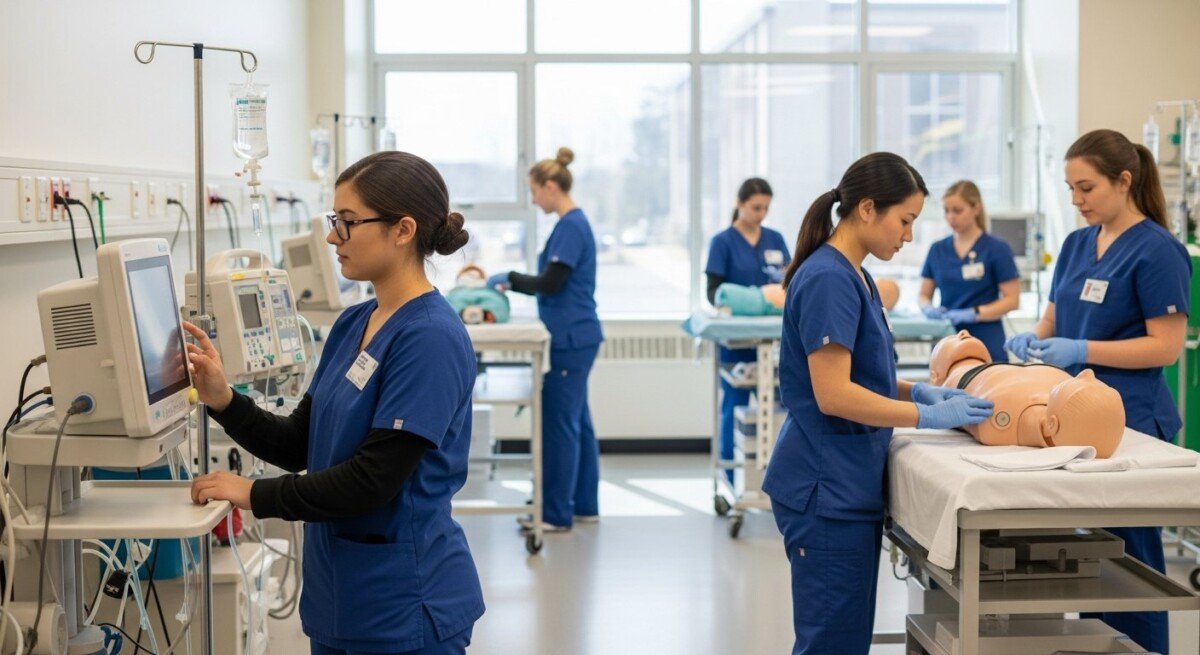
Your Guide to an Associate Degree in Nursing in Massachusetts
An Associate Degree in Nursing in Massachusetts provides a fast, affordable path to becoming a Registered Nurse, with strong job demand and high earning potential across the state’s renowned healthcare sector.

By Ethan Clark
Becoming a Registered Nurse (RN) in Massachusetts is a powerful career move, and an Associate Degree in Nursing (ADN) is one of the most direct and accessible pathways to enter this vital profession. With a strong healthcare sector and a consistent demand for skilled nurses, Massachusetts offers a robust environment for nursing education and career growth. This comprehensive guide will walk you through everything you need to know about pursuing an associate degree in nursing in Massachusetts, from choosing the right program and understanding the curriculum to navigating licensure and launching your career in the Bay State.
Understanding the ADN Pathway in Massachusetts
An Associate Degree in Nursing is a two-year program, typically offered at community colleges and some technical schools, that provides the foundational knowledge and clinical skills required to become a registered nurse. In Massachusetts, ADN programs are designed to prepare graduates to sit for the National Council Licensure Examination for Registered Nurses (NCLEX-RN). This pathway is particularly attractive for its relatively short duration, lower cost compared to a four-year Bachelor of Science in Nursing (BSN), and strong focus on hands-on clinical training. The curriculum blends general education courses in subjects like English, psychology, and anatomy with core nursing coursework and supervised clinical rotations in various healthcare settings.
Massachusetts boasts a network of accredited ADN programs across the state, from the Berkshires to Cape Cod. These programs must be approved by the Massachusetts Board of Registration in Nursing (BORN) and should hold accreditation from either the Accreditation Commission for Education in Nursing (ACEN) or the Commission on Collegiate Nursing Education (CCNE). Accreditation is a critical marker of quality, ensuring the program meets national standards and that your degree will be recognized by employers and licensing boards. It also is essential for students who may wish to pursue a BSN later through an RN-to-BSN bridge program.
Key Steps to Enroll in an ADN Program
The journey to becoming an RN through an ADN program requires careful planning and preparation. The process is competitive, and meeting the minimum requirements is just the first step. Prospective students must demonstrate academic readiness and a commitment to the rigorous demands of a nursing curriculum.
Before applying, you should complete several prerequisite courses, which often include Anatomy & Physiology I and II (with labs), Microbiology, College Composition, and Developmental Psychology. These prerequisites ensure you have the necessary scientific and communication foundation for success in nursing courses. Most programs require a minimum GPA, often a 2.5 or higher, in these prerequisite courses. Additionally, many schools require candidates to take a standardized entrance exam, such as the Test of Essential Academic Skills (TEAS), to assess basic academic knowledge in reading, math, science, and English.
Here is a typical checklist for the application process:
- Research and Select Accredited Programs: Identify several ADN programs in Massachusetts that fit your geographic and scheduling needs. Verify their BORN approval and ACEN/CCNE accreditation status.
- Complete Prerequisite Courses: Enroll at a community college or online provider to finish required classes with strong grades.
- Take the Required Entrance Exam: Register for and achieve a competitive score on the TEAS or other required test.
- Prepare Your Application Materials: This includes official transcripts, letters of recommendation, a personal statement, and a resume detailing any healthcare experience.
- Submit Applications Before Deadlines: Nursing programs often have strict, early application windows. Apply to multiple programs to increase your chances of acceptance.
- Complete Background Checks and Health Requirements: Once accepted, you will need to pass a criminal background check (CORI) and provide proof of immunizations and a physical exam before starting clinical rotations.
Financial planning is a crucial part of this process. While ADN programs are cost-effective, exploring all options for college degree guidance on tuition, fees, and financial aid is essential. Fill out the Free Application for Federal Student Aid (FAFSA), research scholarships specifically for nursing students in Massachusetts, and investigate employer tuition reimbursement programs if you are currently working in a healthcare support role.
Curriculum and Clinical Experience
The ADN curriculum is intensive and immersive. The first year typically focuses on foundational sciences, introductory nursing concepts, and basic skills labs. Courses you can expect include Fundamentals of Nursing, Pharmacology, Pathophysiology, and Health Assessment. The second year delves into specialized areas of nursing practice, such as Medical-Surgical Nursing, Pediatric Nursing, Maternal-Newborn Nursing, and Mental Health Nursing.
The most defining component of an ADN program is the clinical rotation. These are supervised, hands-on experiences in real healthcare environments where students apply classroom theory to patient care. In Massachusetts, students gain experience in diverse settings including hospital medical-surgical units, emergency departments, pediatric wards, maternity units, community health clinics, and long-term care facilities. These rotations are not only vital for skill development but also for professional networking and understanding the different specialties within nursing. The clinical hours required by the Massachusetts BORN ensure graduates are practice-ready upon completion of their degree.
Licensure and Career Outlook for Massachusetts ADN Graduates
Upon successful completion of an accredited ADN program, graduates are eligible to apply to take the NCLEX-RN. The first step is to apply for licensure by examination with the Massachusetts Board of Registration in Nursing. This involves submitting an application, paying a fee, and arranging for your nursing school to send your official transcript to the board. Once you receive an Authorization to Test (ATT) from the board and the testing vendor, you can schedule your NCLEX-RN exam at a testing center.
Passing the NCLEX-RN is the final hurdle to becoming a licensed RN in Massachusetts. The exam is a computerized adaptive test that assesses the knowledge, skills, and abilities essential for safe and effective entry-level nursing practice. After passing, you will receive your Massachusetts RN license and can begin applying for jobs. The career outlook for RNs in Massachusetts is exceptionally strong. The state consistently has one of the highest concentrations of healthcare jobs in the nation, with major hospital systems like Mass General Brigham, Beth Israel Lahey Health, and Boston Children’s Hospital, among many others. According to state labor data, the demand for registered nurses is projected to remain high due to an aging population and healthcare workforce retirements.
While an ADN qualifies you for an RN license and many staff nursing positions, it’s important to understand the broader educational landscape. Many healthcare employers, especially large academic medical centers, express a preference for nurses with a BSN degree and may require ADN hires to enroll in an RN-to-BSN program within a few years of hire. Fortunately, Massachusetts has numerous RN-to-BSN programs, many offered online, that allow working nurses to earn their bachelor’s degree with significant credit for their ADN and experience. This creates a clear and flexible career ladder: ADN to RN licensure to gain experience, then RN-to-BSN for career advancement, similar to the pathways explored in our guide on becoming an RN in Nevada.
Frequently Asked Questions
How long does it take to complete an ADN program in Massachusetts?
Most traditional, full-time ADN programs are designed to be completed in two years (four semesters). However, part-time options are available at some schools, which will extend the timeline. The duration also depends on whether you have completed prerequisite courses before enrollment.
Can I complete an ADN program online in Massachusetts?
While the lecture and theory components of many ADN programs are increasingly offered in hybrid or online formats, the clinical training must be completed in person at approved healthcare facilities. There are no fully online ADN programs due to this hands-on requirement. You will need to live near or be able to commute to a school and its affiliated clinical sites.
What is the average salary for an RN with an ADN in Massachusetts?
Registered nurse salaries in Massachusetts are among the highest in the country. While salary varies by experience, location, and specialty, the median annual wage for RNs in the state typically exceeds $90,000. ADN-prepared RNs generally start at a competitive salary that increases with experience and additional education.
Is there a waiting list for ADN programs in Massachusetts?
Due to high demand and limited clinical placement slots, many ADN programs in Massachusetts are competitive and may have waiting lists. This underscores the importance of applying early, having a strong academic record, and applying to multiple programs to secure a seat.
What are the best community colleges for nursing in Massachusetts?
Several Massachusetts community colleges have excellent reputations for their ADN programs, including Massasoit Community College, Berkshire Community College, Bristol Community College, and Quincy College. The “best” program is subjective and depends on your location, schedule, and specific career goals. Always verify current accreditation and NCLEX pass rates.
Pursuing an associate degree in nursing in Massachusetts is a strategic and rewarding investment in your future. It opens the door to a stable, well-compensated, and deeply meaningful career in a state with world-class healthcare institutions. By carefully selecting an accredited program, diligently preparing for the academic rigor, and planning for the licensure process, you can efficiently transition from student to skilled healthcare professional, ready to meet the critical needs of patients across the Commonwealth.