
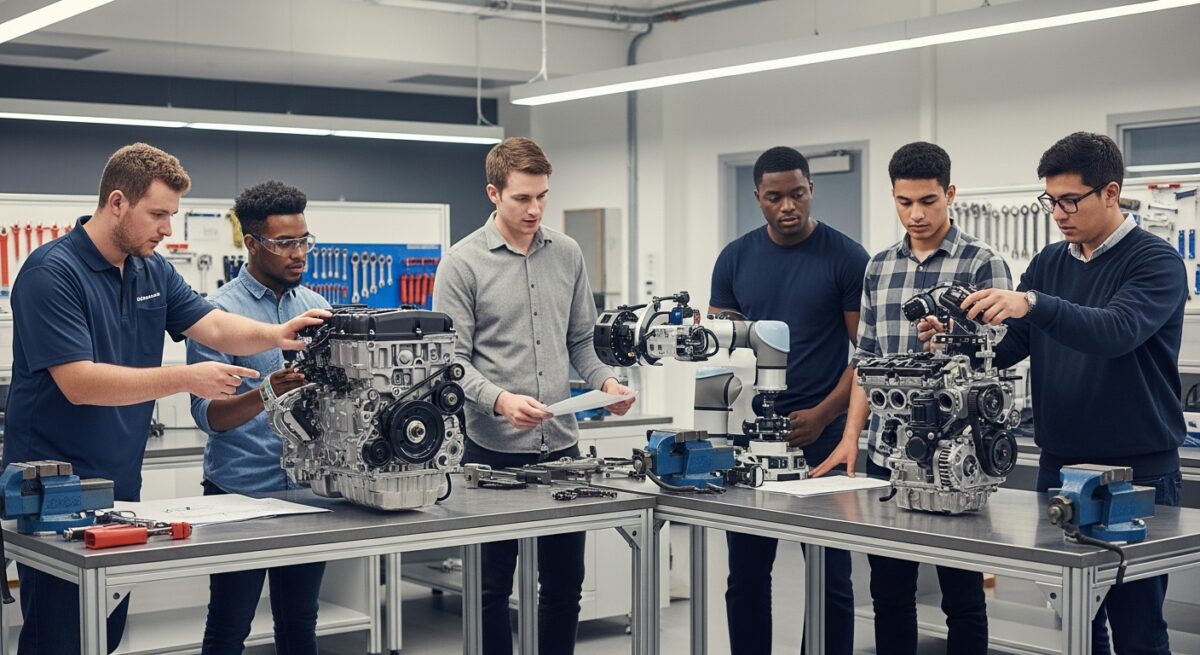
Mechanical engineering remains one of the most versatile and rewarding career paths in the modern workforce. If you are considering a bachelor’s degree in mechanical engineering, you are looking at a field that combines physics, mathematics, and material science to design and manufacture mechanical systems. From robotics and automotive design to energy systems and aerospace components, mechanical engineers shape the physical world around us. This guide walks through everything you need to know about earning this degree, what to expect in the curriculum, and how to launch a successful career after graduation.
Why Pursue a Bachelor’s Degree in Mechanical Engineering?
A bachelor’s degree in mechanical engineering opens doors to hundreds of industries. Unlike some engineering specializations that focus narrowly on one area (like civil or electrical engineering), mechanical engineering provides a broad foundation. Graduates can work in automotive manufacturing, aerospace, robotics, HVAC systems, renewable energy, biomedical devices, and even entertainment (think theme park ride design). The median annual salary for mechanical engineers in the United States exceeds $95,000 according to the Bureau of Labor Statistics, and the field is projected to grow at a steady rate over the next decade.
Beyond financial stability, mechanical engineering offers intellectual challenge and creative satisfaction. You get to solve real-world problems: designing safer cars, more efficient power plants, or prosthetic limbs that restore mobility. For students who enjoy hands-on problem solving and want to see their ideas become tangible products, this degree is an excellent fit. Additionally, the skills you develop (critical thinking, project management, technical analysis) are transferable to roles in management, law (patent law), and entrepreneurship.
Core Curriculum and What You Will Study
A typical mechanical engineering degree program takes four years of full-time study and includes a mix of foundational sciences, engineering core courses, and specialized electives. The first two years focus heavily on mathematics (calculus, differential equations, linear algebra) and physics (mechanics, thermodynamics, electromagnetism). You will also take introductory engineering courses that teach computer-aided design (CAD), programming, and basic materials science.
During the junior and senior years, the curriculum deepens into core mechanical engineering subjects. Here are the key areas you will study:
- Thermodynamics and Heat Transfer: Understanding energy conversion, engine cycles, refrigeration, and thermal system design.
- Fluid Mechanics: Analyzing fluid behavior in pipes, pumps, turbines, and aerodynamic surfaces.
- Solid Mechanics and Materials Science: Studying stress, strain, failure modes, and selecting appropriate materials for different applications.
- Dynamics and Controls: Modeling moving systems, vibration analysis, and designing feedback control systems for robots and automated machinery.
- Manufacturing Processes: Learning about machining, casting, 3D printing, and assembly methods used in industry.
Most programs also require a capstone design project in the final year. Working in teams, students tackle a real engineering problem from concept through prototyping. This experience mirrors professional practice and builds a strong portfolio piece for job interviews. Many universities also offer concentrations or elective tracks in areas like aerospace, automotive engineering, renewable energy, or mechatronics.
Accreditation and Choosing the Right Program
Accreditation is critical when selecting a mechanical engineering degree program. In the United States, the Accreditation Board for Engineering and Technology (ABET) accredits engineering programs. Graduating from an ABET-accredited program is often required to become a licensed Professional Engineer (PE) later in your career. Licensing is essential for engineers who want to sign off on public projects or start their own consulting firms.
When researching schools, look for ABET accreditation on their mechanical engineering program page. You should also consider factors like class size, laboratory facilities, internship placement rates, and faculty expertise. Some programs emphasize theoretical research, while others focus on hands-on design and co-op experiences. Visiting campuses and talking to current students can help you find the best fit. For those balancing work or family obligations, many accredited universities now offer online or hybrid options. For more information about exploring these alternatives, online degree guidance can help you navigate accredited remote programs.
Specializations Within Mechanical Engineering
While a general bachelor’s degree in mechanical engineering provides broad training, many students choose to specialize. Specialization can make you more competitive in specific job markets. Here are some popular focus areas:
- Automotive Engineering: Focuses on vehicle design, powertrain systems, electric vehicles, and autonomous driving technology.
- Aerospace Engineering: Covers aircraft and spacecraft design, propulsion, aerodynamics, and structural analysis.
- Robotics and Mechatronics: Combines mechanical design with electronics and computer control to build intelligent machines.
- Energy and Thermal Systems: Concentrates on power generation, HVAC, renewable energy systems, and thermal management.
- Manufacturing and Materials: Emphasizes production processes, quality control, and advanced materials like composites and alloys.
Choosing a specialization early can help you tailor your electives, internships, and senior projects toward that field. However, many engineers start in a general role and specialize later through on-the-job training or graduate studies. The flexibility of mechanical engineering means you are never locked into one path.
Internships, Co-ops, and Real-World Experience
Classroom learning is essential, but employers highly value practical experience. Most mechanical engineering programs encourage or require internships or cooperative education (co-op) placements. An internship typically lasts one summer, while a co-op alternates semesters of work and study over a longer period. Both provide paid, supervised work experience at engineering firms, manufacturing plants, research labs, or government agencies.
Completing one or two internships can dramatically improve your job prospects after graduation. You gain hands-on skills with industry-standard software and equipment, build a professional network, and often receive a job offer from the company where you interned. Many students also join student chapters of professional organizations like the American Society of Mechanical Engineers (ASME) or SAE International to compete in design competitions and attend conferences. These activities demonstrate initiative and passion to future employers.
Career Paths and Job Outlook
Graduates with a mechanical engineering degree enter a robust job market. According to the Bureau of Labor Statistics, employment of mechanical engineers is projected to grow about 10 percent from 2022 to 2032, faster than the average for all occupations. This growth is driven by demand for new machinery, automation, renewable energy technology, and advanced manufacturing. Industries that hire the most mechanical engineers include transportation equipment manufacturing, machinery manufacturing, scientific research and development services, and architectural and engineering services.
Common job titles for new graduates include design engineer, manufacturing engineer, quality engineer, project engineer, and test engineer. With experience, mechanical engineers can advance to senior engineer, engineering manager, technical director, or even executive roles like chief technology officer. Some engineers also pursue graduate degrees (master’s or PhD) to move into research, teaching, or specialized technical leadership. The versatility of the degree also allows career shifts into finance, law, medicine (biomedical engineering), or technical sales.
Frequently Asked Questions
Is a bachelor’s degree in mechanical engineering hard? Yes, it is academically challenging, especially the mathematics and physics courses. However, with consistent effort, study groups, and use of campus tutoring resources, most students succeed. The difficulty also depends on your chosen specialization and university.
Can I get a mechanical engineering job with only a bachelor’s degree? Absolutely. The vast majority of entry-level mechanical engineering positions require only a bachelor’s degree. A PE license or master’s degree can help with advancement but is not needed to start.
How long does it take to complete a mechanical engineering degree? Typically four years of full-time study. Some students take five years if they include co-op placements or switch majors. Accelerated programs and online options may offer different timelines.
What software should I learn as a mechanical engineering student? CAD software like SolidWorks, AutoCAD, or CATIA is essential. You should also learn MATLAB for analysis and programming, and possibly FEA tools like ANSYS or COMSOL for simulation work.
What is the difference between mechanical engineering and industrial engineering? Mechanical engineering focuses on designing and building mechanical systems and components. Industrial engineering focuses on optimizing complex processes, systems, and organizations. There is overlap, but mechanical engineering is more technical and design-oriented.
Earning a bachelor’s degree in mechanical engineering is a significant investment of time and effort, but it pays dividends in career flexibility, earning potential, and the satisfaction of creating solutions that matter. Whether you dream of designing electric vehicles, building robots, or developing sustainable energy systems, this degree provides the foundation to turn those ambitions into reality. As you research programs, consider accreditation, specialization options, and experiential learning opportunities. With the right preparation, you can launch a rewarding engineering career that evolves with technology and industry needs.