
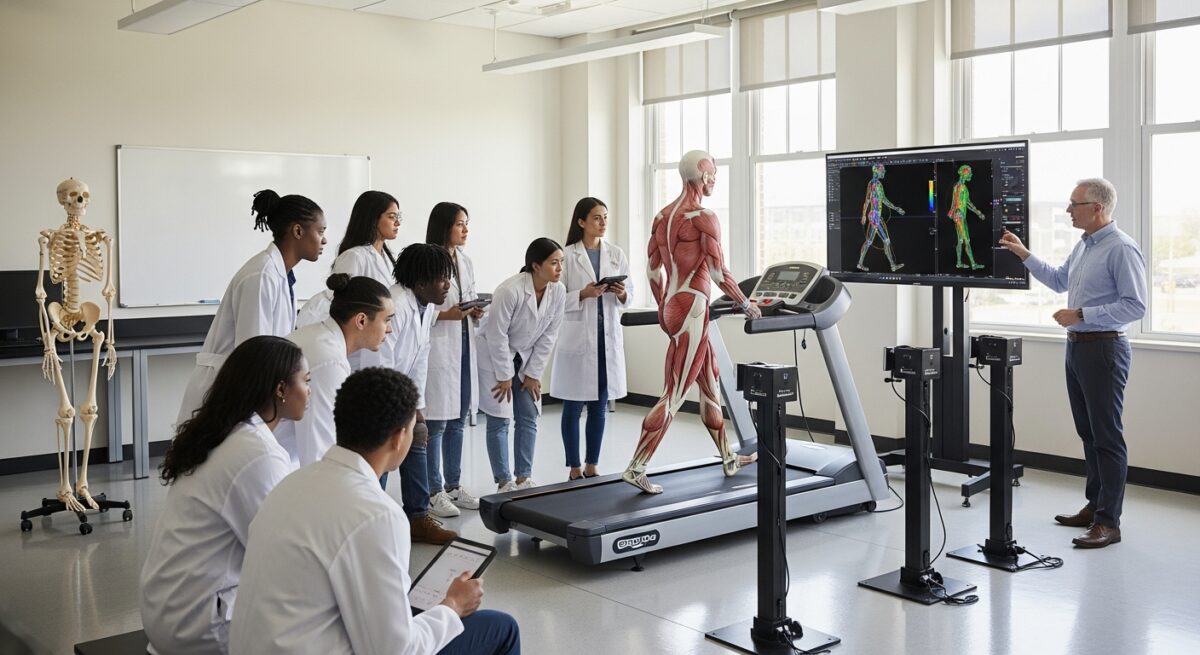
If you are fascinated by human movement, passionate about health, and driven to help others achieve their physical potential, a Bachelor of Science in Kinesiology degree offers a powerful and versatile foundation. This comprehensive field of study, often synonymous with exercise science or human kinetics, delves into the scientific principles of movement, from cellular mechanics to whole-body performance. Graduates are not limited to a single career path, instead, they enter a dynamic landscape where their expertise in anatomy, physiology, biomechanics, and motor behavior is in high demand across healthcare, fitness, corporate wellness, and sports. This career guide is designed to illuminate the diverse opportunities a kinesiology degree unlocks, providing a roadmap for aspiring professionals to navigate their future.
Understanding the Kinesiology Degree Curriculum
A Bachelor of Science in Kinesiology is a rigorous science-based program. The curriculum is designed to provide a deep understanding of the human body in motion. Core coursework typically includes foundational sciences like human anatomy and physiology, where students gain detailed knowledge of bodily systems. Courses in biomechanics apply physics to understand how forces affect movement, while exercise physiology explores how the body responds and adapts to physical activity. Students also study motor learning and control, which examines how we acquire and refine movement skills, and often engage in courses on nutrition, psychology of sport and exercise, and research methods.
This strong scientific foundation is what sets the kinesiology degree apart and makes its graduates so valuable. It is not merely a fitness certification, it is an academic discipline that prepares students to assess, analyze, and prescribe interventions based on evidence. Many programs offer concentrations or tracks that allow students to tailor their studies early on. Common specializations include pre-physical therapy or pre-occupational therapy, exercise science, fitness leadership, sports management, and clinical kinesiology. Choosing a concentration can help align coursework with specific career goals and graduate school prerequisites.
Core Career Paths for Kinesiology Graduates
The career outcomes for someone with a bachelor of science in kinesiology are remarkably diverse. The degree serves as a launchpad for both immediate employment and advanced professional or clinical degrees. The primary pathways can be broadly categorized into allied health professions, fitness and wellness, and sport performance.
Allied Health and Clinical Roles
For many students, a kinesiology degree is the essential undergraduate step toward a clinical career. The deep understanding of the human body provides an excellent foundation for advanced study. Common next steps include pursuing a Doctor of Physical Therapy (DPT), Master of Occupational Therapy (OT), or Doctor of Chiropractic (DC) degree. Other graduates may enter accelerated nursing programs or physician assistant studies. Even at the bachelor’s level, roles exist as physical therapy aides, cardiac rehabilitation technicians, or exercise physiologists in clinical settings, where they work under the supervision of licensed clinicians to implement rehabilitation programs.
Fitness, Wellness, and Health Promotion
This is a vast and growing sector for kinesiology graduates. They are uniquely qualified to design safe and effective exercise programs for diverse populations. Careers include personal trainers, strength and conditioning coaches, group exercise instructors, and wellness coordinators. These professionals work in settings like commercial gyms, corporate wellness centers, community recreation facilities, and even cruise ships. Their role extends beyond coaching, they educate clients on lifestyle modifications, motivate behavioral change, and use their knowledge of physiology to optimize health outcomes. This pathway is ideal for those who enjoy direct client interaction and want to see the tangible impact of their work.
Sport Performance and Coaching
Kinesiology graduates are integral to the world of competitive athletics. They apply principles of biomechanics and physiology to enhance athletic performance and reduce injury risk. Careers in this sphere include strength and conditioning coaches for school, collegiate, or professional teams, sports coaches, and sport performance analysts. Some work in sport science labs using technology like motion capture to analyze movement efficiency. This path requires a blend of scientific knowledge and practical coaching skills, often demanding nontraditional hours aligned with training and competition schedules.
Essential Skills and Certifications for Success
While the kinesiology degree provides the theoretical knowledge, complementing it with practical skills and professional certifications is crucial for career readiness and marketability. Employers seek candidates who can apply textbook learning to real-world situations.
Key skills developed in a strong program include client assessment, where you learn to evaluate fitness levels, movement patterns, and health risks. Program design is another critical skill, creating tailored exercise prescriptions for goals ranging from weight loss to post-rehabilitation. Furthermore, communication and motivational skills are paramount for educating clients and fostering adherence to programs. Hands-on experience through internships, practicums, or volunteer work is perhaps the most valuable asset a graduate can have, providing a resume boost and professional references.
Professional certifications validate your expertise to employers and clients. While requirements vary by job, some of the most recognized and valuable include:
- Certified Personal Trainer (CPT) from organizations like the American College of Sports Medicine (ACSM) or National Academy of Sports Medicine (NASM).
- Certified Strength and Conditioning Specialist (CSCS) from the National Strength and Conditioning Association (NSCA), a gold standard for coaching athletes.
- Exercise Physiologist Certification (EP-C) from ACSM for those working in clinical or health-fitness settings.
- Corrective Exercise Specialist (CES) or Performance Enhancement Specialist (PES) from NASM for advanced programming.
It is important to research the specific certifications required or preferred in your chosen niche, as some may require a bachelor’s degree as a prerequisite, making your kinesiology education directly applicable. For students considering the flexibility of digital learning, exploring the best online Bachelor of Science degree options can provide valuable insights into accredited programs that fit a busy schedule.
Navigating the Job Market and Salary Expectations
The job market for kinesiology graduates is generally positive, fueled by an aging population seeking mobility, a growing focus on preventive healthcare, and the constant cultural emphasis on fitness and performance. According to the U.S. Bureau of Labor Statistics, employment for exercise physiologists and fitness trainers is projected to grow much faster than the average for all occupations. However, competition can be strong for certain roles, especially in desirable locations or with elite sports organizations.
Salary expectations vary widely based on the specific career path, geographic location, level of experience, and obtained certifications. Entry-level positions in personal training or as a therapy aide may start in the $30,000 to $45,000 range. With experience and specialization, salaries can increase significantly. Certified Strength and Conditioning Coaches at the collegiate or professional level, clinical exercise physiologists, and corporate wellness directors can earn salaries ranging from $50,000 to $80,000 or more. It is critical to understand that many roles in fitness and wellness have an earnings ceiling that can be lifted by building a private client base, developing specialized niche services, or moving into management.
To maximize earning potential and job satisfaction, proactive career planning is essential. Networking through professional organizations like ACSM or NSCA, attending conferences, and securing impactful internships are invaluable steps. Furthermore, for a comprehensive look at navigating higher education choices, you can find clear college degree information to aid in your academic planning.
Frequently Asked Questions
Is a kinesiology degree hard?
As a science-heavy major, kinesiology is academically rigorous. It requires a strong grasp of biology, chemistry, physics, and mathematics. Students should be prepared for challenging courses in anatomy, physiology, and biomechanics. Success requires dedicated study, but for those passionate about the subject matter, the challenge is engaging and rewarding.
Can I become a physical therapist with a kinesiology degree?
Absolutely. A Bachelor of Science in Kinesiology is one of the most common and excellent undergraduate majors for pre-physical therapy students. It covers nearly all the prerequisite courses required for Doctor of Physical Therapy (DPT) programs, such as anatomy, physiology, exercise physiology, and psychology. You will still need to complete other prerequisites, gain observation hours, and maintain a competitive GPA.
What is the difference between kinesiology and exercise science?
The terms are often used interchangeably, and many universities title their degrees accordingly. Generally, kinesiology is considered the broader umbrella term for the study of human movement. Exercise science is a sub-discipline within kinesiology that focuses specifically on the body’s responses and adaptations to physical activity. When researching programs, look at the actual curriculum rather than just the degree title.
Are there jobs in kinesiology beyond training and therapy?
Yes. The degree’s versatility leads to roles in ergonomics (designing workplaces to fit workers), assistive technology, pharmaceutical or medical device sales, health coaching, public health advocacy, and research. Some graduates also pursue law or business degrees with a focus on health, sport, or wellness industries.
Should I get a master’s degree in kinesiology?
A master’s degree can open doors to advanced clinical roles, higher-level research positions, teaching at the community college level, and specialized niches like biomechanics or sport psychology. It is often recommended for those seeking leadership roles in corporate wellness, cardiac rehab, or strength and conditioning. Evaluate if your target career requires or strongly prefers an advanced degree.
A Bachelor of Science in Kinesiology is far more than a degree, it is a passport to a profession dedicated to enhancing human health and performance. By combining a solid scientific education with strategic certifications and practical experience, graduates are equipped to make a meaningful impact in a variety of settings. Whether your passion lies in rehabilitating an injury, training an elite athlete, or promoting community health, this degree provides the foundational knowledge to build a fulfilling and dynamic career centered on the science of movement.