
Your Associates in Sonography Degree Career Guide
This guide details how an associate’s degree in sonography leads to a stable, hands-on healthcare career, covering curriculum, specializations, and certification steps.

By Janet Wilson
Imagine a career where you use advanced technology to see inside the human body, providing critical information that directly impacts patient diagnosis and care, all without the need for a four-year medical degree. This is the reality for diagnostic medical sonographers, and an associate’s degree in sonography is the most direct and efficient educational pathway to enter this vital and growing healthcare field. This comprehensive career guide is designed to demystify the process, from understanding the degree itself to launching a successful career as an ultrasound technologist. We will explore the curriculum, key specializations, certification requirements, and the promising job outlook that makes this two-year investment a strategic move for many aspiring healthcare professionals.
What Is an Associate’s Degree in Sonography?
An Associate of Science (A.S.) or Associate of Applied Science (A.A.S.) in Diagnostic Medical Sonography is a focused, career-oriented degree program typically completed in 18 to 24 months. It is designed to provide students with the foundational knowledge, technical skills, and clinical experience necessary to perform ultrasound examinations. Unlike a general associate’s degree, a sonography program is highly specialized, blending classroom instruction in anatomy, physiology, physics, and patient care with extensive hands-on training using ultrasound equipment. The core objective is to prepare graduates to sit for national certification exams and become competent entry-level sonographers. This degree is widely recognized by employers as the standard qualification for the profession, offering a faster route to employment than a bachelor’s degree while providing a robust educational foundation. For individuals considering their broader academic journey, understanding how to choose the right degree is crucial. Our resource on aligning college degrees by career path offers valuable insights into making strategic educational decisions.
Core Curriculum and Clinical Training
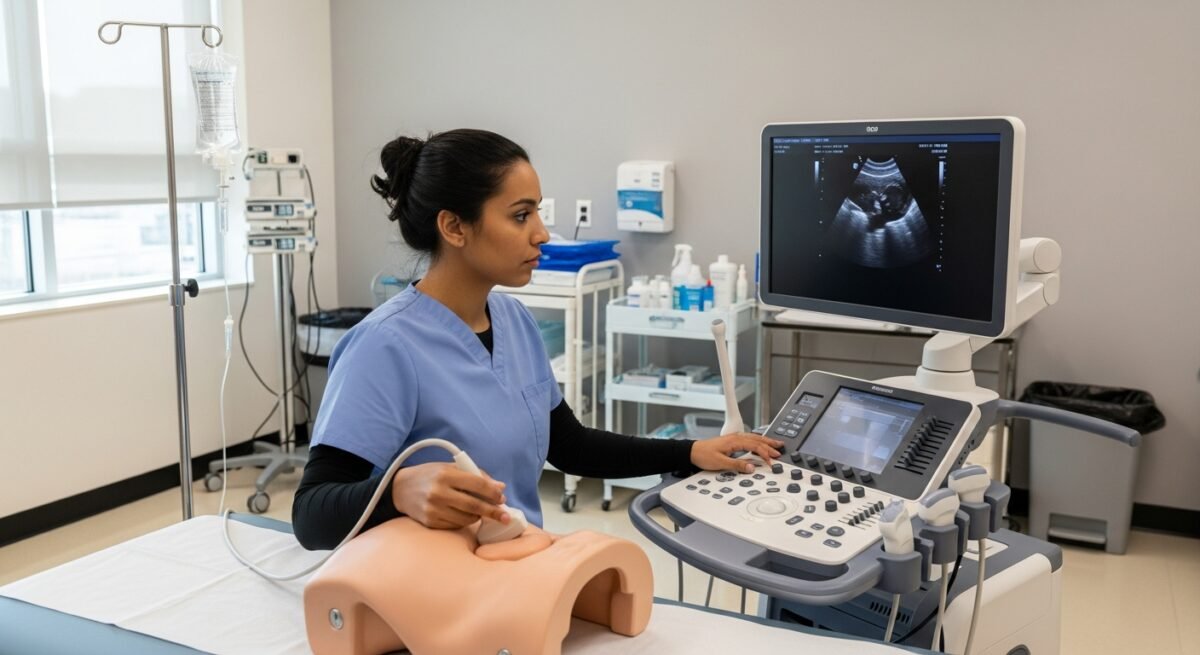
The curriculum for a sonography associate degree is rigorous and multifaceted. Students begin with prerequisite courses in basic sciences and mathematics before diving into sonography-specific subjects. A typical program includes in-depth study of cross-sectional anatomy, which is essential for interpreting ultrasound images, and sonographic physics, which explains how sound waves interact with body tissues to create images. Courses also cover patient care protocols, medical ethics, and communication skills. However, the most critical component is the clinical externship. Students spend hundreds of hours in hospitals, clinics, and imaging centers, working under the supervision of registered sonographers. This real-world experience is indispensable, allowing students to apply classroom knowledge, master scanning techniques on actual patients, and become proficient in various ultrasound procedures. The integration of theory and practice ensures graduates are not just knowledgeable, but also procedurally competent and professionally prepared.
Specializations Within Sonography
While the associate degree provides a generalist foundation, many programs offer or require students to choose a track for focused training. These specializations align with different certification credentials and career paths. The three primary areas are Abdomen-Extended, Obstetrics and Gynecology (OB/GYN), and Adult Echocardiography. Some programs may also offer vascular sonography or pediatric echocardiography tracks. Choosing a specialization allows a student to develop expertise in a specific area of the body and its associated pathologies. For example, an OB/GYN sonographer focuses on imaging the female reproductive system and monitoring fetal development, while an adult echocardiographer specializes in imaging the heart and its vessels to assess cardiac function. It’s important to research programs to see which tracks they offer, as this decision can shape your initial job opportunities and career trajectory. Many sonographers later choose to earn additional certifications in other specialties to broaden their skills and marketability.
Career Outlook and Earning Potential
The career outlook for diagnostic medical sonographers is exceptionally strong, a key reason why the sonography associate degree is such an attractive option. According to the U.S. Bureau of Labor Statistics, employment of sonographers is projected to grow much faster than the average for all occupations over the next decade. This demand is driven by an aging population that requires more medical imaging services and the increasing preference for ultrasound as a safe, non-invasive, and cost-effective diagnostic tool compared to more invasive procedures. In terms of earning potential, the median annual wage for diagnostic medical sonographers is competitive within the allied health field. Salaries can vary based on geographic location, years of experience, place of employment (such as hospitals versus outpatient centers), and specialization. Sonographers with multiple certifications often command higher salaries. This positive job market means that graduates of accredited associate degree programs typically enjoy high job placement rates and opportunities for career advancement.
Steps to Launching Your Sonography Career
Pursuing a career as an ultrasound tech involves a clear sequence of steps, beginning well before graduation. Following this structured path maximizes your chances of success and smooths the transition from student to professional.
- Research and Select an Accredited Program: This is the most critical step. Ensure the sonography associate degree program is accredited by the Commission on Accreditation of Allied Health Education Programs (CAAHEP) or another recognized agency. Accreditation is mandatory for graduates to be eligible to take the national certification exams.
- Excel in Prerequisites and Program Coursework: Success in prerequisite science and math courses is often required for program admission. Once enrolled, dedicate yourself to mastering both the academic and hands-on components of the curriculum.
- Complete Clinical Externships: Treat your clinical rotations as an extended job interview. Demonstrate professionalism, eagerness to learn, and technical skill. These sites are often the first source of job offers for new graduates.
- Graduate and Apply for Certification: Upon completing your degree, you must apply to take the certification exams through the American Registry for Diagnostic Medical Sonography (ARDMS) or Cardiovascular Credentialing International (CCI). Most employers require certification.
- Pass Your Certification Exam(s): Successfully pass the Sonography Principles and Instrumentation (SPI) exam and your chosen specialty exam (e.g., Abdomen, OB/GYN, Adult Echocardiography) to earn your credentials (e.g., RDMS, RVT, RDCS).
- Secure State Licensure (if required): Some states require sonographers to hold a state license in addition to national certification. Research the requirements for the state where you plan to work.
- Begin Your Job Search and Continue Learning: Leverage connections from clinicals, your program’s career services, and professional job boards. Commit to continuing education to maintain your certification and stay current with technological advances.
Each of these steps builds upon the last, creating a clear roadmap from education to employment. For comprehensive college degree information that can help you evaluate different educational pathways, including sonography, exploring dedicated resources is highly recommended.
Frequently Asked Questions
Is an associate’s degree enough to become a sonographer?
Yes, an associate’s degree is the most common and widely accepted educational pathway to become a diagnostic medical sonographer. It provides the necessary training and clinical hours to qualify for the national certification exams, which are the primary credential sought by employers.
Can I complete a sonography associate degree online?
While the didactic (classroom) portions of some programs may be offered online, the clinical training component cannot be completed remotely. You will need to complete hands-on scanning hours at an approved healthcare facility. Most “online” sonography degrees are hybrid models designed for students who can secure a local clinical site.
What is the difference between a sonographer and an ultrasound tech?
These terms are generally used interchangeably within the medical field. Both refer to the professional who operates ultrasound equipment to create diagnostic images. “Diagnostic Medical Sonographer” is the formal title used by credentialing bodies and the Bureau of Labor Statistics.
How important is program accreditation?
Accreditation is non-negotiable. Graduating from a CAAHEP-accredited program is a prerequisite for eligibility to take the ARDMS certification exams. Employers almost universally require ARDMS certification, so attending an unaccredited program can severely limit your career prospects.
What are the physical demands of the job?
Sonography can be physically demanding. Sonographers often stand for long periods, may need to help position patients, and are required to perform repetitive motions with their scanning arm and wrist. Proper ergonomic technique is emphasized in training to prevent workplace injuries.
Embarking on the path to become a diagnostic medical sonographer through an associate’s degree program is a decision that balances efficient education with a rewarding, hands-on career in healthcare. This degree opens the door to a profession characterized by stability, competitive compensation, and the profound satisfaction of playing a key role in patient diagnosis and well-being. By carefully selecting an accredited program, committing to your studies and clinical training, and successfully achieving certification, you can position yourself for a successful launch into this dynamic and essential medical field.