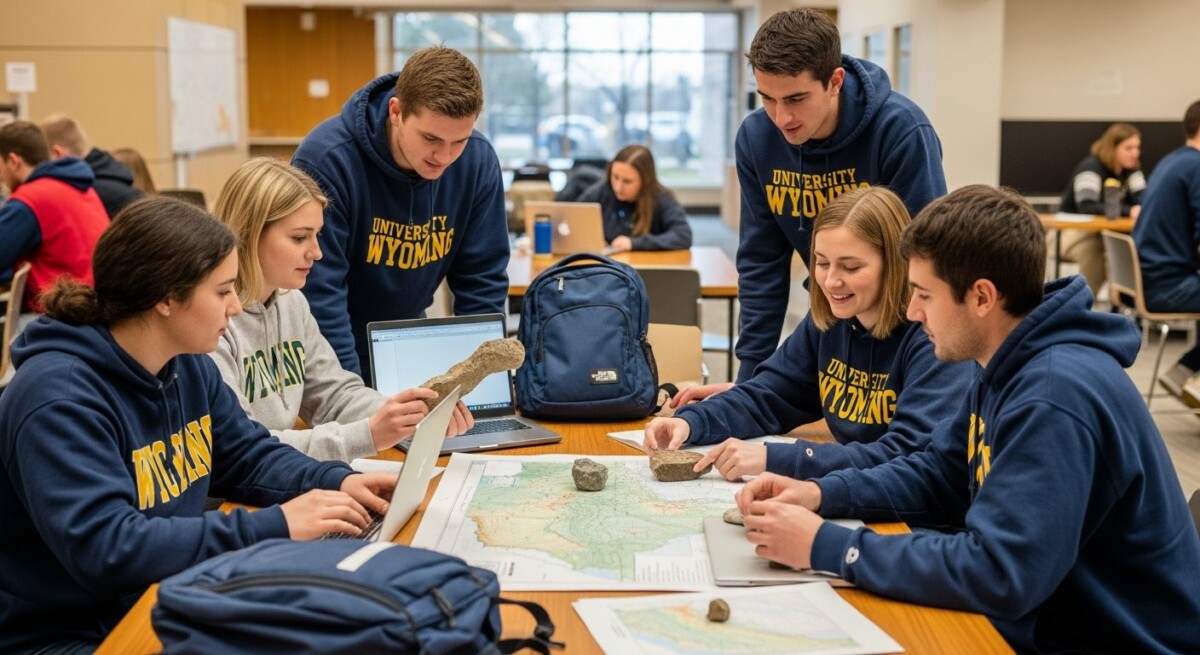
Choosing where to pursue your undergraduate education is a monumental decision, one that shapes your career trajectory, personal growth, and future opportunities. For students drawn to the American West’s iconic landscapes, tight-knit communities, and unique economic sectors, Wyoming offers a compelling and distinct higher education landscape. While the state’s population is modest, its commitment to accessible, high-quality public education is substantial, centered around a flagship research university and a network of community colleges that provide seamless pathways to four-year degrees. This guide provides a comprehensive overview of Wyoming universities offering undergraduate degree programs, detailing the academic specialties, campus cultures, and practical considerations that define the Cowboy State’s educational offerings.
The University of Wyoming: The State’s Comprehensive Flagship
As the sole four-year public university in the state, the University of Wyoming (UW) in Laramie serves as the cornerstone of higher education. With an enrollment of approximately 10,000 students, UW provides the breadth and depth of a national research institution while maintaining a student-to-faculty ratio that fosters personal interaction. Its status as a land-grant university deeply connects its mission to the state’s needs, particularly in energy, agriculture, and natural resources. Undergraduate students benefit from research opportunities typically reserved for graduate students at larger institutions, alongside a classic collegiate experience set against the backdrop of the Laramie Range.
UW organizes its 80+ undergraduate programs across seven colleges: the College of Agriculture, Life Sciences and Natural Resources; the College of Arts and Sciences; the College of Business; the College of Education; the College of Engineering and Physical Sciences; the College of Health Sciences; and the Haub School of Environment and Natural Resources. This structure ensures focused academic advising and tailored resources. Notably, UW is a national leader in areas like petroleum engineering, wildlife and fisheries biology, and atmospheric science, directly feeding into key state industries. The university’s robust honors program and undergraduate research initiative provide avenues for high-achieving students to distinguish themselves.
The Community College Pathway to a Bachelor’s Degree
Wyoming’s unique system provides one of the most streamlined and affordable pathways to a bachelor’s degree in the nation through its seven community colleges. These institutions, located in Casper, Cheyenne, Powell, Riverton, Rock Springs, Sheridan, and Torrington, offer associate degrees and certificate programs designed for direct transfer to the University of Wyoming or other four-year institutions. For many students, starting at a community college close to home is a strategic financial and academic decision. The state guarantees that associate degrees earned at a Wyoming community college will transfer seamlessly to UW, satisfying the general education requirements and allowing students to enter as juniors in their chosen major.
This model is particularly powerful for non-traditional students, those exploring academic interests, or individuals seeking career-specific training before committing to a four-year program. For example, a student might complete an Associate of Science in Nursing at Casper College before transferring to UW’s Bachelor of Science in Nursing completion program. Similarly, degrees in fields like criminal justice, business administration, and engineering technology begin at community colleges with lower tuition and smaller class sizes. This integrated system removes the guesswork from transfer planning and makes a bachelor’s degree more accessible across Wyoming’s vast geography. When evaluating any engineering program, understanding accreditation is crucial; our guide on ABET Accreditation Explained: What It Means for Your Degree details why this seal of approval matters for your career.
Specialized and Online Undergraduate Opportunities
Beyond the traditional on-campus experience, Wyoming’s institutions have developed specialized and flexible programs to meet evolving student needs. The University of Wyoming is a significant provider of online education, offering numerous undergraduate degrees and completion programs fully online. This is a critical resource for working adults, place-bound students, and those balancing family commitments. Popular online offerings include a Bachelor of Science in Nursing (RN-to-BSN), a Bachelor of Arts in Organizational Leadership, and a Bachelor of Science in Psychology.
Furthermore, several distinctive partnerships and programs cater to niche interests. Through the Wyoming Innovation Network (WIN), the community colleges and UW collaborate on workforce-focused programs in high-demand fields like cybersecurity, data science, and advanced manufacturing. For students interested in the arts, the Northwest College (in Powell) partnership with UW allows for a unique studio art pathway. Wyoming Catholic College, a private liberal arts college in Lander, offers a singular Great Books curriculum focused on the Western intellectual tradition, representing a different educational philosophy within the state. Exploring these varied academic program insights is key to finding the right fit for your goals.
Key Considerations for Choosing Your Wyoming University
Selecting the right program involves more than reviewing a course catalog. Prospective students must weigh several factors specific to Wyoming’s educational landscape. First, residency is a major financial consideration. Wyoming offers some of the lowest tuition rates in the country for in-state students, and the Western Undergraduate Exchange (WUE) program provides reduced tuition for students from participating western states for many programs, though not all. Second, campus culture varies dramatically between the bustling, traditional setting of UW in Laramie and the more commuter-focused, career-oriented environment of a community college.
Third, alignment with Wyoming’s core industries presents both opportunity and limitation. If your career goals are in energy, natural resource management, agriculture, or outdoor recreation, Wyoming’s programs are exceptionally strong and well-connected to employers. If you seek programs in highly specialized fields like marine biology or metropolitan urban planning, you may need to look to institutions in other states or heavily leverage online options. Finally, the value of close faculty mentorship and undergraduate research access at UW cannot be overstated for students seeking a personalized, hands-on academic journey.
To systematically evaluate your options, consider the following steps:
- Define Your Academic & Career Goals: Be clear on your intended major and career path to assess program strength and accreditation.
- Calculate Total Cost: Compare tuition, mandatory fees, and cost of living (housing, food, transportation). Factor in scholarships, WUE discounts, and in-state residency requirements.
- Visit or Virtually Tour Campuses: Experience the environment. If visiting in person isn’t feasible, utilize virtual tours and schedule video calls with admissions counselors.
- Analyze Support Services: Investigate academic advising, career placement rates, tutoring centers, and mental health resources.
- Confirm Transfer Pathways: If starting at a community college, meet with an advisor to sign a formal transfer agreement ensuring all credits will apply to your target bachelor’s program.
Frequently Asked Questions
What is the most affordable way to earn a bachelor’s degree in Wyoming?
The most affordable path is typically to establish Wyoming residency, complete an associate degree at one of the seven community colleges (which have the lowest tuition), and then transfer to the University of Wyoming to complete the final two years of your bachelor’s degree. This pathway can cut total degree cost by tens of thousands of dollars.
Can I get a quality engineering degree in Wyoming?
Yes. The University of Wyoming’s College of Engineering and Applied Science offers ABET-accredited undergraduate degrees in civil, mechanical, electrical, petroleum, chemical, and computer engineering, among others. These programs have strong ties to industry and excellent job placement rates, particularly in the energy sector.
Are there out-of-state tuition discounts?
Yes, through the Western Undergraduate Exchange (WUE). Students from eligible western states can attend the University of Wyoming or certain programs at community colleges at 150% of in-state tuition, which is often significantly less than standard out-of-state rates. However, WUE seats are competitive and not available for every major.
What if I want a major not offered in Wyoming?
Wyoming’s unique legislative mandate includes funding for a limited number of students to study specific high-cost programs not available within the state (e.g., dentistry, veterinary medicine) through the Professional Student Exchange Program (PSEP). For standard undergraduate majors not offered, students often utilize online degree programs from other accredited institutions or consider relocation.
How important is the community college system?
Extremely important. It is the entry point for a majority of Wyoming’s postsecondary students and is designed as an integral, respected first step toward a bachelor’s degree. The transfer agreements are robust and make the community colleges a smart strategic choice for many students.
Wyoming’s approach to higher education is characterized by practicality, accessibility, and a deep connection to the state’s identity and economic engine. For the student seeking a personalized education with unparalleled access to outdoor recreation, a close-knit community feel, and direct pathways to careers in foundational American industries, Wyoming universities offering undergraduate degree programs present a unique and valuable opportunity. By carefully navigating the flagship, community college, and online options, you can construct an educational journey that is both financially sensible and academically rigorous, setting a solid foundation for your future in the West and beyond.