
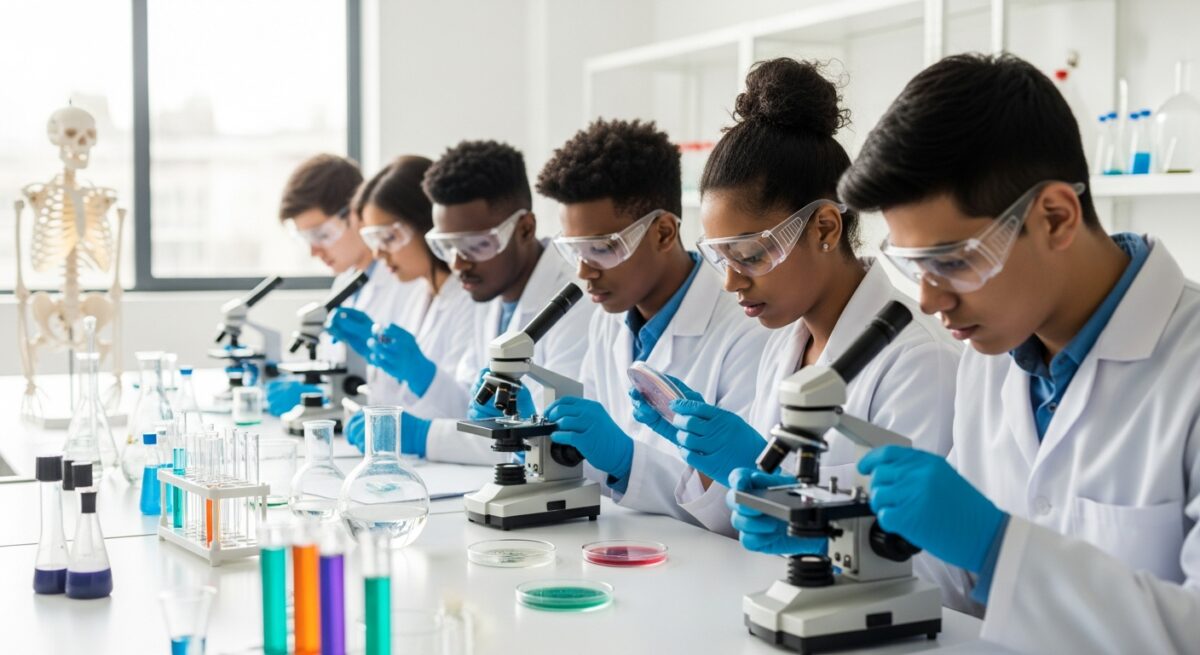
Choosing to pursue an associate degree in biology is a strategic decision that opens doors to further education and entry-level careers in science and healthcare. Many students begin their journey with a biology associate degree because it provides a solid foundation in the life sciences without the four-year commitment of a bachelor’s program. This two-year degree covers the core principles of biology, chemistry, and mathematics while preparing you for transfer to a four-year institution or direct entry into the workforce. Understanding exactly what you will study in this program helps you decide if this path aligns with your academic and professional goals.
An associate degree in biology typically requires 60 to 64 credit hours of coursework. These credits are divided between general education requirements, core biology courses, and elective or lab-based experiences. The curriculum is designed to build critical thinking skills, laboratory techniques, and scientific literacy. Whether you plan to become a research assistant, a healthcare professional, or a environmental scientist, the knowledge gained in this program serves as the bedrock for your future career. Let us explore the specific subjects and skills you will encounter during your studies.
Core Biology Courses You Will Take
The heart of any biological sciences major is the series of foundational biology courses. These classes introduce you to the major concepts that govern living organisms. You will start with General Biology I and II, which cover cell structure, genetics, evolution, ecology, and the diversity of life. These courses often include a laboratory component where you learn to use microscopes, conduct dissections, and perform basic experiments.
In General Biology I, the focus is on molecular and cellular biology. You will study the chemical building blocks of life, how cells function and reproduce, and how energy flows through biological systems. Topics include photosynthesis, cellular respiration, DNA replication, and protein synthesis. General Biology II shifts to organismal biology and ecology. Here you examine plant and animal anatomy, classification systems, population dynamics, and ecosystem interactions. Both courses emphasize the scientific method and data analysis, skills that are essential for any biology associate degree graduate.
Genetics and Evolution
A dedicated course in genetics is often required for an associate degree in biology. This class dives deeper into heredity, gene expression, and genetic variation. You will explore Mendelian genetics, chromosomal inheritance, and the molecular mechanisms of mutation. Many programs also include an introduction to biotechnology, such as PCR and gel electrophoresis, which are common techniques in modern labs. Understanding evolution is another critical component. You will learn about natural selection, speciation, and the evidence for evolutionary change across geological time. These concepts unify all biological disciplines and help you understand the diversity of life on Earth.
Chemistry Requirements for Biology Students
Chemistry is the language of biology. Every biology associate degree program requires at least two semesters of general chemistry. These courses cover atomic structure, chemical bonding, stoichiometry, states of matter, and thermodynamics. The laboratory sessions teach you proper chemical handling, titration, and reaction analysis. A strong grasp of chemistry is essential because biological processes are fundamentally chemical reactions. For example, understanding how enzymes work or how drugs interact with cells requires knowledge of chemical principles.
Some programs also recommend or require an introductory organic chemistry course. Organic chemistry focuses on carbon-based compounds, including the structure and reactivity of molecules like carbohydrates, lipids, proteins, and nucleic acids. This knowledge is particularly valuable if you plan to transfer into a pre-medical, pharmacy, or biochemistry bachelor’s program. The combination of biology and chemistry coursework in an associate degree in biology creates a powerful foundation for advanced study.
Mathematics and Statistics in the Curriculum
Mathematics is another pillar of the biological sciences major. Most programs require college algebra or precalculus, and some may require an introductory statistics course. Statistics is especially important because biologists use data to test hypotheses and draw conclusions. You will learn descriptive statistics, probability, hypothesis testing, and regression analysis. These tools are used in fields such as epidemiology, ecology, and clinical research.
For example, if you work as a laboratory technician after earning your biology associate degree, you might need to analyze experimental data to determine if a treatment has a significant effect. Statistics gives you the framework to make those judgments. Calculus is not always required for an associate degree, but some transfer-oriented programs may include it to align with four-year university prerequisites. Check the specific requirements of your target transfer school to plan your math courses accordingly.
Laboratory Skills and Hands-On Training
A significant portion of your time in a biology associate degree program will be spent in the laboratory. Lab work is where theoretical knowledge meets practical application. You will learn standard techniques such as pipetting, centrifugation, spectrophotometry, and microbial culturing. Safety protocols are emphasized from the first day. You will practice proper use of personal protective equipment, chemical disposal procedures, and emergency response.
Many programs also offer a dedicated lab techniques course that covers advanced methods. These may include:
- DNA extraction and amplification using polymerase chain reaction (PCR)
- Gel electrophoresis for separating DNA or protein fragments
- Microscopy techniques including staining and cell counting
- Basic bioinformatics using online databases like GenBank
- Enzyme assays to measure reaction rates
These hands-on experiences make you competitive for entry-level positions in research labs, clinical settings, or pharmaceutical companies. Employers value candidates who can perform tasks independently and accurately. The lab component also helps you decide if you prefer benchwork or if you are more interested in field biology or healthcare.
General Education and Elective Courses
Like any associate degree, a biology associate degree includes general education requirements. These courses ensure you develop communication, critical thinking, and quantitative reasoning skills. Typical general education classes include English composition, public speaking, humanities, and social sciences. While these may seem unrelated to biology, they are essential for your professional development. Scientists must write reports, present findings, and collaborate with diverse teams.
Elective courses allow you to explore specific interests within the biological sciences. Depending on your program, you might choose classes in microbiology, human anatomy and physiology, environmental science, or nutrition. If you plan to transfer to a four-year program, select electives that fulfill prerequisite requirements for your intended major. For instance, if you want to become a registered nurse, anatomy and physiology are critical. If you aim for a career in wildlife biology, ecology and botany courses would be beneficial.
Transfer Pathways and Career Opportunities
One of the primary reasons students choose an associate degree in biology is the opportunity to transfer to a bachelor’s program. Many community colleges have articulation agreements with public universities that guarantee transfer of credits. This pathway can save you tens of thousands of dollars on tuition while providing the same foundational education. For what degrees can you earn online at Open University, you can explore flexible options that complement your biology studies.
Career options with a biology associate degree include laboratory technician, research assistant, environmental technician, and quality control analyst. Some graduates work in pharmaceutical manufacturing, food science, or agricultural testing. The U.S. Bureau of Labor Statistics projects steady growth for biological technicians, with median salaries around $48,000 per year. With additional certifications or experience, you can advance to supervisory roles or specialize in areas like clinical laboratory science.
If you are considering further education, a biology associate degree provides a smooth transition to bachelor’s programs in biology, biochemistry, environmental science, or health professions. Many universities accept these credits and allow you to complete your degree in two additional years. For those interested in degree planning for students, this route offers flexibility and affordability.
Frequently Asked Questions
What can I do with an associate degree in biology?
Graduates can work as laboratory technicians, research assistants, environmental samplers, or quality control inspectors. The degree also serves as a stepping stone to bachelor’s programs in biology or health sciences.
How long does it take to earn a biology associate degree?
Most full-time students complete the program in two years. Part-time study may take three to four years depending on course load.
Do I need to take chemistry for a biology associate degree?
Yes. General chemistry is a required component of nearly all biology associate degree programs. Some programs also recommend organic chemistry.
Can I transfer my associate degree credits to a four-year university?
Many community colleges have transfer agreements with public universities. Check with your academic advisor to ensure your credits will apply to your intended bachelor’s program.
Is the biology associate degree hard?
The program requires dedication and strong study habits. The material is challenging but manageable with consistent effort. Tutoring and study groups are often available.
An associate degree in biology is a versatile credential that opens many doors. The curriculum provides a thorough grounding in life sciences, laboratory skills, and analytical thinking. Whether you enter the workforce immediately or continue your education, the knowledge and experience you gain will serve you well. As you explore your options, consider how this degree fits into your long-term career vision. With careful planning and the right resources, you can build a rewarding future in the biological sciences.