
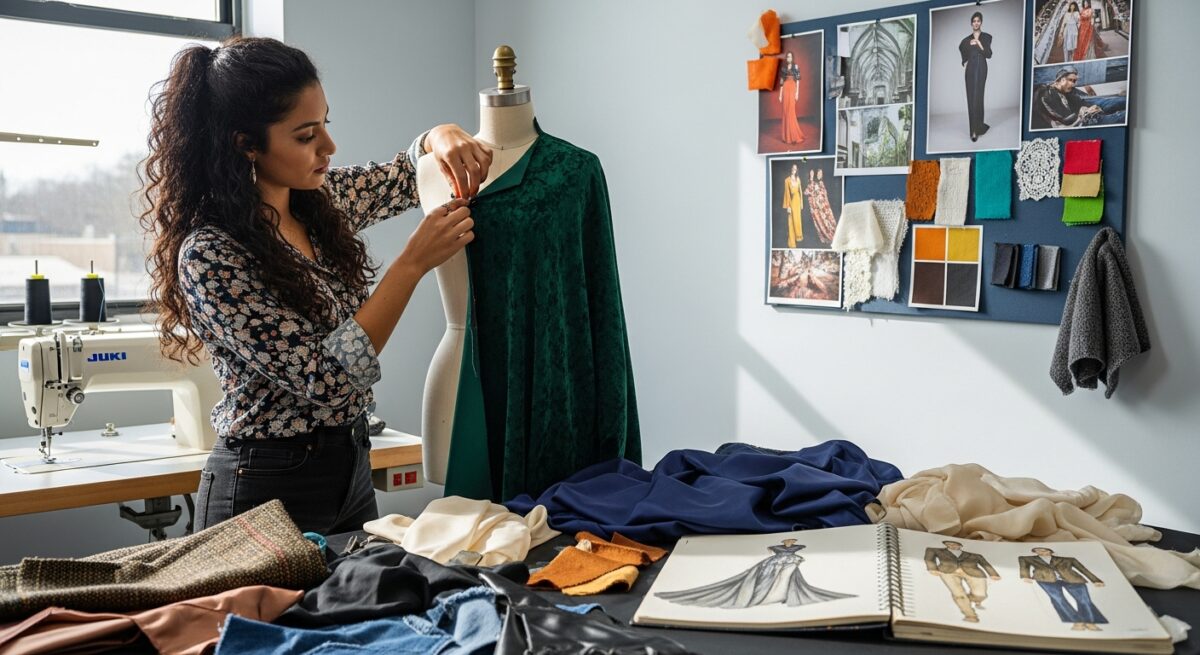
Choosing to pursue a Bachelor of Fashion Design is a commitment to transforming creative passion into professional expertise. This comprehensive degree program is far more than learning to sketch pretty dresses, it is a rigorous academic and practical journey that equips you with the technical skills, theoretical knowledge, and business acumen required to thrive in the global fashion industry. From the first stitch to the final runway presentation, the curriculum is designed to build a versatile and resilient designer. So, what exactly fills those three to four years of study? This deep dive outlines the core competencies, creative processes, and industry insights you will master, providing a clear roadmap for your educational journey in fashion.
The Foundational Pillars of Fashion Design Education
Every enduring structure needs a solid foundation, and a fashion design career is no different. The initial phase of a bachelor’s program focuses on building the essential skills that underpin all creative work. This is where you move from having an interest in fashion to understanding its fundamental language. You will learn the principles and elements of design, such as line, shape, color theory, texture, and balance, and how they apply specifically to the human form and garment creation. Historical context is crucial, courses in the history of costume and fashion provide invaluable inspiration and teach you how socio-economic, political, and cultural movements have shaped style across centuries. This historical awareness prevents mere trend-chasing and fosters the development of a unique, informed design perspective.
Concurrently, you will engage in intensive practical skill development. This begins with drawing and illustration, learning to communicate your ideas visually through both hand-rendering and digital means. Flat sketching, croquis drawing, and mastering proportions become second nature. Alongside illustration, you will be introduced to the cornerstone of physical creation, pattern making and draping. You will learn how to translate a two-dimensional sketch into a three-dimensional garment, starting with basic blocks and progressing to complex constructions. This hands-on work in the studio is where theory meets tangible reality, and where the first inklings of your personal design voice begin to emerge through fabric and form.
Technical Proficiency and Material Mastery
As your foundation solidifies, the curriculum delves deeper into the technical complexities that separate amateur makes from professional-grade design. A significant portion of your learning will be dedicated to mastering construction techniques. You will progress from simple seams to advanced tailoring, couture sewing methods, and the specific constructions required for different garment types like tailored jackets, evening gowns, or activewear. This includes learning about interior structure, interfacings, linings, and closures, all the hidden details that ensure a garment not only looks good but performs and wears well.
Equally important is the development of material intelligence. You will take courses in textiles where you learn to identify fibers, weaves, and knits, understand fabric properties like drape, weight, and durability, and predict how different materials will behave during cutting, sewing, and wearing. This knowledge is critical for making informed sourcing decisions and achieving your desired design outcome. Furthermore, you will become adept at using industry-standard technology. Computer-Aided Design (CAD) software for fashion, such as Adobe Illustrator, Photoshop, and specialized programs like CLO 3D or Browzwear, becomes a key part of your toolkit. You will learn to create digital flats, tech packs for manufacturers, and even 3D garment simulations, skills that are now non-negotiable in the modern fashion workflow. For those considering flexible learning paths to acquire these technical skills, exploring the advantages of design degrees online can reveal how digital platforms effectively deliver this hands-on, software-focused education.
The Design Process: From Concept to Collection
The heart of a Bachelor of Fashion Design degree is the iterative, creative process you will follow repeatedly, refining it with each project. This process is a structured framework for innovation that typically includes the following key stages:
- Research and Inspiration: Learning to develop a concept from diverse sources like art, architecture, nature, or social issues, creating mood boards, and building a cohesive narrative.
- Ideation and Sketching: Generating a high volume of design ideas, exploring silhouettes and details, and refining selections through iterative sketching.
- Fabric Sourcing and Development: Selecting and sometimes manipulating or printing fabrics that align with the concept and design requirements.
- Pattern Drafting and Toile Creation: Developing patterns and constructing muslin prototypes (toiles) to test fit, proportion, and design in three dimensions.
- Final Garment Construction: Executing the final pieces in the actual fashion fabric with precision finishing.
- Presentation and Portfolio: Photographing the work, creating a compelling layout for your portfolio, and preparing for a runway show or critique.
This process is taught and reinforced through project-based learning. You will complete multiple projects, often escalating in scale and ambition, culminating in a senior capstone or final collection. This major project is the zenith of your undergraduate work, where you propose, develop, and execute a fully realized collection that reflects your unique aesthetic and technical prowess. It involves in-depth research, a cohesive theme, a defined target market, and the production of several original garments. This collection, and the portfolio documenting its journey, becomes your primary tool for launching your career or applying for advanced studies.
The Business of Fashion and Professional Preparation
A contemporary fashion design degree recognizes that creativity must be coupled with commercial savvy. Therefore, a substantial part of your education will focus on the business side of the industry. You will take courses in fashion marketing, branding, and merchandising, learning how to identify target markets, position a brand, and understand the retail landscape from wholesale to e-commerce. Critical topics like supply chain management, cost analysis, and pricing strategies are covered to ensure you can create designs that are not only beautiful but also viable to produce and sell.
Professional preparation is woven throughout the program. You will learn how to build a standout professional portfolio, both physical and digital, and craft effective resumes and cover letters. Courses often include modules on freelancing, starting your own label, or how to navigate the corporate design studio environment. The importance of networking, internships, and understanding industry ethics and sustainability practices is strongly emphasized. Many programs facilitate internships, providing real-world experience that is invaluable for applying classroom knowledge and building professional connections. This holistic approach ensures that upon graduation, you are not just a designer, but a fashion professional ready to contribute meaningfully to the industry. Navigating this transition from student to professional is a key part of degree planning for students in any creative field, ensuring academic investments lead to tangible career pathways.
Specializations and Evolving Industry Niches
While building a broad skill set, many bachelor’s programs offer opportunities to explore specializations that align with specific career paths within the vast fashion ecosystem. Your elective courses or final projects might allow you to dive deeper into areas such as sustainable and ethical fashion design, learning about circular design principles, zero-waste patterning, and eco-material innovation. Another major pathway is technical design, focusing on the precise specifications, fit, and production details required for mass manufacturing. You might specialize in apparel for specific markets, such as children’s wear, menswear, athletic performance wear, or lingerie and intimate apparel.
The curriculum also increasingly addresses the industry’s most pressing contemporary issues. Courses dedicated to sustainability explore the environmental and social impact of fashion, challenging you to design with responsibility. The rise of digital fashion, including virtual clothing and NFTs, is becoming a topic in forward-thinking programs. Furthermore, understanding global supply chains, inclusive sizing, and adaptive design for people with disabilities are no longer niche concerns but integral parts of a modern, conscientious design education. This exposure helps you identify where your passions and skills can meet a real-world need, carving out your unique place in the future of fashion.
Frequently Asked Questions
Do I need to know how to sew before starting a Bachelor of Fashion Design?
While prior sewing experience is beneficial and shows passion, it is not typically a strict requirement for admission. Most programs are designed to start from the basics, assuming no prior technical skill. They will teach you sewing, pattern making, and draping from the ground up. A strong portfolio of creative drawings or projects and a clear passion for design are often more important initial criteria.
What is the difference between a fashion design degree and a fashion merchandising degree?
A Bachelor of Fashion Design focuses on the creation of apparel and accessories. It is centered on the artistic, technical, and procedural aspects of bringing original clothing ideas to life. A Fashion Merchandising degree, in contrast, focuses on the business side, buying, selling, marketing, and promoting fashion products. Designers create the product, merchandisers strategize how to sell it and connect it with the consumer.
What kind of career can I get with this degree?
The career paths are diverse. Graduates commonly become apparel designers, technical designers, pattern makers, or production assistants for established brands. Others pursue careers as freelance designers, costume designers for film and theater, or entrepreneurs launching their own labels. Roles also exist in product development, fashion illustration, trend forecasting, and textile design.
How important is the final portfolio?
Your portfolio is arguably the most critical output of your degree. It is your visual resume and the primary tool for securing internships, jobs, or entry into graduate programs. It should professionally document your best work, your design process, technical skills, and unique creative vision. Building a strong, cohesive portfolio is a central objective throughout the program.
Are internships a required part of the curriculum?
Many, but not all, bachelor’s programs in fashion design either require or strongly encourage the completion of one or more internships for academic credit. These internships provide indispensable industry experience, help you apply classroom learning, build your professional network, and significantly enhance your resume. Even if not mandatory, pursuing internships is highly advisable.
Embarking on a Bachelor of Fashion Design degree is an immersive journey that builds a complete designer. You will graduate with more than a diploma, you will possess a refined creative process, a robust technical skill set, a practical understanding of the fashion business, and a body of work that signals your readiness to contribute. It is a challenging yet profoundly rewarding path that transforms raw creativity into a powerful, professional language capable of shaping how the world dresses and expresses itself.