
What to Expect in an Associate Degree in Nursing Program
An Associate Degree in Nursing provides a direct path to becoming an RN. This guide details the rigorous coursework, clinical rotations, and NCLEX preparation you can expect.

By Lucas Lucas
Choosing to become a nurse is a profound decision, and for many, the most direct and efficient path begins with an Associate Degree in Nursing (ADN). This two-year program serves as a critical gateway into the healthcare field, offering a rigorous blend of classroom theory and hands-on clinical experience designed to prepare you for the National Council Licensure Examination (NCLEX-RN) and a rewarding career. Understanding the structure, demands, and rewards of an ADN program is the first step toward a successful journey into nursing. This guide will walk you through the core components, challenges, and triumphs you can anticipate, providing a clear roadmap for your educational investment.
The Core Structure of an ADN Program
An Associate Degree in Nursing program is typically a 60 to 72-credit course of study that can be completed in about two years of full-time enrollment, though part-time and accelerated tracks may be available. The curriculum is meticulously designed to meet state board of nursing requirements and is built on a foundation of general education prerequisites and core nursing courses. You will not only learn the science and art of nursing but also develop critical thinking, communication, and technical skills essential for patient care. The program’s structure is a balanced, demanding sequence that builds your competency step by step.
The first year often focuses heavily on prerequisite and introductory courses. You can expect to take classes in anatomy and physiology, microbiology, psychology, English composition, and mathematics. These are not mere formalities, they are the bedrock upon which your nursing knowledge is constructed. A solid understanding of human biology, for instance, is non-negotiable for grasping pathophysiology and pharmacology later on. Concurrently, you will begin your initial nursing courses, which introduce fundamental concepts like nursing theory, health assessment, basic patient care skills, and medical terminology. This phase sets the stage for the more intensive clinical work to come.
The Clinical Experience: Learning in the Real World
Perhaps the most defining element of any nursing associate degree is the clinical rotation. This is where textbook knowledge meets human reality. Clinical placements are supervised, hands-on learning experiences in actual healthcare settings such as hospitals, long-term care facilities, clinics, and community health centers. Under the guidance of a clinical instructor and staff nurses, you will begin to apply your skills, interact with patients, and participate as part of a healthcare team.
Expect your clinical schedule to be demanding, often involving early mornings, long shifts, and travel to different sites. Rotations are designed to expose you to various specialties, including medical-surgical nursing, pediatrics, obstetrics, mental health, and gerontology. Each rotation has specific learning objectives. For example, in a medical-surgical setting, you might focus on wound care, medication administration, and post-operative monitoring, while in pediatrics, you learn growth and development principles and family-centered care. This diversity is invaluable, helping you identify areas of interest for your future career while building a versatile skill set. The transition from classroom to bedside can be intimidating, but it is also where most students find their passion for nursing solidified.
Key Subjects and Skills You Will Master
The ADN curriculum is comprehensive and intensive. Beyond the initial prerequisites, the core nursing coursework delves deep into the knowledge required for safe and effective practice. You will take sequential classes that build in complexity, ensuring you can synthesize information and make sound clinical judgments.
Major course topics typically include:
- Fundamentals of Nursing: The absolute basics, covering hygiene, mobility, infection control, vital signs, and the nursing process.
- Pharmacology: A detailed study of medications, including classifications, mechanisms of action, dosage calculations, side effects, and safe administration practices.
- Medical-Surgical Nursing I & II: Often the most substantial part of the curriculum, focusing on the care of adult patients with common medical conditions and surgical interventions across body systems.
- Maternal-Newborn Nursing: Care of women during pregnancy, labor, delivery, and the postpartum period, as well as care of the newborn.
- Pediatric Nursing: Principles of caring for infants, children, and adolescents, with an emphasis on developmental stages and family dynamics.
- Mental Health Nursing: Understanding psychiatric disorders, therapeutic communication techniques, and the role of the nurse in promoting mental wellness.
- Leadership and Management: Introduces concepts of delegation, prioritization, healthcare systems, and the nurse’s role in quality improvement and patient safety.
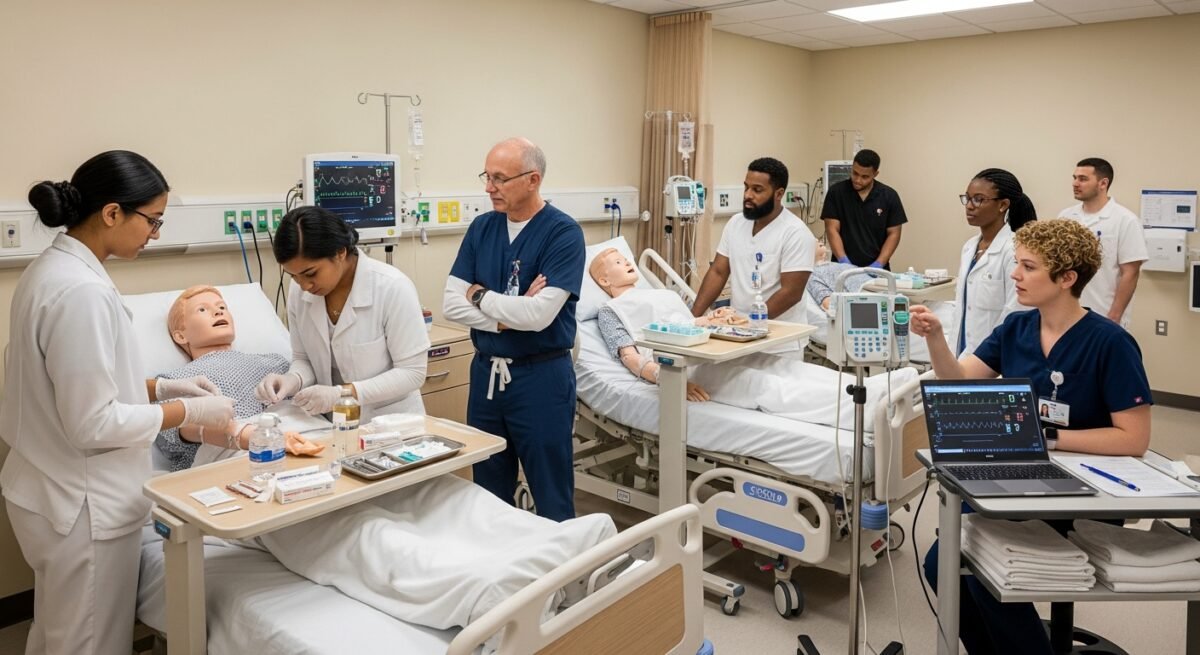
Mastering these subjects requires a blend of memorization, comprehension, and application. You will spend significant time in skills labs practicing procedures on manikins before performing them on patients. Proficiency in dosage calculation is paramount, and you can expect regular math competency tests. Furthermore, developing strong soft skills, like empathetic communication, teamwork, time management, and stress resilience, is woven throughout the entire program experience. For those considering other fast-track technology fields, understanding the structured, hands-on nature of an ADN can be contrasted with the focused technical training found in top associates in cyber security online programs, which also lead to high-demand careers but in a vastly different environment.
The Time Commitment and Workload Reality
Prospective students must enter an ADN program with clear eyes regarding the time and energy required. This is not a passive education, it is an immersive one. For every hour spent in lecture or clinical, plan to spend two to three hours outside of class studying, reading, preparing care plans, practicing skills, and completing assignments. The workload is continuous and cumulative, meaning you cannot afford to fall behind.
A typical week might involve 12-16 hours of classroom lecture, another 12-24 hours in clinical rotations (especially in later semesters), and then 20-30 hours of independent study. This often means sacrificing social activities, reducing work hours, and relying on a strong support system. Many programs strongly advise against full-time employment while enrolled due to the intensity of the schedule. Effective time management and organizational strategies become your most valuable tools. Creating a dedicated study schedule, forming study groups, and learning how to prioritize information are critical for success and maintaining sanity.
Preparing for the NCLEX-RN and Career Launch
The ultimate goal of any ADN program is to prepare you to pass the NCLEX-RN and become a licensed Registered Nurse (RN). The curriculum is explicitly aligned with the NCLEX test plan. Throughout the program, you will take standardized tests that mimic the NCLEX format and content to assess your readiness and identify areas needing improvement.
In your final semester, preparation intensifies. Many programs incorporate a dedicated NCLEX review course or capstone seminar. You will be expected to complete comprehensive practice question banks and review core content. Upon graduation, you will receive an authorization to test from your state board of nursing. It is highly recommended to take the NCLEX as soon as possible after graduation while the knowledge is fresh. Passing this exam is the final step to unlocking your RN license. With license in hand, ADN graduates are qualified for entry-level RN positions in a wide array of settings, including hospitals, nursing homes, clinics, and home health agencies. The career outlook remains strong, and this degree provides a solid, employable foundation. Many nurses then choose to pursue a Bachelor of Science in Nursing (BSN) through RN-to-BSN programs, which can often be completed online while working. For personalized advice on navigating these degree pathways and selecting the right program for your goals, seeking professional college degree guidance can be an invaluable step in your planning process.
Frequently Asked Questions
Is an ADN program harder than a BSN program?
The core nursing coursework in ADN and BSN programs is very similar in rigor and covers the same clinical competencies needed to pass the NCLEX. The primary difference is that BSN programs include more courses in humanities, research, leadership, and community health, which extends the time to degree. The intensity of the nursing core, however, is comparable.
Can I work while completing my nursing associate degree?
It is possible, but challenging. Many students work part-time, often in flexible or per-diem roles like nursing assistant positions. However, due to the demanding schedule of classes, labs, and clinicals, most programs advise limiting work hours. Your academic success must be the top priority.
What are the biggest challenges students face?
Common challenges include managing the immense volume of information, balancing the program with personal/family responsibilities, the financial cost, and the emotional stress of clinical experiences. Time management, a strong support network, and utilizing campus resources (tutoring, counseling) are key to overcoming these hurdles.
What is the career outlook for ADN-prepared RNs?
The job outlook for Registered Nurses is excellent, projected to grow much faster than average. ADN-prepared RNs are hired into hospitals (particularly in medical-surgical units), long-term care, outpatient clinics, and other settings. Some hospital systems, especially in competitive metropolitan areas, may express a preference for BSN-prepared nurses, but ADN graduates are absolutely employable and often continue their education while working.
How do I choose a good ADN program?
The most critical factor is accreditation (by the Accreditation Commission for Education in Nursing or the Commission on Collegiate Nursing Education) and a strong NCLEX pass rate. Also consider program cost, schedule flexibility, clinical placement opportunities, student support services, and graduation rates.
Embarking on an Associate Degree in Nursing program is a commitment to a transformative and demanding educational journey. It requires dedication, resilience, and a passion for helping others. By knowing what to expect from the curriculum, the clinical demands, the time investment, and the ultimate goals, you can enter your program prepared not just to survive, but to thrive. The path is challenging, but the reward, a career dedicated to healing and making a tangible difference in people’s lives, is unparalleled. Your journey to becoming a nurse starts with this informed first step.