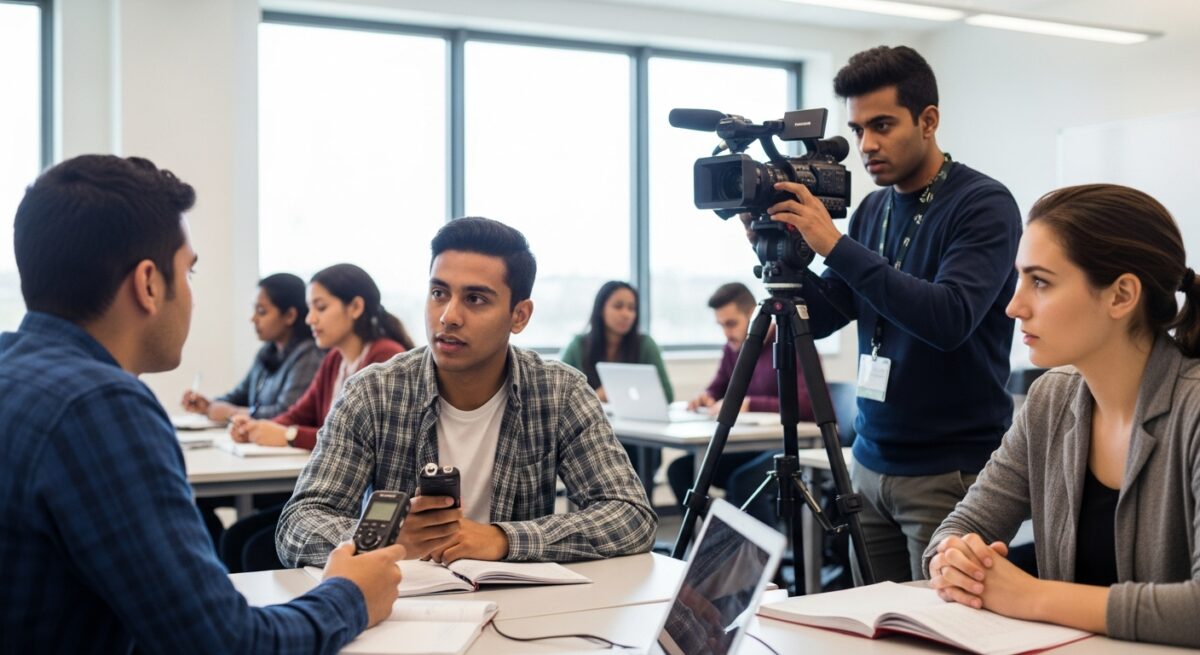
Deciding to pursue a Bachelor of Journalism is a commitment to mastering the craft of storytelling in the digital age. It is a rigorous, dynamic, and immensely rewarding path that prepares you not just for a job, but for a vital role in society. This degree goes far beyond learning to write a news lead, it is a comprehensive education in critical thinking, ethical reasoning, technical production, and understanding the complex forces that shape our world. If you are passionate about truth, clarity, and impact, this program will equip you with the foundational skills and adaptive mindset needed to navigate the fast-evolving media landscape. Here is a detailed look at what you can realistically expect from your four years in a journalism degree program.
The Core Curriculum and Foundational Skills
Every accredited journalism program is built upon a core set of courses designed to instill the timeless principles of the profession. You will begin with the fundamentals: news writing and reporting. This involves learning the inverted pyramid structure, conducting interviews, verifying facts, and writing with clarity and precision under deadline pressure. Alongside this, you will take a course in media law and ethics, which is arguably the most critical component of your education. Here, you will study defamation, privacy, copyright, and the First Amendment, while grappling with real-world ethical dilemmas journalists face daily.
Another pillar is multimedia storytelling. Modern journalism is rarely just text. Your coursework will integrate audio, video, and photography, teaching you how to shoot and edit basic video, record and mix audio for podcasts, and capture compelling photographs. You will learn to choose the right medium for the story. Furthermore, most programs require a research methods or data journalism course. This teaches you how to find, analyze, and visualize data to uncover trends and tell more powerful, evidence-based stories. Understanding these core areas ensures you graduate as a versatile journalist, not a specialist in a single, potentially outdated, format.
The Evolution From Classroom to Newsroom
The theoretical knowledge from your lectures is meaningless without practical application. This is where the lab and studio components of your degree come alive. You will spend significant hours in news labs, often structured as working newsrooms for the campus newspaper, TV station, radio station, or online publication. Under the guidance of professors with professional experience, you will pitch stories, assign roles, and produce publishable content for a real audience. This simulated newsroom environment is where you make mistakes, learn to collaborate with editors and peers, and build the resilience needed for a career in media.
This hands-on experience typically culminates in a mandatory internship. A quality journalism program will have strong connections with local and national media outlets to help place students. An internship provides an irreplaceable bridge to the professional world. You will network, understand workplace culture, and add crucial clips or a demo reel to your portfolio. Many students secure their first job through internship connections. The transition from student to professional is gradual, and this structured progression, from introductory reporting to capstone projects and internships, is designed to make you job-ready upon graduation.
Specializations and Elective Pathways
While the core is universal, most Bachelor of Journalism or media studies programs offer specializations or concentrated elective tracks. This allows you to tailor your degree to your interests and career goals. Common specializations include Broadcast Journalism, Digital/Online Media, Sports Journalism, Political Journalism, and Science/Environmental Reporting. Choosing a specialization involves taking a cluster of advanced courses in that area. For instance, a broadcast track would include advanced video production, live reporting, and anchor performance, while a digital media track might delve deeper into social media strategy, web analytics, and interactive story design.
Your choice of electives outside the journalism school is also vital. The best journalists are subject-matter experts. You are strongly encouraged to minor or take a substantial number of courses in a field like Political Science, Economics, Computer Science, Environmental Studies, or a foreign language. This domain knowledge gives you the context and depth to report authoritatively on complex issues. A journalist with a background in economics can better explain market trends, just as one with a computer science minor can more critically cover technology and AI. This interdisciplinary approach is a key expectation and advantage of a comprehensive journalism degree.
Building Your Professional Portfolio
From your very first semester, you should be curating your portfolio. In journalism, your portfolio (a collection of your best work) is your primary credential, often more important than your GPA. Expect to continuously build and refine this body of work. It should showcase a range of skills: strong writing samples, a well-produced video package, an audio story, and data visualizations. Your work from student media, class assignments, and especially your internship will form the backbone of this portfolio.
Today, a portfolio is almost always a professional website. Part of your degree will involve learning how to present yourself online. You will likely take a course or workshop on personal branding for journalists, which covers creating a clean, functional website using platforms like WordPress or Squarespace, optimizing your LinkedIn profile, and using social media professionally. You are expected to leave the program not just with skills, but with a tangible, digital showcase of those skills ready to present to employers.
Financial and Career Realities After Graduation
It is essential to enter a journalism degree with clear-eyed expectations about the industry landscape. Journalism is a competitive field, and starting salaries can vary widely. Positions at major national outlets are highly sought after, while opportunities at local newspapers, TV stations, digital startups, and niche publications are more numerous. The skills you learn, however, are highly transferable. Many graduates find rewarding careers in related fields like content strategy, public relations, corporate communications, media relations, and digital marketing.
Financing your degree is a crucial consideration. Beyond federal aid and scholarships, you should actively seek out journalism-specific scholarships from professional organizations like the Society of Professional Journalists (SPJ) or the Radio Television Digital News Association (RTDNA). Understanding the return on investment is part of being an informed student. For comprehensive financial planning resources, including scholarship comparisons and aid guidance, a dedicated student funding & tuition guide can be an invaluable tool during your research process.
Frequently Asked Questions
Is a Bachelor of Journalism worth it if I want to work in digital media or podcasting? Absolutely. Modern journalism degrees are built for the digital landscape. The core skills of reporting, writing, editing, and ethical storytelling are the same. Your program will specifically train you in digital content creation, audio production, and audience engagement strategies essential for podcasting and online media.
What is the difference between a BA and a BS in Journalism? The distinction is often minor and varies by school. Typically, a Bachelor of Arts (BA) requires more liberal arts and humanities credits, including a foreign language, and may have a broader theoretical focus. A Bachelor of Science (BS) might include more courses in quantitative methods, data analysis, or specific technical production. Examine the specific curriculum of each program to see which aligns with your goals.
How important is the accreditation of the journalism school? Very important. Look for programs accredited by the Accrediting Council on Education in Journalism and Mass Communications (ACEJMC). This ensures the program meets rigorous standards for curriculum, faculty qualifications, facilities, and assessment, giving you confidence in the quality of your education.
Can I do a journalism degree online effectively? Yes, many accredited institutions now offer robust online journalism degrees. The key is ensuring the program provides practical, hands-on experience. Look for online programs that ship production equipment to students, use virtual labs, facilitate remote internships, and have strong support for building a portfolio. The importance of online journalism degree programs has grown significantly, offering flexibility without sacrificing core competencies.
What personal qualities are essential for success in this degree and career? Innate curiosity, persistence, integrity, and strong communication skills are paramount. You must be comfortable talking to strangers, asking tough questions, and receiving critical feedback. Adaptability and a willingness to continuously learn new technologies are also non-negotiable in today’s media environment.
Embarking on a Bachelor of Journalism degree is a commitment to becoming a clear-eyed observer, a meticulous researcher, and a compelling storyteller. You will be challenged to think critically, act ethically, and adapt constantly. The journey will equip you with a powerful toolkit of skills applicable far beyond the traditional newsroom, preparing you to inform, engage, and make a meaningful impact in whatever professional path you choose. Your education begins in the classroom, but its true test and reward lie in the stories you will go on to tell.