
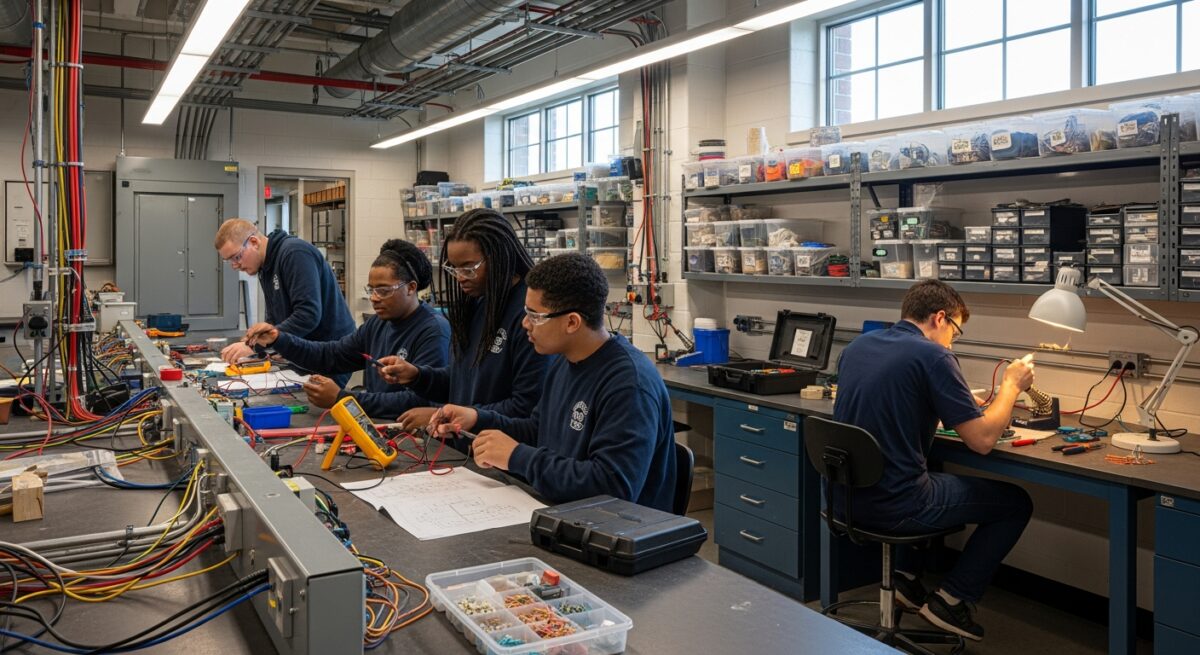
If you enjoy working with your hands, solving technical problems, and understanding how electrical systems power the modern world, an associate degree in electrical technology could be your gateway to a stable and rewarding career. This two-year degree program blends theoretical knowledge with hands-on training, preparing graduates for roles in industries ranging from manufacturing and construction to renewable energy and telecommunications. Unlike a four-year engineering degree, which focuses heavily on design theory and advanced mathematics, an electrical technology degree emphasizes practical application: you learn how to install, maintain, troubleshoot, and repair electrical equipment and systems. For many students, this represents a faster, more affordable path to a well-paying technical career without the time and debt commitment of a bachelor’s program.
Understanding the Associate Degree in Electrical Technology
An associate degree in electrical technology is an undergraduate credential typically awarded by community colleges, technical institutes, and some online universities. Most programs require 60 to 70 credit hours and can be completed in two years of full-time study. The curriculum is designed to provide a solid foundation in electrical theory, circuit analysis, digital electronics, and motor controls, while also developing practical skills like wiring, soldering, and equipment testing. Graduates emerge with the ability to read blueprints, use diagnostic tools, and apply safety standards in real-world settings.
This degree sits between a short-term certificate (which may teach specific skills like residential wiring) and a bachelor’s degree in electrical engineering (which prepares students for design and management roles). The associate degree strikes a balance: it offers enough technical depth to qualify for skilled technician positions while leaving the door open for further education. Many programs have articulation agreements with four-year institutions, allowing credits to transfer toward a bachelor’s degree in engineering technology or a related field.
Core Subjects You Will Study
The typical curriculum covers both foundational and specialized topics. In the first year, students often take courses in DC and AC circuits, basic electronics, and digital logic. These subjects introduce the principles of voltage, current, resistance, and how components like resistors, capacitors, and transistors function. Laboratory sessions are integral: you might build a simple power supply, test a logic gate circuit, or measure signal waveforms with an oscilloscope.
In the second year, the coursework becomes more applied. Classes in industrial motor controls, programmable logic controllers (PLCs), and electrical machinery teach you how automated systems operate. You may also study National Electrical Code (NEC) requirements, electrical safety protocols, and renewable energy systems. Many programs include a capstone project or internship, giving you direct experience with real-world electrical installations or maintenance tasks. This combination of theory and practice ensures that graduates are job-ready from day one.
Career Paths and Job Opportunities
Graduates with an associate degree in electrical technology find employment across a wide range of sectors. Electrical technicians, also called electrical engineering technicians, work alongside engineers to test and modify electrical equipment. They may install wiring in new construction, maintain power distribution systems in factories, or calibrate instruments in research labs. According to the U.S. Bureau of Labor Statistics, the median annual wage for electrical and electronics engineering technicians was around $67,000 in 2023, with top earners exceeding $95,000. Job growth is projected to be steady, driven by the expansion of renewable energy, smart grid technology, and automation in manufacturing.
Beyond the technician role, this degree opens doors to positions such as:
- Field Service Technician: Traveling to customer sites to install, repair, or upgrade electrical systems, often in industries like medical equipment or industrial machinery.
- Automation Technician: Programming and maintaining PLCs and robotic systems in automated production lines.
- Electrical Inspector: Ensuring that electrical installations comply with local codes and safety standards.
- Renewable Energy Technician: Installing and servicing solar panels or wind turbine electrical systems.
Each of these roles typically offers on-the-job training and opportunities for advancement. With experience and additional certifications (such as a journeyman electrician license), you can move into supervisory positions or start your own contracting business. The practical nature of the degree also makes it a strong foundation for further specialization in areas like industrial electronics, telecommunications, or power distribution.
Online and Flexible Learning Options
For working adults or those with family obligations, many accredited institutions now offer an online associate degree in electrical technology. These programs deliver theoretical coursework through virtual lectures, simulations, and interactive modules. Lab components are often completed through at-home kits, virtual labs, or local approved facilities. While hands-on experience remains essential, technology has made it possible to gain substantial knowledge without commuting to a campus every day. When researching programs, look for accreditation from agencies such as the Accreditation Board for Engineering and Technology (ABET) or regional accrediting bodies, as this ensures the degree meets industry standards and is more likely to transfer to a four-year program.
Choosing an online or hybrid format can reduce costs and scheduling conflicts. Many community colleges also offer evening and weekend classes, making it easier to balance work and study. If you are exploring options, our guide on Cyber Security Associate Degree Overview and Career Path provides a helpful comparison of how different technical associate degrees can lead to distinct career tracks.
How to Choose the Right Program
Selecting the right electrical technology degree program requires careful consideration of several factors. First, verify accreditation. Programs accredited by ABET or similar bodies have undergone rigorous review and are more likely to be recognized by employers and transfer partners. Second, examine the curriculum: does it include PLC programming, motor controls, and renewable energy? These are high-demand skills. Third, consider the cost and financial aid options. Community college tuition is often lower than private technical schools, and many offer scholarships or payment plans.
Additionally, investigate the program’s job placement rate and employer partnerships. Schools with strong ties to local industries often provide internship opportunities and direct hiring pipelines. Finally, think about your long-term goals. If you plan to eventually earn a bachelor’s degree, look for programs with clear transfer agreements with four-year institutions. For those seeking immediate employment, a program that includes a capstone project or apprenticeship may be more valuable.
Financial aid is a critical part of the decision process. Many students rely on grants, loans, or employer tuition reimbursement. Scholarship resources can help reduce out-of-pocket costs, making an already affordable degree even more accessible. Be sure to fill out the Free Application for Federal Student Aid (FAFSA) to determine your eligibility for federal aid and institutional scholarships.
Frequently Asked Questions
Is an associate degree in electrical technology worth it?
Yes, for most students. The degree offers a strong return on investment due to relatively low tuition and high starting salaries. Graduates often enter the workforce within two years with little to no debt, and the skills learned are in demand across multiple industries.
Can I become an electrician with this degree?
An associate degree in electrical technology provides the theoretical knowledge and some practical skills needed for electrical work, but it is not a substitute for a state-issued electrician license. To become a licensed electrician, you typically need to complete an apprenticeship (4-5 years) and pass a licensing exam. However, the degree can help you start at a higher level or qualify for specialized electrical technician roles.
What is the difference between electrical technology and electrical engineering?
Electrical technology focuses on the application of electrical principles: installation, testing, maintenance, and troubleshooting. Electrical engineering emphasizes design, research, and theoretical analysis. Technologists work with existing systems; engineers create new ones. The associate degree is a technology degree, not an engineering degree.
Can I transfer credits to a bachelor’s program?
Many community colleges have articulation agreements with four-year universities that allow you to transfer credits toward a Bachelor of Science in Engineering Technology or a related field. Check with the specific schools you are considering to understand their transfer policies.
Taking the Next Step
An associate degree in electrical technology is a practical, cost-effective way to launch a career in a field that powers nearly every aspect of modern life. Whether you aspire to work in manufacturing, renewable energy, or building automation, this credential provides the foundational skills employers need. By choosing an accredited program, leveraging financial aid, and connecting with career services, you can position yourself for success in a growing industry. Start exploring programs today and take the first step toward a future filled with opportunity.