
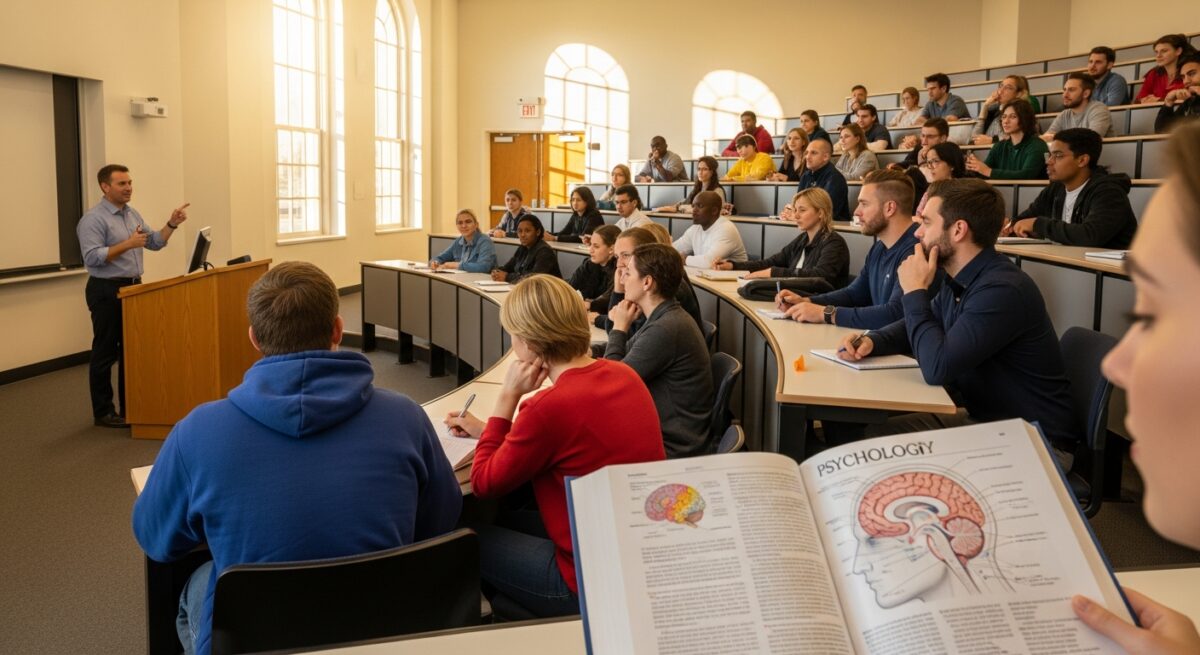
If you are curious about human behavior, mental processes, and the science behind why people act the way they do, a Bachelor of Arts in Psychology might be the perfect fit. This degree opens doors to a wide range of careers and provides a strong foundation for graduate study. In this comprehensive guide, we will explore exactly What Is a BA in Psychology? Degree, Courses and Career Guide topics, so you can make an informed decision about your education and future.
The BA in Psychology is one of the most popular undergraduate degrees in the United States. It is not just for those who want to become therapists. The skills you learn, such as critical thinking, research analysis, and understanding human motivation, are valuable in fields like business, education, marketing, and social services. Whether you dream of working directly with clients or prefer to analyze data behind the scenes, this degree offers a flexible pathway.
Throughout this article, we will break down the core curriculum, the difference between a BA and a BS, the top career paths, and how to choose the right program. We will also link to related resources, such as our guide on Software Engineering Degree vs Course: Key Differences, to help you compare options across disciplines. By the end, you will have a clear roadmap for pursuing a bachelor of psychology.
What Is a BA in Psychology? Defining the Degree
A Bachelor of Arts in Psychology is an undergraduate degree that combines a strong foundation in psychological theory and research methods with a broad liberal arts education. Unlike a Bachelor of Science (BS) in Psychology, which often emphasizes natural sciences, statistics, and lab work, the BA typically requires more coursework in humanities, social sciences, and foreign languages. This makes the BA particularly appealing for students who want a well-rounded education and plan to pursue careers in counseling, human resources, or public relations.
The bachelor of arts in psychology is designed to develop your understanding of human development, social behavior, cognitive processes, and mental health. You will learn how to conduct research, interpret data, and apply psychological principles to real-world problems. Many programs also offer concentrations such as developmental psychology, industrial-organizational psychology, or forensic psychology. The degree typically takes four years of full-time study, though accelerated and part-time online options are available through platforms like online degree programs.
It is important to note that a BA in Psychology is often a stepping stone. While you can find entry-level jobs with this degree, many advanced roles in psychology require a master’s or doctoral degree. However, the bachelor’s level prepares you for graduate school and provides transferable skills that employers value across many industries.
Core Courses in a BA in Psychology Program
The curriculum for a BA in Psychology is structured to give you both breadth and depth. You will start with introductory courses and then move into more specialized topics. Below is a breakdown of the typical courses you can expect to take.
Foundation Courses
Every psychology program begins with foundational classes that establish the core concepts of the field. These courses include:
- Introduction to Psychology: An overview of major theories, historical figures, and key areas such as learning, memory, emotion, and personality.
- Research Methods in Psychology: Teaches you how to design experiments, collect data, and analyze results. This is critical for understanding scientific literature.
- Statistics for Psychology: Covers descriptive and inferential statistics, probability, and how to use software like SPSS or Excel for data analysis.
- Developmental Psychology: Examines human growth from infancy through old age, covering physical, cognitive, and social changes.
- Abnormal Psychology: Focuses on mental disorders, their symptoms, causes, and treatments. This is often a prerequisite for clinical graduate programs.
These foundation courses ensure that every graduate has a solid grasp of the scientific method and the major areas of psychological study. After completing these, you can choose electives that match your interests.
Advanced and Elective Courses
Once you have the basics down, you can explore specialized areas. Popular electives in a BA in Psychology program include:
- Social Psychology: How individuals influence and are influenced by others, covering topics like conformity, prejudice, and group dynamics.
- Cognitive Psychology: The study of mental processes such as perception, memory, language, and decision-making.
- Biological Psychology: Explores the relationship between the brain, nervous system, and behavior.
- Industrial-Organizational Psychology: Applies psychological principles to the workplace, focusing on employee motivation, leadership, and organizational culture.
- Counseling Theories: Introduces different therapeutic approaches, including cognitive-behavioral, psychodynamic, and humanistic therapies.
Many programs also require a capstone course or a senior thesis, where you conduct an independent research project under faculty supervision. This experience is valuable if you plan to apply to graduate school.
BA vs. BS in Psychology: Which Is Right for You?
One of the most common questions students ask is whether to pursue a BA or a BS in Psychology. The answer depends on your career goals and academic strengths. A ba in psychology (Bachelor of Arts) typically requires fewer science and math courses and more liberal arts electives. It is ideal if you are interested in counseling, social work, law, or human services. A BS (Bachelor of Science) usually demands more coursework in biology, chemistry, and advanced statistics, making it better suited for students aiming for research positions or medical school.
Both degrees cover core psychological theory, but the BA offers more flexibility. For example, a BA student might double major in English or Sociology, while a BS student might double major in Neuroscience or Biology. If you are unsure about your career path, the BA is often a safer choice because it keeps more options open. Many employers and graduate programs do not distinguish between the two, so focus on the skills you gain rather than the label.
It is worth noting that some schools only offer one version of the degree. When researching programs, check the curriculum carefully to ensure it aligns with your goals. If you plan to pursue a master’s in social work or counseling, a BA is perfectly acceptable. If you want to become a clinical psychologist, a BS may provide a stronger research foundation.
Career Paths with a BA in Psychology
A BA in Psychology prepares you for a diverse array of careers. While some roles require additional education, many are accessible right after graduation. Here is a look at the most common career paths.
Entry-Level Jobs for Bachelor’s Graduates
With a bachelor’s degree, you can work in social services, human resources, sales, or administrative roles. Common entry-level positions include:
- Case Manager: Helps clients access social services, healthcare, and housing. Often works in nonprofit or government agencies.
- Human Resources Assistant: Supports recruitment, employee relations, and training programs in corporate settings.
- Research Assistant: Assists with data collection, literature reviews, and lab management in academic or private research institutions.
- Mental Health Technician: Provides direct care to patients in psychiatric hospitals or residential treatment centers under the supervision of licensed professionals.
- Market Research Analyst: Studies consumer behavior and market conditions to help companies make decisions about products and advertising.
These roles typically offer starting salaries between $35,000 and $50,000 per year, depending on location and industry. With experience, you can move into supervisory or management positions.
Careers Requiring Graduate Education
If you want to become a licensed psychologist, counselor, or therapist, you will need a master’s or doctoral degree. Popular graduate paths include:
- Clinical Psychologist: Requires a PhD or PsyD. Diagnoses and treats mental disorders in private practice or hospital settings.
- School Psychologist: Works in K-12 schools to support students’ academic and emotional needs. Typically requires a specialist-level degree (EdS) or master’s.
- Counselor (LPC, LMHC): Provides therapy for individuals, couples, and families. Requires a master’s degree and state licensure.
- Industrial-Organizational Psychologist: Applies psychology to improve workplace productivity and employee well-being. Often requires a master’s or PhD.
- Forensic Psychologist: Works within the legal system, conducting evaluations and providing expert testimony. Requires a doctoral degree.
Graduate programs are competitive, so maintaining a strong GPA, gaining research experience, and securing letters of recommendation are essential. Many students also complete internships to build practical skills.
How to Choose the Right BA in Psychology Program
Selecting the right program is crucial for your success. Here are key factors to consider when evaluating schools.
First, check accreditation. The program should be accredited by a recognized body such as the American Psychological Association (APA) or the regional accrediting commission. Accreditation ensures that the curriculum meets industry standards and that your degree will be recognized by employers and graduate schools.
Second, consider the format. Online BA in Psychology programs are increasingly popular because they offer flexibility for working adults. Many accredited universities now offer fully online degrees that allow you to study from anywhere. Look for programs that provide access to virtual labs, online libraries, and career services.
Third, examine the faculty. Look up professors in the department to see their research interests and teaching experience. If possible, reach out to current students or alumni to learn about their experiences. A program with active faculty who mentor students can greatly enhance your education.
Finally, consider cost and financial aid. Tuition varies widely between public and private institutions. Use the CollegeDegree.Education platform to compare programs and find affordable options. Many schools offer scholarships, grants, and work-study opportunities specifically for psychology majors.
Frequently Asked Questions (FAQ)
Can I become a therapist with a BA in Psychology?
No, a BA in Psychology alone does not qualify you to be a licensed therapist. You need at least a master’s degree in counseling, social work, or a related field, plus supervised clinical hours and state licensure. However, the BA is the first step toward that goal.
What is the difference between a BA and a BS in Psychology?
The BA emphasizes liberal arts, humanities, and foreign languages, while the BS focuses more on natural sciences, math, and research methods. Both cover core psychology content, but the BA offers more flexibility for double majors and is often preferred for careers in counseling or social work.
How long does it take to complete a BA in Psychology?
Most full-time students complete the degree in four years. Accelerated programs may allow completion in three years, while part-time or online programs can take five to six years. The exact timeline depends on transfer credits and course load.
Is a BA in Psychology worth it?
Yes, for many students. The degree develops critical thinking, communication, and analytical skills that are valuable in many careers. According to the Bureau of Labor Statistics, jobs in psychology-related fields are projected to grow 6% from 2022 to 2032, faster than the average for all occupations. Graduates also have high earning potential, especially with advanced degrees.
What jobs can I get with a BA in Psychology without a master’s?
Entry-level roles include case manager, human resources assistant, research assistant, mental health technician, and market research analyst. These positions allow you to gain experience and decide if you want to pursue graduate education later.
Final Thoughts on Pursuing a BA in Psychology
Choosing to earn a Bachelor of Arts in Psychology is a decision that can shape your personal and professional life. The degree provides a deep understanding of human behavior, which is useful in almost any career. Whether you decide to enter the workforce immediately after graduation or continue to graduate school, the skills you acquire will serve you well. Use the resources available at CollegeDegree.Education to explore accredited programs, compare costs, and find the right fit for your goals. With careful planning and dedication, a BA in Psychology can be the foundation for a fulfilling and successful career.