
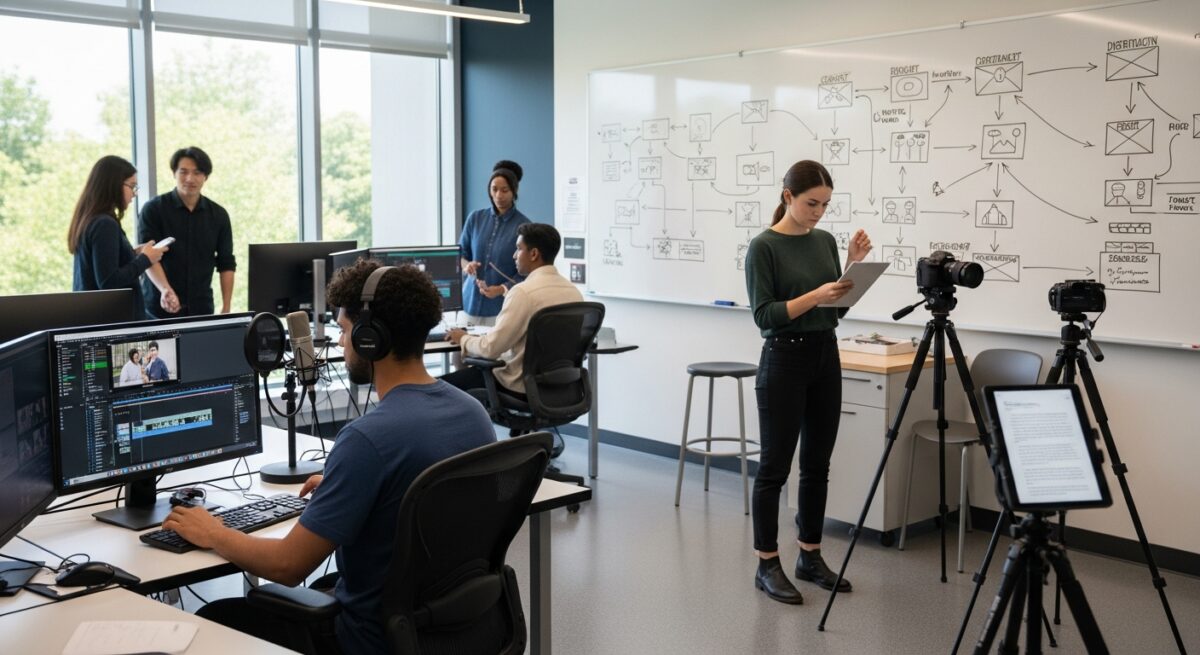
If you enjoy storytelling, analyzing digital trends, or crafting messages that influence public opinion, a communication and media degree might be the right path for you. This interdisciplinary field blends theory with hands-on practice, preparing students for careers in journalism, public relations, advertising, corporate communication, and digital content creation. Understanding what a communication and media degree includes is essential before committing to a program, because the curriculum varies widely across institutions. Some programs emphasize critical media theory, while others focus on practical production skills like video editing or social media analytics. In this article, we break down the core components of a typical communication and media degree, including required courses, elective concentrations, portfolio-building opportunities, and the career paths that graduates can expect.
Core Curriculum and Foundational Knowledge
Every communication and media degree begins with a set of foundational courses designed to provide a broad understanding of how media systems operate and how communication shapes society. These core classes typically cover communication theory, media history, research methods, and writing for diverse audiences. Students learn to analyze media messages critically and understand the ethical responsibilities of communicators in a democratic society.
For example, a course in communication theory might explore models of sender-receiver dynamics, the role of noise in message transmission, and how cultural contexts influence interpretation. A media history class often traces the evolution of print, radio, television, and digital platforms, helping students see how technological changes have reshaped public discourse. Research methods courses teach both qualitative approaches (such as interviews and focus groups) and quantitative techniques (such as surveys and content analysis), giving students the tools to evaluate media effects and audience behavior.
Writing is a cornerstone of any communication and media degree. Students typically take multiple writing-intensive courses, including news writing, persuasive writing, and strategic communication. These classes emphasize clarity, conciseness, and audience awareness. Many programs require a public speaking or presentation skills course as well, recognizing that oral communication is just as important as written communication in professional settings.
Specialized Concentrations and Elective Tracks
After completing foundational coursework, students usually choose a concentration that aligns with their career goals. The flexibility of a communication and media degree allows for deep dives into specific areas. Common concentrations include journalism, public relations, advertising, digital media production, corporate communication, and media studies. Each concentration has its own set of required and elective courses that build specialized expertise.
In a journalism concentration, students might take classes in investigative reporting, feature writing, multimedia storytelling, and media law. They often produce work for a campus newspaper, radio station, or online news outlet. Public relations concentrations focus on crisis communication, event planning, media relations, and campaign strategy. Students learn to write press releases, build media lists, and measure campaign effectiveness. Advertising tracks cover consumer behavior, copywriting, brand strategy, and media planning. Digital media production concentrations teach video editing, audio production, graphic design, and web development. Corporate communication tracks prepare students for internal communication roles within organizations, covering topics like organizational culture, change management, and employee engagement.
Media studies is a more theoretical concentration that examines the social, political, and economic dimensions of media. Courses might include media ethics, global media systems, audience analysis, and critical theory. This track is ideal for students considering graduate school or careers in research, policy, or academia.
Skills You Will Develop
A communication and media degree cultivates a versatile skill set that employers value across industries. Beyond writing and speaking, students develop research, analytical, and project management abilities. They learn to work under deadlines, collaborate in teams, and adapt messages for different platforms and audiences.
Digital literacy is a major component. Students gain proficiency with content management systems, social media scheduling tools, analytics dashboards, and multimedia editing software. Many programs now include courses on data visualization, search engine optimization, and audience targeting. These technical skills complement the soft skills that communication graduates are known for, such as empathy, cultural awareness, and persuasive storytelling.
Critical thinking is emphasized throughout the curriculum. Students learn to evaluate sources, identify bias, and construct evidence-based arguments. They practice ethical decision-making by considering the consequences of their messages on diverse stakeholders. This combination of hard and soft skills makes communication graduates adaptable to rapidly changing media landscapes.
Portfolio and Experiential Learning Opportunities
Most communication and media degree programs require students to build a professional portfolio before graduation. This portfolio showcases their best work across multiple formats, such as articles, videos, social media campaigns, press kits, and research papers. Faculty often provide feedback and guidance on selecting and refining portfolio pieces.
Internships are strongly encouraged or even required. Many programs have partnerships with local media outlets, PR agencies, marketing firms, nonprofit organizations, and corporate communication departments. Internships provide real-world experience and often lead to job offers after graduation. Students who complete internships report higher confidence and clearer career direction.
Campus media organizations offer another avenue for hands-on learning. Student-run newspapers, radio stations, TV studios, and podcast networks allow students to apply classroom knowledge in a low-stakes environment. Leadership roles in these organizations help students develop management and editorial skills. Some programs also offer capstone courses where students work on client projects, conducting research and presenting campaign recommendations to real organizations.
For those interested in exploring flexible options, a communications degree online can offer similar experiential learning through virtual internships, digital portfolios, and remote collaboration tools. Online programs are especially valuable for working adults who need to balance education with other commitments.
Career Paths and Salary Expectations
Graduates with a communication and media degree enter a wide range of fields. According to the Bureau of Labor Statistics, media and communication occupations are projected to grow faster than average over the next decade. Common job titles include public relations specialist, journalist, content strategist, social media manager, corporate communications coordinator, advertising account executive, and media planner.
Salaries vary by role and location. Entry-level positions in public relations or journalism typically start around $40,000 to $50,000 per year. Experienced professionals in strategic roles, such as communications directors or digital marketing managers, can earn $80,000 to $120,000 or more. Media production roles, such as video editor or podcast producer, fall in a similar range depending on the market and employer.
The degree also prepares students for graduate study in fields like law, business, public policy, or advanced communication research. Many communication graduates pursue master’s degrees in strategic communication, digital media, or organizational leadership to accelerate their career growth.
Frequently Asked Questions
Is a communication and media degree worth it?
Yes, for students who enjoy writing, research, and creative problem-solving. The degree provides transferable skills that are valuable in almost every industry. Graduates find work in corporate, nonprofit, government, and media sectors. The key is choosing a program with strong internship opportunities and a curriculum that matches your interests.
Can I get a communication and media degree online?
Many accredited universities offer fully online communication and media degrees. These programs cover the same curriculum as on-campus versions and often provide flexible scheduling for working adults. Online students still have access to virtual internships, digital portfolios, and faculty mentorship.
What is the difference between communication studies and media studies?
Communication studies focuses on interpersonal, organizational, and rhetorical communication. Media studies examines mass media systems, cultural effects, and digital platforms. Many degree programs combine both, but some schools offer distinct tracks. Your choice depends on whether you prefer direct human interaction or large-scale media analysis.
Do I need to be a good writer to succeed in this degree?
Strong writing skills help, but they can be developed through coursework and practice. Programs typically include writing labs and peer review sessions. The degree also emphasizes visual, audio, and digital communication, so writing is only one part of the skill set.
What technology skills will I learn?
Students typically learn to use content management systems, social media scheduling tools, analytics platforms, and video/audio editing software. Some programs also teach basic HTML, graphic design with Adobe Creative Suite, and data visualization tools like Tableau.
Choosing the Right Program for Your Goals
When evaluating communication and media degree programs, consider factors such as accreditation, faculty expertise, internship placement rates, and alumni outcomes. Look for programs that offer concentrations matching your interests and provide access to modern media labs and software. Accreditation from organizations like the Accrediting Council on Education in Journalism and Mass Communications (ACEJMC) signals a quality program that meets industry standards.
Visit campus if possible, or attend virtual open houses. Talk to current students and faculty about their experiences. Review the curriculum for each concentration to ensure it includes both theory and practice. Ask about portfolio requirements and career services support. A program that actively connects students with alumni and industry professionals will give you a head start in the job market.
For students who value flexibility, online programs can be an excellent option. Many online communication degrees offer the same rigorous curriculum as on-campus programs, with the added benefit of asynchronous classes and digital networking events. Whether you choose online or on-campus, the most important factor is finding a program that aligns with your career aspirations and learning style.
Ultimately, a communication and media degree equips you with the tools to navigate a world saturated with information. You will learn to craft clear messages, understand diverse audiences, and adapt to emerging technologies. These abilities are not only professionally valuable but also personally empowering. In an era where media shapes public opinion and drives social change, communication graduates play a vital role in connecting people and ideas.
If you are ready to explore accredited programs, discover available communication and media degrees that match your goals and budget. With the right education and hands-on experience, you can build a rewarding career in this dynamic field.