
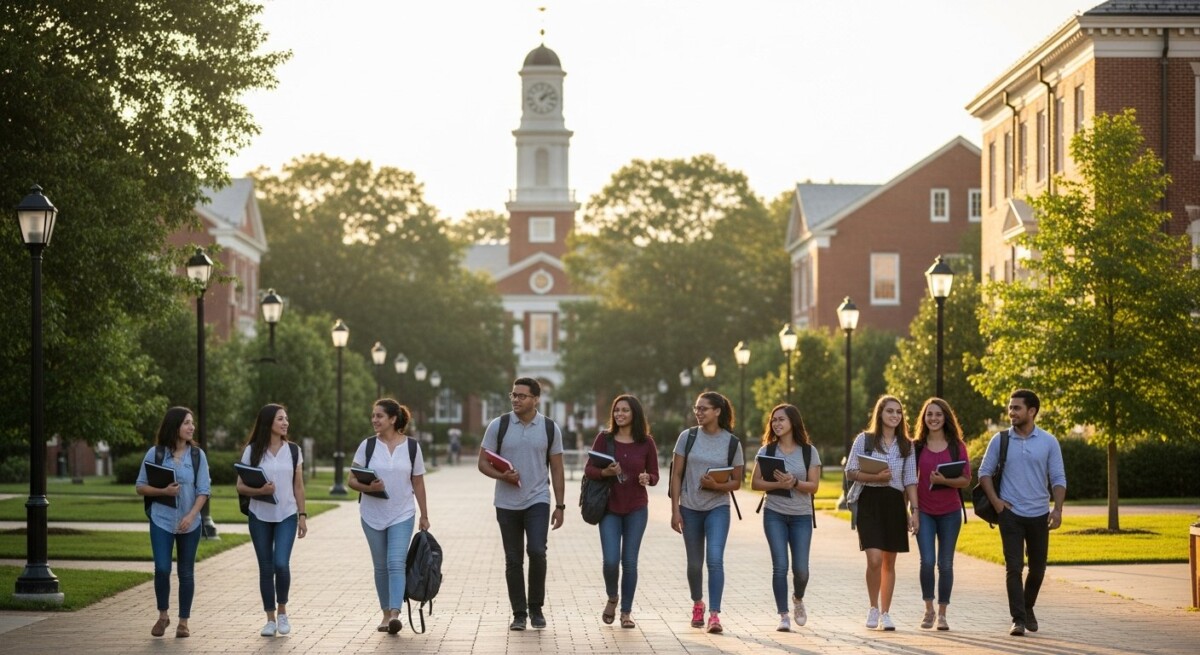
Choosing where to earn a four-year degree is one of the most consequential decisions a student can make. The Commonwealth of Virginia offers a rich and diverse higher education landscape, from world-renowned public research universities to focused private colleges and flexible online programs. For students seeking a bachelor’s degree, understanding the distinct options available across Virginia institutions providing bachelor’s degrees is the first step toward a successful academic and professional future. This guide explores the major types of schools, their unique strengths, and how to navigate the application process effectively.
Virginia’s higher education system serves over 500,000 students annually across more than 30 public and private nonprofit four-year institutions. The state consistently ranks among the top in the nation for educational attainment and workforce readiness, thanks in large part to the quality and accessibility of its colleges and universities. Whether you are a high school student planning your next step, a working adult seeking a career change, or a military service member transitioning to civilian life, Virginia’s institutions offer pathways tailored to diverse needs and goals.
The Public University Advantage
Virginia’s public universities are the backbone of the state’s higher education system. Flagship institutions like the University of Virginia (UVA) and Virginia Tech are nationally recognized for their research output, academic rigor, and extensive alumni networks. UVA, founded by Thomas Jefferson, emphasizes liberal arts education alongside professional programs in law, business, and medicine. Virginia Tech, known for its engineering and agricultural sciences, operates a strong polytechnic tradition with a focus on hands-on learning and innovation.
Beyond the flagships, comprehensive universities such as George Mason University, Virginia Commonwealth University (VCU), and James Madison University (JMU) serve large and diverse student populations. George Mason, located in Northern Virginia near Washington D.C., excels in economics, public policy, and information technology. VCU, based in Richmond, is renowned for its arts and health sciences programs, including a top-ranked school of nursing. JMU offers a balanced undergraduate experience with strong programs in education, business, and communication studies.
These public institutions benefit from state funding, which helps keep tuition costs lower than many private alternatives, especially for in-state residents. However, competition for admission to the most selective public universities has intensified in recent years. Prospective students should research each school’s specific admission requirements, which often include minimum GPA thresholds, standardized test scores (though many schools have adopted test-optional policies), and demonstrated extracurricular involvement.
Private Colleges and Universities
Virginia is also home to a robust collection of private nonprofit colleges that offer distinct educational philosophies and smaller learning environments. Institutions like Washington and Lee University, the University of Richmond, and William & Mary (which, while public, operates with a hybrid funding model and a strong liberal arts identity) provide rigorous academics with low student-to-faculty ratios. These schools often emphasize close mentorship, undergraduate research, and a tight-knit campus community.
Private liberal arts colleges such as Hampden-Sydney College (for men), Hollins University (for women), and Randolph College focus on developing critical thinking, communication skills, and ethical reasoning across a broad curriculum. These institutions typically offer generous financial aid packages, sometimes making the net cost competitive with public universities for high-achieving students. Additionally, private schools like Liberty University, based in Lynchburg, provide faith-based education with extensive online and residential programs.
For students seeking academic program insights and guidance on comparing private versus public options, exploring detailed program offerings and financial aid calculators is essential. Each institution publishes its net price calculator, which can give a personalized estimate of actual costs after scholarships and grants.
Online and Flexible Degree Options
Not every student can attend classes on a traditional campus. Virginia institutions have responded to this need by expanding online bachelor’s degree programs across numerous fields. Old Dominion University (ODU) in Norfolk has been a pioneer in distance learning, offering fully online degrees in fields like cybersecurity, nursing (RN to BSN), and business administration. Virginia Tech’s Online program and George Mason’s Mason Online provide similar flexibility, allowing students to complete coursework asynchronously while balancing work and family responsibilities.
For adult learners and military-affiliated students, these online pathways are particularly valuable. Virginia is home to a large active-duty and veteran population, and schools like Liberty University and the University of Virginia’s School of Continuing and Professional Studies have dedicated support services for these groups. Many institutions also offer accelerated eight-week or six-week courses, enabling students to finish degrees faster than traditional semester schedules allow.
When evaluating online programs, students should verify that the institution holds regional accreditation, which is the gold standard for academic quality in the United States. The Southern Association of Colleges and Schools Commission on Colleges (SACSCOC) is the regional accrediting body for Virginia schools. Accreditation ensures that credits are transferable and that the degree will be recognized by employers and graduate programs.
Community College Transfer Pathways
One of the most cost-effective routes to a bachelor’s degree in Virginia begins at a community college. The Virginia Community College System (VCCS) comprises 23 colleges across the state, offering associate degrees and certificate programs. Through the Guaranteed Admission Agreement (GAA), students who earn an associate degree with a minimum GPA (typically 2.5 to 3.4, depending on the receiving institution) are guaranteed admission to participating four-year public universities.
Popular transfer destinations include Virginia Tech, UVA, George Mason, and JMU. Students can complete general education requirements and introductory major courses at a fraction of the cost, then transfer seamlessly as juniors. This pathway not only saves money but also allows students to build a strong academic record in a smaller classroom setting before transitioning to a larger university.
Key considerations for transfer students include:
- Meeting with an academic advisor early to align course selections with transfer requirements
- Using the Virginia Education Wizard and Transfer Virginia portals to verify course equivalencies
- Applying for the Virginia Transfer Grant, which provides financial assistance to qualifying students
- Understanding that some competitive majors (e.g., engineering, nursing) may have additional prerequisites or higher GPA requirements
Successful transfer students often report that the community college experience helped them mature academically and personally, leading to stronger performance in upper-division coursework at their four-year institution.
Specialized and Career-Focused Institutions
Virginia also boasts specialized institutions that focus on specific career fields. Virginia Military Institute (VMI) in Lexington offers a unique combination of a rigorous academic program and a military corps of cadets lifestyle, producing officers for all branches of service. Norfolk State University and Virginia State University are historically black universities (HBCUs) that provide culturally affirming environments with strong programs in STEM, business, and education. The College of William & Mary’s Raymond A. Mason School of Business and the University of Virginia’s McIntire School of Commerce are highly selective professional programs that begin accepting undergraduates in their junior year.
For students interested in the arts, Virginia Commonwealth University’s School of the Arts is consistently ranked among the top public art schools in the nation. Shenandoah University and James Madison University offer excellent programs in music, theater, and health professions. These specialized programs often require separate applications, portfolios, or auditions, so early planning is critical.
Financial Aid and Affordability
Virginia offers several state-funded financial aid programs to make bachelor’s degrees more accessible. The Virginia Commonwealth Award is a need-based grant for in-state undergraduate students attending public or private nonprofit colleges. The Virginia Guaranteed Assistance Program (VGAP) provides additional support for students with the highest financial need. The Virginia Tuition Assistance Grant (VTAG) helps Virginia residents attending private colleges in the state reduce their tuition burden.
Federal financial aid, including Pell Grants, work-study programs, and Direct Loans, remains the primary funding source for many students. Completing the Free Application for Federal Student Aid (FAFSA) by the state deadline (typically March 1 for priority consideration) is essential for maximizing eligibility. Many Virginia institutions also offer merit-based scholarships, which do not require demonstrated financial need and are awarded based on academic achievement, leadership, or special talents.
Frequently Asked Questions
What is the difference between a public and private university in Virginia?
Public universities receive state funding and typically offer lower tuition to in-state residents. Private universities rely on tuition and endowments, often charging higher sticker prices but frequently providing substantial financial aid. Class sizes at private institutions tend to be smaller, and the educational experience may be more personalized.
Can I complete a bachelor’s degree entirely online through a Virginia school?
Yes. Several Virginia institutions offer fully online bachelor’s degrees in fields like business, nursing, cybersecurity, psychology, and criminal justice. Old Dominion University, Liberty University, and George Mason University are prominent providers of online undergraduate programs.
How do transfer agreements work between Virginia community colleges and four-year universities?
The Guaranteed Admission Agreement (GAA) allows students who earn an associate degree with a specified GPA to transfer automatically to participating public universities. Students should work with a community college advisor to ensure their course selections meet transfer requirements for their intended major.
Are there honors programs at Virginia colleges?
Most Virginia public universities offer honors programs or colleges that provide enriched coursework, research opportunities, and close faculty mentorship. Examples include the Jefferson Scholars program at UVA and the Honors College at Virginia Tech. Admission to these programs is competitive and often requires separate applications.
What standardized tests are required for admission to Virginia colleges?
Many Virginia institutions have adopted test-optional policies, meaning students can choose whether to submit SAT or ACT scores. However, some programs (especially engineering and nursing) may still prefer or require scores. Check each school’s admissions website for current policies.
Virginia’s higher education ecosystem offers remarkable variety and opportunity. From historic public flagships to innovative online programs and supportive community college pathways, the state provides multiple entry points to a bachelor’s degree. By carefully researching options, understanding financial aid resources, and aligning academic goals with institutional strengths, students can find a Virginia college that sets them on a path to lifelong success. The key is to start early, ask questions, and use every available resource to make an informed decision.