
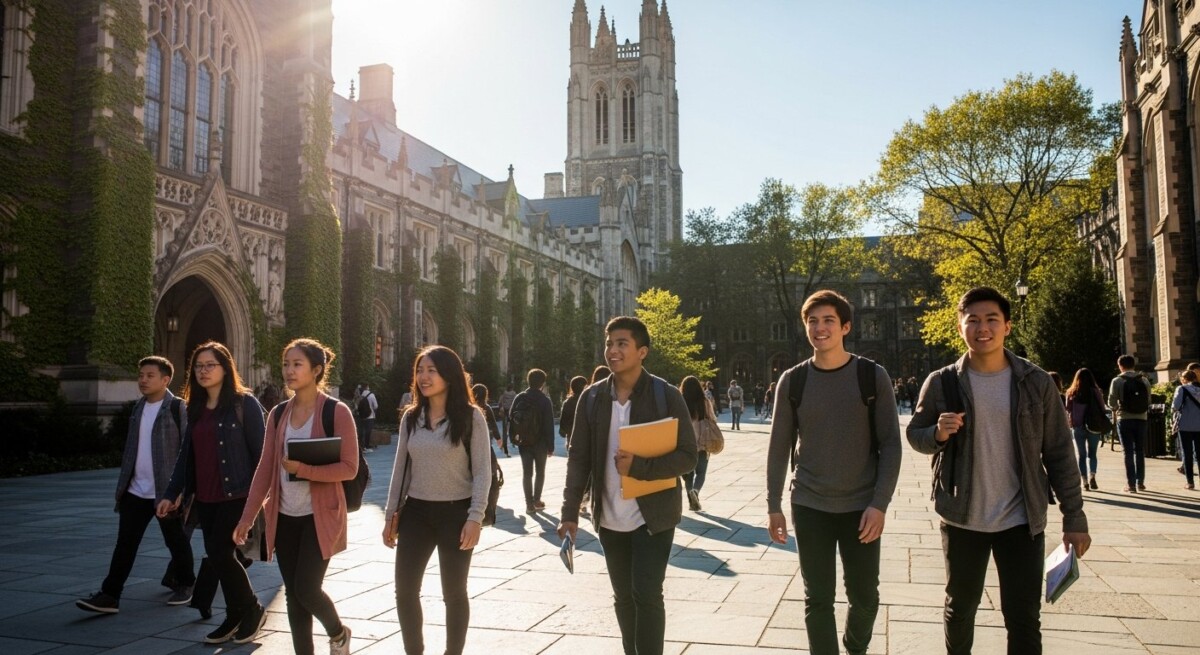
Choosing an undergraduate degree in New York is a decision that shapes not just your education, but your entire career trajectory. With a higher education landscape as vast and diverse as the state itself, prospective students are presented with an unparalleled array of academic pathways. From the world-renowned research institutions of the Ivy League to the specialized focus of public universities and liberal arts colleges, New York offers a program for virtually every interest and ambition. This guide will navigate the rich ecosystem of New York undergraduate degree programs and majors, helping you align your academic goals with the unique opportunities available across the Empire State.
The New York Higher Education Landscape
New York’s academic environment is defined by its incredible variety and concentration of prestigious institutions. The state is home to the largest urban public university system in the nation, the City University of New York (CUNY), and the extensive State University of New York (SUNY) network, which together provide accessible, high-quality education across dozens of campuses. Simultaneously, private powerhouses like Columbia University, Cornell University, New York University (NYU), and a constellation of elite liberal arts colleges such as Vassar, Colgate, and Hamilton offer globally competitive programs. This dual structure means students can find a fit based on budget, campus culture, and academic intensity, whether they seek the immersive residential experience of a rural campus or the integrated professional opportunities of a city like New York City, Buffalo, or Rochester.
High-Demand and Innovative Undergraduate Majors in New York
The academic offerings at New York institutions are directly responsive to both global trends and the state’s robust economy. While traditional disciplines remain strong, many schools have developed cutting-edge interdisciplinary majors that prepare graduates for the future of work.
Business, Finance, and Entrepreneurship
Given New York’s status as a global financial and business capital, related undergraduate programs are exceptionally strong. Stern School of Business at NYU, the School of Management at Binghamton University (SUNY), and the SC Johnson College of Business at Cornell are just a few examples. Majors often extend beyond standard Business Administration to include specialized tracks in Financial Engineering, Fintech, Real Estate, and International Business. The integration with Wall Street, Fortune 500 companies, and a thriving startup scene provides unmatched internship and networking opportunities.
Technology, Computer Science, and Engineering
New York’s “Silicon Alley” and growing tech hubs in Buffalo, Rochester, and Albany have spurred significant investment in STEM education. Programs in Computer Science, Data Science, Cybersecurity, and Artificial Intelligence are highly sought after. Institutions like Cornell Tech, the University at Buffalo’s School of Engineering, and Rensselaer Polytechnic Institute (RPI) are leaders. Unique combined majors are common, such as Computer Science and Economics, or Information Science with concentrations in Human-Centered Design, reflecting the applied nature of tech education in the state.
Arts, Communication, and Media
For creative fields, New York is arguably the world’s epicenter. Undergraduate programs benefit from direct access to Broadway, major media conglomerates, world-class museums, and galleries. Notable majors include Film and Television at NYU Tisch, Drama at Juilliard, Communication at Ithaca College, and Industrial Design at Pratt Institute. These programs are often studio-based and heavily focused on portfolio development and professional connections from the first year.
When evaluating these and other programs, prospective students should consider several core factors. Accreditation is paramount, ensuring the degree is recognized by employers and graduate schools. The specific curriculum and required courses define the skill set you will graduate with. Faculty expertise, particularly their industry or research connections, can greatly enhance learning. Finally, the career outcomes and support services offered by the institution’s career center are critical indicators of a program’s value. For a deeper dive into evaluating curriculum structures, our guide on Carnegie Mellon online undergraduate degrees offers a useful framework for assessing rigorous academic programs.
The SUNY and CUNY Advantage
The public university systems in New York provide a tremendous value proposition for in-state residents. SUNY’s 64 campuses offer a coherent yet diverse set of options, with certain campuses designated as university centers (like Albany, Binghamton, Buffalo, and Stony Brook) that offer comprehensive research doctoral programs. CUNY’s 25 campuses are integrated into the fabric of New York City, providing affordable pathways to careers in the city’s key industries. Both systems feature honors colleges, specialized degree tracks, and robust transfer pathways from community colleges. A key strategy for many students is to begin at a community college like SUNY Suffolk or CUNY Borough of Manhattan Community College to complete general education requirements at a lower cost before transferring to a four-year campus to complete their major.
Navigating the Application and Decision Process
Selecting the right New York undergraduate program requires a structured approach. Start by clearly defining your academic interests and career goals, even if they are broad. Research institutions that have recognized strengths in those areas, using official college websites and reliable resources for academic program insights. Pay close attention to admission requirements, which can vary significantly. For example, some programs within a university (like engineering, business, or the arts) may have separate, more competitive application processes with earlier deadlines or portfolio requirements.
Financial planning is a non-negotiable part of the process. Beyond tuition, consider the cost of living, which is highly variable across the state. Explore all financial aid options:
- New York State Aid: The Tuition Assistance Program (TAP) and the Excelsior Scholarship can significantly reduce costs for eligible residents at SUNY and CUNY schools.
- Institutional Scholarships: Many private and public schools offer merit-based and need-based awards.
- Federal Aid: Complete the FAFSA to determine eligibility for Pell Grants, work-study, and federal student loans.
If possible, visit campuses. The feel of a large research university versus a small liberal arts college is profound and can greatly influence your success and satisfaction.
Frequently Asked Questions
What is the difference between a SUNY and a CUNY school?
SUNY (State University of New York) is a statewide system of public institutions, including research universities, comprehensive colleges, and technical colleges located across New York State. CUNY (City University of New York) is the public university system of New York City, comprising senior and community colleges located within the five boroughs. Both offer excellent value for New York residents.
Are there strong online undergraduate degree options from New York schools?
Yes. Many SUNY and CUNY campuses, as well as private institutions like Syracuse University and St. John’s University, offer accredited online undergraduate degrees. These are ideal for working adults, career changers, or those who need geographic flexibility while still earning a degree from a New York-based institution.
How important is it to choose a major before applying?
It depends on the university. Many liberal arts colleges and universities with a holistic admissions process allow you to apply as “undecided” and declare a major later. However, for highly selective or specialized programs (e.g., Engineering, Business, Fine Arts), you often must apply directly to that school or program, and switching in can be difficult. Always check the specific policy of each institution.
What are some “hidden gem” programs in New York?
Beyond the most famous names, New York is full of standout specialized programs. Examples include the Environmental Science program at SUNY College of Environmental Science and Forestry (ESF), the Aviation program at Vaughn College of Aeronautics and Technology, the Pharmaceutical Sciences program at St. John’s University, and the Game Design and Development program at Rochester Institute of Technology (RIT).
Can out-of-state students get financial aid at New York schools?
Yes, but it is typically more limited. Out-of-state students are eligible for federal aid via the FAFSA and may qualify for merit-based scholarships offered by the institution itself. They are generally not eligible for New York state-specific aid like TAP or the Excelsior Scholarship. Private universities in New York often have need-blind admissions and meet full demonstrated need for all admitted students, regardless of state residency.
Your choice of an undergraduate degree in New York is the first major step in building your professional future. The state’s educational resources are designed to support ambitious goals, whether in the arts, sciences, business, or technology. By thoroughly researching programs, understanding the financial landscape, and aligning your choice with your personal and professional objectives, you can leverage a New York education into a powerful launchpad for your career. The diversity of options ensures that with careful planning, you can find an academic home that challenges you, supports you, and connects you to a world of opportunity.